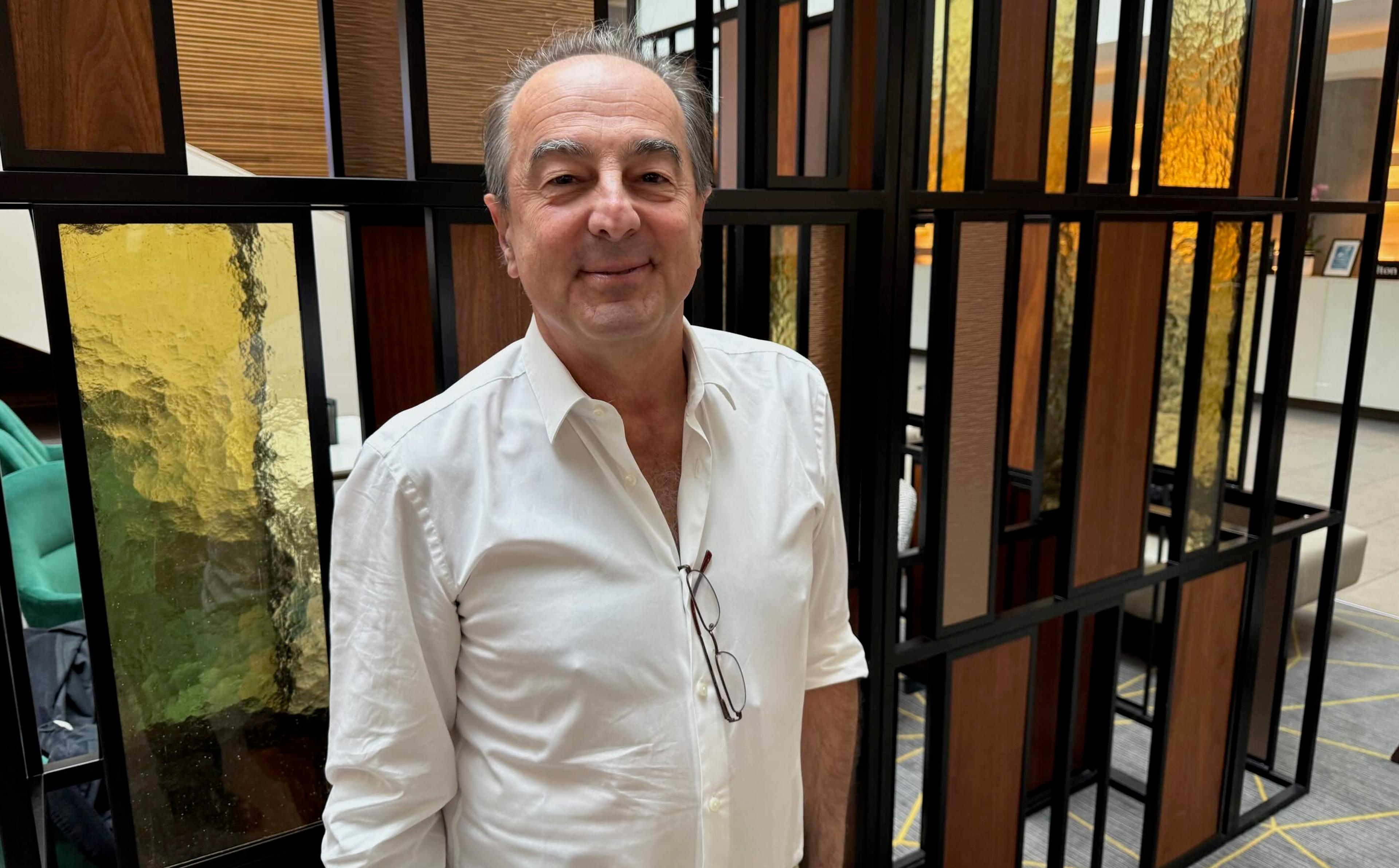

Arguably the first thing that comes to mind about Bottega Prosecco is its gold bottle that often catches your eye when wondering through duty free at a busy airport. But if you strip away the fancy packaging, there is a whole lot more going on in the bottle than Bottega is often given credit for.
For one of Bottega’s key strengths is how far it has been able to develop its aged Proseccos and whilst the vast majority of the sector is dominated by wines from the last harvest, Bottega now has Proseccos in the market for every year going back to 2021.
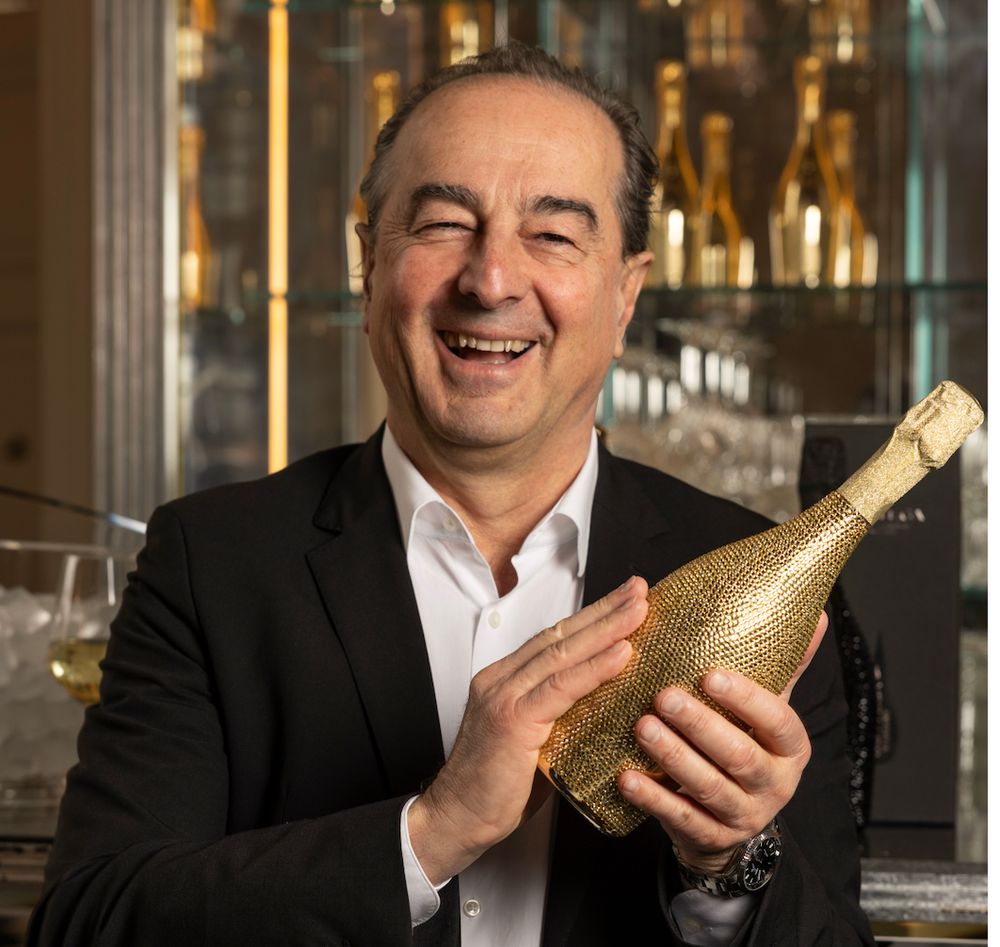
Sandro Bottega has been in charge of the family business since he was 19 years of age
Sandro Bottega, says owner and managing director, says there are three main reasons why he is so keen to promote Proseccos from different years.
“The first goal is to upgrade the reputation of Prosecco. The second is to give every consumer the chance to choose a product based on its quality and how much they want to spend. The third is to have a product to match with different pairings of food and at different times,” he says.
So within the Bottega range there are Proseccos to enjoy as an aperitif, or after work with colleagues and friends, or when you are out for dinner and you can enjoy “throughout your meal - from oysters to barbecue”.
It is the gastronomic quality of Bottega’s Proseccos that Sandro Bottega is particularly proud of and which he believes makes the brand stand out versus its peers.
It all comes down to the longer malolactic fermentation process that goes into making its wines and helps give them their distinctive elegant and smooth taste.
It means the highest quality Bottega Proseccos can age in the bottle for up to 10 years, with no risk of oxidation, compared to only three years, due to dégorgement, of the classic method, claims Sandro Bottega.
“We only make vintage Prosecco,” he says, “we never blend one vintage with another.”
He adds: “We want every harvest to have its own character.”
Whilst currently 90% of its Proseccos are from the last vintage, with 10% covering its aged Proseccos, Sandro Bottega would like to see that split move to 50/50 so that it can build up its reserves.
Another key reason Bottega is able to make Proseccos with age is they come from the area around the town of Conegliano where the Proseccos are more full bodied with a fruity bouquet, says Sandro Bottega.
Premium Vintage Collection
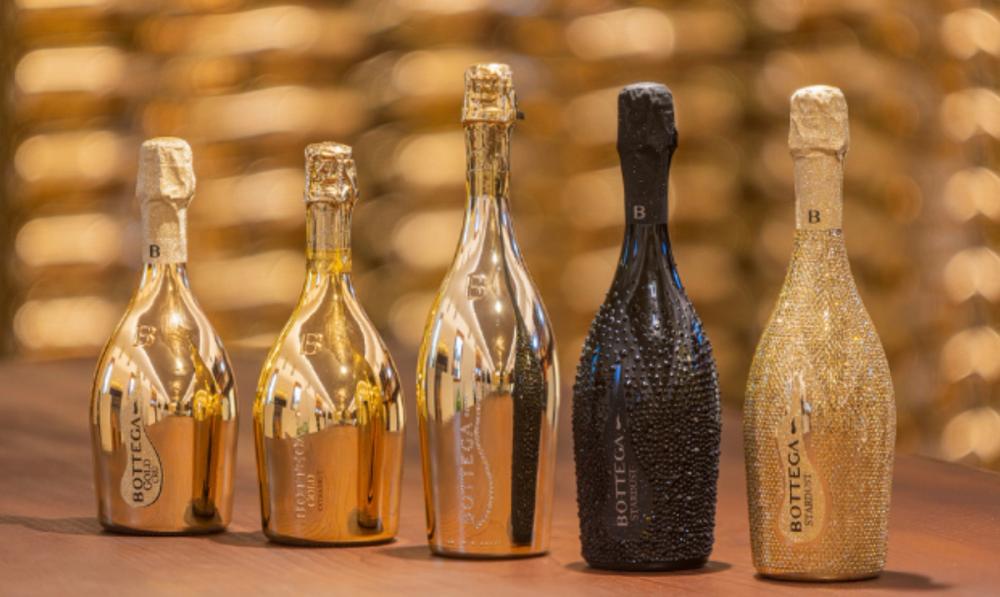
Bottega's Premium Vintage Collection
To help truly cement the reputation of Prosecco, Bottega last year introduced a new Premium Vintage Collection to capture all the innovation it has brought to the category over the last 50 years in a bid to show how the very best Proseccos can rival Champagne.
Proseccos that come from a single high altitude vineyards in the Unesco protected hills of Valdobbiadene, using an extremely long fermentation process, in horizontal autoclaves, for up to 12 months. They also go through pre-fermentation cryomaceration to safeguard the extraction of colour, flavour and tannins from the skins of the grapes.
These are wines that also illustrate the diversity and quality of the Glera grape variety and how their styles differ from site to site, vineyard to vineyard in the region.
“A good Prosecco,” stresses Bottega, “has an even bigger body than a Champagne.”
The extra brut style of the Premium Vintage Collection covers five Vintage products, that were all released into the market at the same time, including: Gold Cru Vintage 2023 (RRP €29); Gold Vintage 2024 (RRP €36, the only one that is brut style); Gold Diamond Vintage 2022 (RRP €49); Black Stardust Vintage 2021 (RRP €119); and Gold Stardust Vintage 2021 (RRP €250). The limited range only covers 50,000 bottles.
Unique position
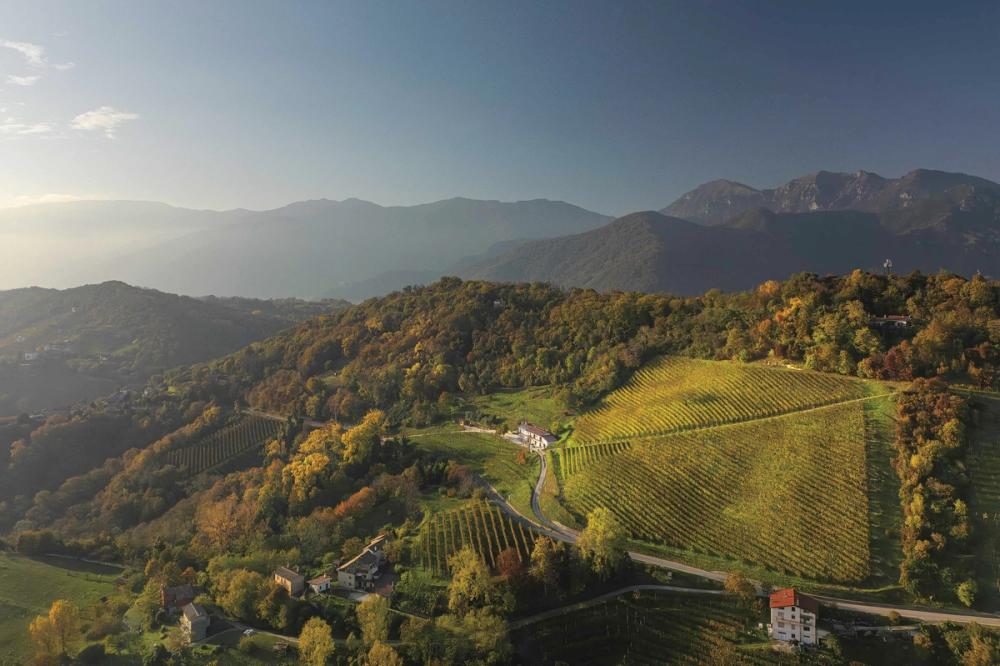
Bottega's Proseccos come from protected hills of Valdobbiadene
Bottega’s credentials as a premium, innovative brand has helped position it, in Matthew Clark’s former chief executive, Steve Thompson’s words, as a “unique place in the market” as a brand that can sit in the next tier down from premium sparkling wine and Champagne.
It has certainly helped Bottega develop a “fantastic relationship” with Matthew Clark in the UK since they first started working together in 2013 and its premium credentials have helped act as a catalyst for growth in other markets around the world.
Sandro Bottega is also keen to point out that Prosecco DOCG is the “rarest” of all the main sparkling wine categories coming from only 8,000 hectares compared to Champagne’s 34,00 ha and Cava’s 32,000ha. With Prosecco DOC covering 29,000ha and DOC Treviso 14,200ha.
The 3,500 growers in Prosecco DOCG are small enough, he says, “to cultivate their vineyards like a garden” and the high altitude terrace system means it is “extremely expensive” to pick and harvest the grapes - up to €21,000 per hectare or €1.10 per kg of grape compared to €0.75 in Champagne and €0.45 in Cava.
Bottega’s “clear understanding and respect” for quality means it is willing to invest in the finest grades of cork it can find and chooses to source its corks from Sardinia.
It is also planning for the future and is rolling out a new clone to its vineyards that dates back to 1918 that will be used to graft all the new vines it plants.
Multi-faceted business
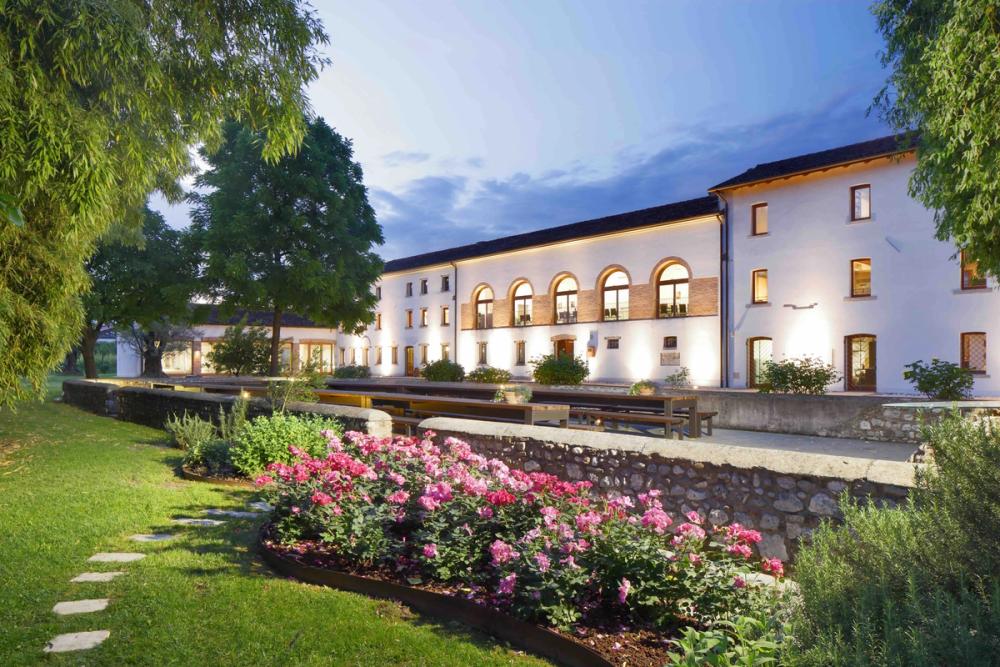
Bottega's headquarters are in Villa Rosina in Bibano di Godega in the heart of Treviso.
Bottega’s main headquarters is at Villa Rosina in Bibano di Godega in the heart of Treviso. From here it is able to control and mange a multi-faceted business where Prosecco is only part of a huge range of products and drinks the business now operates.
Whilst the family’s history might date back to 1635, its modern history started in 1977 when Aldo and Rosina Bottega founded Distilleria Bottega in Pianzano di Godega and started to make grappa and spirits from the family’s vineyards.
It was Sandro Bottega who can lay claim to being the first generation to fully commercialise the business when he took over the company when his father died in 1983 at only 19 years of age. It was his decision to start making Prosecco in 1987 and open its first dedicated winery in 1992.
The start of a journey that now sees the company generating over €1.7 billion in revenue a year and is now selling its products in over 160 countries around the world, supported by 27 export managers and it has dedicated offices in Argentina and the UK, US, France, Germany, Japan, Korea.
“Our philosophy is to make many products of the highest quality,” says Sandro Bottega. “It is important to make good quality wine, but it is very important to have a sales organisation that is able to represent us and understand and educate the market every day.”
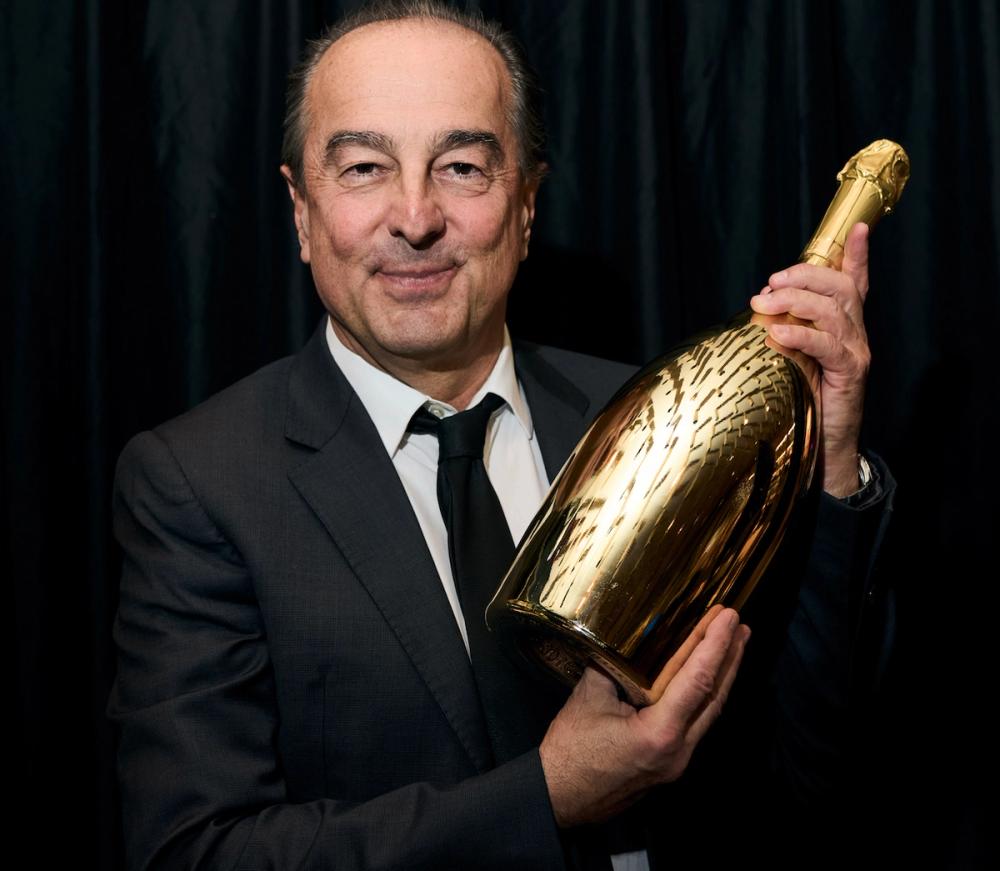
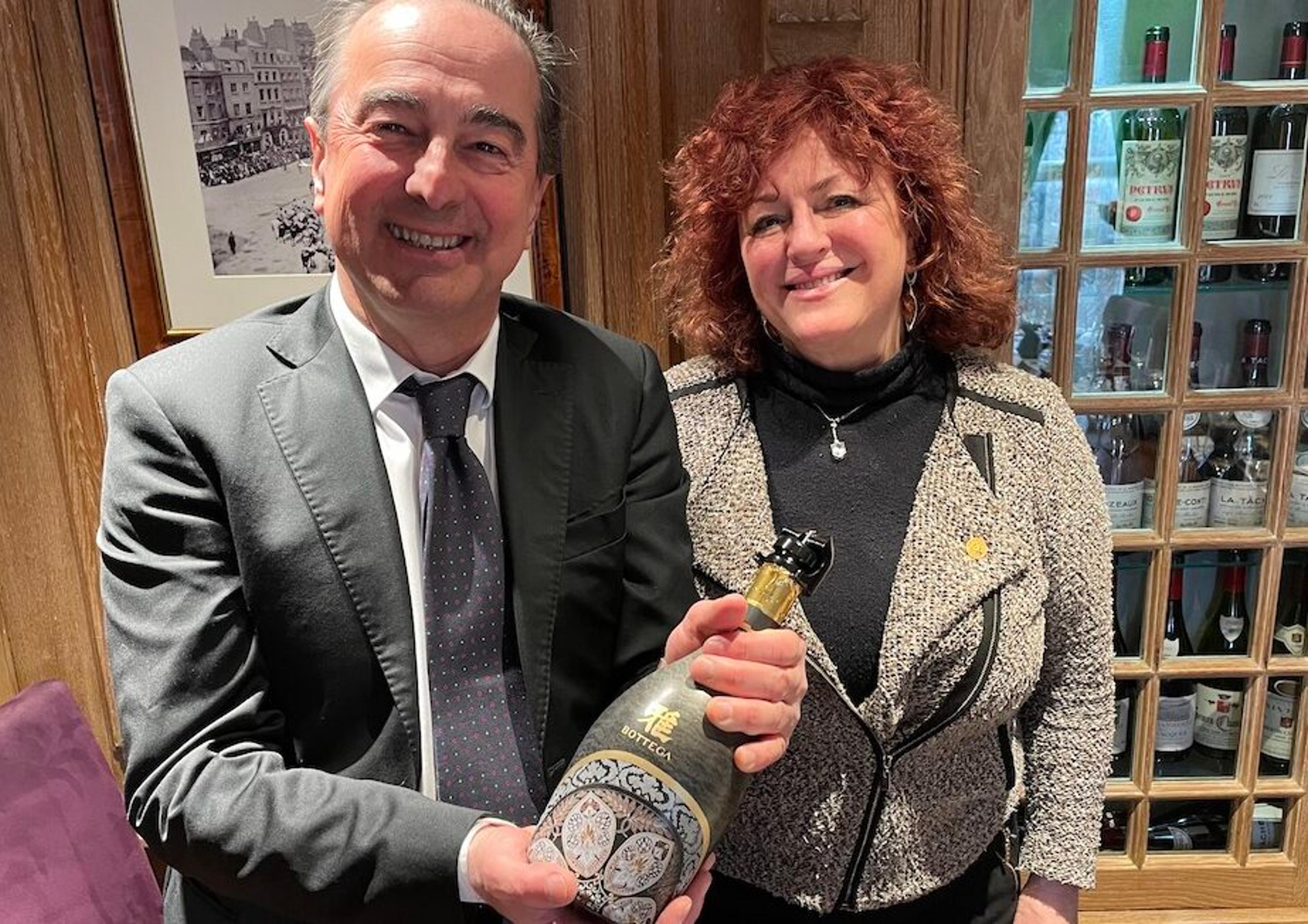
Sandro Bottega proudly holds Bottega's iconic gold bottle
Bottega Gold is the flagship brand in the company’s range and its eye-catching gold bottle is said to have taken five years to perfect and is designed to shield the sparkling wine from UV light.
The company is also making still wine in other key regions around Italy, and has wineries in Valpolicella (opened 2018), Montalcino (2019), and Chianti (2023). Prosecco, though, accounts for around 44% of its sales and 26% is made of other sparkling wine brands.
As well as making its own extensive spirits brands, including its own grappas, gins, Italian whiskies and liqueurs, it also runs a glass factory to produce its spirits bottles.
Bottega is now developing a no and low alcoholic drinks range, including alcohol-free sparkling wines and ready-to-drink and spritz brands.
Interestingly, he says, it looks to position its alcohol-free sparkling wines in the gourmet section of stores and is not “focused on the wine drinker but the people who don’t drink”.
“We have tried to make a new approach for the zero alcohol wines,” he says.
Bottega Prosecco bars
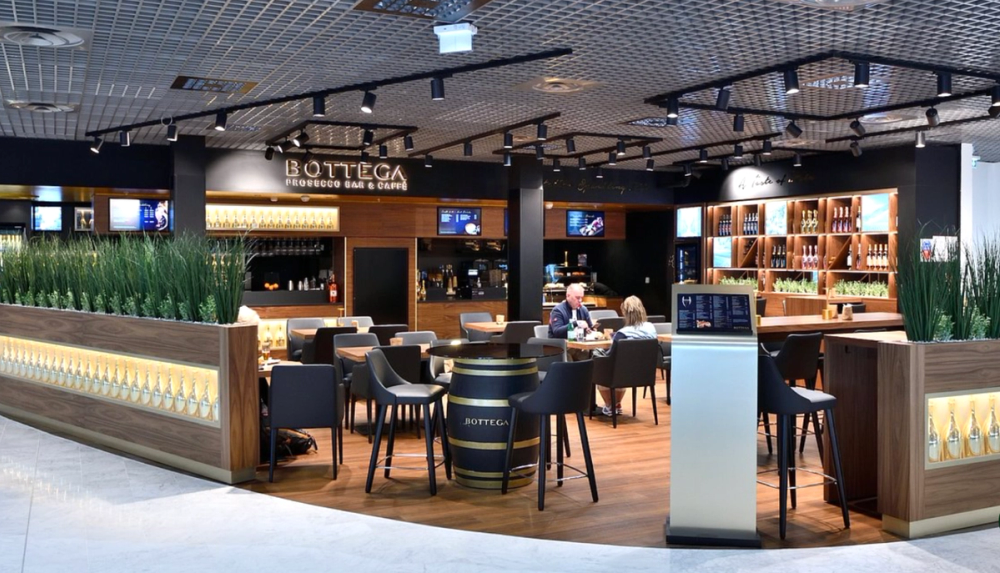
Bottega has opened up a chain of Prosecco bars in airports and other travel retail destinations all over the world
With close to 95% of its sales going into the global on-trade it is perhaps not surprising that Bottega also runs its own network of bars, with major venues in key cities around the world, but also dedicated bars on a growing fleet of cruise ships, ensuring its wines and bottles are being joined on the high seas too.
Sandro Bottega says the reason he introduced the bars was to help “educate the consumer to drink Prosecco in the proper way” and also to promote moderate, responsible drinking.
“The first glass of the day is always the best glass,” he says. “The first is to satisfy your thirst, the second is to make you smile.”
The bars are also a great showcase for its brands and its colourful, attention-grabbing bottles which is what ultimately Bottega is all about and is very much its USP in the market. Bottles that make you feel good to buy for yourself, or as a gift, he says.
He is also keen to promote the idea of drinking Prosecco with food and has even written his own recipe book that shows all the best dishes and styles of food that can be enjoyed with Prosecco.
“I have collected 100 recipes all within 30 kilometres of the DOCG area of different cuisines and the story of how the recipe was born. You have to know what you drink and eat,” he says.
“So with the Prosecco bar I have tried to emphasise the quality of the food, of the good ingredients and of the simplicity of Italian trattoria,” he says.
Sustainability focus
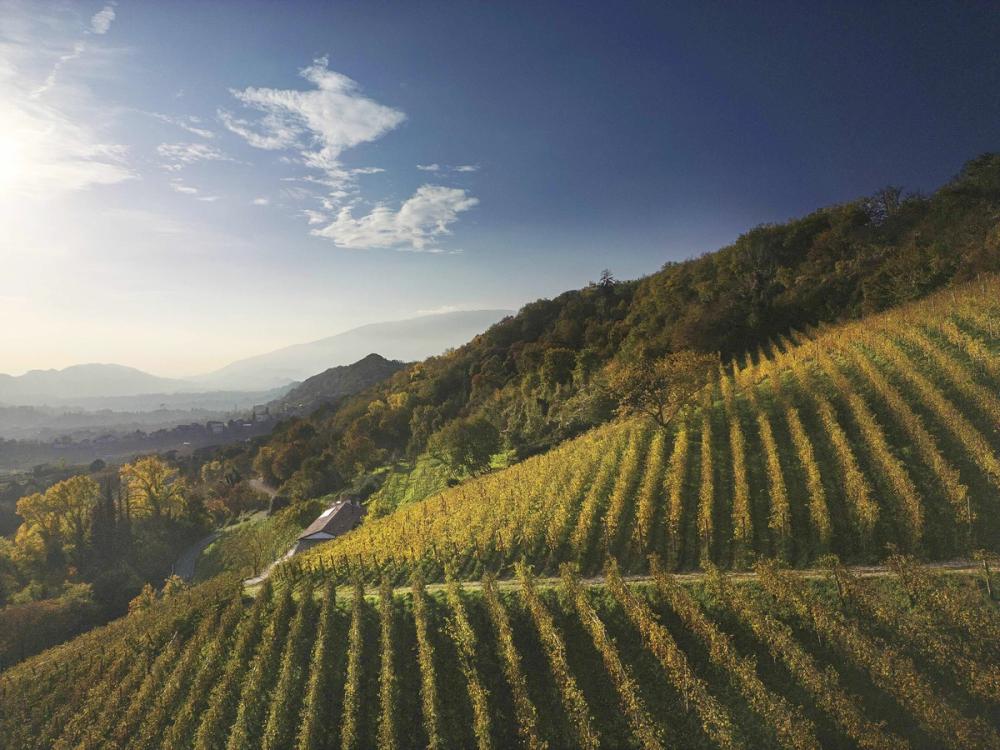
Sustainability is a key part of Bottega's production process
Another key facet of the Bottega business is its focus on and dedication to sustainability with a raft of initiatives to maximise how it is handling the land, and all the resources that go through its production process from waste to energy.
All its vineyards, for example, are SQNPI certified or organic and it recycles over 20m litres of water a year and uses 100% renewable energy, including a large proportion from its own solar and photovoltaic system and produces enough energy for 1,000 families.
It uses up to 90% recycled glass in its dark glass bottles and 90% recycled plastic from the sea and runs a plastic waste collection scheme. It is even growing its own Bottega Forest (part of the Treedom project) and planting 1,000 trees a year in key parts of the world including Tanzania, Madagascar and Ecuador.
It supplies waste pomace and lemon peel to a plant near the company’s premises for the production of biogas, which is then used to generate energy.
It’s a lot to take in, but then Sandro Bottega is as good at telling the company’s story as he has making it a global success.
* You can find out more about Bottega here.