
For brands deciding where to invest their competition entry budgets, the important question is not simply which event offers the best chance of winning an award, but which can deliver the most useful commercial insight.
The London Competitions for wines, beers and spirits differentiates itself through its three-part judging system: assessing products on quality; value for money; and packaging and design.
The aim is to consider each as a complete commercial proposition: not just whether it tastes good, but whether it delivers against its price and has the right presentation to compete in the marketplace.
The 2027 edition, marking the 10th year of the London Competitions, builds on this approach with expanded feedback for entrants, greater transparency around judging and a new Buyer Market Intelligence Report.
Here are 10 reasons why entering could give drinks brands a valuable competitive edge.
1 Get an independent assessment of the liquid

All the products entered into the London Competitions for wines, beers and spirits are assessed blind for their quality
Brand reputation, packaging and price can all influence how a product is perceived. But how good is the liquid when judged entirely on its own merits?
The London Competition's blind-tasting process ensures that judges assess quality before setting eyes on the branding or packaging, helping to prevent established reputations and attractive presentation from influencing their initial assessment.
The quality score takes into account aroma, flavour, balance, complexity and finish, with the exact considerations reflecting the product category. For established producers, this provides reassurance that a flagship product is maintaining its standards, while for smaller or newer businesses, it offers an opportunity to demonstrate that their wine, beer or spirit can compete with products from better-known names.
2. Find out whether your pricing is competitive
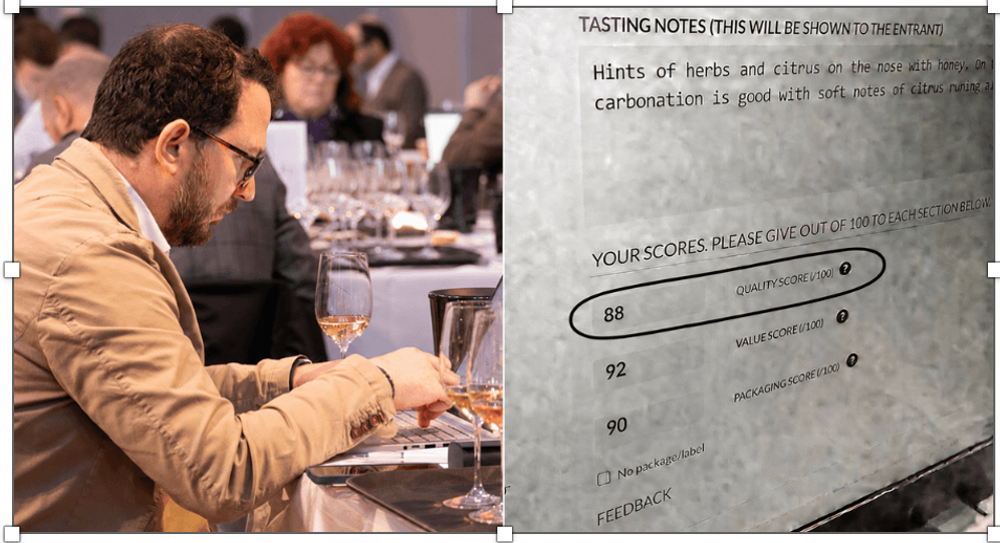
All products are scored separately for their quality, value and packaging
A product can be excellent, but if its price does not reflect what it delivers, it may struggle to win over buyers and consumers. Value is a separate judging criterion. Once judges have completed their blind quality assessment, they are shown the recommended retail price and consider whether the product justifies its positioning in relation to its category, production, origin and overall drinking experience.
This is particularly relevant for producers operating in premium and super-premium segments, where pricing can be critical to commercial success.
Fabio Spinetti, head of bars at Carlton Tower Jumeirah and a former competition judge, has highlighted the importance of considering more than flavour, pointing to packaging and, importantly, saleability.
An independent assessment of value can provide a useful reality check: confirming that a price point is justified or suggesting that a product is struggling to deliver the perceived value expected of its category.
3. Find out whether your packaging is doing its job
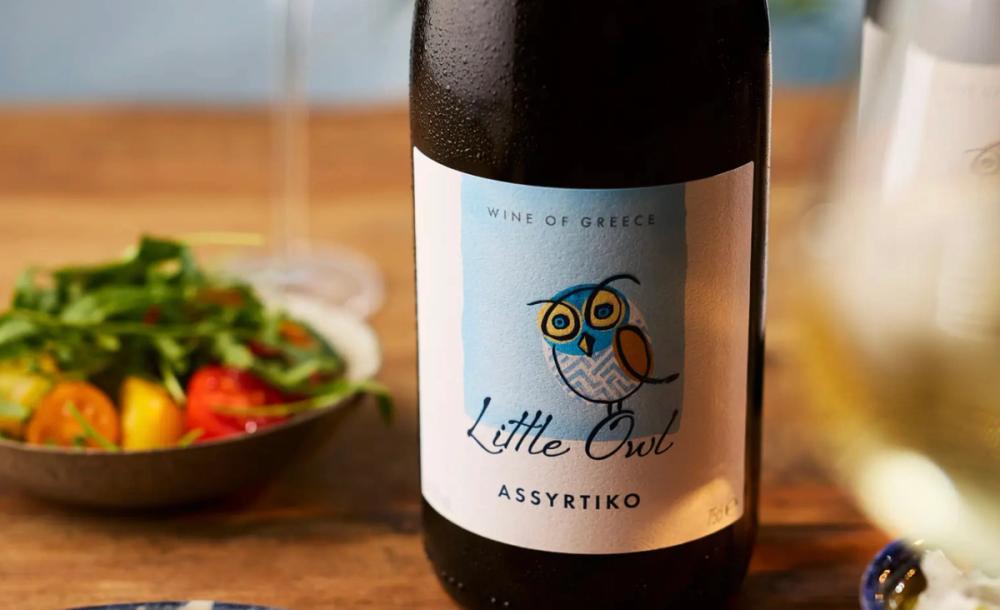
The 2025 Little Owl Assyrtiko by Artisan Group of Brands (Greece) won Best Wine by Package at the 2026 London Wine Competition
Packaging is often the first point of contact between a product and a potential customer. But producers can become so familiar with their own bottles, cans and labels that they lose sight of how they appear to someone encountering the brand for the first time.
The separate packaging assessment allows judges to examine presentation, label, closure and overall design, considering everything from visual impact and brand clarity to functionality and suitability for the intended market.
Cristiana Pirinu, a former judge and bartender at The Donovan Bar, has highlighted the importance of shelf appeal, explaining that she looks at how effectively a product stands out alongside others.
And fellow judge Enrico Chiappini, senior bartender at Dukes Bar, believes that quality, value and packaging need to work together. His advice is that “balance across these is key to making an impression”.
For producers considering a redesign, launching a new expression or moving into a different price category, this professional perspective can be particularly useful.
4. Get constructive feedback, not just a medal or score
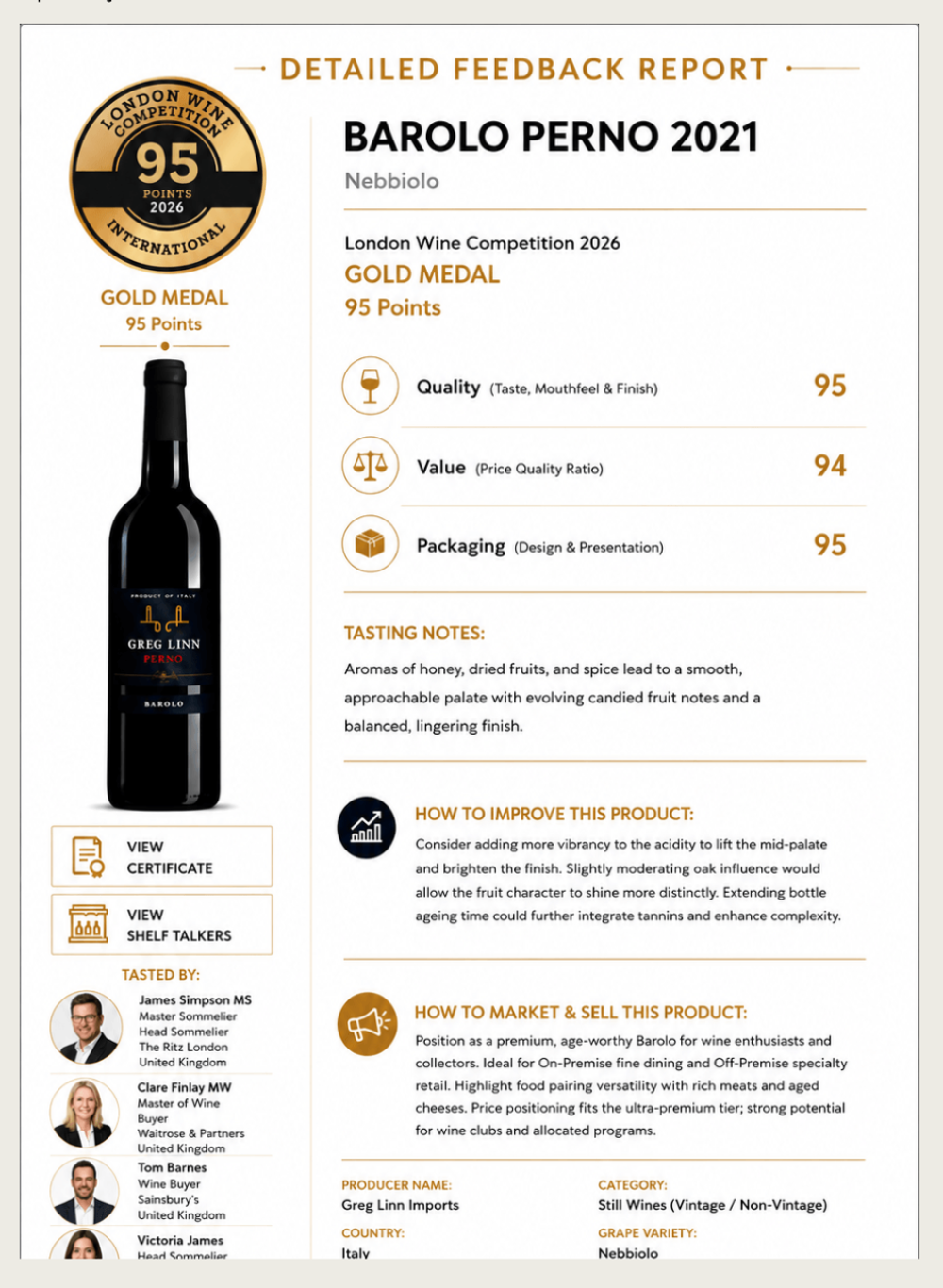
An example of a feedback form being introduced for the 2027 awards
A competition entry should provide something useful even when the result is not an award. For 2027, the London Competition is placing greater emphasis on constructive feedback, giving entrants a clearer understanding of how their products are performing and where improvements might be made.
For producers, this could be valuable product-development information: identifying an aspect that needs refining, highlighting a characteristic that deserves greater emphasis or providing reassurance that a particular production approach is working.
Billy Leighton, Master Blender Emeritus at Irish Distillers' Midleton Distillery, brings decades of experience in Irish whiskey to the judging process. His advice is to be selective about what to enter: “Choose the expression that best showcases your brand at its peak.”
5. Understand how to sell your product more effectively
Knowing that a product tastes good is one thing; knowing how to position and sell it is quite another.
The expanded feedback also addresses how products could be marketed and sold, moving the assessment beyond the tasting room and into the commercial realities facing producers.
Judges can consider the target consumer, suitability for retail or the on-trade, potential sales channels, distributor appeal, serving opportunities and the strengths of the brand story.
A wine might be particularly suited to a restaurant list, for example, while a craft beer could have stronger potential in specialist retail or a premium spirits brand in cocktail bars.
Harp Mann, award-winning mixologist and mixology consultant, believes that a clear identity is essential to making their presence felt. “The products that stand out are usually those that combine exceptional liquid quality with a compelling story and a genuine reason for existing.”
6. Access market intelligence from buyers

A new Buyer Market Intelligence Report is being introduced for the 2027 awards offering direct feedback from buyers on your products
One of the most interesting additions for 2027 is the introduction of the Buyer Market Intelligence Report, which will be made available to entrants at no additional cost.
Compiled from surveys completed by the judges, the report aims to provide insight into current purchasing priorities and emerging opportunities across the drinks trade.
It will cover subjects including the fastest-growing categories, price-point demand, packaging and format preferences, sustainability, how buyers discover new products and which categories they are actively looking to purchase – as well as those they may be reducing or discontinuing.
For producers looking to expand their portfolios or review their route to market, this could be a particularly useful resource. Rather than relying solely on their own sales data or assumptions, entrants will be able to draw on the collective experience of professionals working across retail, distribution, importing and hospitality.
7. Benchmark your products against international competitors
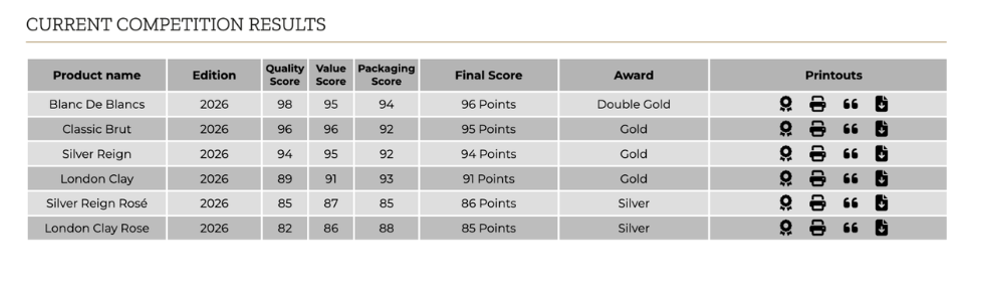
You can benchmark your scores against other brands to see you did across all the voting criteria
How does your wine compare with others at a similar price? Is your beer delivering the same level of quality as competing products? Does your spirit have the balance and complexity expected of its category?
Benchmarking is important to product development, but it can be difficult for producers to obtain an objective assessment of where they stand.
The London Competition attracts entries from across the international drinks market, allowing brands to measure their performance against products from different countries, production backgrounds and price categories.
Leighton sees this as one of the competition's key strengths, describing it as “a great way to benchmark your product in its category”.
The three-part judging system makes this particularly useful. A product might perform strongly on quality but discover that its price or presentation is less competitive. For brands entering year after year, the results can also help track whether changes to a recipe, production method, packaging or price have improved their standing.
8. Put your products in front of influential trade professionals

The line up of top buyers who took part in the judging of the 2026 London Wine Competition
The experience of a competition's judging panel is an important consideration for producers deciding where to enter.
The London Competition brings together professionals from across the drinks trade, including retail buyers, importers, distributors, bartenders, sommeliers, bar managers, hospitality buyers, master blenders and producers. These are people who regularly make decisions about which products to purchase, list, import, distribute, serve and recommend.
Nick Larsson-Bell, senior spirits and beer buyer at Harvey Nichols, was among the judges at the 2026 competition. Reflecting on the experience, he described it as “a wonderful judging event that takes into account not just the liquid, but also the packaging and retail price. A great one for us buyers.”
Having products assessed by people who understand the practical considerations involved in buying and selling drinks provides a valuable commercial perspective.
The increased transparency around judging for 2027, including information about the professionals assessing entries, also allows producers to understand the experience informing their results.
9. Discover emerging trends and new opportunities
The international breadth of the competition provides a window on developments beyond a producer's immediate market.
Judges encounter products from different countries and production traditions, offering an opportunity to identify emerging styles, new ingredients and changing consumer interests and trends.
For example, Matteo Torresin, one of the judges in the 2024 competition commented on the growing diversity of non-alcoholic drinks, contemporary gins and products from emerging drinks-producing countries.
And for producers, this wider industry perspective can help highlight opportunities that may not yet be apparent in their domestic markets, and prompt them to consider whether their products have potential in new territories or categories.
10. Make better-informed decisions about future investment

Learn from award-winning brands that have entered and succeeded in new catetogies like Smiling Wolf that won Non-Alcoholic Spirit of the Year at the 2026 London Spirits Competition
Developing and launching a new product involves considerable investment, from sourcing ingredients and production to packaging, marketing and distribution. Getting the proposition right before committing to a wider launch can make a significant difference.
The London Competition’s stringent judging process gives producers several perspectives on how convincingly a product communicates its identity and positioning.
This is particularly relevant for businesses entering a new category or price segment, launching an alternative format or repositioning an existing brand.
Testing a product with experienced industry professionals before committing to further investment could help identify weaknesses, refine its proposition and allow producers to approach the market with greater confidence.
More than a medal
For producers, the value of entering need not be measured solely by the number of medals won. It can also be measured by what they learn about their products, how they are positioned and what they might need to do to compete more effectively.
Early bird pricing before November 30
Enter the 10th edition of the London Competitions by November 30, 2026, to take advantage of early bird pricing.
Enter now at: