
This all sounds rather dramatic. What is all this fuss over a new style of Bordeaux wine?
It’s a bit more than a “fuss”. It’s been a very long time since there has been such a major change in the way the traditional world of Bordeaux works. This summer will be the first time the wine trade will have the chance to sell the new style of Claret wines made from the 2025 vintage.
It is being seen within Bordeaux as a vital breakthrough moment that could potentially be a business saving decision for hundreds - if not thousands - of Bordeaux producers, and all those who rely on them in the region.
Growers and producers who have been hit by a double whammy of major declining sales, both domestically and all its major traditional export markets, and the impact of climate change that is forcing many winemakers, growers and producers to pack it all in, rip up their vines and abandon their vineyards.

The new Bordeaux Claret classification might be controversial but it is essential to help Bordeaux producers and growers say the Bordeaux wine authorities
As Stéphanie Sinoquet managing director of the Bordeaux et Bordeaux Supérieur wine Union that looks after the interests of thousands of producers, explains: “Bordeaux & Bordeaux Supérieur PDO volumes are down by 50% over the last five years and have been impacted by a combination of climate change, geopolitical impact,(Brexit, US taxes, and lost markets like China and Russia and a reduction of red wine consumption by consumers.”
By creating what it sees as a new wine category called Claret, with a fruit-forward profile, lighter, lower-tannin expression that can be served chilled, it believes it can both meet evolving consumer preferences and market challenges.
“It is also potentially a lifeline for struggling producers and gives them the chance to produce a style of wine better suited to warmer conditions and evolving consumer tastes,” she adds.
So Bordeaux is essentially re-claiming the term “Claret” - essentially from the British -and taking it back to its roots in the Middle Ages when it was a popular lighter style red?
That’s exactly it. The Claret of 2026 is very much in the spirit - and style - of the Claret of the Middle Ages..
It’s as if Bordeaux has got itself into a DeLorean and taken itself back to the futureto rediscover what came before.
As Sinoquet explains: “We have this very true story that we would like to revive about clear red Bordeaux wines from the Middle Ages. We decided to revisit the old recipe with modern techniques and change all the specifications behind the old/historical Claret to create a light red Bordeaux with low tannin. The colour will also be clearer than classical Bordeaux.”
It was the British who took it upon themselves to use ‘Claret’ to describe all the classic Bordeaux red wines that have become famous the world over.
Sinoquet says: “Unfortunately, claret is becoming more and more budget wines at some retailers, whose purchase price is often below production costs, which is not sustainable.”
But crucially, she stresses, it is only in the UK where the term Claret refers to classic Bordeaux red wines. In all other international markets, particularlyanglo saxon countries, it is a new term that Bordeaux believes can appeal to a new younger, more curious and open wine drinker, that is already enjoying similar style wines from other regions around the world.
“We are reviving historical light red Bordeaux styles for the modern palate,” says Sinoquet.
So how do we define what a new Bordeaux Claret wine is?
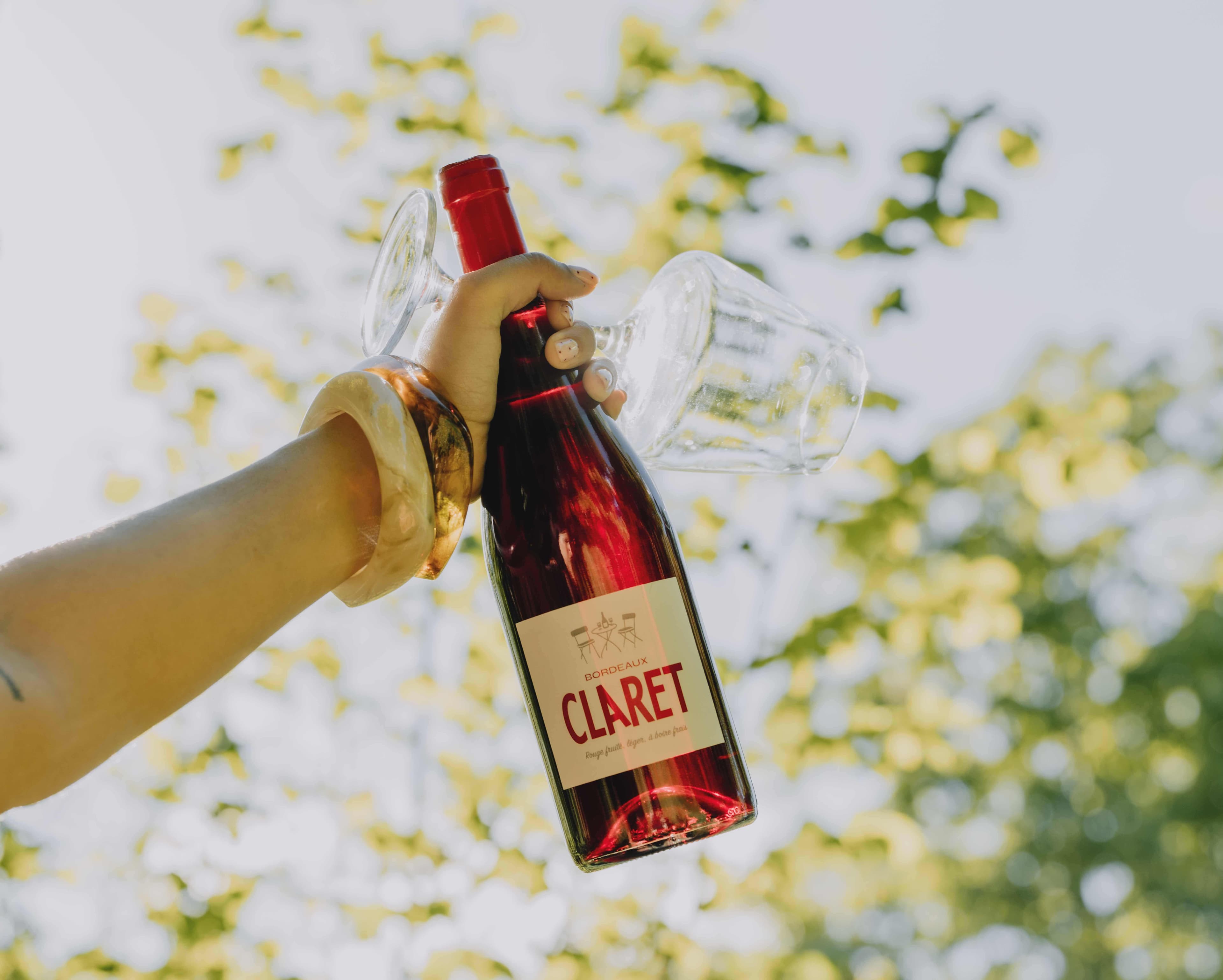
The new Bordeaux Claret is seen by the Bordeaux authorities is a must step in order to help its producers and growers
In a nutshell the key characteristics of the new Bordeaux Claret is fruit-forward profile ,very low tannins, a paler colour, and up to 7 grams per litre ofsugar which might sound high but would not be picked up by 90% of consumers and the majority of wine professionals, claims Sinoquet.
But it is still very much a dry red wine and uses the same grape varieties as a classic Bordeaux red.
Another key feature of the new Claret is that a lot of winemakers are looking to make them around 11%-12% ABV to fit in nicely to the “better for” and “lighter wine” category. Although there is nothing in the classification that stops them from producing a high alcohol 15% ABV wine if they want to.
Instead they rely on managing the vines, controlling the leaves and how and when the grapes ripen and crucially picking earlier so that the grapes have lot of fruit and sweet characteristics, but not too much alcohol.
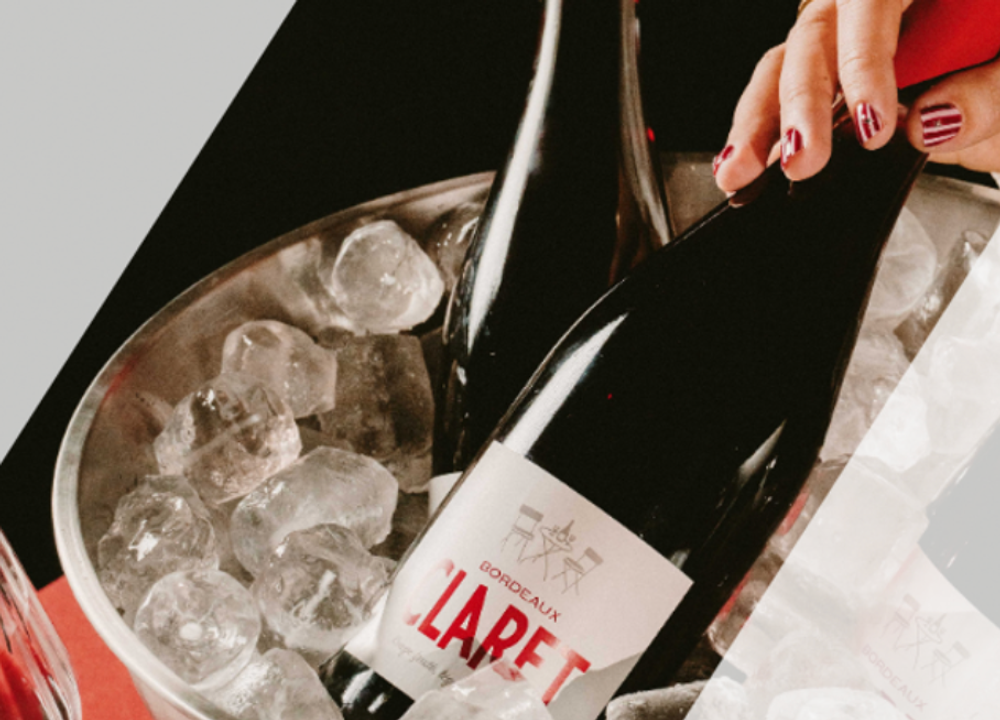
The big difference with the new Claret is it is designed to be drunk on its own, without food and be an easy drinking style to compete directly with beer, cocktails and other alcoholic beverages. The hope is Claret wines could, for example, be enjoyed with a cube of ice.
A wine that appeals to younger drinkers that don’t want to know too much about what they are drinking, providing it is light, fresh, easy to drink and ideally does not have too much alcohol.
So it’s about making wine Bordeaux simpler and easier to understand for a consumer looking for these sort of lighter style red wines?
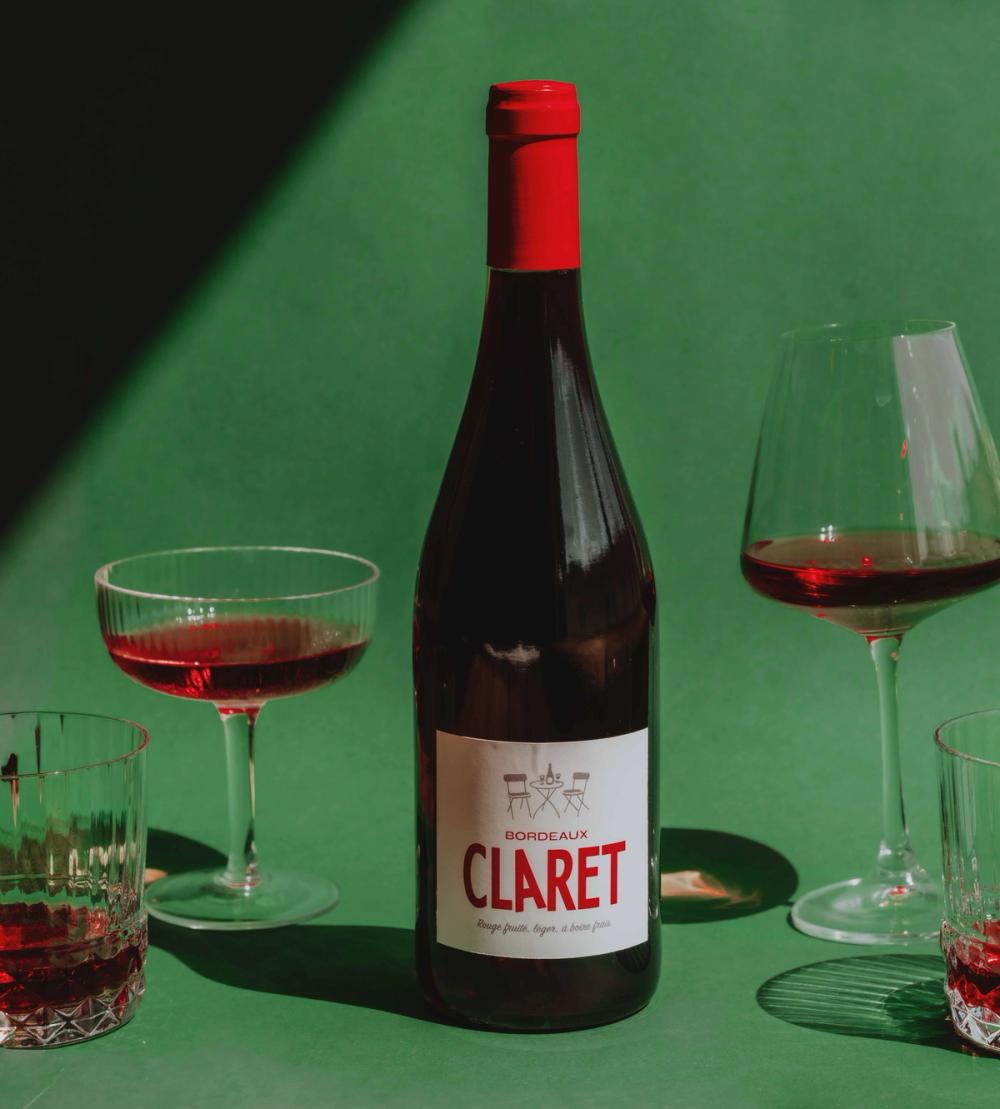
It is hoped the lighter, fresher, low tannin style of the new Claret wines will attract a wider base of wine drinkers
“We’re now addressing people that up to now weren’t necessarily Bordeaux drinkers,” adds Claire Dawson, marketing consultant for the Union. “That’s the market share we want to acquire whether it be in the UK, , America and all the six markets that Bordeaux generally works in.”
She adds: “It’s the market segment that is the most important message. That’s why we’ve developed the style of wine. They’re the people we are targeting. We are not targeting the usual Claret drinker.”
The hope is it can create a category and a style of wine that is a contrast with traditional heavier Bordeaux reds and is distinct from rosé Clairet, which remains a separate product category.
Interesting. So what is the difference between Clairet and Claret?
A lot. Clairet is not a red wine at all, but made as a rosé wine. Claret is 100% a Bordeaux red wine. It might seem confusing but there is no overlap at all other than the names sounding similar.
The Union does not see this as an issue as Clairet is a relatively niche wine that is only really seen in areas of France and Belgium. It is a much paler looking wine and has to be very dry - neither of which is the case for Claret.
So who is eligible to make a Claret wine?
The new classification is open to any producer in Bordeaux, from a co-operativeto a “château”, providing the profile of the wine conforms to the new regulations in terms of tannin level, colour level and alcohol level.
If they decide to produce a Claret then on the label it must simply state “Bordeaux” as the appellation and “Claret” as the subtitle.
What about the UK wine merchants that are currently doing so much to promote the classic style of Claret that is now obsolete under these new regulations?
Sinoquet is keen to stress to UK wine merchants that are currently making and promoting their own Claret wines that they can still continue to use wine from previous vintages to give them the time to gradually move over to the new style of Claret over the three years - depending on what vintage they are currently selling.
They can also continue to make those wines in the same style, with the same old Claret characteristics, they just won’t be able to promote them as Claret.
If they absolutely want to keep the name, UK merchants can go to the “upper limits” of what is allowed for a new Claret style which again will help the new classification to bed in and that “the change is not too abrupt”.
Sinoquet says the Bordeaux authorities know this could be “quite a challenge” for some UK wine merchants, but they also have to appreciate the conditions in Bordeaux both in terms of climate change and the fact that so many producers are going out of business, means something has to be done.
“They have to understand that we are in a very difficult situation and that’s why sometimes making decisions is hard. But we have to adapt and they will have time to adapt.”
What is being done to ensure the quality of these Claret wines come up to scratch?
Clearly the new Claret category needs to hit the ground running and to get as many people in the trade onside as quickly as possible.
To ensure the first wines coming into the market can be as good as they can be each wine has had to go through a rigorous quality control and assessment process with each wine judged and tasted by a panel of professional tasters for quality control.
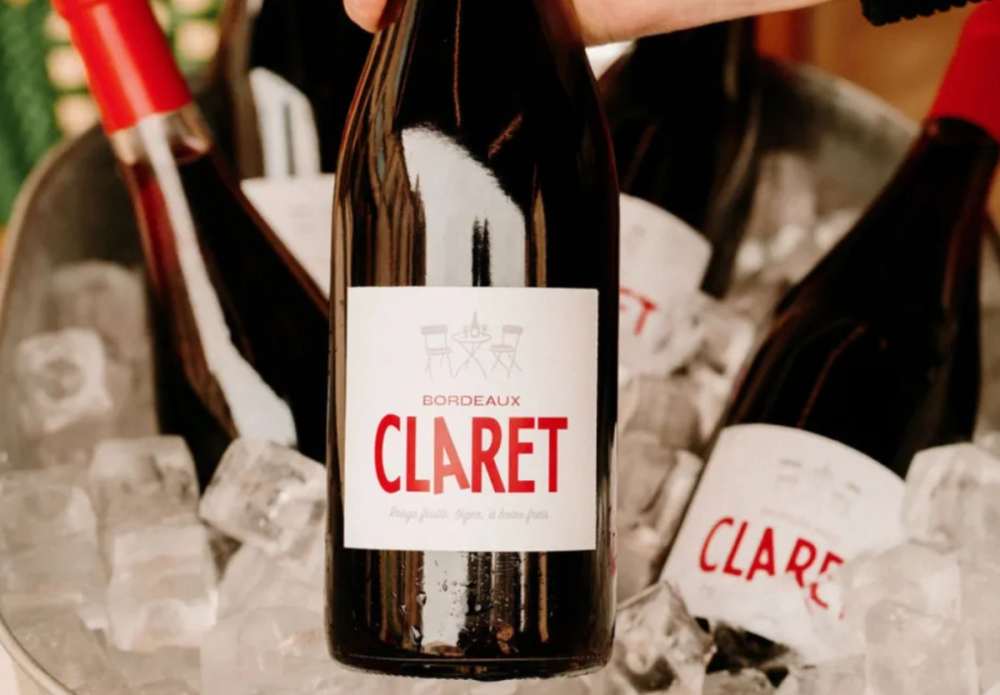
Claret over ice...or Claret with ice perhaps?
The committee ensures the wines align with the light, fresh, fruity Claret profile before being certified, she adds.
Did the Bordeaux authorities not think of coming up with a new name for this new style of wine?
Yes, it was considered but it soon became clear that it would not be possible under current EU rules and regulations to introduce an entirely new classification. Any attempt to do so would have taken years, cost a lot of money and was not guaranteed to succeed.
What sort of price points can we expect these Claret wines to compete in?
Good question. Ultimately it is down to the producer and the story it can create around their wine, but in terms of a region, the recommended price for Claret is what is termed as “the popular premium range” which in France would be on shelf between €8-12 in France and around £10-£15 in the UK.
“We are aiming for affordable quality,” says Sinoquet.
The intention is for Claret to succeed in both the mainstream on and off-trade and it is particularly well suited for bars and pubs to sell by-the-glass - and help create a talking point about the wine as well.
How is it going to be promoted?
For the first year to 18 months the focus is very much on the trade and getting the key information and details over to all channels of the market and the key Bordeaux stakeholders.
Once there is healthy and wide distribution for Claret in the market then Bordeaux can start to push its message to the consumer, using a combination of direct social media, but also working with key ambassadors in the trade who can host special tastings, and events in the on and off-trade.
Sinoquet says the platform is there for winemakers and producers to grab and makes wines that stand out both in how they taste, but how they look with exciting new packaging innovations that are expected to hit the market soon that can take Bordeaux into new ground for look, design and youth appeal.
Launch parties, complete with DJs and a targeted younger audience, are planned to take part in key bars and venues in London, Bordeaux, and Paris and are designed to be very different than the formal and traditional image of Bordeaux.
It is for example hosting a launch party with Bourne and Hollingworth in London on May 20 with a range of new Claret wines served in different styes, be it with ice and in cocktails, all washed down with a DJ, surrounded by social media influencers.
How much Claret can we expect to see in the market in the coming years?
We will have to wait and see as the Bordeaux authorities are, perhaps understandably, being a little cautious about giving out bold forecasts such has been the level of upheaval in the region with so many producers going out of business.
But Sinoquet is confident and hopes that up to a million bottles will be sold in Europe by the end of 2026.
How far the category grows from there will depend on how quickly the market opens up to it, the number of producers are willing to try and make it and the growing conditions in the vineyards.