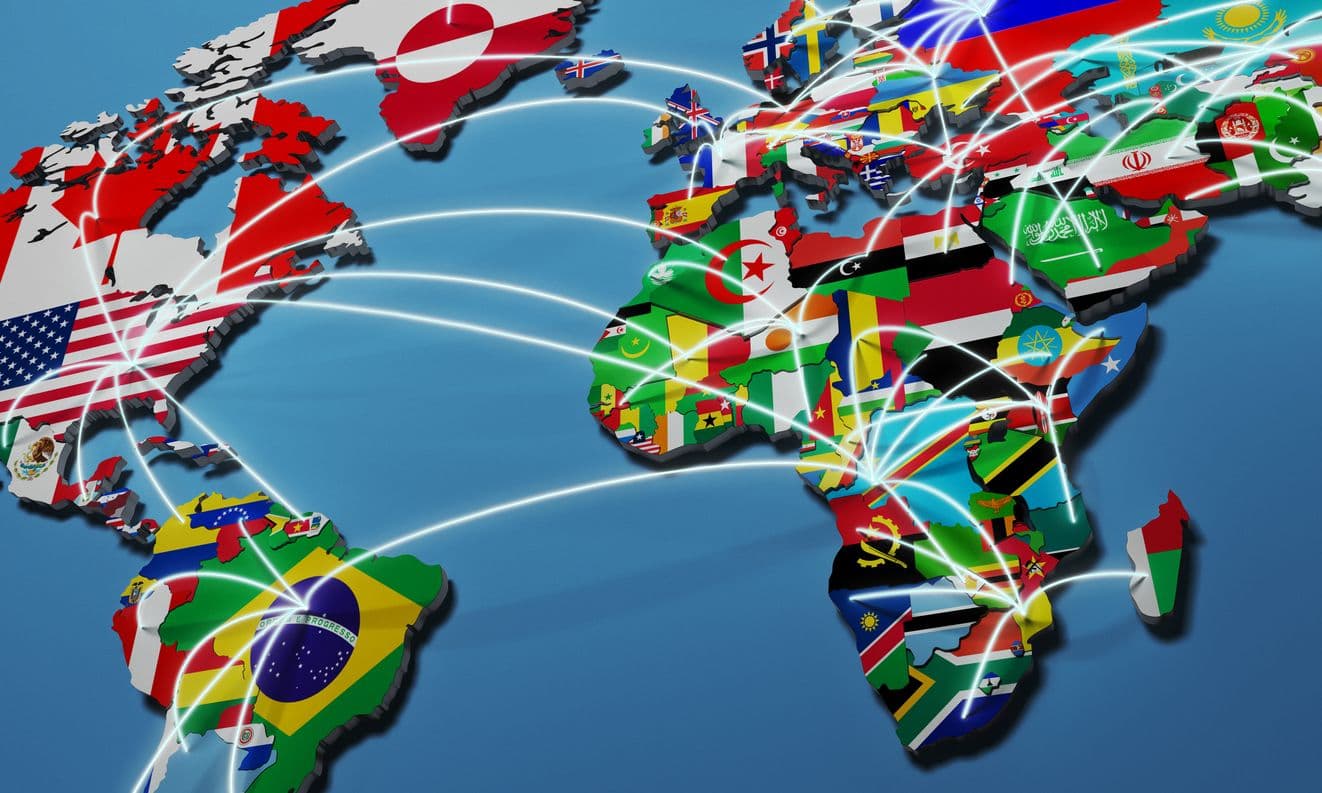

Talk to any major international wine or spirits producer and they will quickly say how much they want to invest in emerging markets around the world. But just how far that wish to do business in these developing countries actually relates to sales is another matter.
For the most part the vast majority of their sales still lie with customers in the main traditional routes to market, with most of their focus being across Europe, the US and Canada.
But as the impact of President Trump’s tariffs really start to bite, coupled with a spate of free trade deals opening up potential trade in new areas of the world, then what were emerging markets are fast becoming strategic hubs to grow sales and secure profits for years to come.
But which of these developing markets are the ones to place your bets on? They are, after all, said to be emerging for a reason as they don’t have the support network and sophisticated drinks supply chains that producers and brand owners are used to.
Every major wine and drinks producer is having to seriously re-evaluate where they are investing their time and resources to build exports in the right countries. Picture istock/jadamprostore
IWSR, the international drinks analysts, says the overall global beverage alcohol market is set to grow by $34 billion in value growth over the next 10 years across key markets. But what are those “key” markets?
Emily Neill, IWSR’s chief operating officer, explains: “Beverage alcohol growth momentum has decisively shifted towards developing markets, with India likely to be the biggest engine of growth for the next decade, followed by Brazil and Mexico. The 10-year forecasts provided by our new Global Forecast Suite really lay bare the extent of the change that is coming, as the combination of demographic changes, shifting economic growth patterns and the long-run moderation trend in developed markets take full effect.”
IWSR says the specific countries to back are India, Mexico, Nigeria, South Africa, Brazil and Ethiopia that are all predicted to add the most total beverage alcohol volumes between 2024 and 2029, with India leading the way.
It adds: “Success will hinge on local knowledge of category dynamics, consumer behaviour and the regulatory environment.”
IWSR's Marten Lodewijks, IWSR managing director and president recently added: “A turbulent 2025 has caused the drinks industry to recalibrate. Tariff disruption and a cautious consumer put premiumisation strategies under pressure, while emerging markets offered a rare bright spot.
Go where the big boys are
The companies to really watch are the big global brewers, major multinational spirits businesses and Champagne houses, and see where they are investing in.
The likes of Heineken, AB InBev and Diageo have been investing in India, Africa, South America and Asia for years, buying up distributors and securing their vast routes to market, whilst protecting lost profits in their more traditional markets.
Heineken, for example, has publicly identified key African countries and parts of Asia as its target areas for expansion. All parts of the world where regulation is weaker.
AB Inbev, along with all the other major international brewers, has invested heavily in helping local farmers in India and other developing countries to grow the ingredients they need to make their world famous beers
AB InBev’s footprint in these emerging markets also stretches to training and investing in local farming businesses that both improves their farming practices, but also increases crop yields it needs to help drive future growth. It claims to be supporting over 24,000 small farmers worldwide.
In India, for example, it runs an entrepreneurship initiative for 1,000 family-run businesses and is teaching modern farming practices to grow crop yields and income for more than 2,000 barley growers.
If you have the scale and clout to make these moves then it makes complete sense if you follow the advice of major investment analysts like Bain & Company. Its research “shows that revenue growth in emerging markets has outpaced global growth by up to 10 times for multinational players, with profitability that’s equal to or higher than global averages”.
“In some consumer products categories, growth in emerging markets is three times that of developed markets,” says Bain & Company.
“With consumer markets in Asia and Eastern Europe growing at double-digit rates, multinationals are moving fast to build their brands - and the expertise to manage them. Succeeding in emerging markets is essential in order to defend - and increase - their stakes in the global market. Ultimately, how they fare in emerging markets is a key indicator of how they'll fare everywhere else,” it adds.
Emerging markets, for example, now account for 59% of Unilever's total global turnover, over 50% for Danone, around 50% for Coca-Cola, and between 35%-40% for Procter & Gamble.
Changing business patterns
Back in the world of drinks the changing global picture is also having an impact on where buyers and producers want to do business. For years the highly influential Asian, South American and US buyers have been willing to fly to Europe to meet producers at either ProWein or now Wine Paris.
Now they are increasingly looking to do business directly in the countries they are trading with, which is good news for ProWein and Vinexposium’s international and regional shows around the world be it in Hong Hong, Shanghai, Singapore, Tokyo, Mumbai and São Paulo.
We can expect to see the size, scale and importance of all those shows increase dramatically in the years to come. All those respective shows have already built strong platforms in their target countries and will now benefit hugely from the changing way the world of wine and spirits now wants to do business.
Which will also take some pressure away from everyone trying to do business across just three days in Paris in February or increasingly less so Dusseldorf in March.

President Macron was at Wine Paris to promote global opportunities for French wine producers
It’s why Rodolphe Lameyse, the then chief executive of Vinexposium and Wine Paris, and now head of food and wine at parent company, Comexposium, was so happy to have President Macron at this year’s show.
“Getting him here was a key objective,” he says as it helps signal to French and European wine producers just how important exploring new trade routes are, particularly in face of declining EU wine sales and production.
It was also a presidential endorsement for all the investment Vinexposium (and ProWein Dusseldorf) is making in building successful trade shows in all these new emerging markets of the world.
Italy’s Prime Minister Georgia Meloni was also in Vinitaly last week giving her personal endorsement for the Italian wine industry and backing its exports drive around the world.
It is also very much how international wine producers now want to do business. As Martin Perez Cambert, managing partner of VinoAnalysis, that manages export operations for wineries across Argentina, Chile, Uruguay, Spain, and Italy, explains: “The era of the mass migration of Asian buyers to Europe in the middle of winter is over. The proliferation of localised fairs (Vinexpo Asia, ProWine Shanghai, ProWine Mumbai) means the mountain now comes to Muhammad.”

Martin Perez Cambert, managing partner of VinoAnalysis, is typical of the new breed of wine professional who travels the world opening up new markets - travelling in one week from Vinitaly to attend a wine fair in São Paulo
He also says for Southern Hemisphere producers trying to attend shows in Europe during their harvests in March makes going to trade shows in key target markets when it makes more sense to do so has become a no brainer.
"For a producer anywhere in the Southern Hemisphere, a March fair presents an impossible choice: you either travel to sell the wine, or you stay home to actually make it. February is the absolute limit before the harvest demands complete, undivided attention,” he says.
South America and booming Brazil

Brazil is opening up like never before to the global drinks industry as South America as a whole looks to capitalise on the new EU-Mercosur trade deal
The whole South American wine market is potentially ripe for picking now that the much awaited EU-Mercosur trade was finalised earlier in the year, removing 35% tariffs on wines and spirits and opening up what the EU claims could be an overall €77bn trading opportunity in Brazil, Argentina, Paraguay and Uruguay in particular.
Of all the new trading opportunities in South American, Brazil is the one many producers are targeting thanks to the huge rise in the country’s middle class and their demand for premium wines and spirits.
ProWine São Paulo, the Brazilian offshoot of the main German fair, ProWein, says imported wine sales in Brazil were up 6.3% in value and 3.7% in volume between 2024 and 2025, having more than doubled in the last 10 years.
Christian Borgos, co-director of ProWine São Paulo, expects the “market to double again in the next 10 years…maybe sooner.”
There is also a major spirits opportunity in Brazil up for grabs too with all the major spirits companies jostling for position hoping that favourable tariffs and trading deals can fully open up its potential.
One major European spirts company predicts its sales could go up 10 fold if its planned activity and investment in Brazil pays off.
India’s vast potential
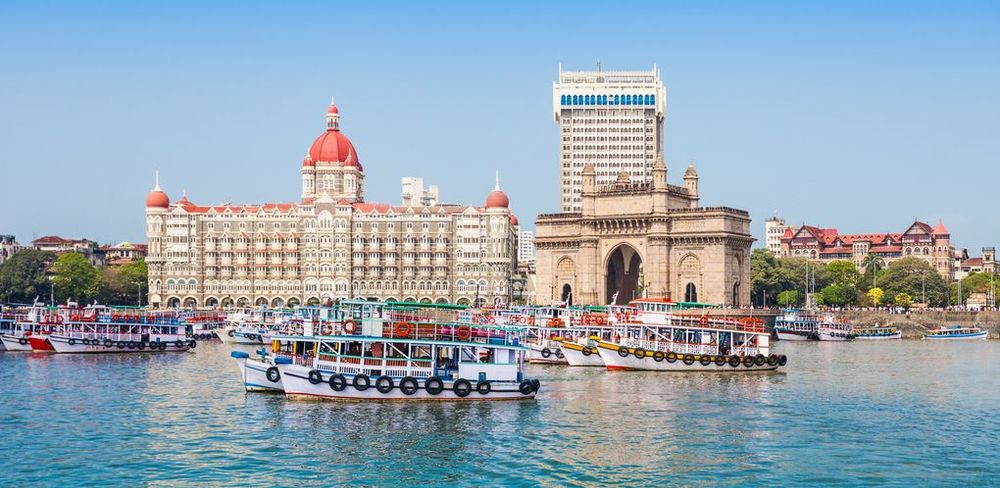
There are high hopes that new trade deals and reduced tariffs on imported drinks will finally kick start the Indian global drinks opportunity
The Indian wine market, for long touted as “the next big thing” might finally live up to to its potential thanks to the breakthrough free trade deal signed with the EU in January which will reduce duties on wine from 150% to 20% over a set phased period.
It has meant that up to now the vast majority of wines sold and bought in India are home made. IWSR puts the domestic wine share of the market at 84% by volume in 2024, with imported wines making up the rest. The CAGR volume for wine from 2019 to 2024 was 7%.
ISWR has recently released figures that show Indian whisky sales are up by five million cases, worth nearly $500M million in value. Its total alcohol volumes are up by 4% and value by 5%.
The fact there is now a free trade deal with the EU does not automatically mean the market will be awash with European wines, warns local wine writer Ruma Singh.
She told The Buyer you only have to look at the limited impact on sales after a similar free trade deal with Australia in 2022 to be a little more cautious, she says.
But with further trade deals in the works for New Zealand, Chile and Argentina then you can see why producers are lining up to take whatever share of the market they can.
Singh says the fact ProWine India taking part in Mumbai in November 2026 is set to be its biggest yet- 213 exhibitors from 21 countries - shows the demand and interest is there.
It is the scale of growth of India’s middle class - expected to exceed 1 billion people in the next 20 years and represent 38% of the population by 2031 -that is catching everyone’s attention.
“That’s scale. That’s generational demand. India represents a major long-term premium growth opportunity,” says Michael Bilello, president of the American Whiskey Association.
The near 30% hike in the costs of local wines on the back of a very short 2025 harvest has also narrowed the cost between domestic and imported wines which is also helping to drive international interest in India.
Africa calling

Major African cities like Nairobi are opening up to international drinks producers as Africa's booming middle class brings new export opportuities
Africa’s growing economy and the rise of the middle class in a number of major countries is opening up opportunities for wines and spirits.
It was noticeable at last year’s Cape Wine how many South African producers were actively looking to target emerging African countries and take far more advantage of their own domestic market rather than focus all their efforts on declining and troubled traditional markets in Europe and the US.
Kobie Lochner, chief executive of La Motte Wine Estate and Leopard's Leap Wines, says it is sees East Africa, in particular, as being strong potential markets in countries such as Botswana, Kenya and Tanzania.
“There is a lot of opportunity in Africa. There is a growing young population and the South African wine industry has the chance to shape how they embrace wine,” he says.
Boland Cellars, for example, has created a bespoke canned wine range for safari lodges featuring different game animals on the labels and is targeting parks in Namibia, Zambia and Kenya.
“You have to be different and look to stand out,” says Ross Sleet, Boland Cellars’ managing director.
South Africa’s Journey’s End has set up a dedicated team to build up its South African and African business and is making it a “big focus” for the business, says managing director Rollo Gabb.
He admits it is partly about looking to get new business, but also about “spreading the risk” in light of US tariffs and the UK’s increasingly difficult duty system.
Freixenet Copestick is looking to set up production contracts in South Africa where it can work with producers to make certain wines, like Chenin Blanc, for its I Heart range, that it can then look to sell both in South Africa and other key African countries, says managing director, Robin Copestick.
California’s Wine Institute has also identified a number of African countries where it wants to invest and push its exports namely Mozambique, Namibia, Kenya, Tanzania, Nigeria, Angola, Cameroon, Cote d’Ivoire and the island regions of Mauritius and Seychelles.
Middle East and UAE

Dubai has been at the centre of the economic boom across the UAE which despite the current conflicts in the Middle East is still expected to drive growth and export opportunities
The whole of the Middle East might currently be off most people’s radars, in terms of visiting and doing face to face business, but it does not distract from the fact this has become a vital trading area in recent years.
The huge rise in premium hotels, restaurants and fine dining opportunities across the United Arab Emirates means it is now a must for anyone looking to sell and grow their premium wine capacity.
The Knight Frank 2024 Wealth Report revealed a 17% increase in ultra-high-net-worth individuals moving and living in the region in 2023 alone.
Bonhams, the leading global auction house, has described the Middle East as “one of the most promising growth markets for fine wine and spirits”.
Lay & Wheeler set up its own Middle East division last October in partnership with Truebell Marketing & Trading. It follows a number of major wine and drinks companies that have invested heavily in the area including Gallo, Constellation Brands, The Wine Group, Treasury Wine Estates,Concha Y Toro, Castel Freres amongst many others.
Quite where the region will be in the aftermath of the current Iran/ US, Israel/Lebanese conflict remains to be seen, but the economic forecasts are this will still be a major growing hub for doing business over the next 10 to 15 years.
The Middle East, driven mainly by Dubai and Abu Dhabi, has already emerged as a near $14bn market for wine and spirits and projected to reach $28bn billion by 2033, growing at a CAGR of 8.3%, according to Grand View Research.
The off-trade currently dominates wine sales across the UAE - with a 88% market share, driven by travel retail, an expanding retail and supermarket sector and growing online sales. But it was the on-trade that was forecast to see the fastest CAGR growth - 9.6% from 2025 to 2033 - before the current US/ Iran war broke out. Figures that might need to be recalibrated depending how long the conflict continues.
UK demand
It’s hard to label the UK wine market as exactly “emerging” but the increased need for UK wine buyers, and major supermarkets in particular, to source wines that can naturally hit lower ABV levels and take advantage of the new UK duty rates, means we are going to see a more diverse range of countries wines appearing on British retail shelves.
Alex Green at Beyond Wines, for example, believes Eastern Europe will once again become a major source for UK buyers with more wines from Hungary and Romania that can hit the demand 10-11% ABV alcohol levels being very much in demand.
“We are going to be see an expanding mix of countries appearing on our shelves. It’s a lot harder to get an Barossa Shiraz into the market than it was two years ago,” says Green.
All of which means it is increasingly difficult to talk about a global wine industry as one entity when it is made up so many moving parts with as many countries on the up as there are those on the down.
What is clear is if we could all jump in a DeLorean and travel five to 10 years in the future the biggest and most important wine markets are going to be different to what they are now. It might mean we are all heading as much to São Paulo, Mumbai and Tokyo to do business as we are currently Paris and Dusseldorf.
* You can read part one of Richard Siddle's analysis into the opportunities for drinks producers to capitalise on the growth in emerging markets by clicking here.