
Over the past four years the wine trade has been having several different conversations at once.
Producers are talking about climate, cost of production and the need to move up the value ladder. Importers are talking about shipping, currency and portfolio margin. Hospitality operators are talking about survival. Consumers are quietly deciding how much wine they actually want to drink when a glass in a restaurant now costs what a decent bottle used to.
All of those conversations are real and valid in their own right. The problem is they do not always intersect. From the seat of a buyer responsible for a large wine category, the last few years have felt less like ‘market evolution’, and more like a structural reset. The traditional assumptions about pricing, supply relationships and premiumisation are all being quietly stress-tested.
None of this means the wine trade is broken; this is nothing we haven’t seen before, but all these things happening at the same time, with such validity, and at such velocity? That’s new.
It means the model many of us grew up with is changing faster than we want to admit, and faster than some can keep up with.
So, what is actually going on, and what can we do about it?
Structural squeeze on hospitality pricing

Clara Rubin shares her insights into the big changes needed by producers, importers and on-trade buyers alike if wine is to contiunue to offer real value for money to consumers
Restaurants rely on beverage margin to support the overall economics of the business. At the same time customers expect wine (especially) to feel like good, accessible value, even when the rest of the menu is clearly premium.
For a long time the system held together. Costs rose gradually, menu prices moved with them, and wine dutifully followed. The past four years has seen that rhythm pushed to breaking point.
Energy, labour, rent, logistics, packaging, raw materials, and tax all moved at once. Restaurants had to push food prices to survive. Wine, which already carried a reputation for high margins, became the part of the menu that could not simply rise at the same pace without causing consumer resistance; the result is a structural squeeze.
Producers needed higher ex-cellar prices. Importers needed sustainable margins. As a result, restaurants cannot endlessly raise list prices without making wine feel inaccessible to their guests. Something in that triangle has to give.
When the model stops working
It is at this point that many businesses reach for the comfort of a good ol’ product matrix. Enter theBoston Matrix, or some variation of it. Pulled out to rationalise the range; Stars, Dogs, Cash Cows, Puzzles. It’s neat, visual, and reassuringly logical.
The problem is that wine does not behave like a conventional product category. It is not just volume and margin. It carries narrative, occasion and trust.
A wine that looks like a “dog” on a spreadsheet may be the bottle that anchors a list or unlocks higher value spending elsewhere. A so-called “cash cow” can just as easily erode guest confidence if it feels extractive, or has been pushed to the point of such.
Apply the matrix too bluntly and you do not optimise the category, you flatten it.
What this moment requires is not less structure, but better judgement. A clearer view of role, function and contribution across the category, not bluntly applied isolated SKU performance metrics. I explore in more detail here how to truly understand an individual wine’s position in a hospitality wine range.
Selective spending rather than automatic upgrading

Clara Rubin knows first hand the pressures on on-trade buyers to manage costs and margins during her time as head of wine across the Hawksmoor group
The wine industry loves the word ‘premiumisation’, I cannot move for the word dropping out of the mouths of boards. For years it has been the tidy explanation for rising bottle prices and improving category value.
Consumers, we are told, are drinking less but drinking better. We’ve been propagating this particular spider-plant for over 15 years.
Simply put, just raising the price does not equate to increased sales. Unlike the cocktail-world’s use of garnish, wine-world’s olives, pandan leaves, dried citrus, puffs of candy-floss, biscuits and in one instance a wedge of stilton, the garnish pinned to the sides of our wine glasses are simply the stories we tell.
Consumers have not abandoned premium wine. What they have abandoned is automatic upgrading. Honey Spencer (wine director at Palomar Group) recently posted saying she is “so fucking sick of expensive wine”. Well, Amen to that my sweet-honey-child. Aren’t we all?
Couple this with the rise of Ozempic, and a broader shift toward health-conscious drinking, and we have something of a perfect storm.
Guests are far more selective about when and why they spend. They will happily order an excellent bottle for the right occasion, the right story, or the right recommendation. What they resist is the sense that every step up the list is simply another pricing tier devoid of any additional meaning, to feather the nest of national debt.
In other words, premium still works. But it needs narrative, confidence and clear value rather than just hierarchy.
Without messaging effectively reaching the end user via passionate, educated FoH employees, we will not see price increase as a tactic work effectively.
Why the supplier and importer model is being stress-tested
For decades the wine trade has operated on a relatively stable chain; producer to importer. Importer to restaurant or retailer. Everyone taking a share of margin along the way.
In stable economic conditions that system works well. Relationships build over time, portfolios develop character and buyers can rely on trusted partners.
The current market, though, tests the resilience of that structure. It’s not the first time the trade has faced this.
Buyers look harder at where value actually sits in the chain. Importers are under pressure to deliver not just good wines but clear commercial logic. Producers are increasingly (read: achingly) aware of how far their wines travel before they reach a consumer, the costs that are incurred, and what happens to pricing along the way. Frustrations mount, ex-cellar prices rise to cover costs at home, pressure is put on importers to slice their margins. No one budges.
None of this necessarily leads to disintermediation. But it does mean the traditional model now requires sharper thinking, more transparency, and more ‘value-add’. More partnership mentality than we’ve ever been enclosed to extend before.
Price signals getting lost along the chain
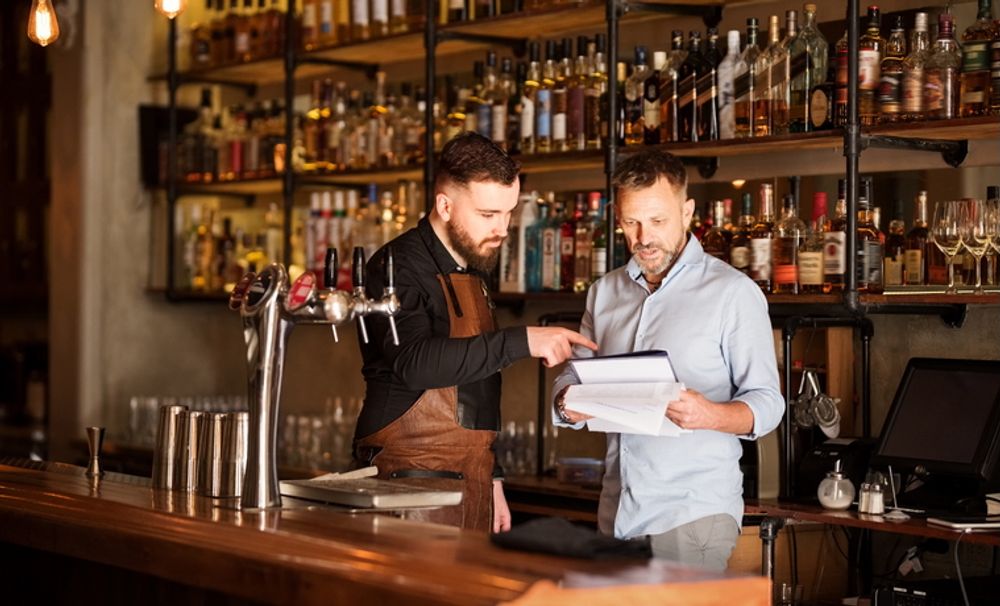
Mangaging pricing has become even harder for on-trade wine buyers in the face of increased overhead costs across the hospitality sector
There exists a further delicate tension between the vineyard and the final point of sale. Producers understandably see the rising costs of farming, labour and climate risk. Many also see the global success of fine wine and the upward movement of certain regions and assume that the broader market can follow the same trajectory.
From the perspective of a buyer dealing with real world consumer behaviour, that assumption does not always hold. There is a widening gap between what producers feel their wines need to cost and what the market can comfortably absorb, particularly in hospitality environments already under so much financial pressure.
That does not mean producers are wrong, many wines can indeed afford to increase price and need to. But it means the market is complex and price signals do not travel cleanly through the supply chain.
Bridging that gap requires careful portfolio construction, honest and open conversations, and sometimes a willingness to rethink how wines are positioned rather than simply how they are priced.
It needs finely-tuned, uncomplicated, good old-fashioned communication. Enter an additional cost to the equation; marketing & PR. Brand messaging and education.
Curation rather than expansion
For all the noise around inflation, consumer caution, and market contraction, there is still plenty of opportunity in wine. The difference is that the opportunity now lies less in volume expansion and more in intelligent curation.
Buyers who understand both the emotional and economic sides of wine will continue to build strong programmes. Importers who can combine distinctive portfolios with clear commercial thinking will remain essential partners. Producers who recognise the realities of the markets they sell into, and are willing to invest in that, will find loyal routes to market and true partnership.
Producers need to be more creative in engaging people in their story. And subsequently be ready to foot the bill for that. Decide how to tailor your story, wear it with conviction, and keep telling that same story consistently.
Brand message, marketing, PR, these are all different things. Please do your homework and make allowances in your budget for one or all of these.
Importers need to embrace technology to deliver that message more effectively to their customers. The expectation is no longer just access to wine, but clarity around what it is and why it matters.
Platforms that improve access to technical information, storytelling and supporting assets are no longer optional. At the same time, operational detail matters just as much. Accurate, accessible data across logistics, compliance and product information should be seamless. This is where real value is added.
Consumer-facing businesses in the on and off-trade need to acknowledge that bluntly applying a Boston Consulting Group product matrix doesn’t work in wine world. You risk over-milking those cash cows to the point of breaking.
Stop. Take your foot off the gas, Thelma. Love and kisses, Louise.
Your highest earning wine should not also carry your highest margin. The biggest margin earner should be a wine that sells quantitatively less but is easier to find replacements for when the price elasticity breaks.
Finally and fundamentally accept that educating your Gen-Z employees about wine is a non-negotiable. Wine training is simple; how it’s made, how to taste it, and how to talk about it.
Commercial discipline & wine intelligence
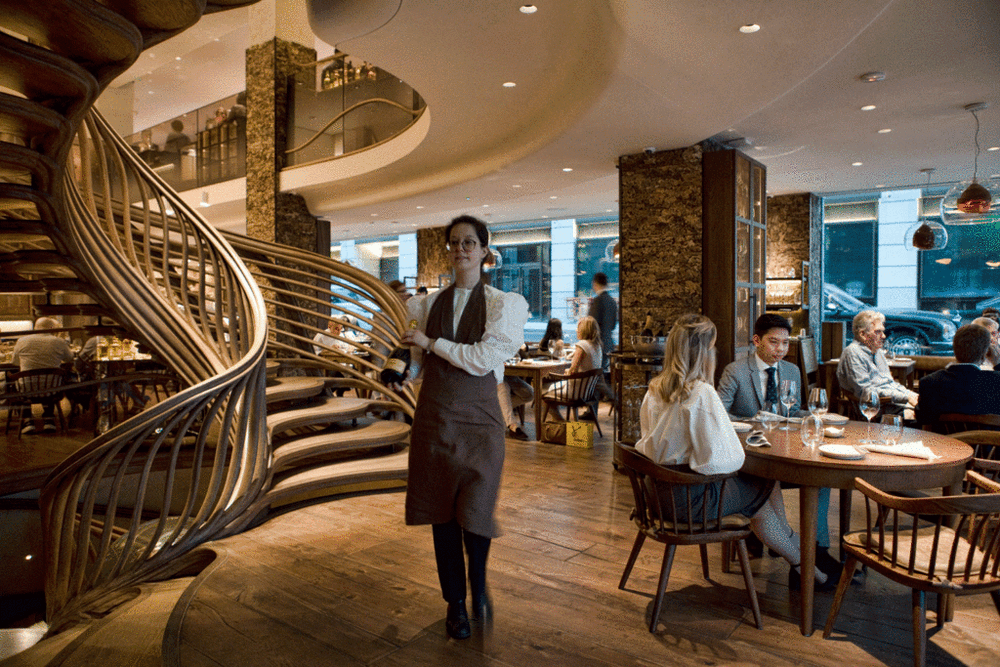
On-trade buyers and their suppliers need to re-think how they work together to ensure margins are being maintained down the supply chain but not at the expense of what they expect customers to pay for their wine
Wine people tend to see the world through vineyards. Buyers tend to see it through spreadsheets. The reality, of course, sits somewhere in between.
Right now the wine trade is quietly recalibrating. Costs have moved, consumer behaviour has shifted and the assumptions that held the system together for the past two decades no longer sit quite as comfortably as they once did.
None of this is a crisis. It is simply the market doing what markets always do. In other words, the fundamentals of good wine business have not changed. The margin for getting them right just got smaller.
But it does mean the next phase of the wine trade will reward businesses that combine commercial discipline with genuine wine intelligence.
Producers who recognise the realities of the markets they sell into. Importers who bring clarity as well as product. Buyers who understand both margin and meaning.
And good judgement, as ever, is the rarest commodity in the trade.
* Clara Rubin is a commercial wine buyer and strategist. You can find out more about the work she does at www.clararubin.com.