
Since January 2026, wine importers in India have barely had time to breathe. Phones have been ringing, inboxes overflowing and days passing in a blur. Nikhil Agarwal, founder-chief executive ,wine, and spirits importer Anggel’s Share and organiser of ProWine India describes his day as a breathless whirl of calls, discussions, and interviews, complete with missed meals and no sleep.
The trigger for the renewed interest in India as a potential wine market was the India-EU free trade agreement (FTA). Announced with much fanfare, it proposed a reduction in import tariffs by the Union government that will also reduce duties on wine from 150% to 20% in a phased manner.
A complex market

It might still be in its infancy considering the enormous size of the population but even if it only grows by a few percentage points that still relates to a major new intenational market for wine
India as a market for alcoholic beverages is often cited as a contradiction in terms. With its population of 1.45 billion people residing in 28 states, India is also the world’s fourth largest economy with an annual GDP of €3.4 trillion.
However, it is a nascent market for wine: the per capita consumption was reportedly under 40-50 ml in 2025. Global drinks data and insight provider IWSR reports that in 2024, local wine (including fruit wine) formed 84% of the total market share by volume, while imported wine stood at 16%. The CAGR volume for wine from 2019 to 2024 was 7%.
The primary reason is the layers of taxes. Besides the 150% central customs duty, there exist state excise and local taxes – alcohol for consumption in India sits outside the national GST system and is the domain of individual states. State governments may impose their own excise duties, cesses, and VAT - this adds to the retail price of a bottle. So even if the central customs layer reduces, state taxes and policy differences will ultimately determine what consumers finally pay for imported wine and spirits in India.
Additionally, several states including Karnataka, Tamil Nadu, Telangana, Andhra Pradesh, and Maharashtraaccount for a chunk of the market for alcoholic beverages, but wine consumption is concentrated in major urban markets including Mumbai, New Delhi, Bengaluru, Pune, and Hyderabad. Several others among India’s 28 states are completely dry (no alcohol).
Consumer interest

This year's ProWine will be the bigget yet out of the six shows it has run showing the growing momentum behind the Indian wine market
Yet, there are clear pointers that the Indian consumer has been displaying increasing enthusiasm for wine despite the odds.
“There has been a structural increase in casual, at-home wine drinking,” says Ujjwal Dhariwal, founder-director of Tannins India, a new wine import firm. Dhariwal points out that while consumption remains tiny – around 1% of a market dominated by spirits – it has grown. “\
”Wine was never a part of the traditional Indian dining table, and drinking more occasion-driven than habitual. Combine this with high retail pricing – a €5 wine might cost €40 by the time it reaches the table – and the growth looks noteworthy.”
The premiumisation trend that began during the Covid pandemic has continued, spreading from metro and Tier one cities (Mumbai, Delhi, Bengaluru) to Tier 2 and Tier 3 towns. Agarwal reveals he gets regular calls from Nagpur, a Tier 2 city, asking him to host wine tastings, while the owner of a chain of premium bakeries in Chandigarh who studied at Monash University and loves Australian wines wants to serve only Australian at his outlets.
“If we sustain this pace, we can double the consumption in India over the next five years. Think about it: literally millions in India enter the legal drinking age every year,” he adds.
Leading importer Vishal Kadakia, founder of Wine Park, estimates a 10% year-on-year growth for imports since 2021. His own portfolio has grown from 90 handpicked wines in 2021 to 160 today.
Mattia Antonio Cianca, chief executive and co-founder of Bordeaux-based import-export and marketing agency Cellar 33, has focused on the Indian market for several years, attending trade fairs and interacting with trade and media.
He says Indian consumers fall into in two segments.
“One, consumers with limited exposure to international wines: their preferences are shaped by what is available locally. Two, a growing segment of well-travelled consumers who have experienced wine internationally and are more experimental. That duality creates a very interesting dynamic.”
Agarwal agrees: “Once exposed to wine, travellers demand similar style and quality when home. Plus, in urban, non-traditional families, kids have grown up seeing their parents drink wine, and so they are taking to it faster than earlier generations did.”

The Indian wine culture is growing - with tasting groups across the country like the @wineinamillion group
Since its inception over 40 years ago, India’s domestic wine industry has ruled the Indian market, with the high taxes on imports also protecting domestic production. Kadakia believes the growth of the domestic wine industry is important for wine drinking culture to grow in India, so with the tax reduction applying only to European wines priced at over €2.50, it acts to protect 80% of the domestic wine market whose offerings are largely priced between Rs 800-1200.
“This FTA does a dual job by protecting the Indian wine industry from cheap imports while reducing taxes on premium European wines,” he says.
Wine: still a work in progress
But does signing an FTA mean it is all systems go for wine? The answer is not that simple. India’sFTA with Australia in 2022 saw a limited impact on the sales of Australian wines in India, importers agree. Cianca puts it down to a question of timing over potential not seized upon: “The market is still structuring itself, and we will see more serious engagement from leading Australian producers, adding new dimensions to the Indian wine landscape.”
What has excited importers most is the burgeoning segment of high-end spenders. Agarwal has a buyer who buys 16 bottles of Bolgheri’s historic Grattamaco wine every month from him at approximately Rs 25000 a bottle.
“More people are showing up with that kind of spending power. The demand for high-end wines will continue to grow.”
Cianca agrees: “For the high-spending Indian it’s not about how much a bottle costs, it’s about drinking the best, that’s not necessarily the biggest, most famous brands. There’s real interest in producers who combine quality, story, and authenticity. First, this segment relies on recommendations from sommeliers, and wine professionals they trust. But once trust is established, they are willing to spend, sometimes without much sensitivity to price. These consumers mirror those from a mature market.”
Beware the pitfalls

India has been held back as a wine market due to the complex internal differences between each of its states as well as the prohibitive national import taxes
But Cianca cautions that entering Indian market is not a quick process.
“First, India’s unique environment makes it difficult to compare with Europe, or even China. A major pitfall is underestimating the time and perseverance required. The reaction to a new wine, a new brand or producer can be slower than in other markets. But this also creates opportunity: unlike many highly competitive, saturated developed markets, India has relatively limited availability across styles, regions, and price points, creating real space in the market.”
Dhariwal agrees, but describes the market as working on a ‘push’ market strategy: requiring incentives and supply-side efforts to create demand with the on-trade and consumers.
“There needs to be continuous investment and activation, including staff training, consumer tastings, and dinners and their associated spends. Producers must attempt to understand policy and regulations, complex as they are. Execution without policy alignment leads to cost overruns and delays in licensing registrations, impacting sales and profits,” he explains.
Another factor that can spoil the party is the current shaky foreign exchange situation, with the rupee weak against the dollar. Agarwal is concerned that if the freefall continues, prices will not improve despite lowered taxes.
“Consider duties, retail margins, distributor costs etc., and a bottle’s price multiples several times over its cost. Add on-trade margins, and it can breach the mental barrier a consumer is willing to pay for wine,” he says.
Another unforeseen obstacle could bethe exponential growth of India’s homegrown spirits market, and a thirst for cocktails that has seen younger drinkers flocking to cocktail bars.
International trends in India

Wine is now becoming part of the dining culture in India
So, what wines excite the typical Indian wine consumer today? The fragmented, rapidly evolving market makes generalisation difficult, replies Cianca.
“There is strong recognition of countries such as France and Italy, with particular interest in Champagne and Burgundy, as well as top producers from Piemonte and Tuscany – regions that benefit from global visibility and brand recognition, and Indian consumers are highly international in their exposure.”
Kadakia agrees: “Consumers enjoy familiar and great price point driven wines.”
Experimentation is driven by lower pricing strategies.
Besides the dominance of France and Italy, Cianca points to countries like Australia and New Zealand that communicate style and grape varieties clearly.
“Also, Argentina, Chile and South Africa offer excellent quality-to-price ratios and stylistic clarity. Cooler-climate regions with wines that are fresh, balanced and drinkable will become increasingly relevant. Ultimately, it will be about how producers position themselves, how clearly they communicate their wines, and how effectively they integrate into the local market structure.” Dhariwal adds: “California, beyond Napa, and Washington, offer good options in the mid- to premium categories.”
Kadakia adds Spain to the list.
Dhariwal finds a gap in the mid-range sparkling segment: “Celebratory formats resonate strongly with Indian consumers and well-priced wines are a potential sweet spot for new and younger consumers. The white wine segment is also under-served, with both domestic producers and importers focusing on reds, despite a shift in interest internationally. Finally, the well-travelled middle-class drinker is beginning to show signs of brand loyalty, especially for wines encountered abroad. Prominent, widely-exposed brands can benefit from this.”
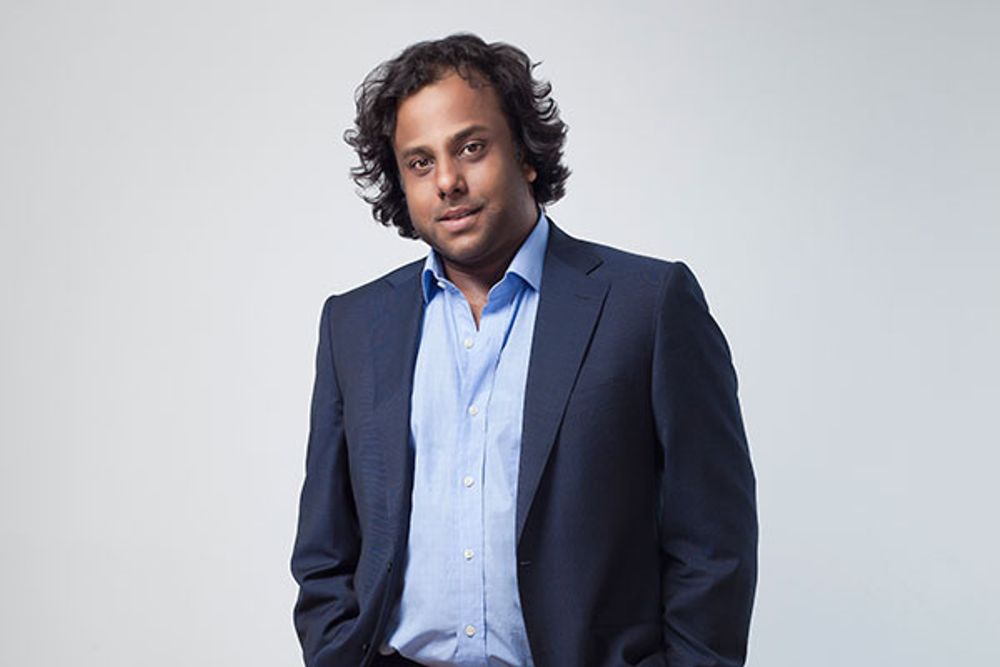
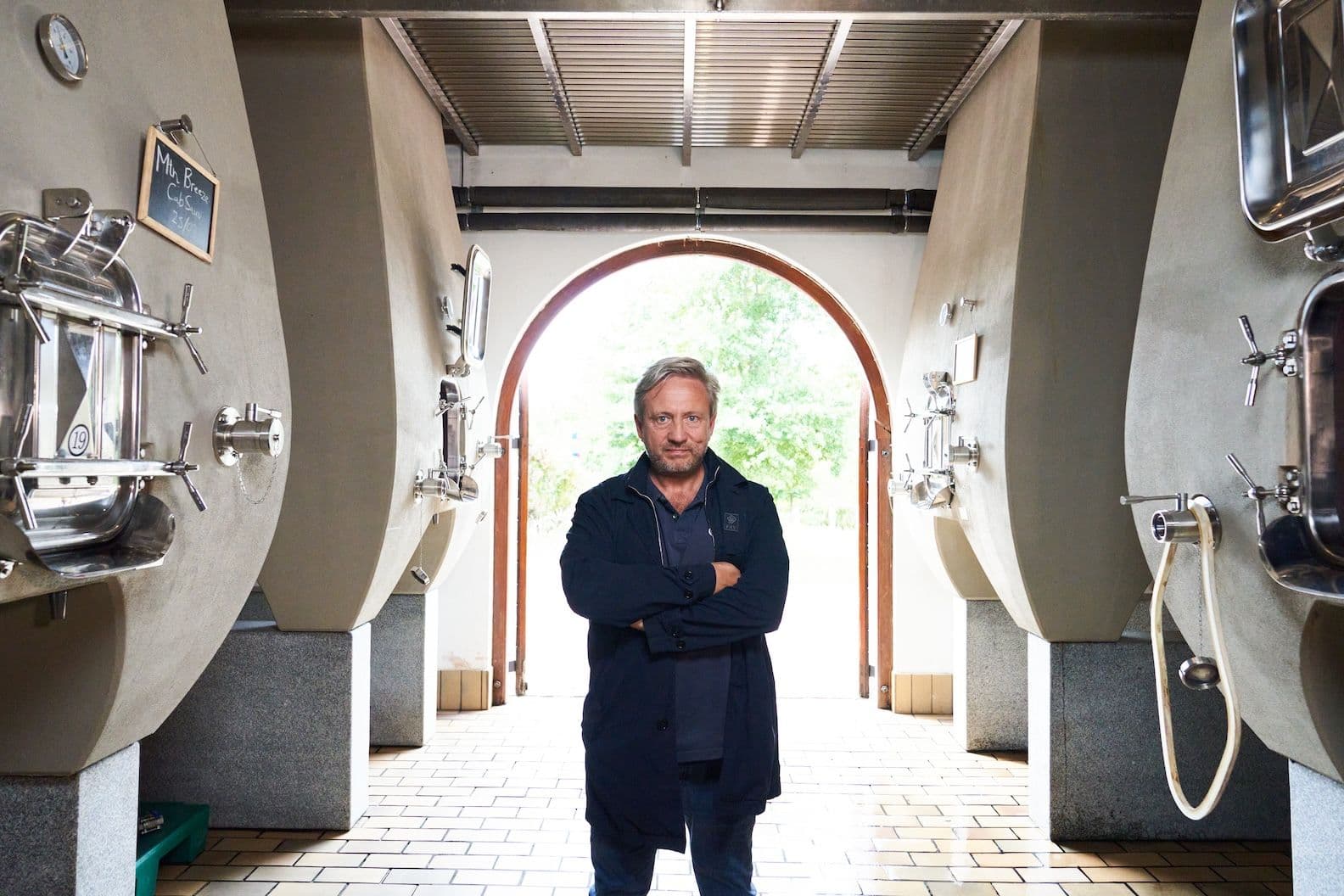
Nikhil Agarwal is a pivotal figure in the growing Indian wine market thanks to the work he does with his own agency - All Things Nice - and the driving force behind ProWine
Agarwal and Kadakia both see traction in the mid-priced range, retailing around Rs2500-3000.
Thinking out of the box also helps. With the current boom in premium hospitality across Indian cities, Dhariwal is supplying 12,000 bottles to a leading restaurant chain for its eight outlets across Delhi-NCR.
“Restaurants need private labels with great price, quality and visually appealing labels for their house wines and by-the-glass offerings. Importers can plug this gap.”
After the EU FTA, other countries are expected to sign agreements which might see tax reductions on wine. New Zealand is reportedly next, as are Chile and Argentina.
ProWine India, which is in its sixth year, will see its biggest edition in Mumbai in November 2026. “Our 2025 edition delivered record-breaking impact — 213 exhibitors from 21 countries, 5,485 trade visitors from 33 countries over a 7,000 sqm show floor — the largest alcoholic beverages trade show in India,” says Agarwal, whose agency All Things Nice partners with Messe Dusseldorf India for ProWine India.
“The world is not a pretty place right now, but India is showing more resilience than other countries, so has become something of a shining light to take your chances with.”
The Indian market story is still being written, believes Cianca.
“I would describe it as a blank canvas, requiring the right approach, partners, and long-term vision to paint on successfully.”
* Ruma Singh DipWSET, FWS, is an independent wine and spirits journalist and writer. Based in Bangalore, she is an educator, wine judge, consultant, columnist, and contributor for publications, Indian and international. She also has her own online wine magazine, Between the Wines. She is a member of the Circle of Wine Writers and the Association of Wine Educators, UK.