
Tell us about the new research and what the key findings are?
I think the biggest thing to come out of this year's research is that the story has moved on from simply 'people are drinking less'. Alcohol is still very much part of people's lives - 84% of alcohol drinkers still drink at least weekly - but people are becoming much more deliberate about when they drink, what they drink and why.We found that 71% of alcohol drinkers are actively using different tactics to manage their intake. That might mean drinking on fewer days, having fewer drinks, choosing smaller measures, switching to lower ABV, or moving between alcoholic and alcohol-free drinks during the same occasion. So it isn't a straight choice between drinking and not drinking anymore.
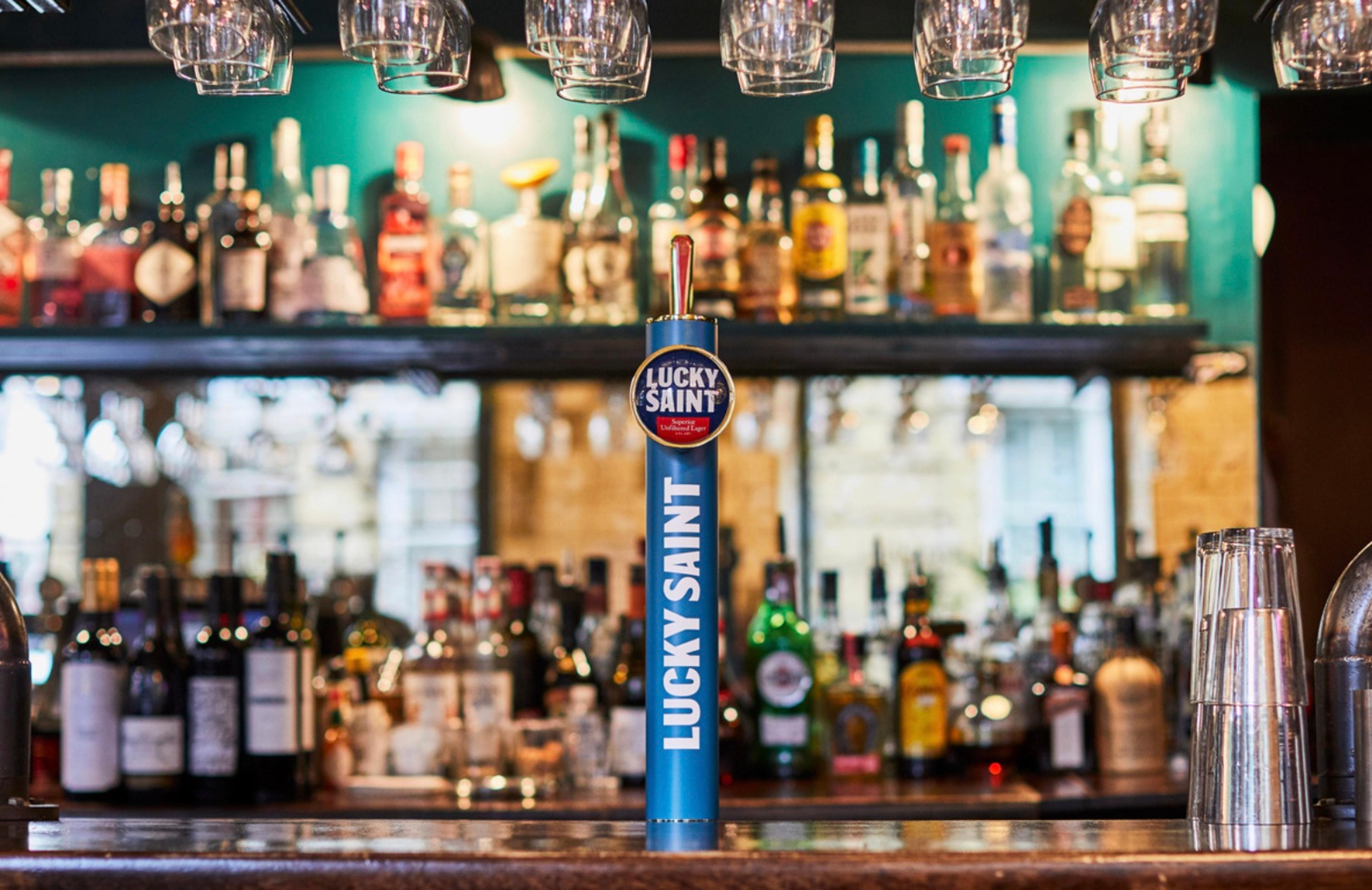
KAM's new low and no Drinking Differently report has been published in partnership with Lucky Saint
Low and no is now a normal part of that mix. Over half (53%0 of UK adults drink low and no at least monthly, compared with 40% in 2023, and 60% of low and no consumers have tried a new brand in the last year.
But perhaps the most important stat is that 97% of monthly low and no drinkers also drink alcohol. That tells you pretty clearly that this isn't about two separate groups of people. Most people are moving between different types of drinks depending on the occasion and what they want from it.
Health is a huge part of the change too. Up to 84% of people looking to reduce alcohol gave a health, diet or fitness-related reason. And we're seeing the impact of health data becoming much more visible - 59% say they track health metrics to some extent after drinking, and 81% of those say seeing that data has led them to change their drinking behaviour.
How did you set out the scope of the research in terms of what you wanted to explore and find out?
We have been tracking low and no for a number of years, but this time we deliberately wanted to zoom out. Rather than just asking 'who drinks low and no?' and 'why?', we wanted to understand what's happening to drinking behaviour more broadly and where low and no fits within that.
So we looked at alcohol consumption, why people are moderating, the tactics they are using, health and next-day considerations, the role of functional drinks, the mix of full-strength, mid-strength and low/no, and then what all of that looks like when people are actually in pubs, bars and restaurants.
One of the questions sitting behind the whole project was: are people really becoming non-drinkers, or are they just becoming more flexible drinkers? The research points pretty strongly to the latter.
You have done a number of low and no reports over recent years - how does this one differ in terms of the findings and how you did the research?
In earlier years, a lot of the conversation naturally centred on awareness, trial, availability and the barriers to choosing low and no. Those things still matter, but the category has grown up quite a lot. More than half of UK adults are now monthly consumers, so simply proving that there is demand isn't the most interesting question anymore.
This year we spent much more time looking at how low and no sits alongside alcohol. We asked about moderation tactics, switching within the same occasion, lower and mid-strength options, next-day considerations, health tracking, functional benefits and what happens when people are out in hospitality venues.
We also asked some fairly direct questions about the social side of low and no, including whether people have ordered an alcohol-free drink without telling the people they're with. That's where the 'stealth drinking' finding came from.
How did you carry out the research?
Methodologically, the main consumer research was an online survey of a nationally representative sample of 2,000 UK adults aged 18+, carried out in March 2026. Having a broad national sample also meant we could look at how behaviours differ by age and gender rather than only talking to people who are already highly engaged with low and no.
What do you think are the biggest takeaways that drinks buyers for the on-trade need to take on board and act on?
First, it’s clear that one alcohol-free beer and one spirit tucked at the bottom of a menu does not cut it anymore. Consumption is growing across all low and no categories including beer, wine, sparkling, spirits, cider, RTDs and cocktails. People are building a much broader drinks repertoire and their expectations have moved with that.
Second, quality matters. We found 80% of low and no drinkers say they prioritise quality over price and 65% are prepared to pay more for a premium low and no option. People increasingly want products they genuinely like and would choose in their own right.
In a nutshell, increasingly people are choosing the low and no because they like the taste and genuinely enjoy the drink rather than just because of the fact it lacks alcohol.
Third, hospitality itself is becoming more important to category discovery. Over a third (36%) of UK adults have bought low and no in pubs or bars in the last three months, up from 25% in 2023, and 60% of low and no consumers have tried a new brand in the last year.
That gives buyers and operators a real role in introducing people to products and brands, not just responding to demand that's already been created elsewhere.
And finally, it is becoming a guest experience issue. Up to 63% say good low and no options make pubs, bars and restaurants feel more welcoming, while 34% of low and no consumers have either left a venue or been disappointed because the alcohol-free range was poor. That's a pretty big warning sign.
Your main headline is that people are not giving up alcohol, they are changing how they drink. Can you give us more detail on why you think that and what it means for brands, suppliers and operators?
The simplest evidence is that 84% of alcohol drinkers still drink at least weekly and 97% of monthly low and no drinkers also drink alcohol. So this is not a mass move from 'drinker' to 'non-drinker'. It's much more fluid than that.
What we're seeing is people make different choices at different times. They might have full-strength drinks on Friday night, an alcohol-free beer after work on Tuesday, switch between the two during a longer occasion, or choose something lower strength because they've got an early start the next day.
People don't necessarily see any contradiction in that. Ordering a low and no drink doesn’t mean I won’t be ordering a full-strength one straight afterwards. People’s overall drinking repertoire is broadening, alcohol is no longer the default choice.
For brands, that means I wouldn't only think about stealing share from alcohol. I would think about which occasions your drink is right for and what need it is meeting.
For operators, it's about making sure the range works for a group of people whose choices may change through the night rather than forcing everyone into a binary 'drinking' or 'not drinking' box.
The industry still tends to organise ranges in fairly rigid categories. Consumers are getting less rigid.
You say people are 'secretly' buying low and no drinks - did you ask them directly? Have you asked that question before?

Yes, we asked it directly this year and we haven’t asked it before. Four in ten UK adults told us they have ordered a low or no drink without letting the people they were with know that it was low or no. We called that 'stealth drinking'.
We also found that 31% of low and no consumers still don't feel comfortable ordering an alcohol-free version of an alcoholic drink when they are out in a pub, bar or restaurant. So although low and no is much more accepted than it used to be, there are clearly still some social dynamics around it.
We hadn't framed the question in this direct way in our previous reports. We wanted to explore it this year because the category is now so widely consumed that the more interesting question is sometimes not whether people drink it, but how openly they make that choice.
The detail is interesting too. Among people who have ordered a 'stealth' drink, 46% said being served in the same glass as the alcoholic version makes it easier; 41% said draught availability helps; 39% said having it listed alongside alcoholic drinks on the menu; and 33% said staff not making a big deal of it.
You say more needs to be done in the on-trade to market drinks and venues by occasions rather than drinks categories. What would your advice be?
I wouldn't suggest throwing out the beer, wine and spirits headings tomorrow. It's more about starting with the question 'what is the guest trying to get from this occasion?' rather than automatically starting with ABV or category.
We found people are moderating across all sorts of occasions - weekends, after work, celebrations, family meals and sporting occasions - not just Dry January. And 47% say how they feel the next day plays a role in what they choose when they're out socially.
So an operator could think much more deliberately about the after-work occasion, the midweek catch-up, drinks with food, a long afternoon, the person who's driving, or someone who wants to stay out but still feel good tomorrow.
Then make it easy to choose across full-strength, mid-strength and alcohol-free depending on that need. Or even functional drinks.
People choose drinks based on how they make me feel at when they are drinking them (healthy, hydrated, a bit tipsy, relaxed, refreshed, focused, or absolutely drunk or whatever) and a significant proportion said they think about how what they consume will make them feel the next day too.
Ranges need to reflect the different ‘occasions’ and/or desired states it’s often not a alcohol vs no-alcohol decision.
Even small things help: placing alcohol-free options alongside their alcoholic equivalents, putting good options on draught, using the same quality glassware and making sure staff can recommend them naturally. Integration is probably more important than creating a big separate 'alcohol-free' world.
Are there any good examples of occasion-driven thinking in the on-trade that operators can learn from?
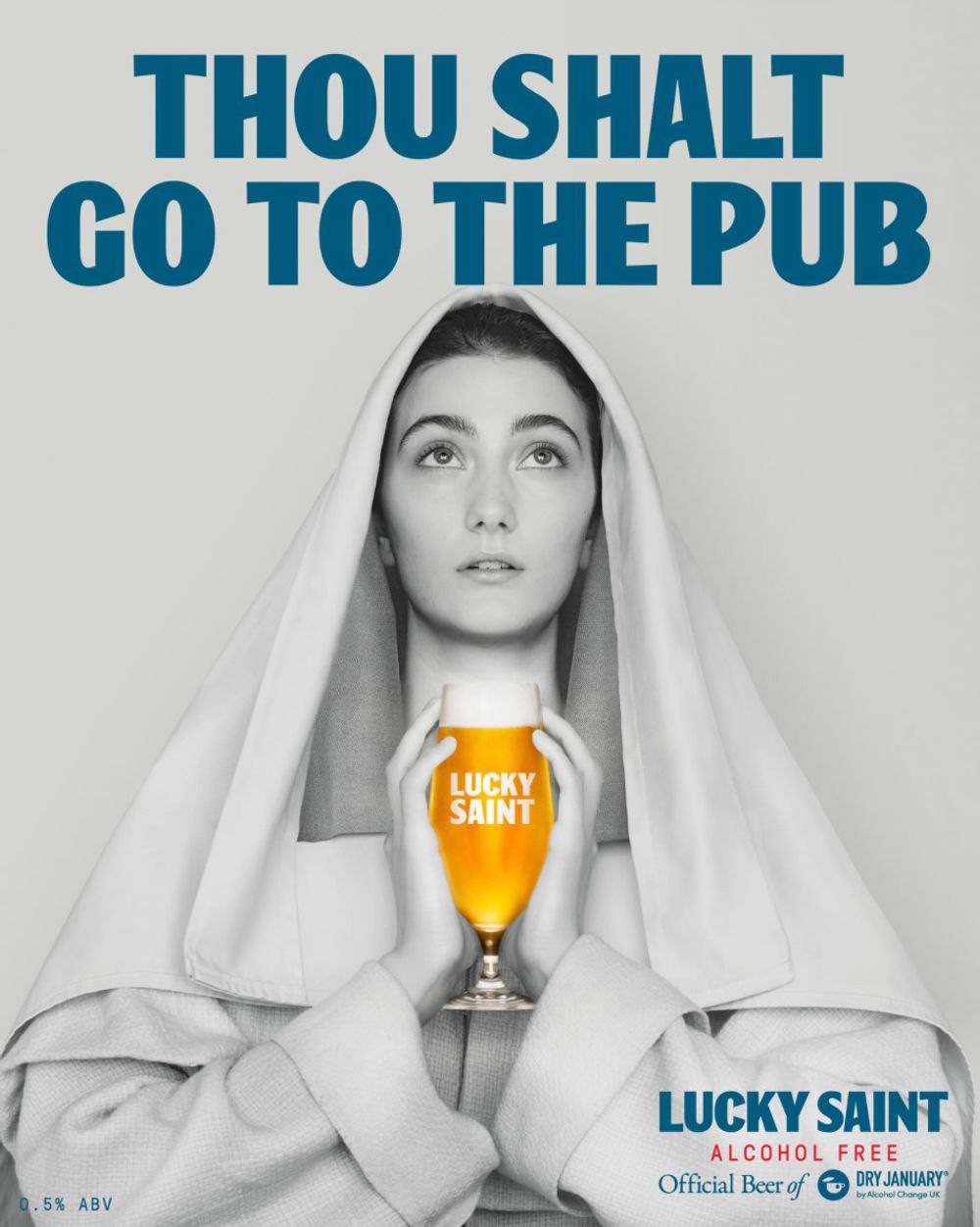
Lucky Saint's Thou Shalt Go to The Pub campaign in Dry January shows how it encouraged people to go out to drink both no and low and full alcoholic drinks
One example in the report is Lucky Saint's 'Thou Shalt Go to the Pub' activity around Dry January. It wasn't really about telling people to stay home and abstain - it was about giving them a reason to go to the pub.
It saw 80% of people brought someone with them to redeem the free pint, 55% bought something else alongside it and 71% weren't regulars at the pub they chose. It shows low and no can help create footfall and spend rather than simply replace an alcoholic sale.
We also included Oxford Partnership data in report looking at the weekday moderation occasion. Their data showed the strongest year-on-year growth in low and no beer between 6pm and 9pm Tuesday to Thursday. The practical advice was really simple: make the product visible, focus activity around that after-work window and build reasons to visit Monday to Thursday rather than only thinking about the weekend. That's the sort of occasion thinking I mean. Start with when and why the customer is there, then work backwards into the range.
A great example of an operator understanding the drinking flexibly is Tao Hospitality Group who have already taken the innovative step to ‘zero proof’ their entire cocktail menu, providing like-for-like equivalents across the whole range - 1 in 8 of cocktails sold are now alcohol-free.
Which low and no trends do you think are likely to increase the most in the coming years?
I think switching within a single social occasion will become much more normal. We already see younger consumers using a wider range of moderation tactics and moving between alcoholic, low/no and mid-strength drinks. I can see that becoming a fairly unremarkable way of drinking rather than something we need a term like 'zebra striping' for.
Functional benefits are another big area. 53% say they would be more likely to choose a low and no drink that also claims a specific functional benefit such as hydration, mood, recovery or focus. That suggests the boundaries between low/no, soft drinks and functional drinks will get much blurrier.
And I think we'll see low and no become more integrated into hospitality rather than living in its own little section. Consumers increasingly want the same things from it that they want from the rest of the drinks list: quality, choice, good presentation and something that feels right for the occasion.
How do you see the main drinks categories developing - wine, beer and spirits - when it comes to low and no?
Beer is still the most established. Nearly half (45%) of UK adults now consume low or no beer at least monthly, up from 30% in 2023. It has had the benefit of better products earlier, more brand investment and increasingly good draught availability.
But we’ve seen for the last few years that growth is broadening beyond beer and that has been really significant this year.
Monthly consumption is now 29% for low/no wine, 26% for sparkling wine, 24% for spirits, 26% for cider, 25% for RTDs and 25% for alcohol-free cocktails. So the idea that low and no is basically alcohol-free beer plus a token spirit is out of date.
Wine probably still has more work to do on product and consumer confidence, but the occasion is clearly there - particularly food, celebration and at-home drinking.
Spirits and cocktails have a big opportunity around flavour, theatre and premium serves, where the absence of alcohol doesn't have to be the main story.
Across every category, I think the next stage is products people choose because they like them, not because they're making a compromise.
Do you see more opportunities in 0% versus mid and lower strength drinks and, if so, why?
I wouldn't choose one over the other. The research actually suggests the opportunity is in giving people a spectrum of choices.
When we asked consumers to estimate the mix of beer, wine and spirits they currently drink, the average split was 53% full-strength, 21% mid-strength and 26% low/no. Among 18-24s it was much more evenly spread: 33% full-strength, 32% mid-strength and 35% low/no. Among over-55s, by comparison, 63% was full-strength.
That says to me that the younger drinking repertoire is already much less binary. Mid-strength can let people stay within an alcoholic occasion while managing pace or units; 0% gives them another tool again. Different products do different ‘jobs’.
For all the focus on low and no, it is still a small percentage of the overall drinks category. How do you see its share developing?
It is still a smaller share of total serves than the amount of coverage might sometimes suggest, but I think penetration and behaviour are probably the more useful indicators of where it's going. 53% of UK adults now drink low and no monthly, compared with 40% in 2023, and only 24% now say they never drink it, down from 34% two years ago.
So there is clearly still headroom. But I don't think growth only comes from people replacing every alcoholic drink with a 0% one. It comes from low and no appearing in more occasions and more repertoires - the first drink, the last drink, the weekday drink, the one between two alcoholic drinks, the lunch where you've got work later, the pub visit when you're driving.
That's why I think share will continue to grow, but probably in a more integrated way than the industry sometimes talks about it. Low and no won't be a separate behaviour; it'll just be part of drinking.
Anything else to say?
The bit I'd come back to is that the future isn't really 'Team Alcohol versus Team Low & No'. Consumers aren't behaving like that. They’re choosing the drink that works for them in that moment. Sometimes that will absolutely be a full-strength pint or a glass of wine. Sometimes it'll be 0%, mid-strength, a soft drink or something functional. And they may make all of those choices in the same week or the same evening.
For buyers, suppliers and operators, I think the job is simply to make sure you've got something genuinely good for each of those moments (obvious really!) The businesses that understand that flexibility will probably be the ones that get the biggest value from the category.
* To access and purchase the full report and find out more go to KAM website here.