Lovely autumn days, still carrying the warmth of summer. From the flatlands, the road winds up through orchards and olive groves until you reach the first folds of the Apennines. The air cools, the forests close in, and you find yourself among hills that feel both distinctly Romagnolo and faintly Tuscan.
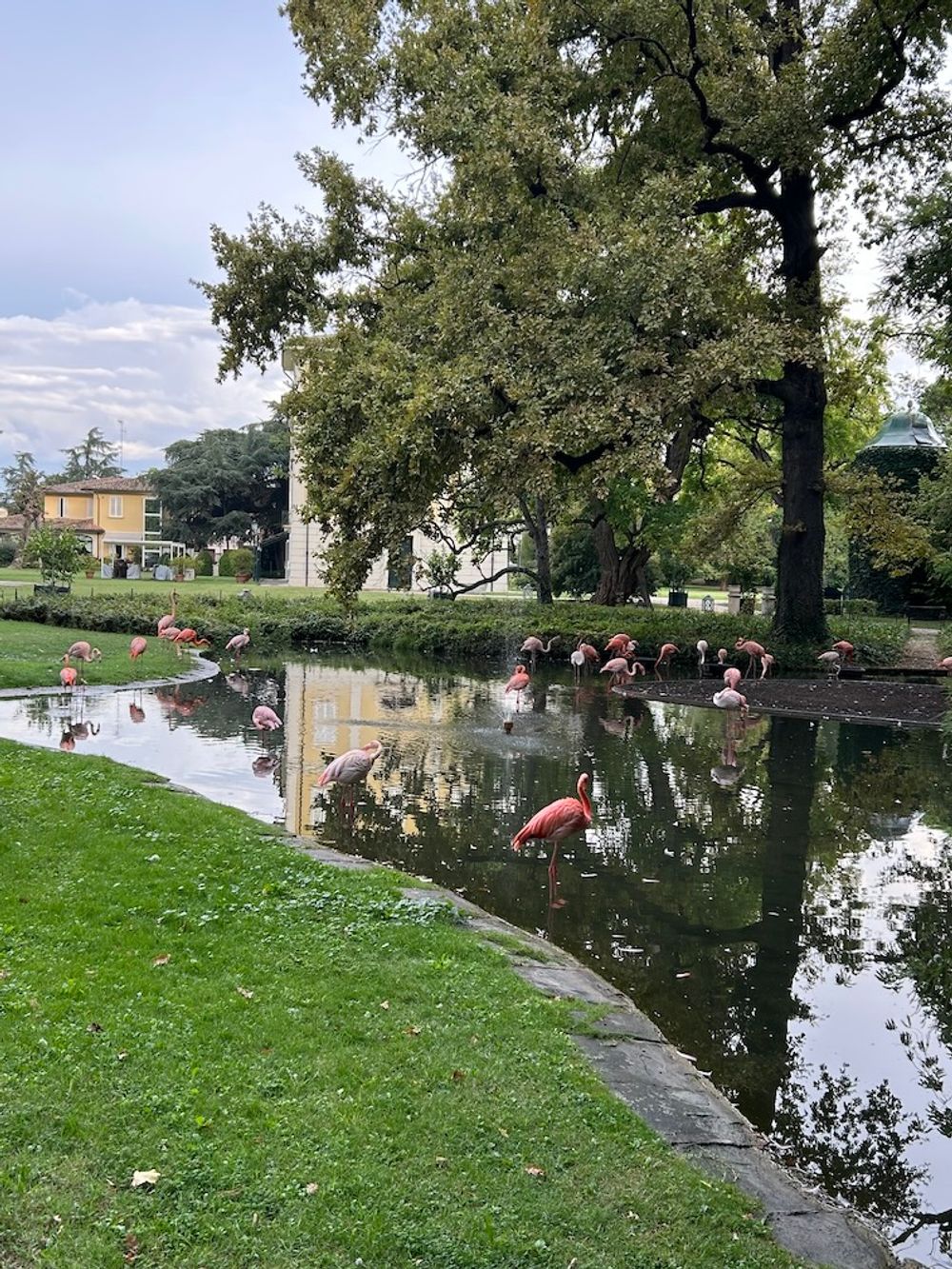
Look! flamingoes
In Faenza, the flamingos stand by the lake, motionless, contemplating life as only flamingos can. Black squirrels dart through the gardens (a rare sight) while storks stalk the fields nearby. It’s an unlikely mix of wildlife for a wine trip, but then Romagna is full of surprises. If the animals seem perfectly at home here, the vines, with centuries of history beneath them, are equally settled.
After all, this is a landscape shaped over millions of years. The Apennines rose when the seabed pushed upwards, leaving behind calanchi clays, sandstones and marls that today define Romagna’s subzones. In a way, the wildlife and the wines share the same story: adaptation, survival, and the quiet confidence of belonging to a place carved by time.
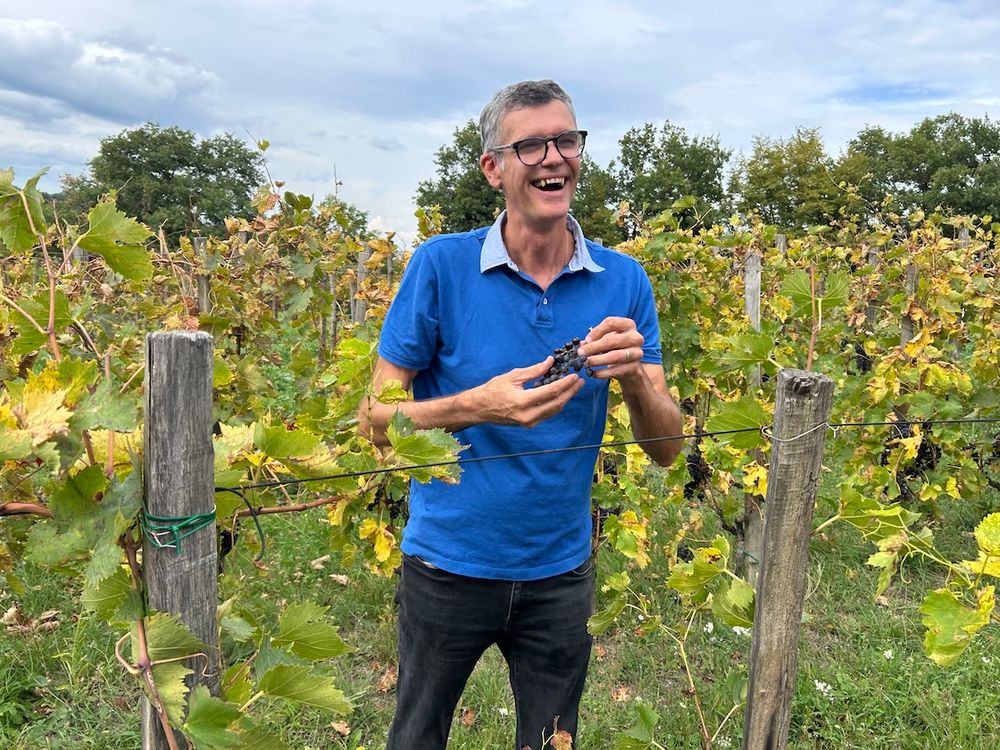
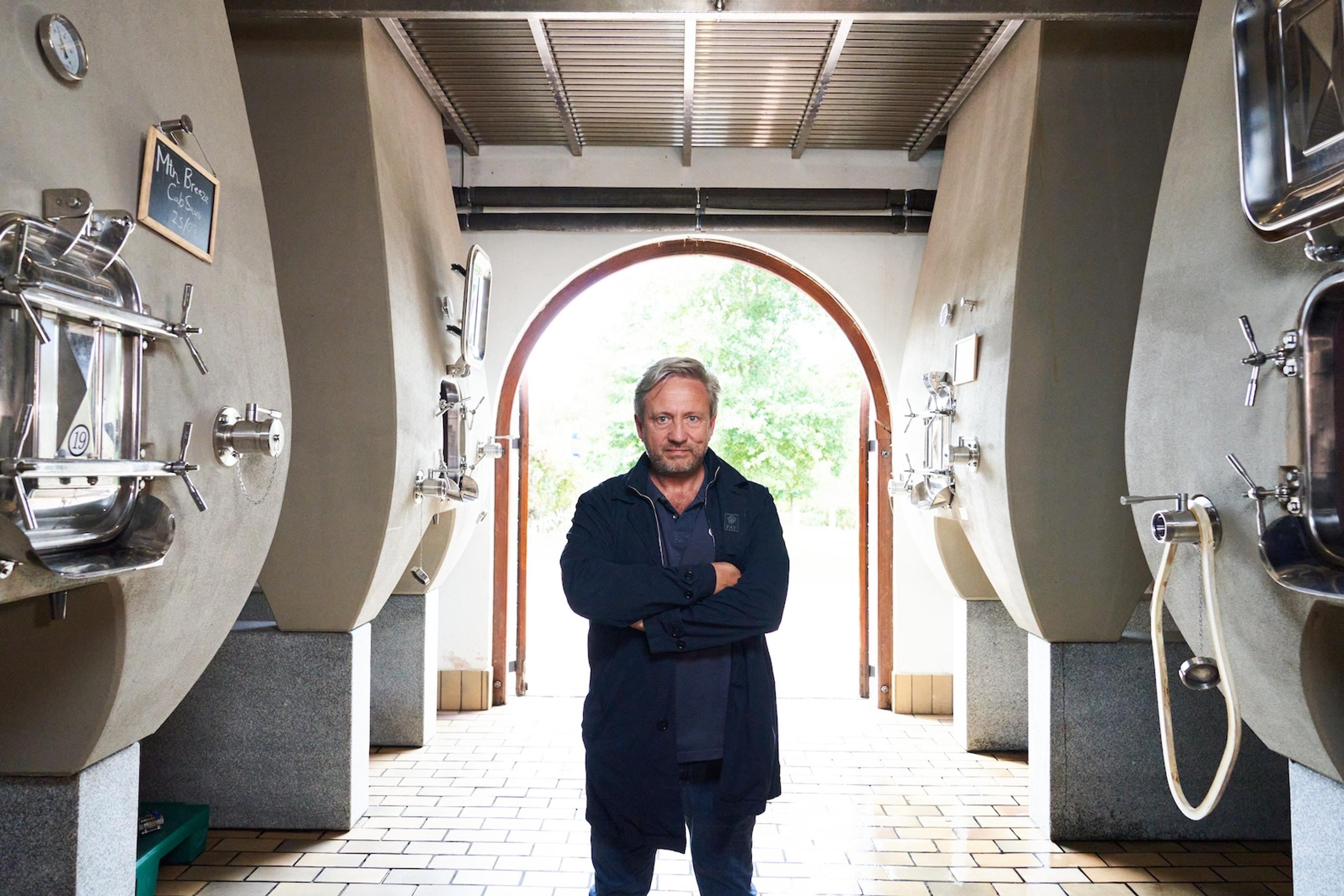
Francesco Bordini, Villa Papiano
Modigliana – freshness on the edge of Tuscany
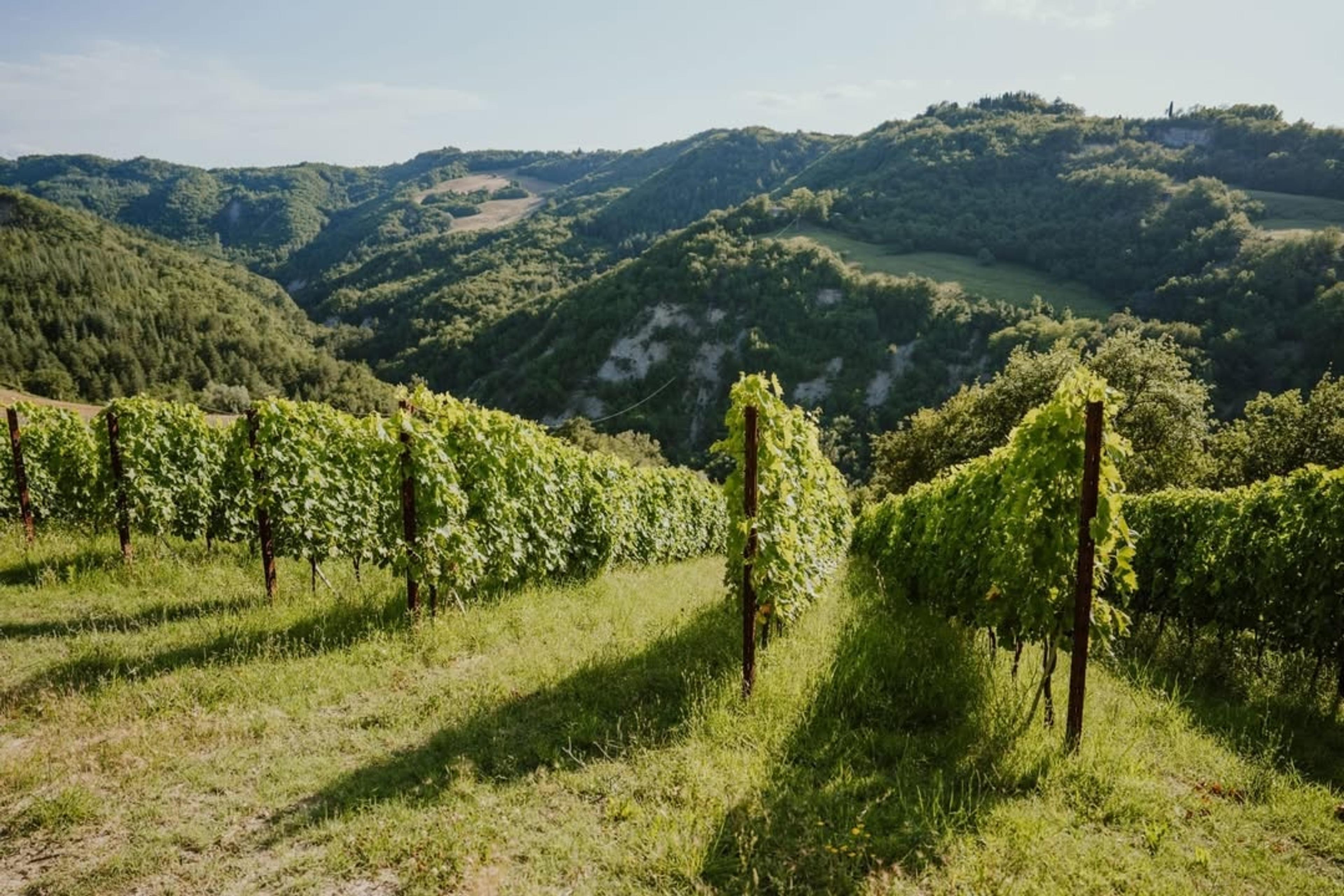
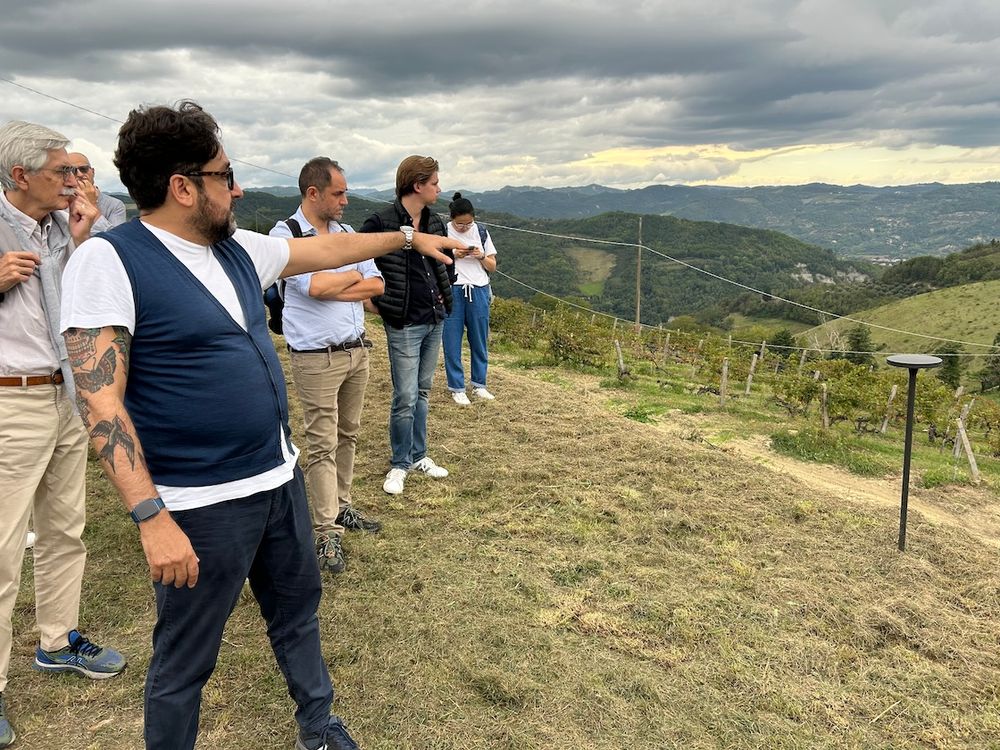
At over 400 metres, in vineyards surrounded by forest, we visited Villa Papiano, one of the most expressive estates in Modigliana. The soils here are sandstone, the slopes steep, and the vines often 40-50 years old. Everything is done by hand. The wines, made from small-berried, nervy Sangiovese, carry lifted perfume and bright acidity, shaped by altitude and the forest canopy.
The winemaker told me a local story: “When you host someone in Modigliana, you welcome them with a glass of wine. You never let the glass empty – you keep topping it with water, and in the end, the guest pours the last drop on the fire.”
It is a gesture that captures Romagna’s spirit: generosity, humility, intensity. The endless topping-up speaks of hospitality. The dilution acknowledges scarcity. The final drop to the flame is both respect and renewal. Like Modigliana’s wines themselves, perfumed, taut and alive, it is never complacent, always carrying a spark.
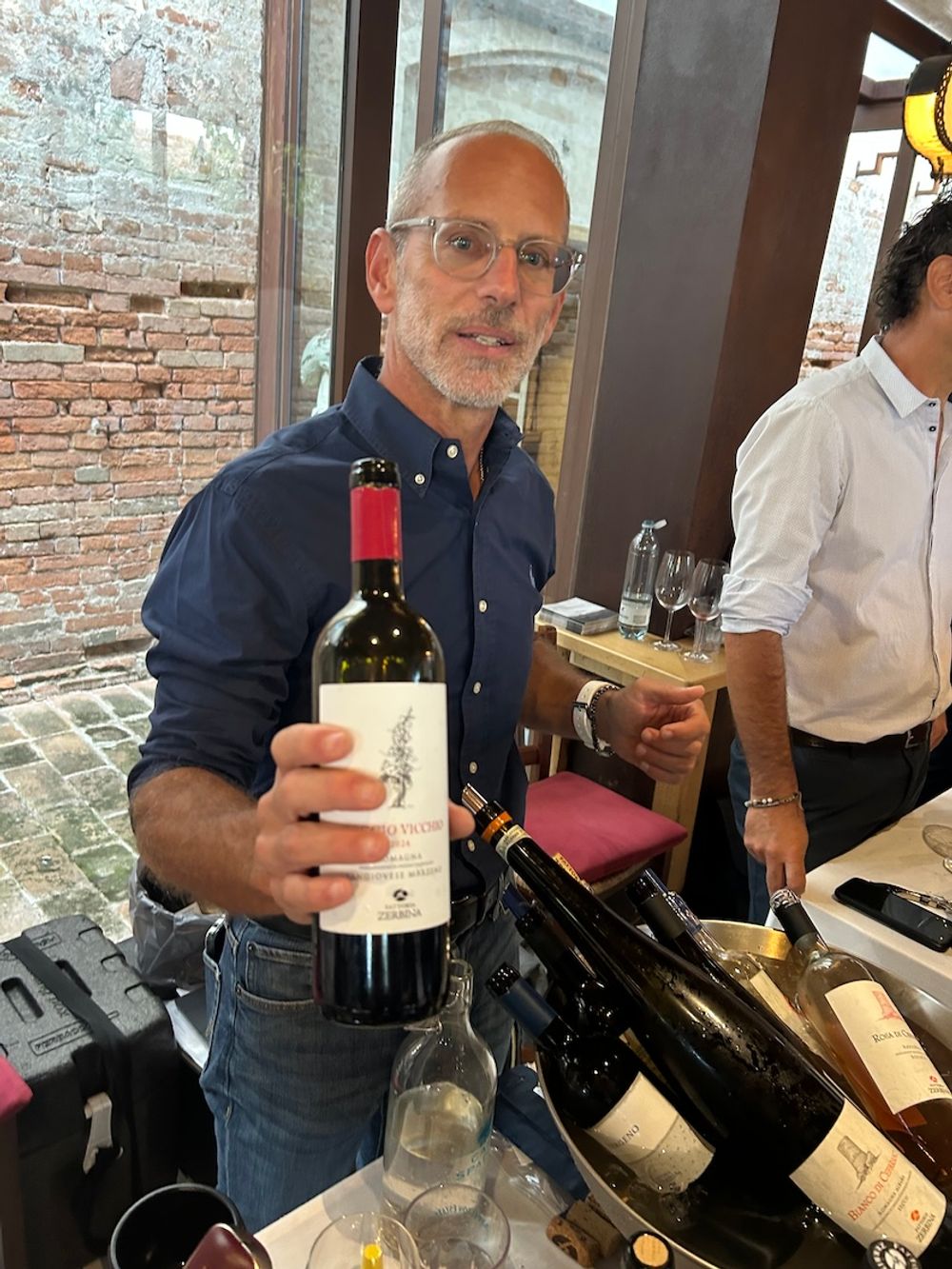
Fattoria Zerbina, Il Pozzo Vecchio, Romagna DOC Sangiovese Marzeno, 2024
Marzeno – Fattoria Zerbina’s quiet revolution
In Marzeno, one of the Faenza subzones, the soils turn a striking iron-rich red. At around 250 metres, the vineyards give Sangiovese more depth and structure than in the lighter Castrocaro sands or the perfumed sandstone of Modigliana. It is land that has always hinted at potential for longevity, though for years much of that potential went unexplored.
Here, Fattoria Zerbina has long been a beacon. When Cristina Geminiani took over from her grandfather in 1987, she rethought everything: switching to high-density plantings, introducing alberello training, cutting yields dramatically. Her aim was to show that Romagna’s grapes – Sangiovese, Albana and even Trebbiano – could be made with the same ambition as Tuscany’s.
With Albana, she went further still. While most treated it as rustic, Geminiani pioneered noble rot in the vineyard, berry by berry, harvest after harvest. The result was Scaccomatto, Romagna Albana DOCG Passito, Fattoria Zerbina – a wine that overturned expectations and is now a regional icon.
Trebbiano, by contrast, has long been Romagna’s most maligned variety, notorious for high yields and thin, forgettable wines. Cristina’s decision to work with it was itself a statement: that even a grape seen as ordinary could, under the right conditions, express character.
Cristina is not only a winemaker but also a provocateur. She insists that Romagna cannot afford complacency. “Producers here need to explore more, to stretch their boundaries. If we only stay within safe practices, we won’t see the full potential.”
Her single-vineyard Fattoria Zerbina, Il Pozzo Vecchio, Romagna DOC Sangiovese Marzeno, 2024, with graphite, red fruit and a streak of minerality, underlines the point – Sangiovese with depth, detail and a clear sense of place.
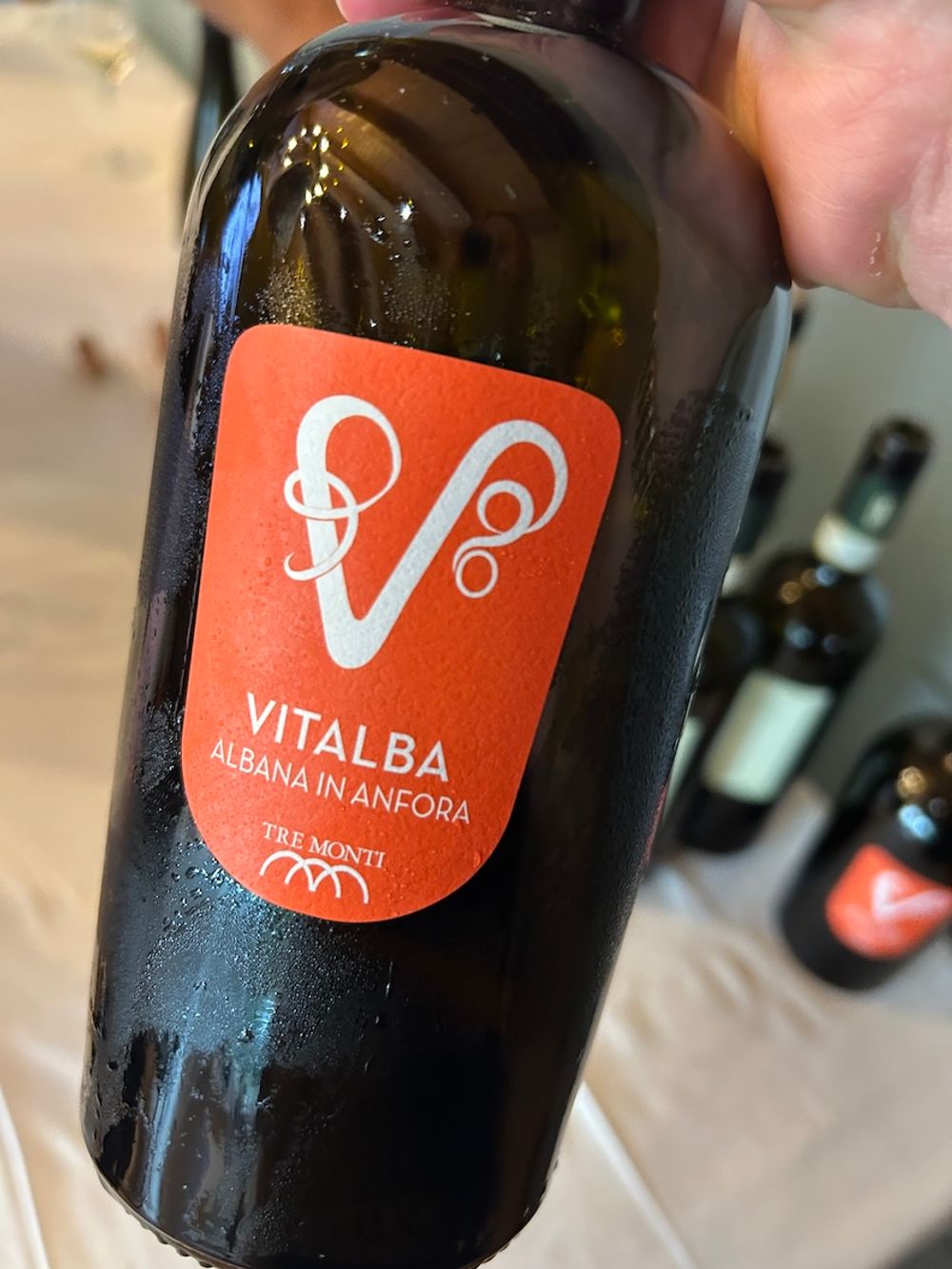
Serra – Tre Monti’s creative streak
In Serra, near Imola, the soils are a patchwork of clays and marls that give balanced, approachable wines – less austere than Predappio, less perfumed than Modigliana, but with a quiet depth of their own.
Here, the Navacchia family has built one of Romagna’s most pioneering estates. Tre Monti, founded in the 1960s by Sergio Navacchia and now run by his sons Vittorio and David, has long been known for its creative streak. Their Vitalba, Romagna Albana DOCG Secco, Tre Monti, 2024, fermented in amphora, is a benchmark: marmalade and peach tea on the nose, tannic grip on the palate, closer to orange wine than conventional white.
They were among the first to prove that Albana could be serious – textured, ageworthy, distinctive. Their Sangiovese, meanwhile, shows consistency and clarity, balancing fruit purity with freshness. In a region often accused of playing safe, Tre Monti’s willingness to experiment has given Serra its place on the map.
Ronchi di Castelluccio
Castrocaro – elegance in lightness
Not all Romagna reds are heavy. In Castrocaro, the vineyards sit lower than those of Predappio or Modigliana, on sandy calcareous soils between 100 and 200 metres above sea level. The Adriatic is not far away, and the wines here tend to be lighter, crunchier, with freshness rather than weight.
Among the most compelling voices is Marta Valpiani, whose small, organic estate has become a quiet reference point for Castrocaro’s potential. Her La Farfalla, Romagna DOC Sangiovese Castrocaro, 2024showed mouth-watering acidity and supple, juicy fruit – contemporary, mineral, and elegant. It’s a wine that proves Sangiovese here doesn’t have to lean on power to make an impression.
Alongside Valpiani, Fiorentini’s Cleonice, Romagna Albana DOCG Secco, 2024 was floral and saline, carrying jasmine, sage and structure. These wines stand apart from the denser, iron-framed styles of Predappio or the saline clays of Bertinoro. Castrocaro shows that Romagna has many registers – not just weight, but finesse.
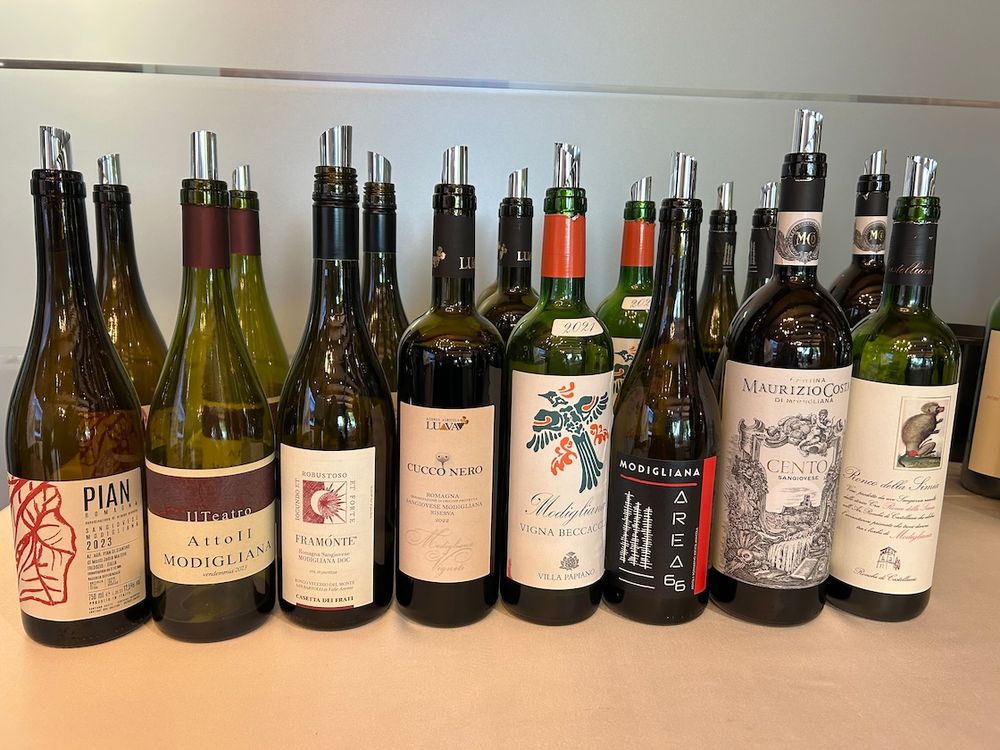
Predappio – old vines and new voices
Predappio is where Romagna red finds its structure. The soils here are rich in iron and sandstone, and the vineyards rise to 450 metres. It is one of Romagna’s historic centres for Sangiovese, producing wines that are darker, more powerful, and built to last.
At Drei Donà, Madonna del Pruno, Romagna DOC Sangiovese Predappio, 2022, aged in amphora, was bright with cherries and pomegranate, layered with acidity and energy. At Condé, Raggiobrusa Riserva, Romagna DOC Sangiovese Predappio, 2022 showed leather, mint and spice, austere but elegant, while the Vigna del Generale Riserva, Romagna DOC Sangiovese Predappio went further still, a flagship bottling from a single site with iron-rich soils, dark fruit and formidable structure.
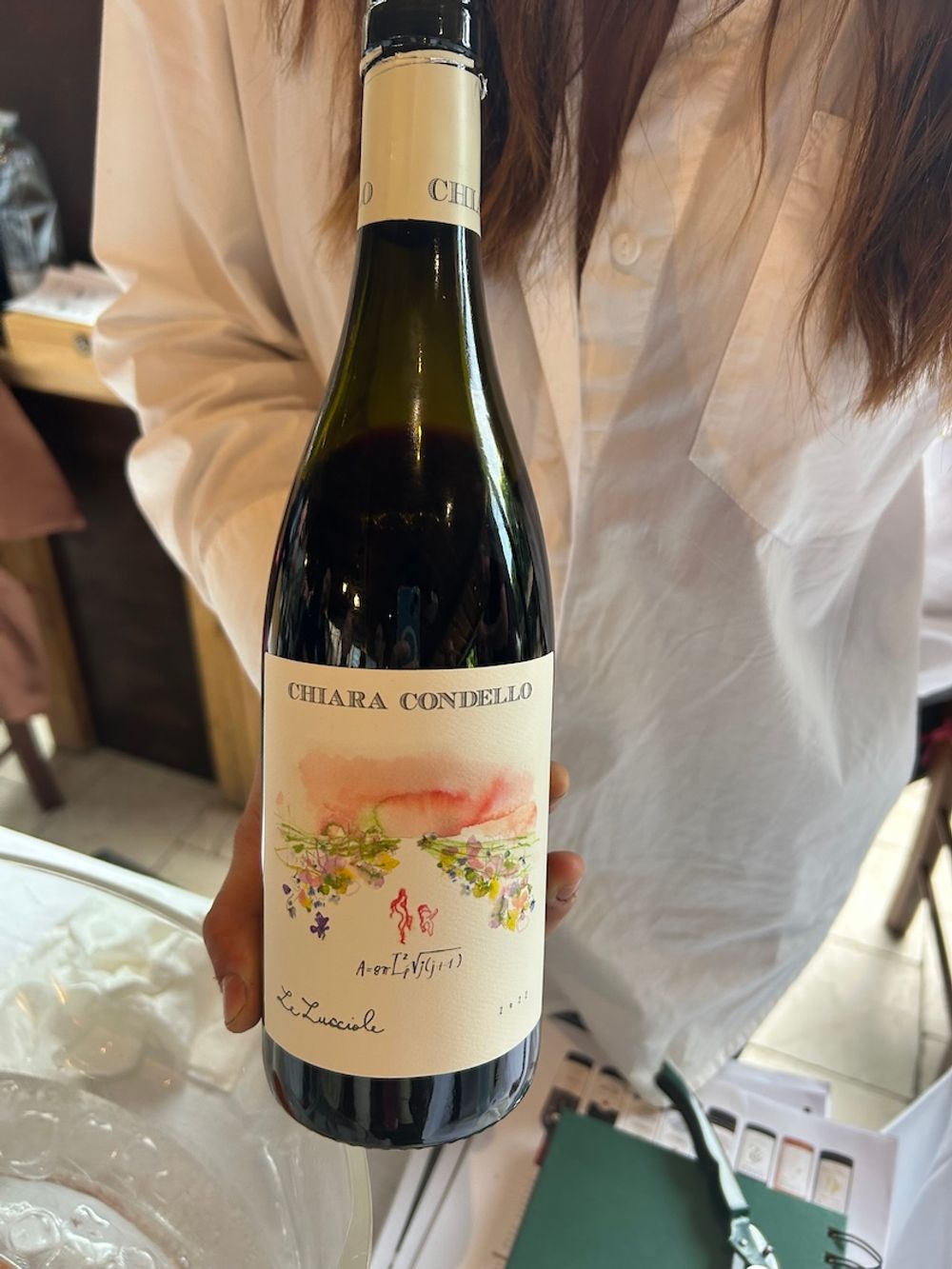
Chiara Condello, Le Lucciole, Romagna DOC Sangiovese Predappio Riserva 2019 is the estate’s calling card: pure, finely etched Sangiovese aged in large oak, balancing perfume with structure. It shows just how much finesse Predappio can achieve. Often described as the ‘poster girl’ for the subzone, Condello represents a new generation of producers giving Predappio both visibility and confidence.
Predappio’s old vines and iron-rich soils give the wines their backbone – a contrast to the perfume of Modigliana or the finesse of Castrocaro. Here, Sangiovese has a more serious, long-lived voice.
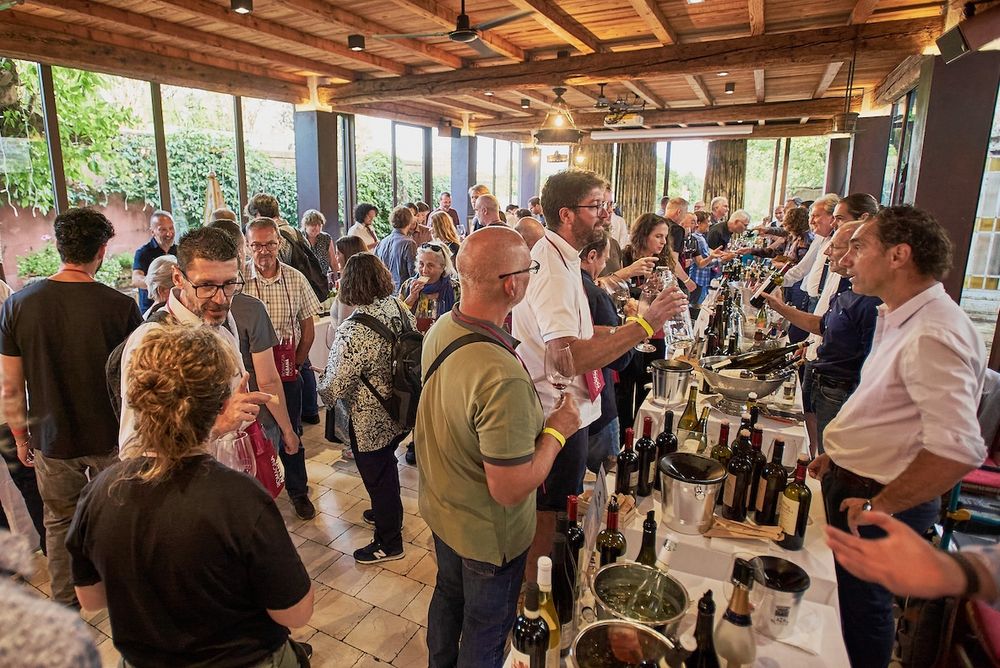
A chance to sample Romagna wines from 60 producers
Bertinoro – salt and structure
If Predappio is about structure and Modigliana about perfume, Bertinoro is about salinity. Its calcareous clays give Sangiovese both power and a distinctive salty edge, making the wines feel firm, long and mineral. At higher altitudes, freshness adds lift to the density, giving Bertinoro one of the clearest identities among Romagna’s subzones.
Bron & Ruseval Riserva, Romagna DOC Sangiovese Bertinoro, Celli, 2021 balanced black cherries and cocoa with a long, saline finish. P. Honorii Riserva, Romagna DOC Sangiovese Bertinoro, Tenuta La Viola, 2021 was lifted with rosehip and cherries, fruity yet firmly structured.
Compared with the finesse of Castrocaro or the lightness of Serra, Bertinoro is denser, saltier, more muscular. Its wines show why this corner of Romagna is becoming one of the region’s most recognised names.
Benjamin Hasko MS/MW, who tasted across the week alongside us, singled out where he sees the future being written most clearly: “Predappio has structure and history, Modigliana offers perfume and freshness, and Bertinoro’s saline clays give a distinctive voice. These are the subzones with the strongest potential, provided producers stay focused on identity.”
Surprises off the beaten track
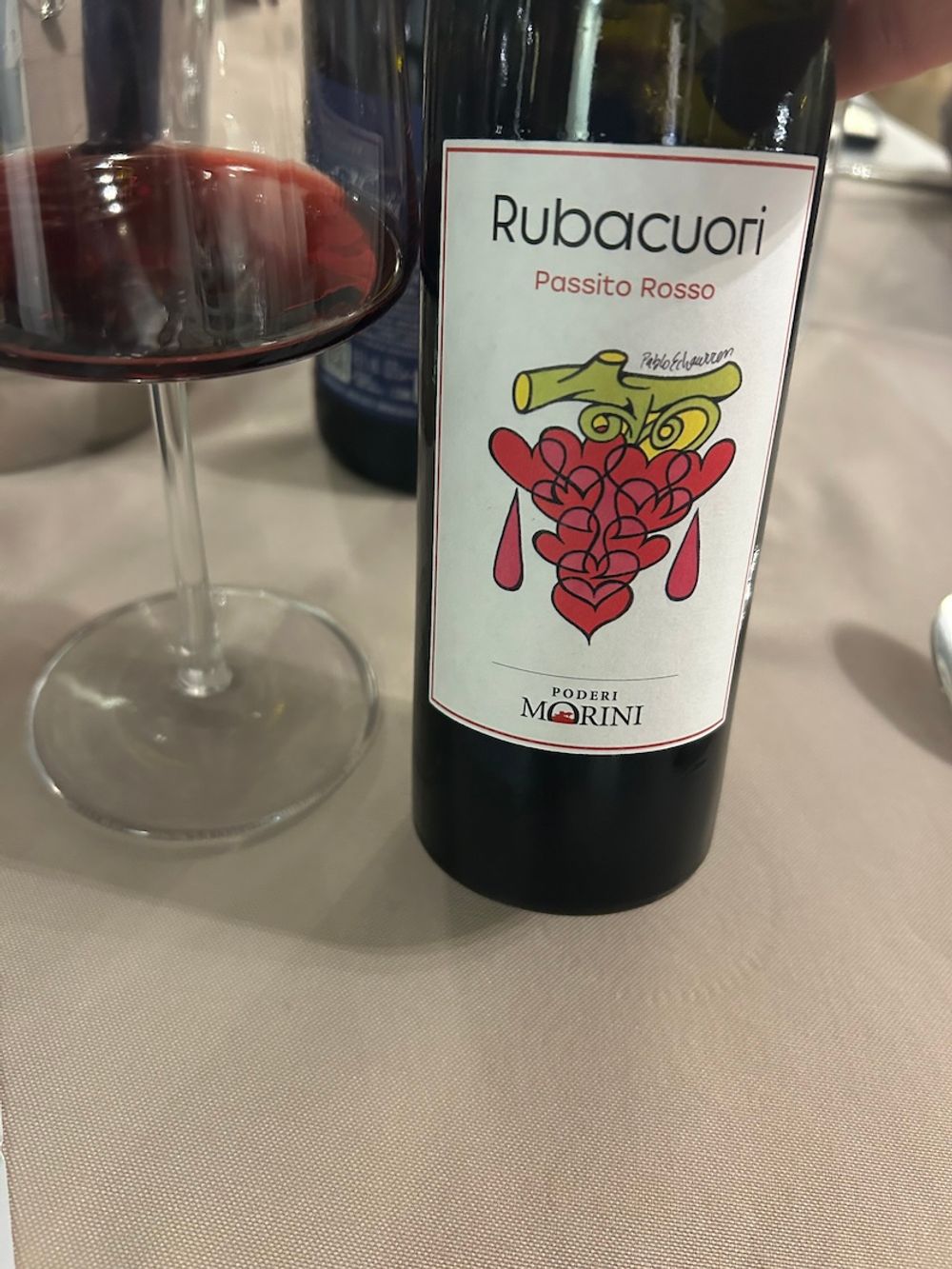
Romagna is not only about its headline grapes. If you look a bit further, a handful of estates are reviving forgotten indigenous varieties, none more striking than Famoso, locally called Rambëla. At Randi Vini, Rambëla Bianca, Ravenna IGT Famoso 2023 was aromatic and grapey, with a lifted, muscat-like freshness that felt jollier and more exuberant than Albana. Alongside it, at Poderi Morini, Rubacuori Romagna Passito Rosso 2011 showed what happens when Sangiovese is dried into a decadent, figgy sweet red. These wines may sit outside the mainstream, but they prove Cristina Geminiani’s point: Romagna cannot afford to play it safe. Experimentation is not only possible here, it may be the region’s clearest path to a unique voice.
Sweet wines
If Albana needed to prove why it deserved DOCG status back in 1986, its sweet wines are the strongest argument. In passito, Albana has an identity that is hard to ignore: botrytis, apricot, honey and spice, with a zing of acidity that keeps it alive.
Bissoni Passito 2023 was light and refreshing, all peach and marmalade. La Sabbiona Giulia 2023 turned richer, with nutty notes, orange peel and mango. Fattoria del Monticino Rosso Albana Passito 2021 carried botrytis and ginger in a luscious frame, while Cantina Forlì Predappio Volo d’Aquila 2021 stood out with earthy depth and a never-ending, zingy finish. Even older bottles had their charm - Umberto Cesari Colle del Re 2015 balanced vanilla, spice and white chocolate.
Together, they made the case that Albana passito is not just tradition, but a jewel for Romagna — distinctive, versatile, and increasingly refined.
Fattoria Zerbina, Tergeno, Romagna Albana DOCG Passito 2024 showed honey and lemon polenta, smooth and fresh, while an earlier vintage from 2014 still carried Mosel-like tension. If Scaccomatto is Zerbina’s uncompromising icon, Tergeno demonstrates a different, more generous side of Albana passito – equally serious, but styled for freshness and approachability.
Yet Romagna doesn’t stop with Albana. At Poderi dal Nespoli, Rubacuori Romagna Passito Rosso 2011 showed what happens when Sangiovese is taken down the same path. Dried cherry, fig and chocolate richness gave a sweet red with a decadent twist – not Albana’s elegance, but a reminder of Romagna’s appetite for experimentation.
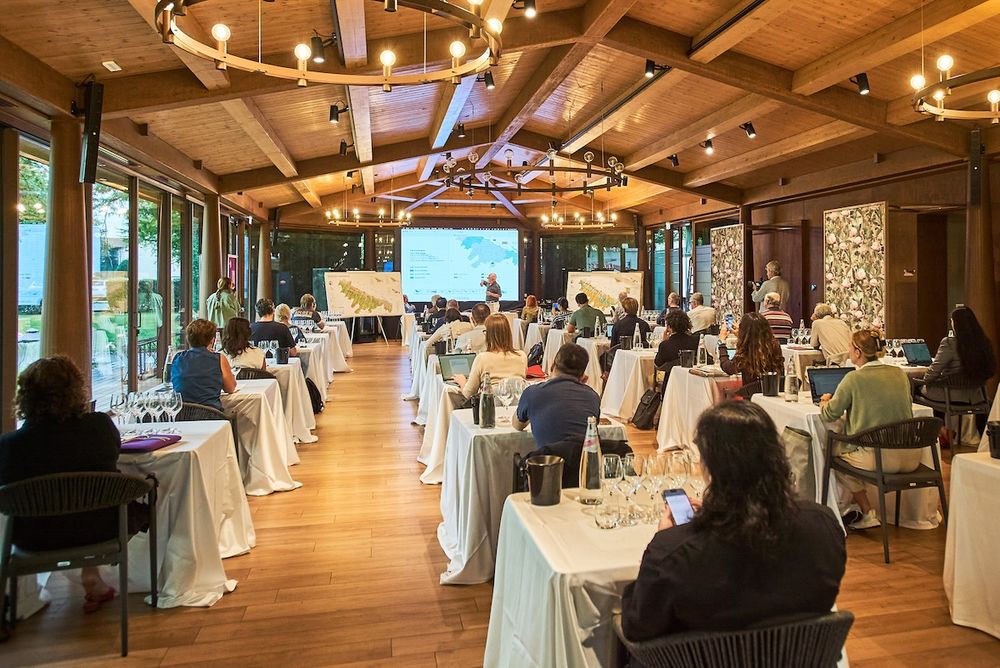
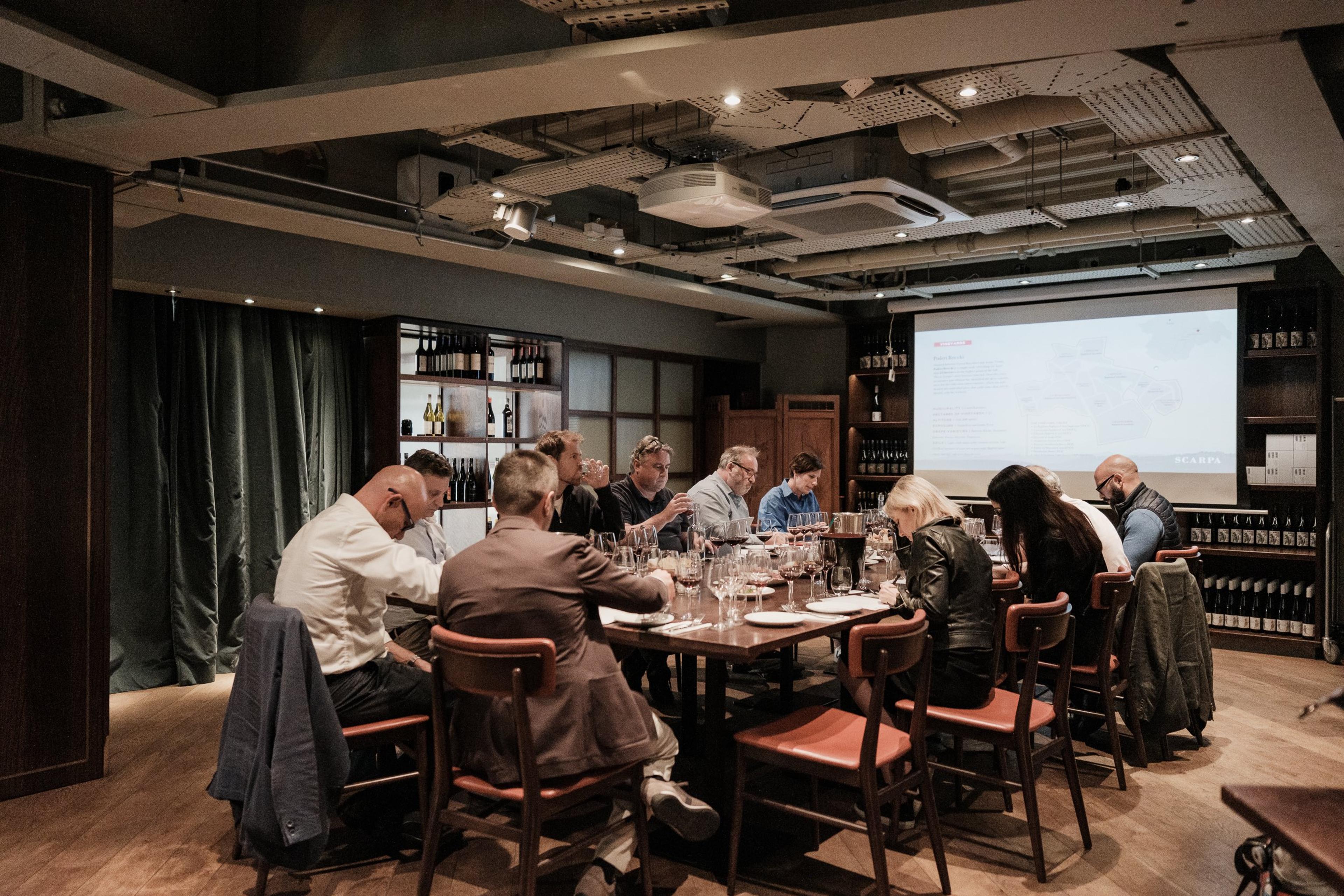
Consorzio masterclass on the soil structures of the region
Depth and definition
Across these hills – Modigliana’s altitude, Predappio’s iron soils, Bertinoro’s clays, Castrocaro’s lightness – the picture emerges of a region with extraordinary diversity. The best wines show perfume, balance and originality.
And yet the region is still unsettled. As I noted in Part One, styles remain varied, sometimes incoherent. Producers are still searching for their USP.
Benjamin Hasko MS/MW captured it neatly: “There’s beautiful, approachable, untapped potential here. The upside is strong because the terroir is real and underexploited.”
That upside, however, will only be realised if producers resist the temptation to homogenise and instead lean into what makes them different.
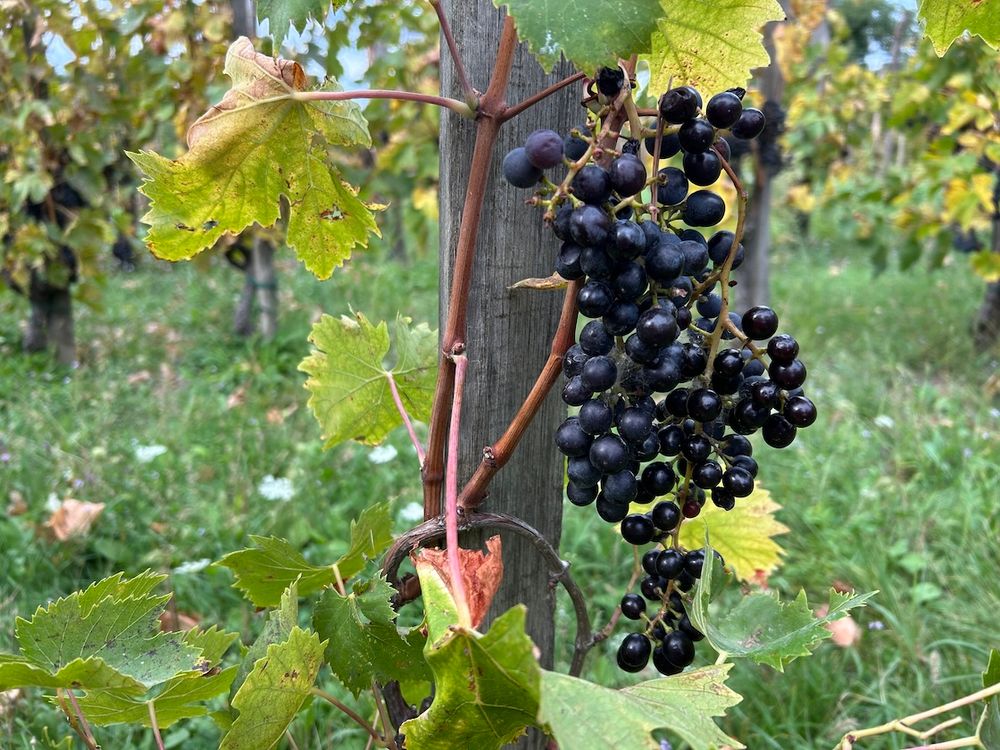
Sangiovese at Villa Papiano
Fire in the last drop
Romagna has all the ingredients: the soils, the grapes, the slopes, the traditions. What it has lacked is definition. But in the vineyards of Modigliana, Predappio, Bertinoro and beyond, the pieces are beginning to come together.
That “last drop on the fire" could yet be the symbol of Emilia Romagna itself: generous, distinctive, and finally ready to burn bright.