Is there anywhere more appealing than the English countryside on a sunny day? Perhaps, if it comes with a vineyard tour, a winery visit and a long, leisurely lunch.
Just 45 minutes from London, Gusbourne Estate offers precisely that. A straightforward journey from St Pancras International to Ashford International, followed by a short taxi ride, brings visitors to one of England’s leading sparkling wine producers. Established in 2004, Gusbourne Estate has built a formidable reputation for traditional method sparkling wines, alongside an increasingly confident range of still bottlings.
A visit is as much about people as place. Hosted by chief vineyard manager Jon Pollard, head of wine Laura Rhys MS and head of wine operations Alastair Benham, the experience begins among the vines. The estate’s first plantings date back to 2004, with initial vintages released in 2010 – recent in global terms, yet already indicative of a clearly defined house style.
Walking through the vineyards, Pollard explains the estate’s viticultural approach. More than half of the plantings are Burgundian clones, selected for their ability to produce smaller yields of intensely flavoured fruit. He says this decision reflects the estate’s unique microclimate and long-term quality ambitions.
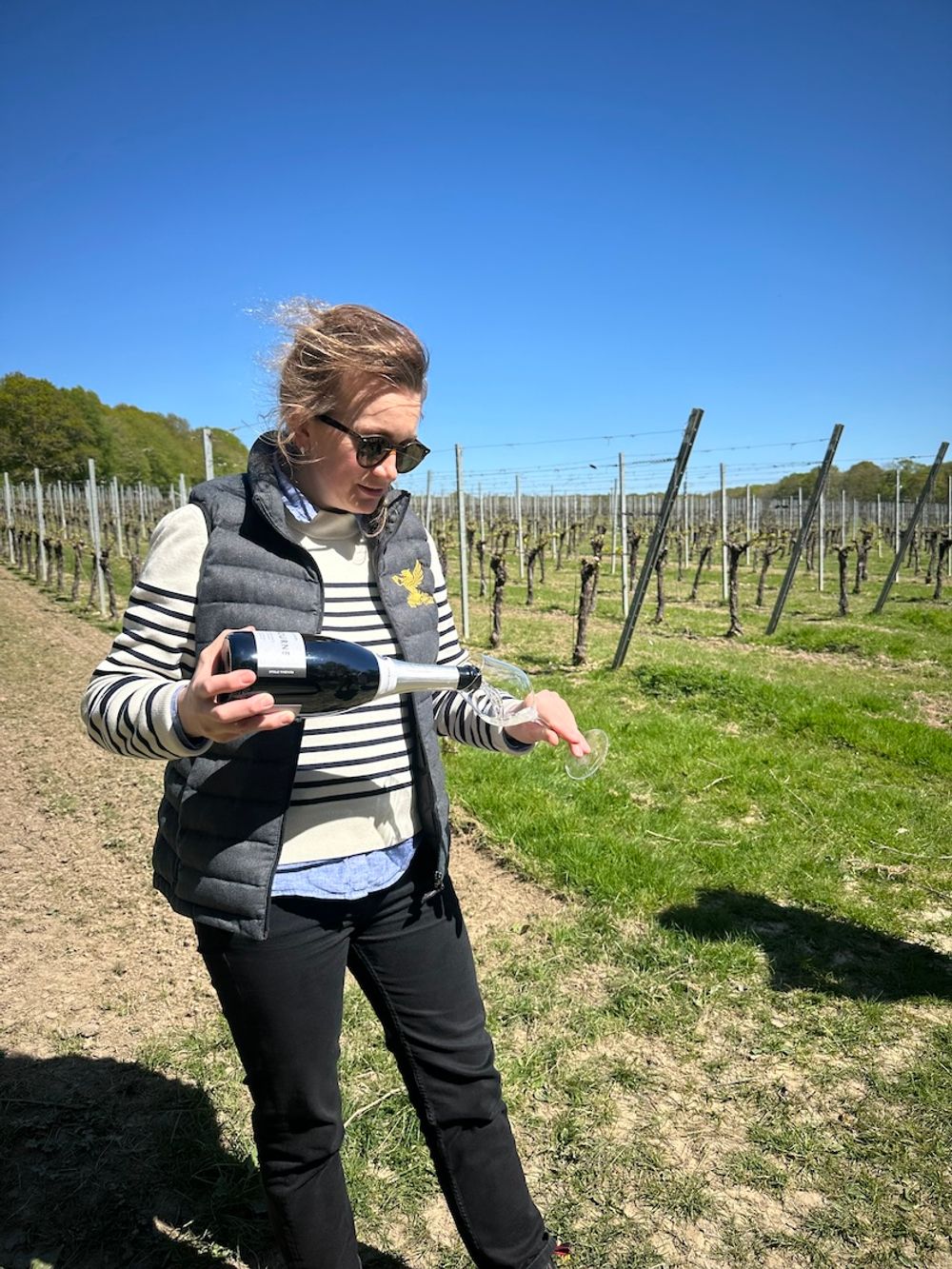
Gusbourne's head of wine Laura Rhys MS
England remains a marginal climate for viticulture, bringing both challenge and opportunity. Frost is a constant threat, mitigated through the use of frost fans during vulnerable periods. Yet it is precisely this climatic tension that gives English sparkling wine its hallmark energy and precision.
There is a distinct electricity to the wines, a vibrancy shaped by seasons that can never be taken for granted. The estate spans around 60 hectares near Appledore, a patchwork of vineyard plots connected, rather charmingly, by golf buggy.
The landscape itself holds quiet intrigue. Once part of the coastline, the area was reclaimed centuries ago as marshland was drained, leaving the sea now some 10 kilometres distant. This layered history subtly informs the character of the site.
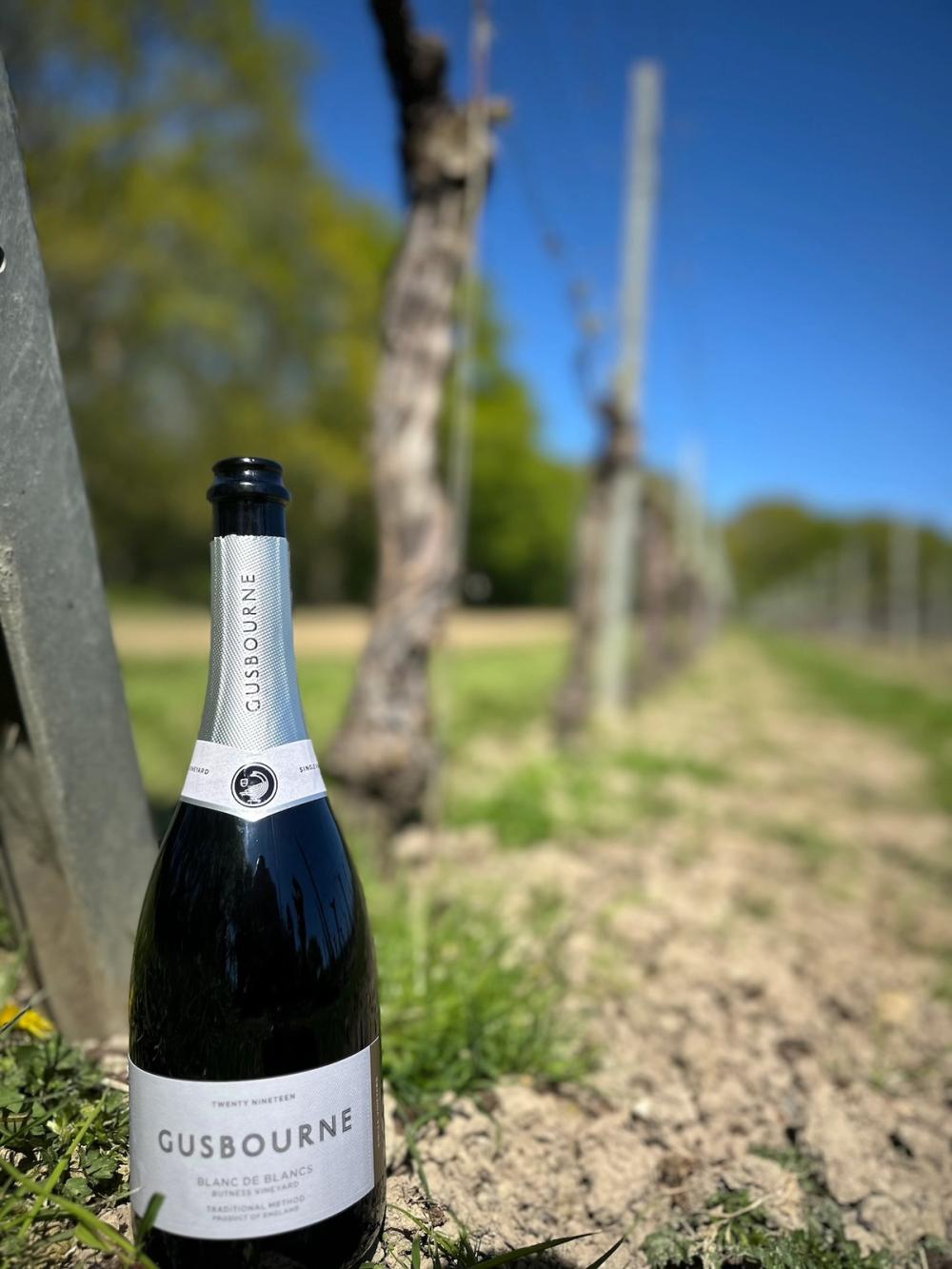
Back at the winery, the latest releases underline the estate’s growing confidence. The Blanc de Blancs, Gusbourne Estate, 2020 stands out for its precision and drive, while the Rosé, Gusbourne Estate, 2020 is equally compelling, combining finesse with depth.
A tasting of base wines from the 2025 vintage suggests considerable promise, pointing towards another strong year for traditional method wines in England.
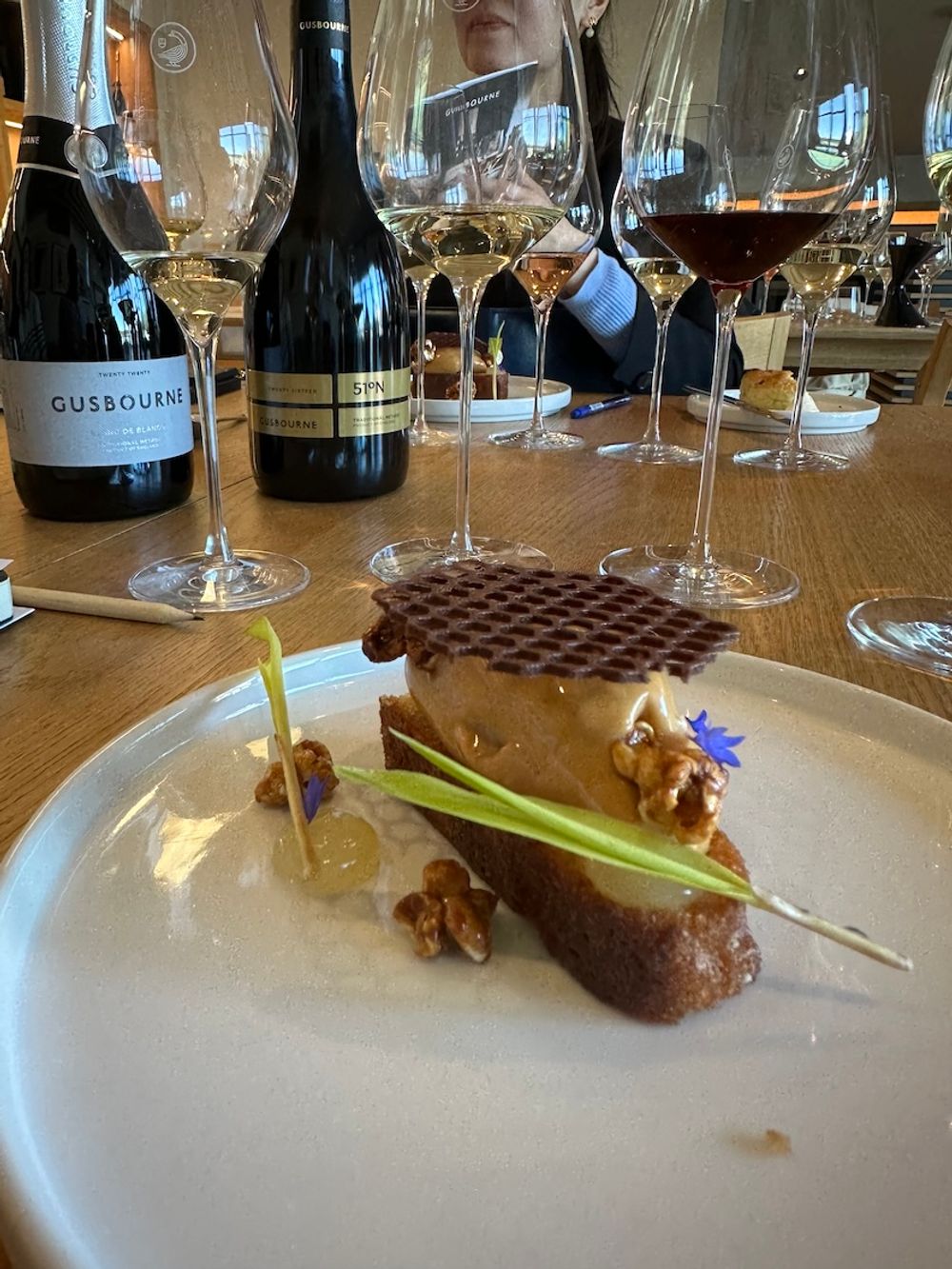
The visit culminates at The Nest, Gusbourne Estate’s tasting room and restaurant. Thoughtfully designed and carefully integrated into its surroundings, it offers expansive views over the vineyards and a clear sense of the estate’s progression. The food is carefully prepared and paired with precision, with a focus on freshness and flavour, each dish designed to complement the wines.
A brief encounter with head winemaker Mary Bridges provides a fitting final note – nine months pregnant and still working hard during blending. Bridges explains that every small decision in the winery contributes to balance, character and the expression of the vintage.
For those seeking a polished yet relaxed escape from the city, Gusbourne Estate presents a compelling proposition. English wine may still be shaped by a marginal climate, but at estates such as this, it is precisely at that margin where the excitement lies.