Do you think the Scottish whisky industry is in something of a ‘perfect storm’ at the moment?
Yeah, I think that's a good description. I mean it's important to note that Scotch whisky has been on a long run of success. I was looking at single malt export figures back in 2000, which were 4 million 9 litre cases, reaching a peak in 2022 of 14m which averages out at a pretty healthy 6% growth a year. However, since then it has dropped back to about 9m which is a fall of around 37%.
I suppose things hit the crunch point with Covid. The whisky industry, like everybody else, was wondering what was going to happen. For the first couple of months things were pretty quiet and then we started to find that customers were getting in touch saying ‘we need stock’, ‘we need whisky’.
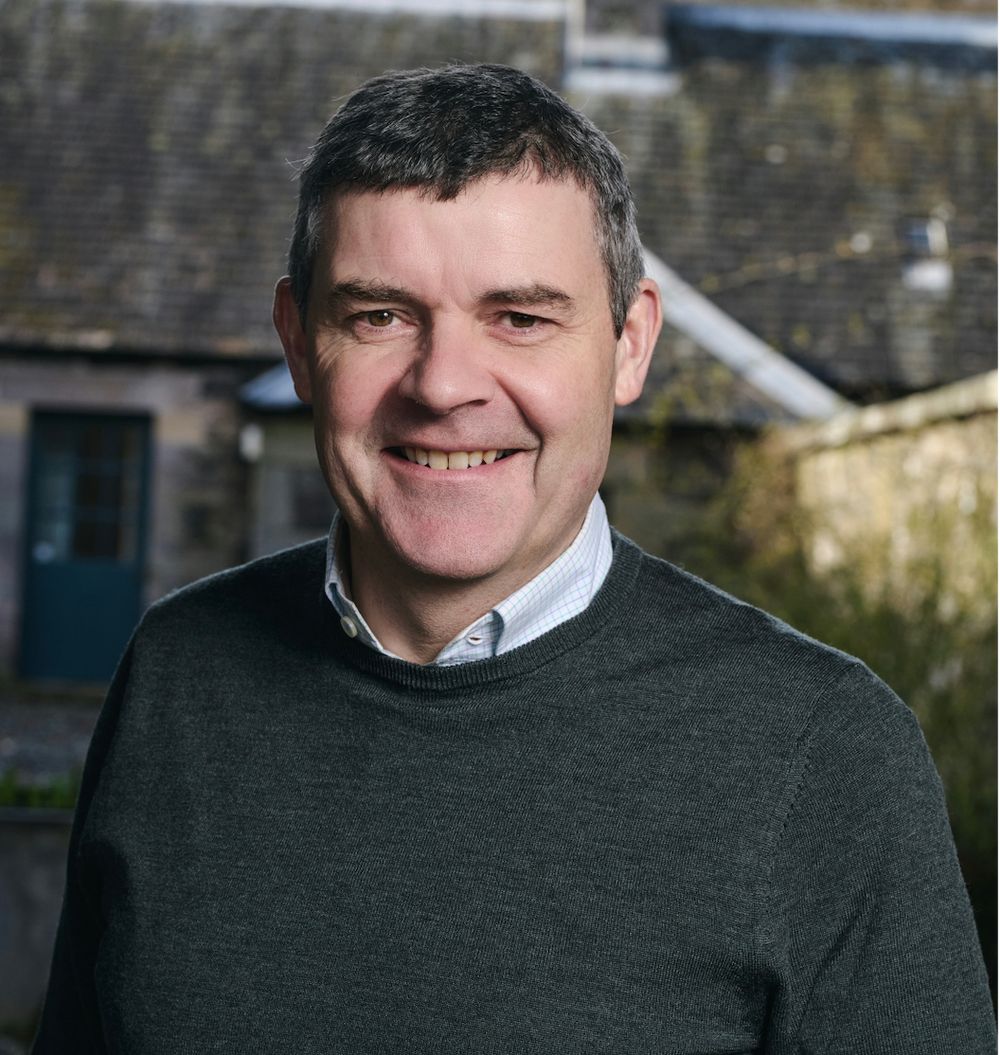
Arran's Euan Mitchell says the Scottish whisky industry is currently going through a perfect storm of issues
We were starting to get a lot of online orders and it became clear that people had more disposable income, and fewer opportunities for spending - so they were buying more premium spirits, single malt Scotch whisky being one of them, and they were fairing up quite significantly.
By 2022 things had reached a peak, and the industry got pretty excited, perhaps over excited, thinking was this the new reality? You know, once people tasted these more expensive whiskies they wouldn’t want to go back - so it seemed it could be ‘boom time’ all the way.
Post-Covid you see the perfect storm. The invasion of Ukraine, inflationary pressures from governments printing money during the pandemic, the cost of energy going through the roof - and all of a sudden consumers were under pretty intense economic pressure.
So, the start of the bubble bursting?
They took a fresh look at the drinks cabinet and saw that it was pretty full. If they were going to make some cut backs that was one of the first places they looked. Then you just have that knock on effect, so the retailers started to see their orders dry up. They had lots of inventory and stopped placing orders to the wholesalers. The distributors and brand owners obviously realised it was hitting a slow down quite quickly but it hit producers like us a bit later.
It wasn't really until around the middle of 2024 that we started to feel the same effects on us that we had been hearing from the bigger companies for about 12 months at that stage. We began to see a significant slowdown, compared to where we had been, and that has continued ever since.
Critically this downturn in demand for Scotch whisky has been repeated around the world?
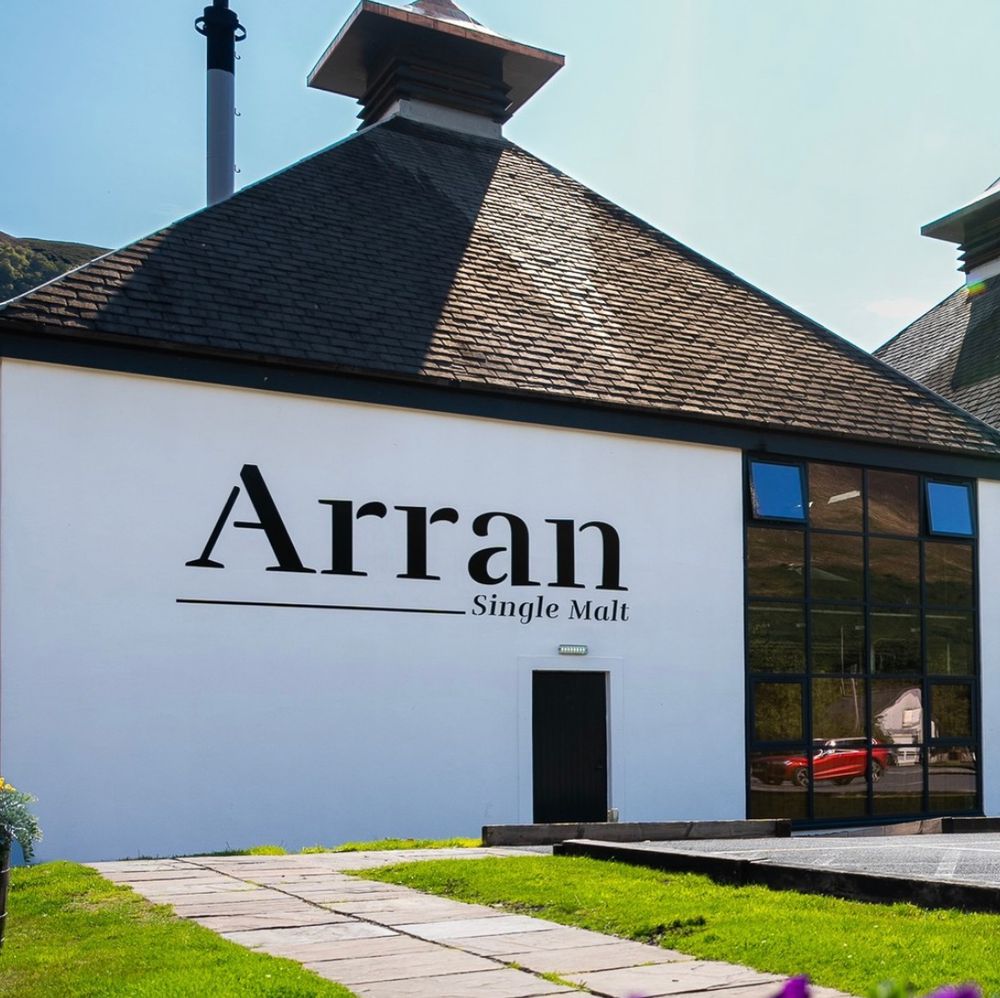
Lochranza Distillery on the beautiful Scottish Island of Arran
Indeed. It's not just about one market. It's not just the UK, unfortunately, it's pretty much affected all of our key markets. So, to a greater or lesser extent sales have been flat, or down slightly.
In China we didn't ship a single case last year, not one bottle. So, a market that had been a top five one for us suddenly just goes completely quiet and we're left scratching our heads thinking ‘where did the good times go!’
In that context 2024 was a bit of a shock to the system for everybody, while in 2025 there was a bit of a feeling of ‘will it be better this year, or will it be worse?’ - in most cases it got a bit worse.
The issues are when is it likely to improve? The answer is simply nobody knows when we will see a significant upturn.
How has the Scottish whisky industry reacted?
It's not a situation we have been used to and there are lots of people in the industry that have never known anything but that growth curve. For some people it’s been like ‘what do you mean sales are down? that’s never happened before!’
We have definitely seen a change, and a big change at that.
The issue facing the industry is understanding when things will start to get better. Having now been through this for some 18-24 months, there are a couple of key things to consider. One, is that people haven't stopped buying single malt, the category hasn't switched off, it's just that consumer buying habits have changed significantly.
In what ways have you seen the UK market change?

Euan Mitchell says there has been a big change in the Scottish whisky industry of people buying to drink rather than invest
I have been saying for some time that the market has shifted, and at the minute it's very much a drinker's market so it's about consumers who have always bought single malt. They like to have a wee dram - every day, every few days - but they enjoy consuming whiskey and they're operating, within UK terms, at the up to £50 price bracket.
As a result, we have seen the market between £50 and £100 soften significantly, and anything above £100 is really quite a tough sell at the moment.
Limited editions are still selling okay but they’re not selling as quickly as they used to do. People would often buy two bottles - one to keep, one to drink - and one of the few bright spots of this whole situation is that the bottle flipping market has almost disappeared because that secondary auction market cycle has also gone very, very flat.
So, buying single malt as a money making investment exercise has taken a big hit?
With those people who were just buying bottles as a speculative purchase we are not really seeing any of that now because they’ve had their fingers burned financially, or they haven't been able to move them on.
So everything's taking a step back to its roots really. It's gone back to that drinker's market, which in some ways is no bad thing. It's about consumption, it's about people enjoying single malts, it's about people not buying bottles to stick on an auction site, or on a shelf, or to put away in a cupboard for a special occasion, probably never to be seen again.
With obvious benefit to the steadfast whisky drinkers?
People are buying the regular brands that they love, and enjoy, and they are continuing to consume them. So, what we’ve found within Arran, is that last year bottlings like our 10-year-old, with the exception of one or two markets, saw about 8% growth in volume, and the Barrel Reserve, which is kind of our entry level product, grew by around 10%.
The more budget priced products are continuing to remain key to maintaining sales then?
Within these price points - one is under £40, one is under £50 - it’s clear there's no problem here, the market is still quite strong. These are products that do pretty well in the on-trade too, so drinkers are wanting a quality single malt in a bar that offers a good value dram. People are still enjoying them, and that's great.
It's stuff like the higher value, older expressions - your 18 year olds and so on - that are definitely a harder sell just now.
So, upselling and premium shift are no longer the current reality?
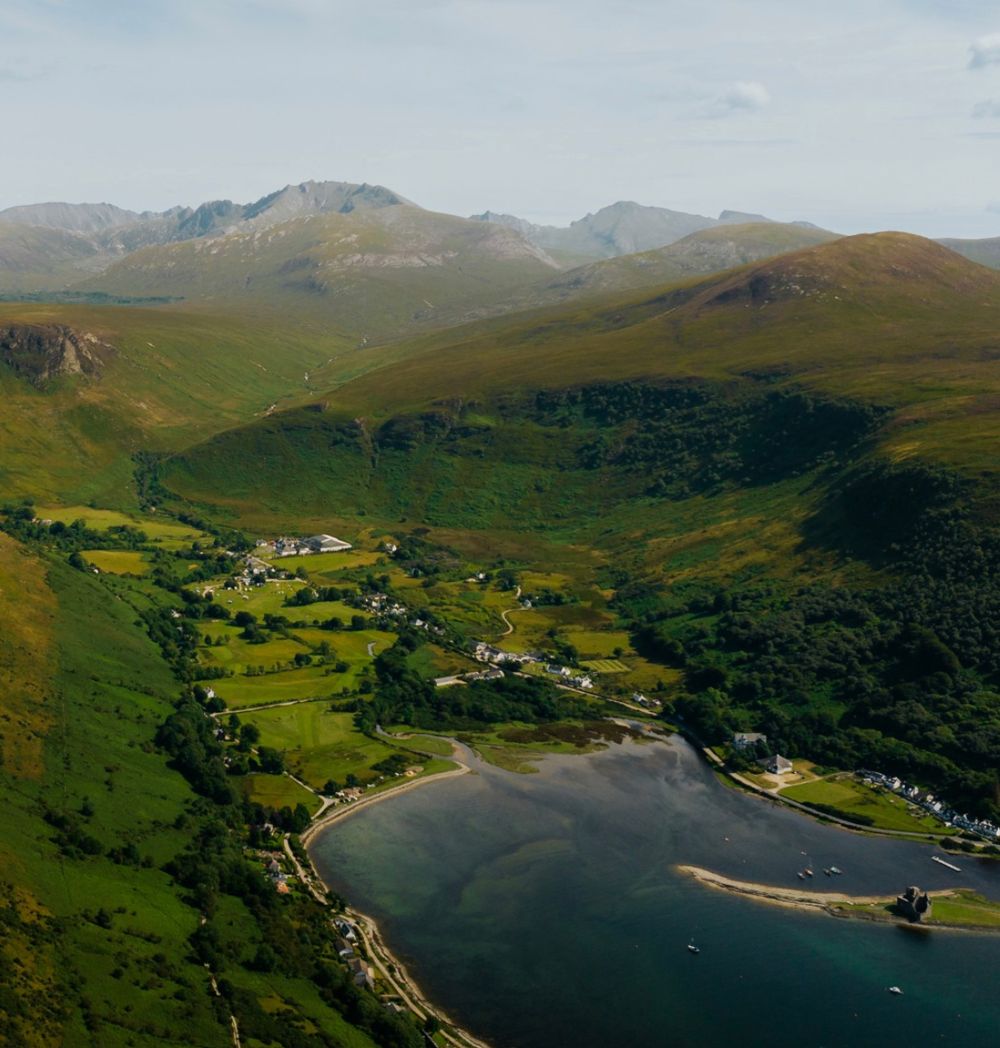
Lochranza is the original home for Arran Distillers'
The feedback we get from a lot of retailers is that upselling consumers is not on the menu at the moment. For a long period of time it was all about premiumisation, but now people are visiting retailers with a fixed budget in mind, and the sellers are saying, ‘okay no problem’ so they're very much operating within the confines of this current reality.
Last year we did start to see one or two markets show some green shoots, like the UK last year was actually a very good market for us, while other markets, like China and Germany, have continued to struggle. A lot of that is being driven by the big companies slashing their prices to try and maintain volumes. We haven't done that, we haven’t increased prices, but neither have we reduced them.
Is this strategy potentially an existential threat to the independent side of the single malt industry?
There are some incredible deals being offered on the big brands right now and that's keeping their volumes going but that's just something we haven't got within our brand strategy so we will just ride it out until pricing returns back to more normal levels.
It's currently much more about the watch words ‘quality’ and ‘value’ and that's what everyone is really looking for. I might be biased but, for example, our 10 year old, it's a great dram, good quality, and good value for money, and that ticks all the consumer boxes right now.
So, how does this fit in with the relaunch of the Arran 14 year-old from a current, strategic point of view?
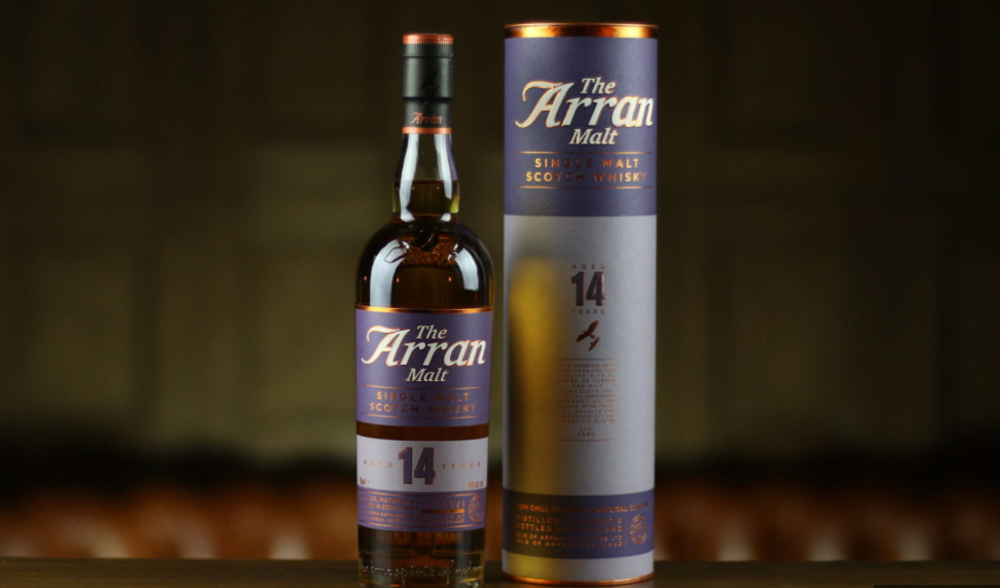
Arran's 14-year old malt whisky
Yes, that is now filtering into the market, so it does look like a purely strategic move, but it's as much driven by our stock situation where our older stocks - between the 18 and 25-year-old - will be phased out of the range over the course of this year.
We do have the younger stocks so we're bringing back the 14 year-old, but actually it's more by chance than by design, but that's a good thing because it's going to be a decent dram in that £50 to £100 category. I think it will do well because it's the next level up from the 10 year-old but it's not a big uplift in price, it's more manageable.
Tariffs have also become a key factor for the industry. Will the trade deals, with the US, and to a lesser degree China and India, help revive Scotch whisky sales over time - especially for the indie side of the sector?
It can only help. I think India is the really big market opportunity for Scotch whisky now, but it's principally for the big companies at the moment. Those who have already got some form of presence there.
For smaller, independent companies there is still quite an obstacle getting into India, it's quite an unknown quantity and not just one market but many different ones, even within the provinces different cities have different ways of selling alcohol. Some states are also dry for religious reasons, so it's a hugely complex market in many respects.
The tariffs are certainly coming down but at 150%, are extremely high. They'll fall over time to 75% but it's still a big challenge as they very much also want to preserve their own domestic spirits industry.
The Chinese market remains a key challenge?
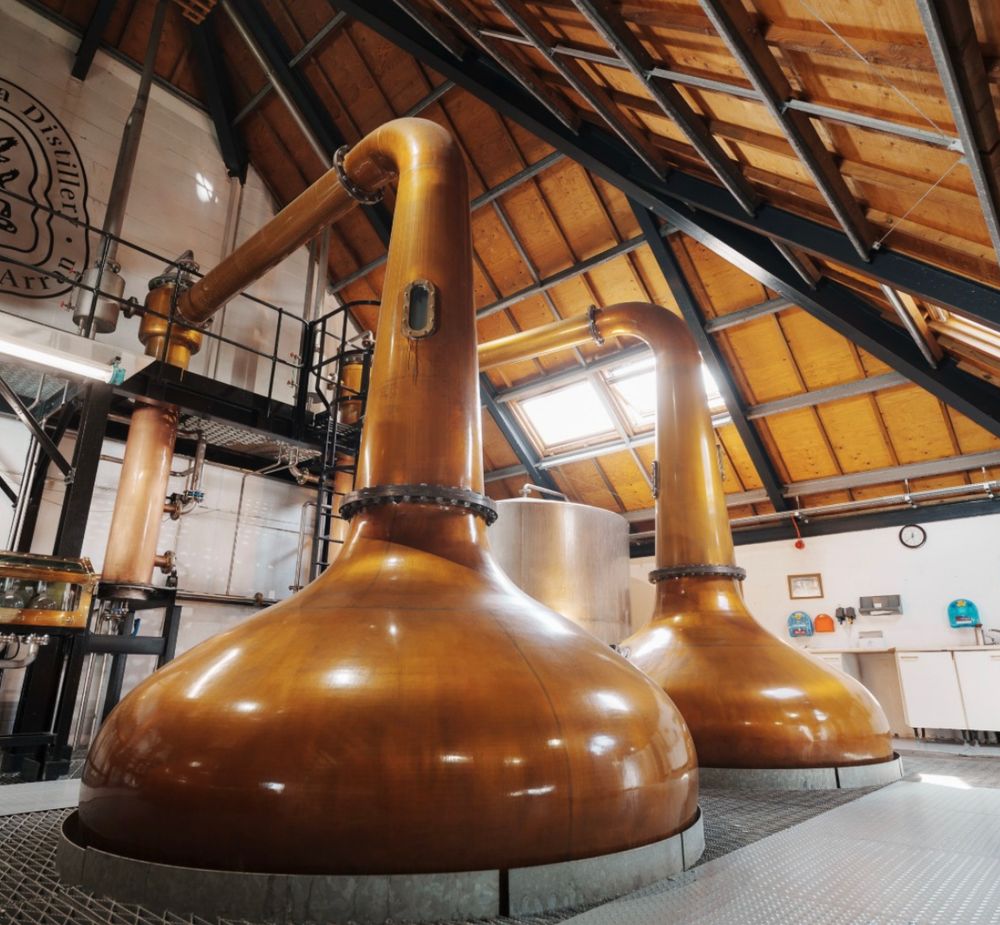
Arran has had to manage stocks and demand in face of a drop in sales around the world for Scottish whisky overall
China went from nothing 15 years ago to one of our top 5 markets but in the last 18 months has gone back to zero again. It’s a market where, when times are good, they buy a lot, they hold a lot of stock, and it's the done thing to be seen celebrating the good times. When times are not so good it's more frowned upon - so everything tends to be either all, or nothing and at the minute it's pretty much nothing.
Hopefully, this tariff reduction from 10% to 5% could revive the market. I mean there is a great love of whisky in China already, so I think in the short-term we are likely to see a boost, as it is already quite an established market. India has huge potential for the big brands, while the smaller brands will kind of follow on in their wake, but that'll take time.
So, I think for us, China is an easier place to pick up a win-win situation. With India, yes we're working with a company there, but we appreciate that there are no quick fixes. Ultimately we hope it will help mop up a lot of the excess volume in the sector.
Do you feel the historically cyclical nature of the malt whisky market adds an extra layer of complexity to forecasting industry recovery?
It's such a difficult industry in terms of production versus sales because when sales are flying everybody makes more, even though your production at that time bears no relation to future reality. You're not going to be selling it for at least the minimum of three years, but more realistically five, 10, 15 years in advance.
There's a lot of rich people in the industry, but nobody has managed to get their hands on a crystal ball yet so it's very difficult to predict the market.
It's a cyclical industry. When the times are good everybody makes a lot more, but it means when there's a downturn then the future forecasts start to look a bit nonsensical. We're at the bottom of the cycle at the moment, so that probably suggests that in 5-10 years time there is actually going to be a shortfall in the industry.
This is all despite the fact that malted barley prices are historically low just now, casks are available, raw materials are not an issue, but everyone feels they’ve had their fingers burned with warehouses full of stock.
There is still a lot of talk about the moderation trend - particularly for younger consumers like Gen Z. The amount of no-low or ‘functional’ spirit drinks, is continuing to grow. Is this also a major concern longer term?
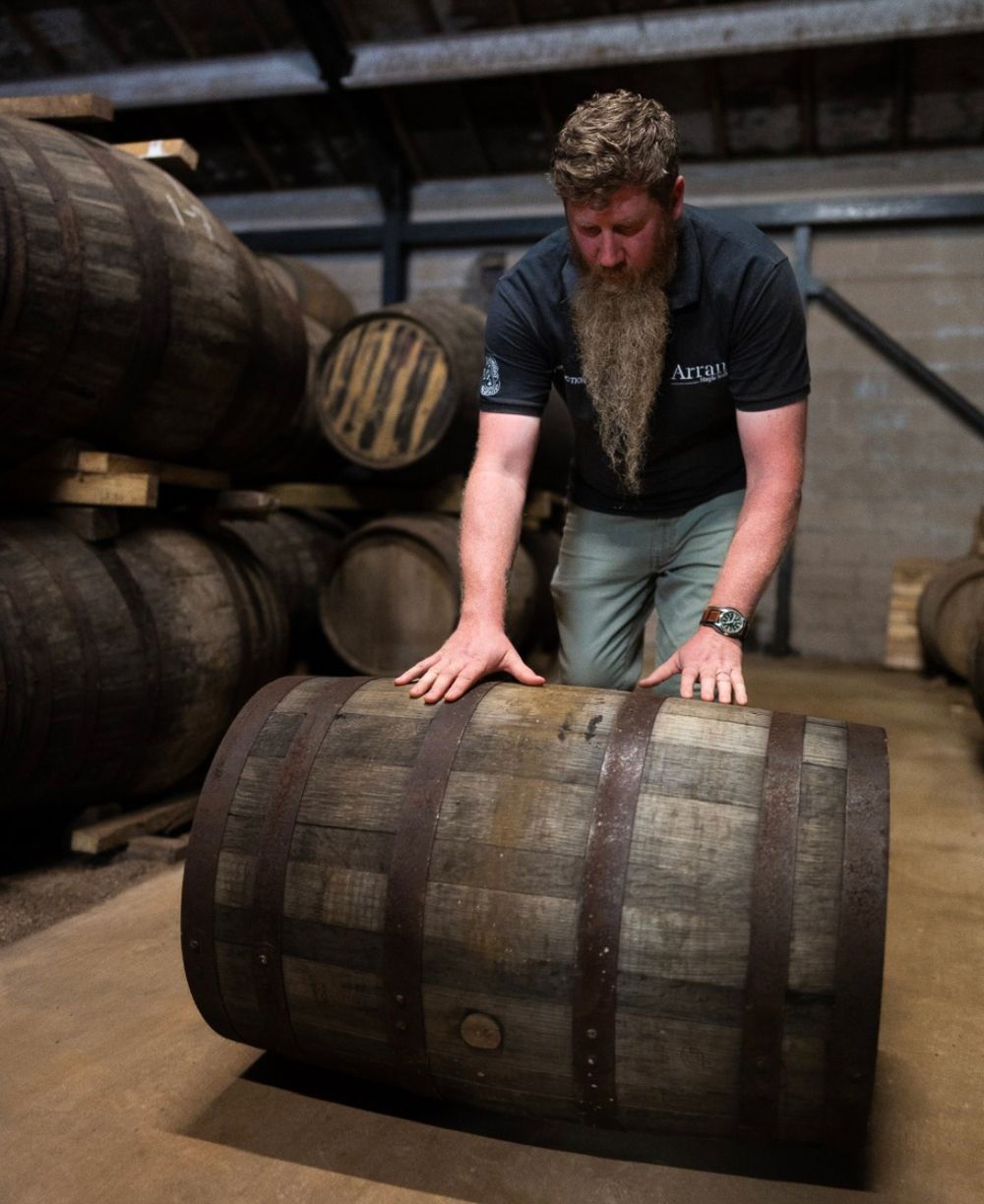
Euan Mitchell says the Scottish whisky industry has always been about the long term and being patient and riding out the good and bad times in such a cyclical market
Time will tell. It's about how that generation ages, the choices they make as they get older, as maybe they discover the joys of alcohol! It is good that people are being more mindful about these things. But, it comes back to that quality over quantity message so it's about people pushing the message of drink less, but drink better. Definitely that's a key message.
I've always been a big supporter of the on-trade and I think its benefits sometimes get lost in this constant noise around moderating alcohol. We've always had a system that's managed consumption - it's called a licensed trade!
I think, for young people now, going for a night out is expensive. Even if they actually want to enjoy a few drinks, the cost is often so high that they can't afford it. That then encourages more supermarket purchases, they're staying in, or heading out later and later at night.
Is there a way we can attract these younger drinkers back to the whisky table?
I see the next few years being very interesting, clearly there's quite a move towards enjoying healthier lifestyles but I think the message needs to get across that alcohol can be part of that. We can't be put in a situation where alcohol is just demonised as being bad. People need to know there is a good side to this as well.
I think we need to continue to bang that drum of quality over quantity, enjoying it responsibly, and with all the sociability benefits that can come with that. It's a very important angle but it's getting overwhelmed by this constant health message. I think we need to find a better balance here, but hopefully that will come.
Considering the issues the craft brewing industry has faced with closures, do you see a risk for some of the newer whisky distilleries to go the same way?
Certainly. In Scotland, we are still seeing a lot of new distilleries being planned and you wish them well. Obviously, if they have a good business plan in place, if they've got the financial backers, and understand this is a very long game, then they have a good chance of staying the course.
However, inevitably, there are people who go into this industry without understanding just how deep the pockets have to be. With whisky the start-up costs are enormous, and you can no longer necessarily rely on gin or vodka sales to cushion the business in the interim.
I think inevitably we'll see some consolidations and sales. You need to stand out in the marketplace, on a shelf, to differentiate yourself from so many other brands and that's tough, so unfortunately I think there is going to be a contraction and some will, sadly, probably close.
Finally, Arran Distillers itself invested significantly in opening a new operation at Lagg in 2019. Will this pose a challenge to the viability of your wider business in the current trading environment?
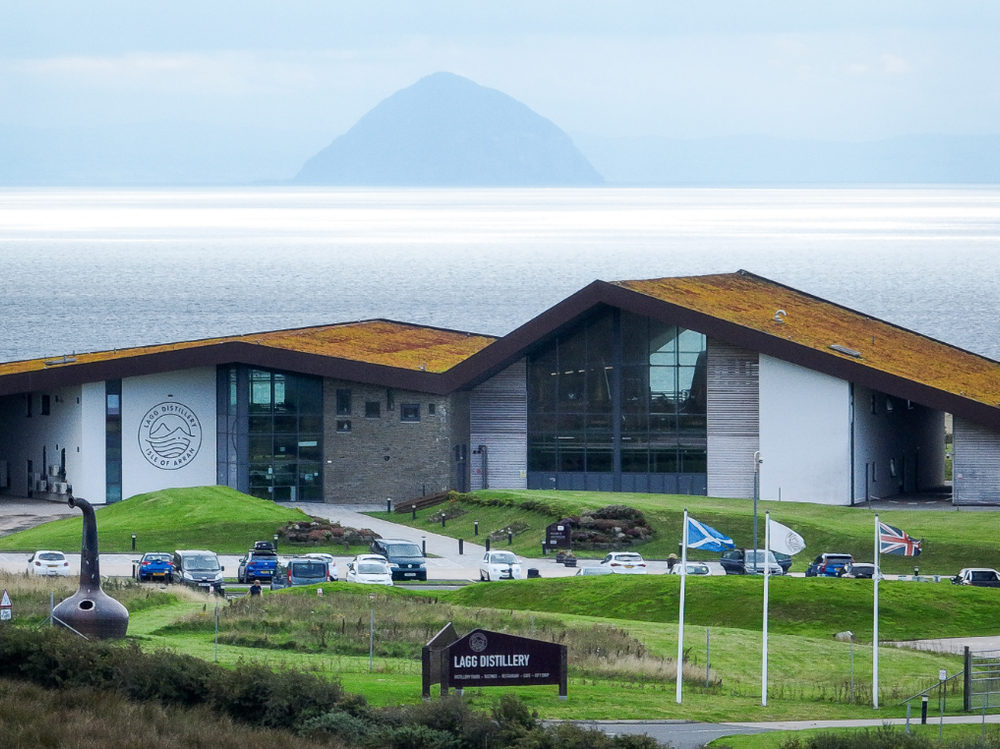
The new Lagg Distillery
Of course, we weren't immune to the old whisky fever ourselves! However, we are an established malt whisky business, with a long trading record behind us, a well known brand, and a good reputation to trade from, so we've always got that to fall back on.
We have the time and space to build up Lagg in the long-term but if you're just building a new, young distillery and that's all you have right now then it is tough, very tough…
* You can find out more about Arran Distillers here.