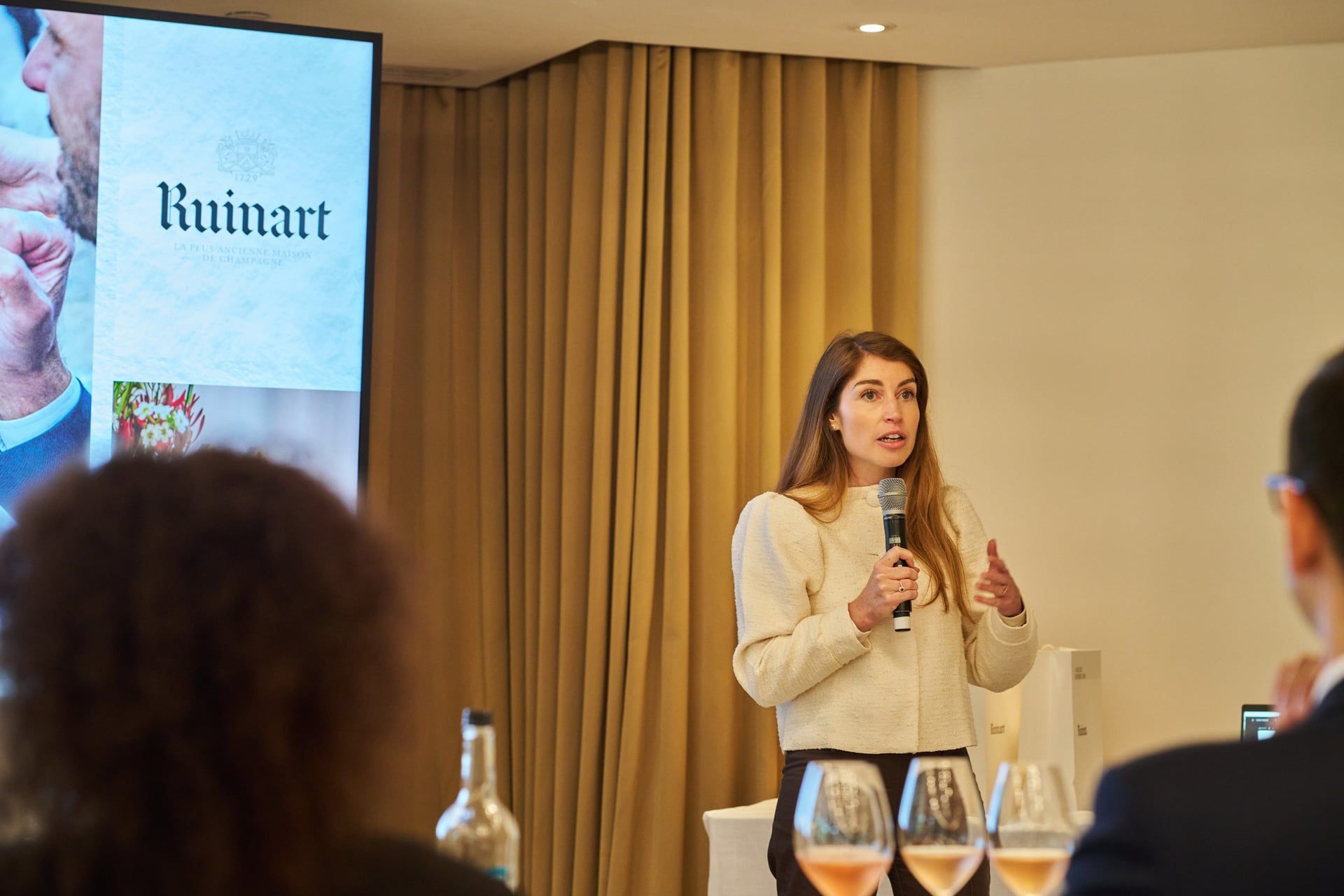
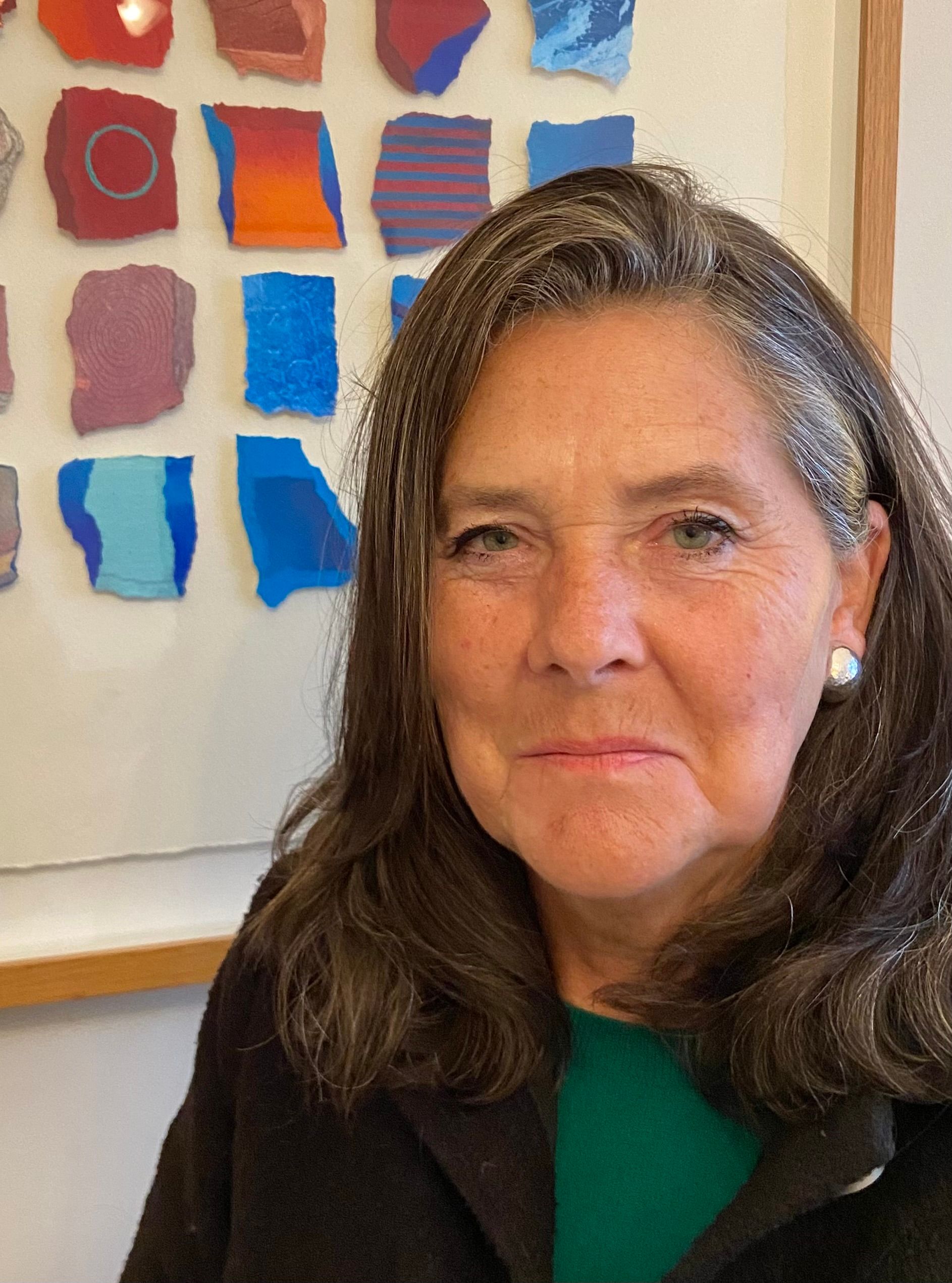
Ruinart is the world’s oldest Champagne house but now has one of the newest and youngest cellar masters. Caroline Fiot officially took up her post in January this year following the untimely death of Frédéric Panaïotis in a tragic diving accident. He had held the role since 2007. Her appointment was brought forward, having already been selected to rejoin Ruinart in 2029 for its 300th anniversary.
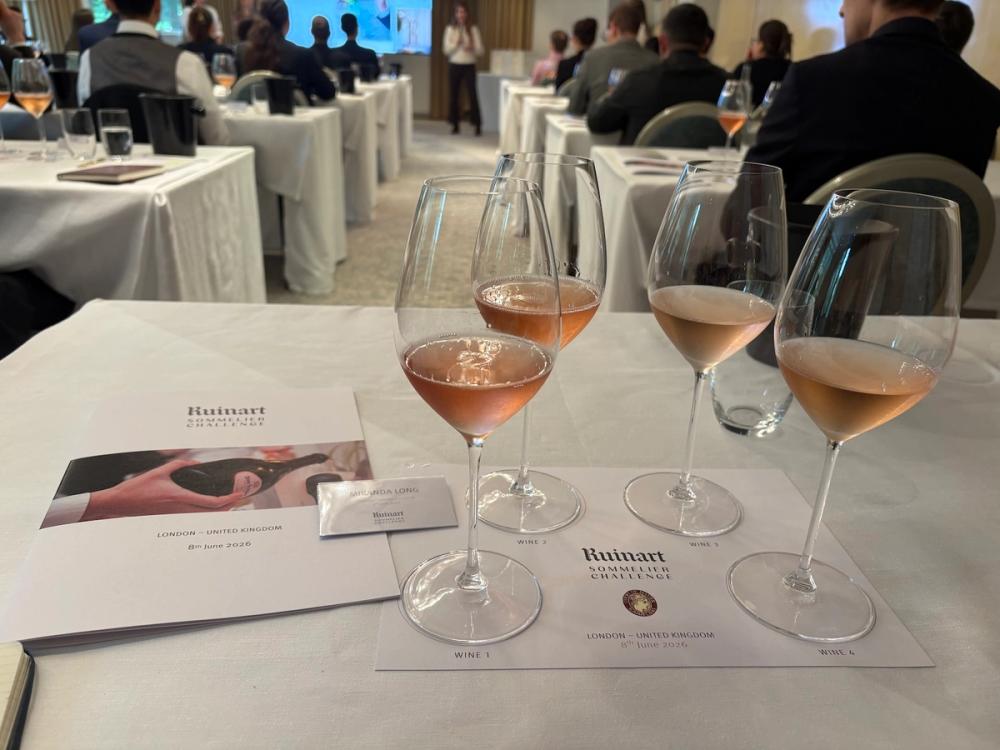
Ruinart Champagne Sommelier UK Challenge 2026, London, June 8, 2026
Fiot is no stranger to Ruinart, part of LVMH since 1987. She was part of the winemaking team between 2016 and 2020 led by Panaïotis, a member of the tasting committee and she oversaw fermentation processes during harvest.
Alongside these responsibilities, she led several R&D projects, including studies on lightstrike and its impact on Ruinart Blanc de Blancs, and contributed to the creation of the Second Skin case. Over the next five years, she also worked on adapting viticultural and winemaking practices to climate change, conducted micro-vinification trials to explore varietal adaptation, and helped develop the first edition of the new cuvée, Ruinart Blanc Singulier.
After a stint at Chandon Argentina in 2020, she returned to Champagne in 2021 to take on responsibility for the Mont Aigu winemaking site at Maison Moët & Chandon. Three years later, she was appointed head of all winemaking facilities, overseeing the implementation of blends from the reception of musts through to bottling for Moët Hennessy’s maisons in Épernay.
Fiot trained as an agricultural engineer and oenologist educated at Institut Agro in Montpellier, and began her career working in the vineyards of Saint-Émilion. This early family experience inspired her to pursue a career in the wine world. She went on to gain international experience at several estates, notably in the United States and Vietnam. Back in France, she deepened her scientific training by joining the LVMH Chair at ESSEC Business School.
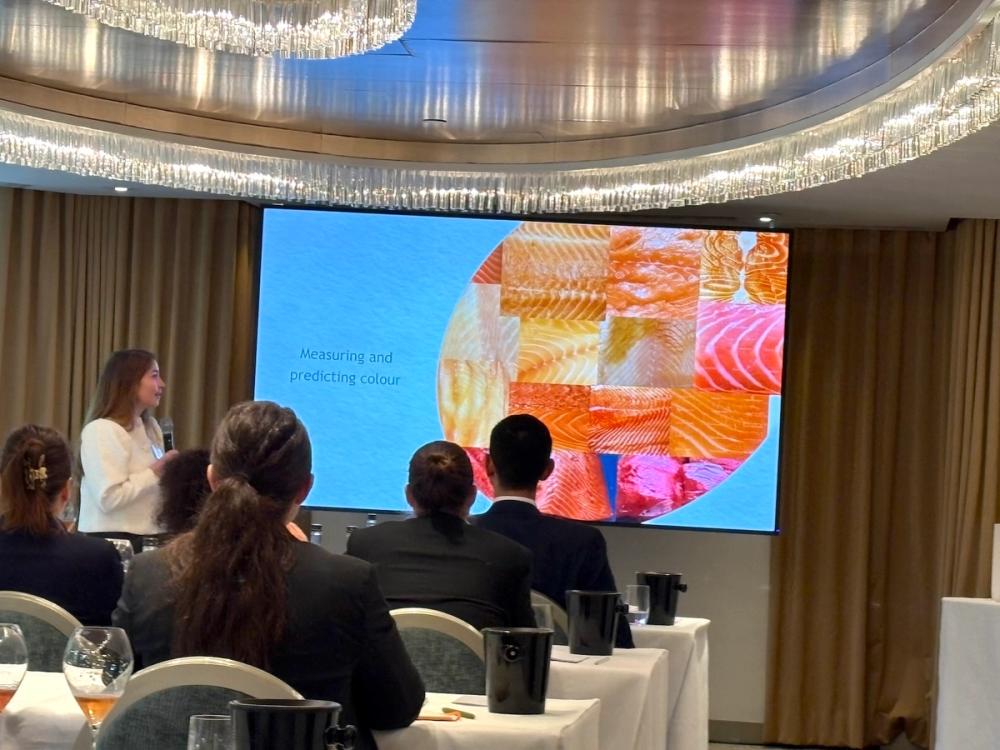
"I now use the colour descriptions not of salmon, but tints of orange or pink!” Caroline Fiot at the Sommelier Challenge 2026, London
Rosé Champagne
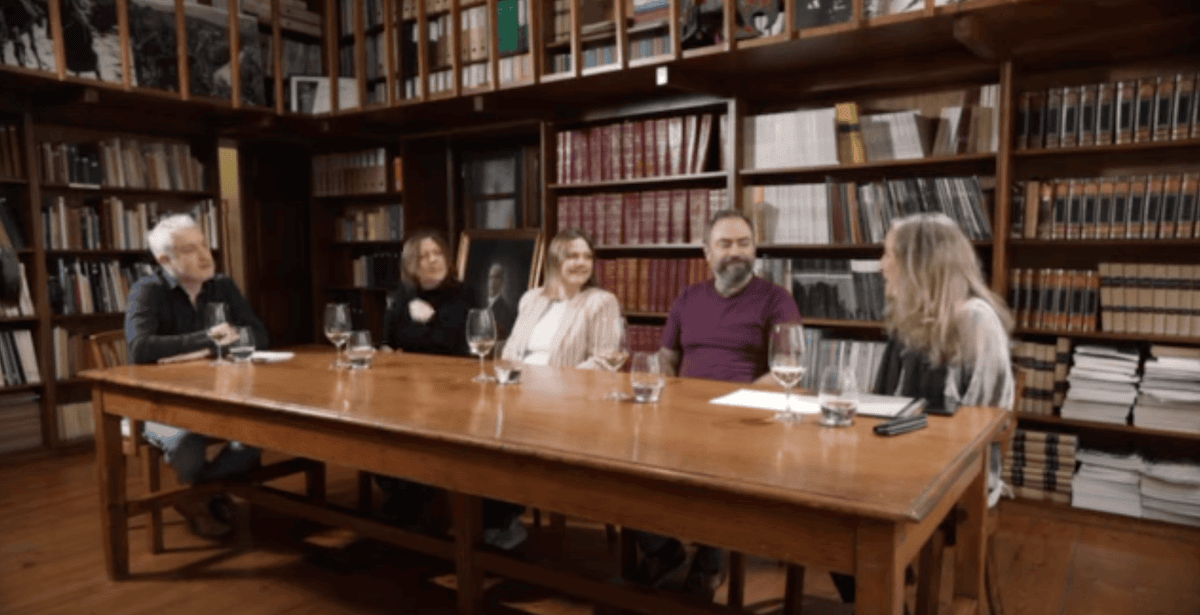
Fiot, aged 35, introduces the masterclass ‘Exploring rosé – ripening and winemaking’. Tinted rosé Champagne was produced since the late 18th century, and the ‘Fismes’ tint (elderberry syrup) was invented in the 19th century, but disappeared in 1907. Blending wasn’t invented in 1818 she explains and it was famously Madame Cliquot who was the most well-known rosé pioneer.
Today, Ruinart Rosé is the blend of Chardonnay (the signature taste of maison) and the fruitiness of Pinot Noir. It balances the aromatic freshness of Côte des Blancs and Montagne de Reims Chardonnay (45%) with the fruitiness of Montagne de Reims and Vallée de la Marne Pinot Noir (43% vinified as white and 12% vinified as red). It is aged in cellars for two to three years (dosage 8g/l, ABV 12.5%).
Fiot laughs that when she first joined Ruinart, Panaïotis asked her what colour she would use to describe rosé wine. “Salmon”, she replied, “but then Panaïotis illustrated just how many different shades of salmon there are. At his insistence, like him I now use the colour descriptions not of salmon, but tints of orange or pink!”
The Champagne Rosé she shows us has been a success story. Since 2020, the Champagne Rosé volume share has grown worldwide from approximately 4% to approximately 10% (peaking at 12% at its highest in 2013).
Sommelier Challenge winners
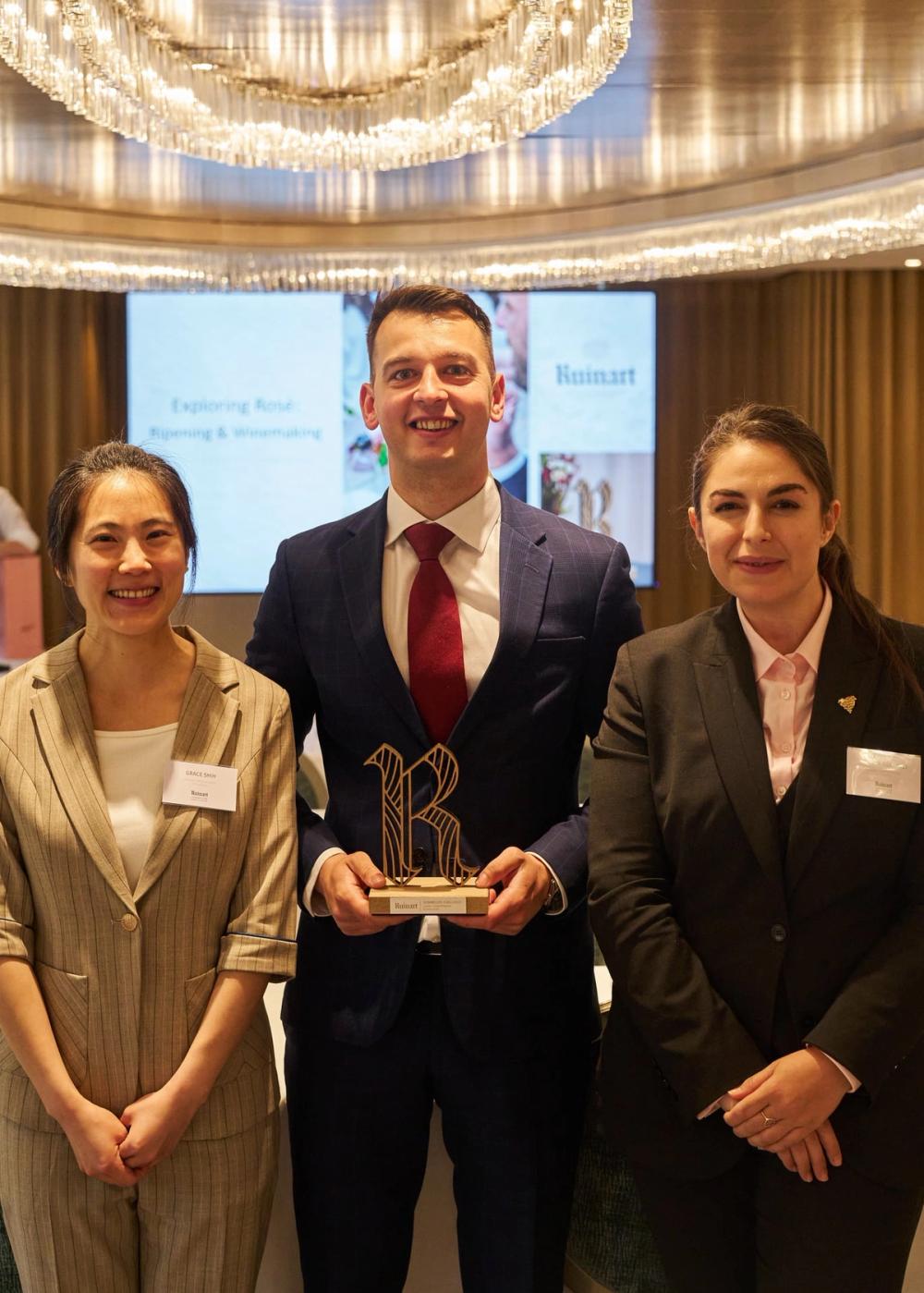
Sommelier Challenge 2026 winners (l-r): Grace Shih, Restaurant St.Barts, winner Zareh Mesrobyan, Estelle Manor, Joanna Nerantzi, Raffles London at the Owo
Last year’s Challenge didn’t go ahead as it came soon after the shock of Panaïotis’s passing. But the winner from 2024, Emma Denney, head of wine at Claridge’s Hotel introduced this year’s Challenge and explained what an amazing prize it was to visit the cellar for four days. She joined the judging panel led by Fiot and Natalie Earl, France editor at Decanter, for this year’s competition.
The blind tasting of four rosé wines, tested candidates on their ability to describe and identify each wine, recommend food pairings and specify appropriate serving conditions. “We set a tough challenge”, declares Fiot.
The 2026 winner was Zareh Mesrobyan, head of wine at Estelle Manor (who was also a runner-up in 2024). Joanna Nerantzi, head sommelier at Raffles London at the OWO hotel, took second place, while Grace Shih, head of wine at the London eatery Restaurant St. Barts, finished third.
Mesrobyan, who is originally from Bulgaria, is also an IWSC panel judge and international sommelier competitor. As part of his prize he will join fellow Ruinart Sommelier Challenge winners from around the world on a four-day educational trip to the Champagne region alongside Fiot and the Ruinart winemaking team. The visit will include technical tastings and an in-depth exploration of the region.
Fiot says, “It was an honour to be part of the competition this year - the calibre of contestants taking part was very impressive. It was not an easy decision to choose a winner but we are thrilled to welcome Mesrobyan to the challenge’s international community this year and look forward to hosting him in Reims.”
The competition is now held in eight countries. It aims to bring together talented sommeliers who share the values of excellence and wish to continue learning about wines and the winemaking process. “To me the value of genuine human connection in events like these has never been more important and should be nurtured,” Fiot concludes.
Use of capsule vs cork ageing
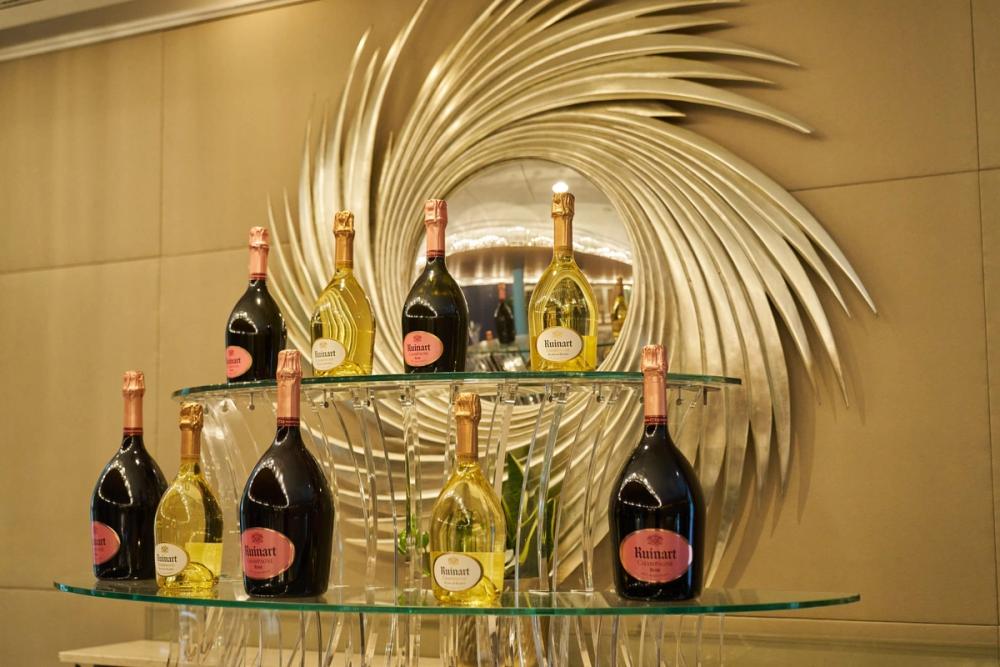
After the masterclass we had the chance to savour:
Ruinart Champagne Rosé NV 2021-based blended rosé, 45% Chardonnay, 2-3 years aging. (7g/l dosage)
Dom Ruinart 2009 made exclusively of Grand Cru vineyards grapes, 85% Chardonnay, 10-years of ageing (4g/l dosage). This is the last vintage to be aged with capsule ageing. as the producer has completely switched to ageing under cork. The next vintage, Dom Ruinart 2013, will be released next year.
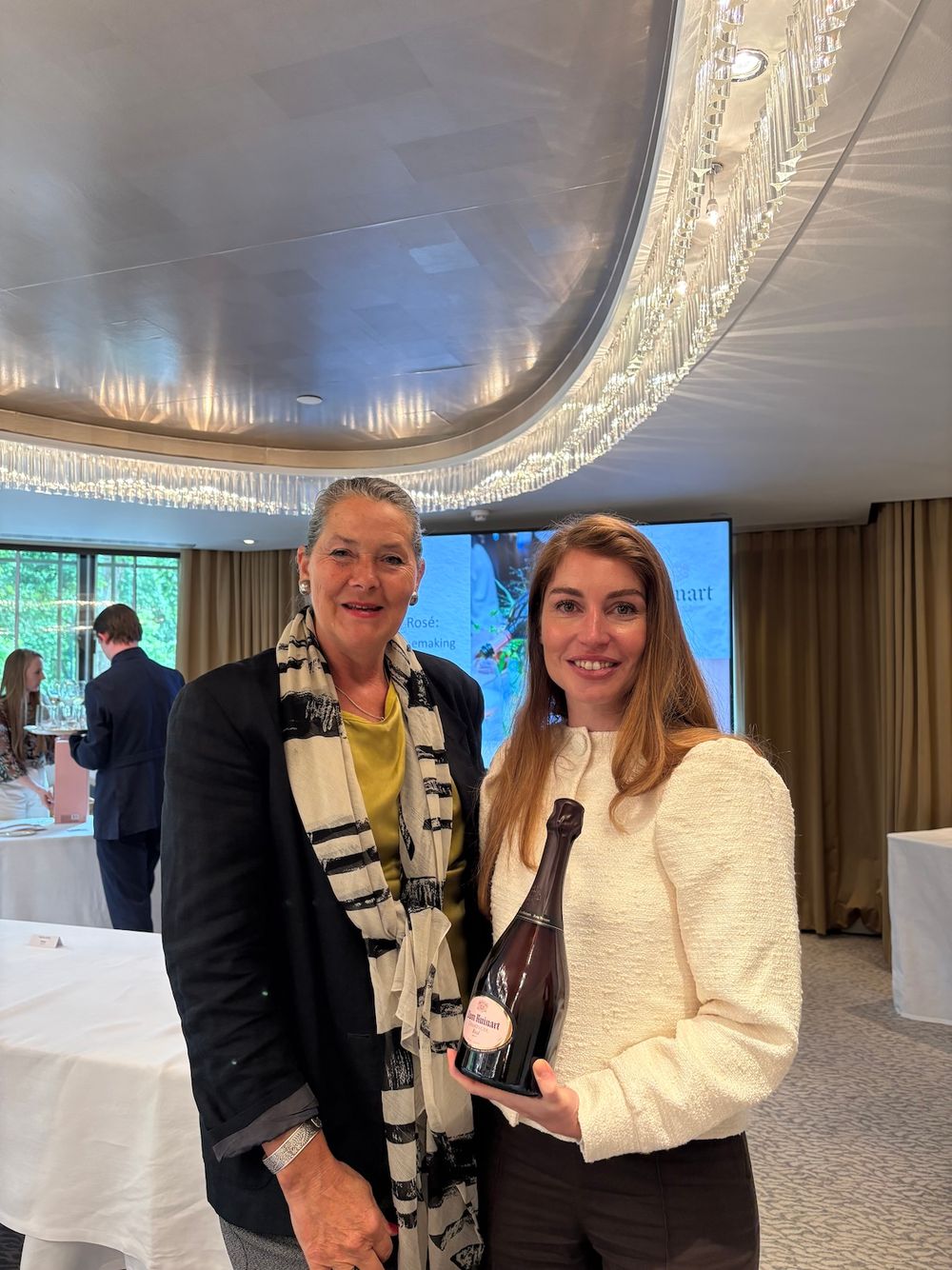
Caroline Fiot with author Miranda Long
Ruinart’s 300th anniversary in 2029
Ruinart is clearly in very safe and visionary hands with Fiot now entrusted with carrying forward the signature taste of Chardonnay and the pioneering spirit of the maison in the lead-up to the house’s 300th anniversary celebrations in 2029.