Tell us about how you got into wine and why you wanted to follow a career in wine?
I grew up in Gujarat, a state in India where alcohol is prohibited, so wine was not part of my upbringing at all. My first exposure came only after I enrolled in a bachelor’s degree in hospitality and hotel administration and moved to Hyderabad. I was fascinated immediately not just by the liquid, but by the combination of culture, geography, people, and precision that wine represents.
Coming from a background where alcohol was taboo, wine became a doorway for me into a world I had never known but felt deeply connected to. I realised very early that this was not just a subject I enjoyed; it was something I wanted to dedicate myself to professionally.
What attracted you to being a sommelier specifically?
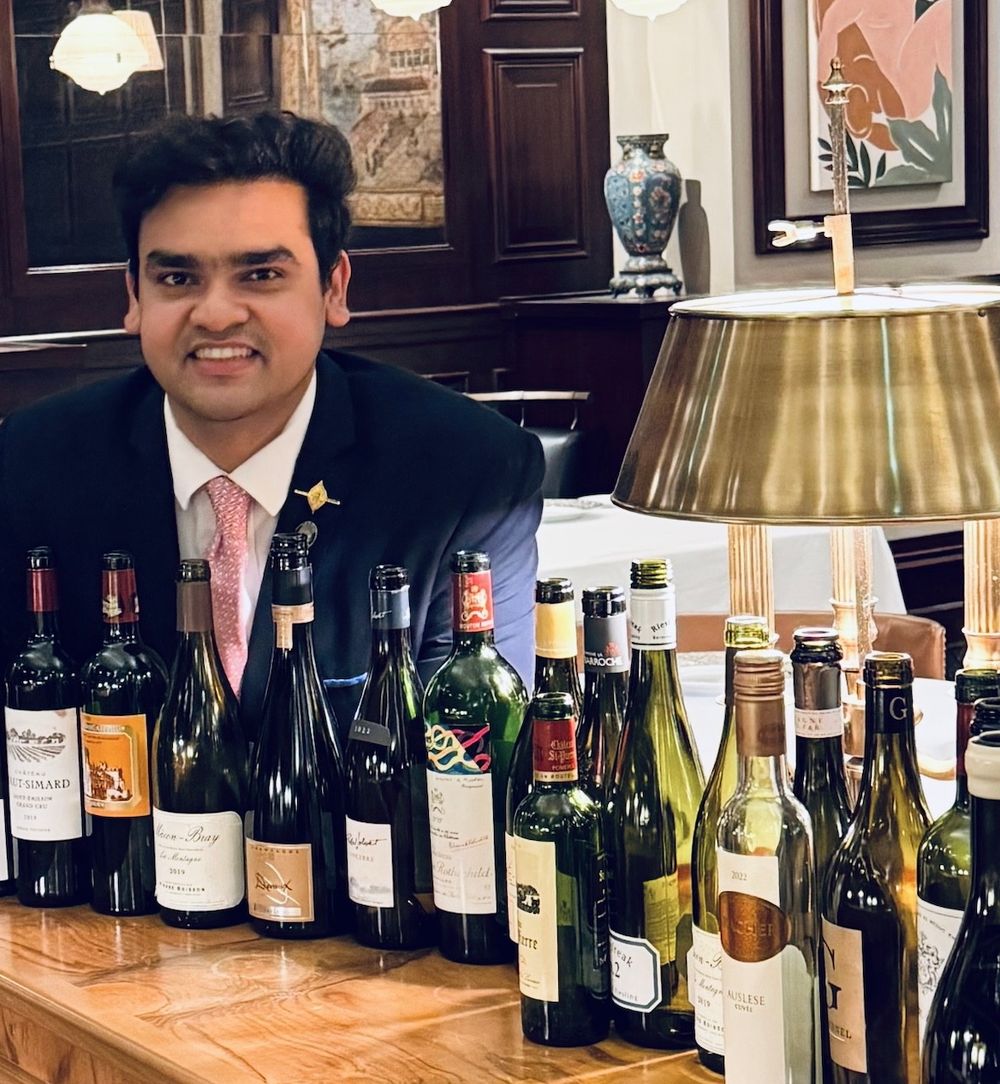
Hanil Mathur is training to be a Master Sommelier alongside his role as h
The sommelier role, for me, is the perfect balance of intellect, hospitality, leadership, and emotional intelligence. I loved the idea of being the bridge between a producer’s vision and a guest’s experience.
I was drawn to the intensity of service, the discipline of blind tasting, and the ability to shape a guest’s evening through knowledge and empathy. Being a sommelier allows me to keep learning every day while also contributing creatively to a team and a restaurant.
What has been your career to date as a sommelier – key steps along the way?
I began my formal wine journey in 2018 with the Court of Master Sommeliers, passing both the Introductory and Certified exams on my first attempt at the age of 20, the youngest Indian to do so at the time.
From there, I progressed through various certifications:
- French Wine Scholar (Highest Honours).
- WSET Level 3 (Merit).
- ASI Sommelier Diploma (Gold).
- CMS Advanced Sommelier at age 24.
I was also named second position at Best Sommelier of India in 2024, a recognition that further motivated my pursuit of excellence. Over the years, I have also served as a judge at the Hong Kong IWSC, the India Wine Awards, and the Wine Masters Asia by the Drinks Business, experiences that broadened my perspective on global wine standards.

Harnil Mathur competing in the Best Sommelier India competition
Professionally, I worked across India and later completed an MBA in wine and spirits business at the Burgundy School of Business, where I deepened my understanding of wine business and Burgundy.
I am now associate director of wine at Black Sheep Restaurants in Hong Kong, leading wine programmes across multiple venues. In 2025, I was named one of the “Rising stars of the Sommellerie World” by ASI, which has been a meaningful milestone in my career.
What was your initial training to be a sommelier?
My foundational training was through the Court of Master Sommeliers and learning on the restaurant floor. Because the culture of wine is still young in India, I had to rely heavily on self-study, mentorship from a few key people, and creating tasting opportunities wherever possible.
Working in the Seychelles early in my career exposed me to an international clientele and a wide range of wines, which accelerated my practical learning and helped me refine both my palate and my approach to hospitality.
Studying and living in Burgundy later provided me with structured academic training and invaluable hands-on exposure to vineyards, producers, and terroir. Travelling through wine regions around the world further deepened my understanding of styles, cultures, and traditions, giving me a well-rounded foundation that continues to shape my approach as a sommelier today.
What do you enjoy most about being a sommelier?
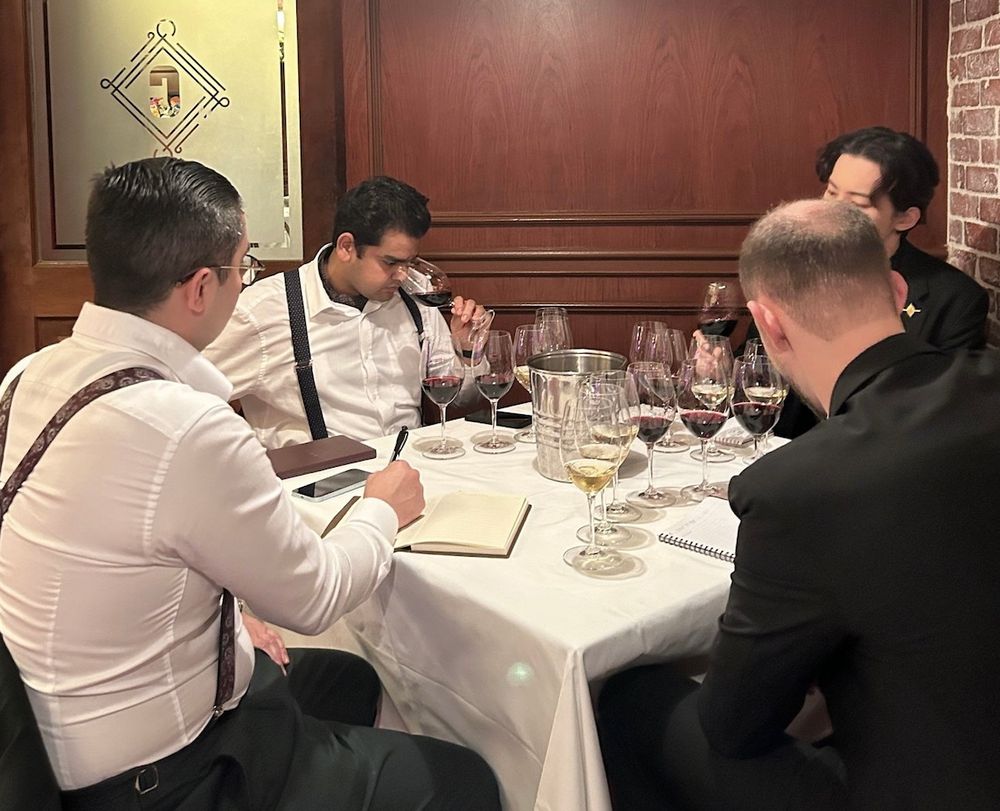
Harnil Mathur taking part in staff training and wine list assessment
I enjoy the intersection of knowledge and human connection. The most rewarding aspect is guiding a guest toward something they didn’t know they would love. I also enjoy mentoring young sommeliers and contributing to the broader community whether through training, competitions, or building better wine programmes.
What do you find the most challenging aspects about being a sommelier?
The most challenging aspect is balancing the intense study required with the physical and emotional demands of restaurant service. Another challenge, particularly in Asia, is breaking preconceptions about wine and encouraging guests to explore unfamiliar regions or styles.
I manage these challenges by building structure into my week; scheduled tastings, study plans, physical training, and mindfulness. For guests, I focus on gentle education, storytelling, and building trust rather than pushing too hard.
Why do you want to train to be a Master Sommelier?
The Master Sommelier title represents the highest level of professionalism, discipline, and service in our field. For me, it is not about the pin; it is about the person the journey requires you to become, someone who is technically strong, emotionally mature, and able to elevate the people around them.
I want to be part of that standard and eventually bring that knowledge back to India and Asia to help shape the next generation.
What have you enjoyed most about the training and education side of becoming an MS?
The community. Training for the MS forces you to collaborate with people who are equally passionate and committed. The study groups, conversations, and shared experiences are some of the most rewarding parts.
I also enjoy the constant learning; every region, every vineyard, every bottle adds a piece to the puzzle.
What do you find the most difficult part of the training?
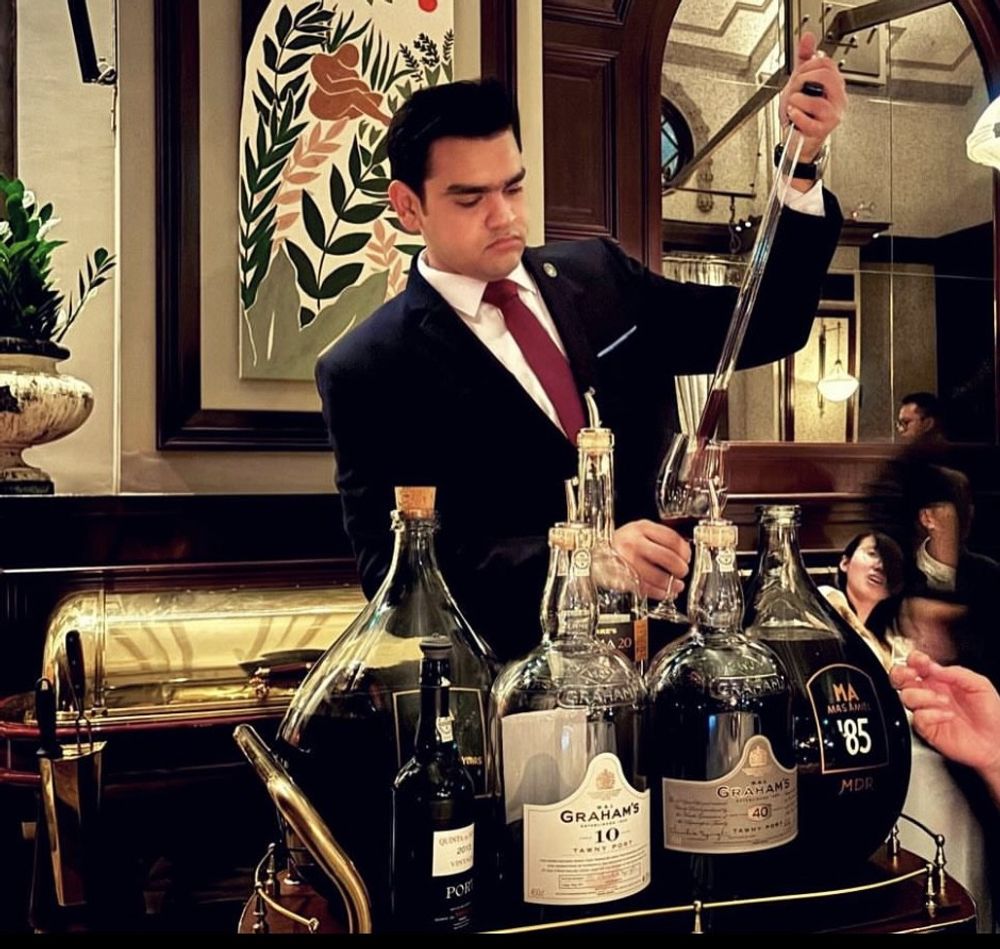
Harnil Mathu says working in Hong Kong means you have to be aware of diferent customer wine preferences from all over the world
The most difficult aspect has been managing self-doubt, especially after setbacks or intense periods of preparation.
I overcame this by staying connected to my “why”, leaning on mentors, and building routines that keep me grounded; tasting with intention, studying in manageable blocks, and making sure I stay mentally and physically healthy.
What are your ambitions now as a sommelier?
My goal is to become a Master Sommelier and to continue building wine programmes that are thoughtful, inclusive, and commercially successful.
Long-term, I want to contribute to the growth of wine culture in Asia and India through training, mentorship, and building bridges between producers and emerging markets. I am also developing a business plan to bring high-quality wines and non-alcoholic alternative options into India.
What trends are you seeing in your local market?
In Hong Kong, wine drinkers have become significantly more curious and sophisticated in recent years. While Burgundy, Bordeaux, and Champagne still dominate, there is a clear movement toward exploring beyond the classic regions. Guests are showing strong interest in South Africa, the United States, Australia, and other premium New World origins not simply for value, but for the quality and individuality these wines offer.
Another notable evolution is the growing curiosity toward Chinese fine wines, particularly from regions such as Ningxia, Yunnan, and Xinjiang. Guests are beginning to appreciate the progress in quality, the diversity of terroirs, and the ambition behind many new Chinese wine projects.
Experiential drinking is also on the rise. Guests now want wines with a story: producers who work organically, family estates with strong identities, or emerging regions undergoing stylistic evolution. This has resulted in more openness toward niche appellations, cool-climate expressions, and lesser-known varieties.
At the same time, health-conscious consumers and those moderating alcohol intake are accelerating the growth of non-alcoholic wines, sparkling teas and premium alternatives. These categories have evolved from being an afterthought to an essential feature of a modern beverage programme.
Overall, Hong Kong’s wine market is maturing rapidly.
What challenges have you faced personally and professionally in Asia?
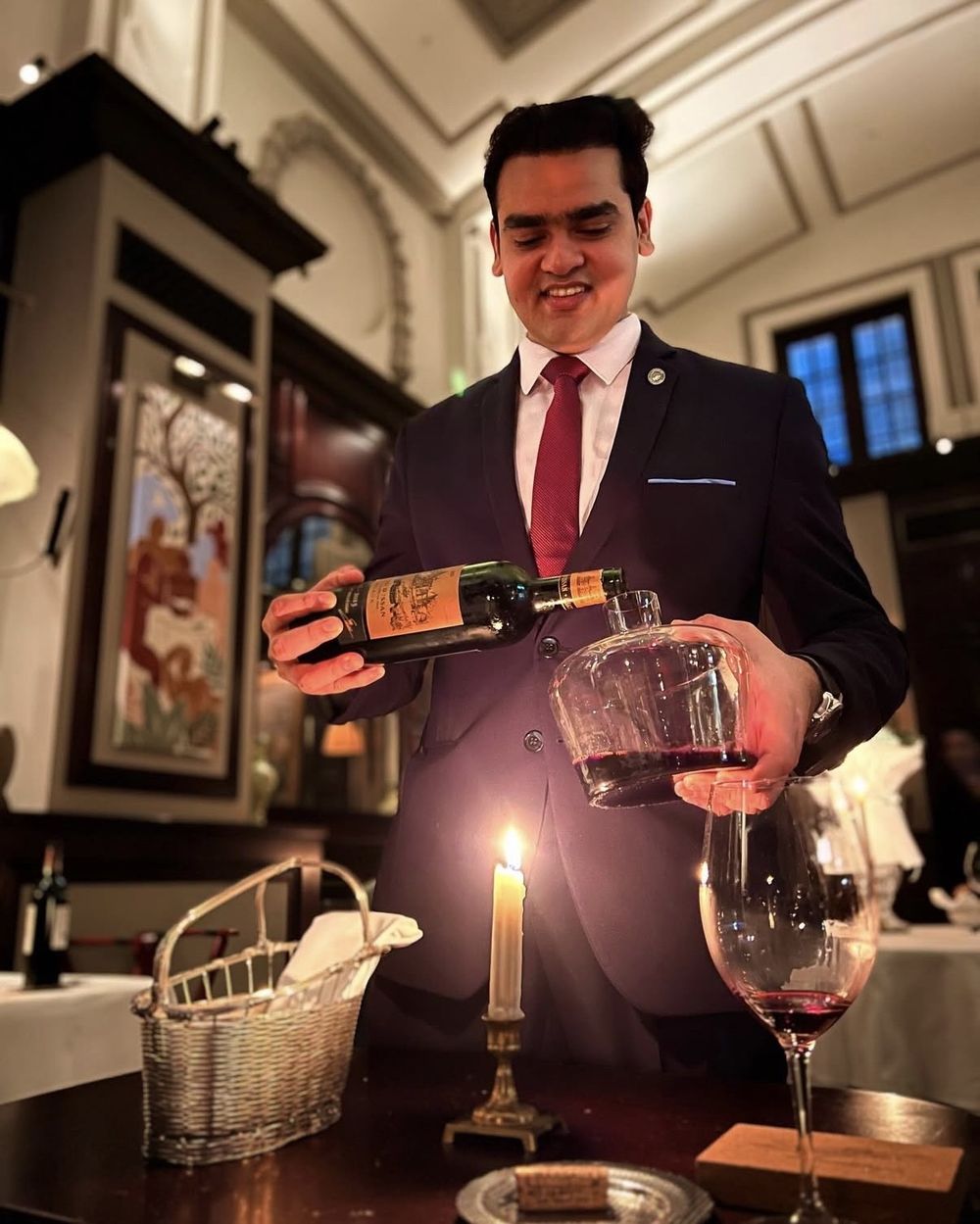
Harni Mathur says it is both exciting but also challenging working in a culture where wine is still not widely drunk or understood
Because wine culture is still developing in many parts of Asia, education remains a constant challenge both for teams and guests. Introducing new regions, grape varieties, and styles often requires patience, creativity, and tailored storytelling to make wine approachable and engaging.
Personally, coming from a background where alcohol is taboo meant I had to build my own path, often without much local support or structured guidance. I relied on self-study, mentorship, and international exposure to gain experience. This journey taught me resilience, resourcefulness, and the ability to adapt quickly; skills that are invaluable when working in diverse markets and educating guests with varying levels of knowledge.
How important is the quality of customer service in Asia?
Service is absolutely crucial in Asia, where many guests are still discovering wine and building their confidence in making choices. Hospitality is not just about pouring wine correctly, it’s about creating a memorable, personalised experience that makes guests feel welcomed, informed, and valued.
Patience, attentiveness, and empathy are key, as each guest comes with different expectations, knowledge, and comfort levels.
I place strong emphasis on guest interaction, clarity, and reading the table carefully understanding whether someone is seeking education, reassurance, or simply a seamless and enjoyable experience.
Excellent hospitality builds trust, encourages exploration, and often leaves a lasting impression that goes beyond the wine itself. In markets like Hong Kong and broader Asia, this ability to combine technical expertise with genuine warmth and attentiveness is what differentiates a good sommelier from a truly exceptional one.
Have you had to adapt your service style for different cultures?
Yes. Each culture has its own expectations around formality, pace of service, personal space, and the level of detail guests want from a sommelier. What works for one table may not work for another. For example, some guests appreciate a highly technical explanation, while others prefer simple guidance and reassurance.
Working in Hong Kong, which hosts an extremely diverse international clientele, has taught me to be highly dynamic and observant.
I often shift between British, American, French, mainland Chinese, and Southeast Asian preferences within a single evening, adjusting tone, pace, and interaction style to suit each table. It has also strengthened my communication skills, empathy, and ability to anticipate guest needs across different cultural contexts.
* You can find out more about the work of the Court of Master Sommeliers and studying for sommelier exams at all stages here.