The IWSC Trusted Distributor Initiative
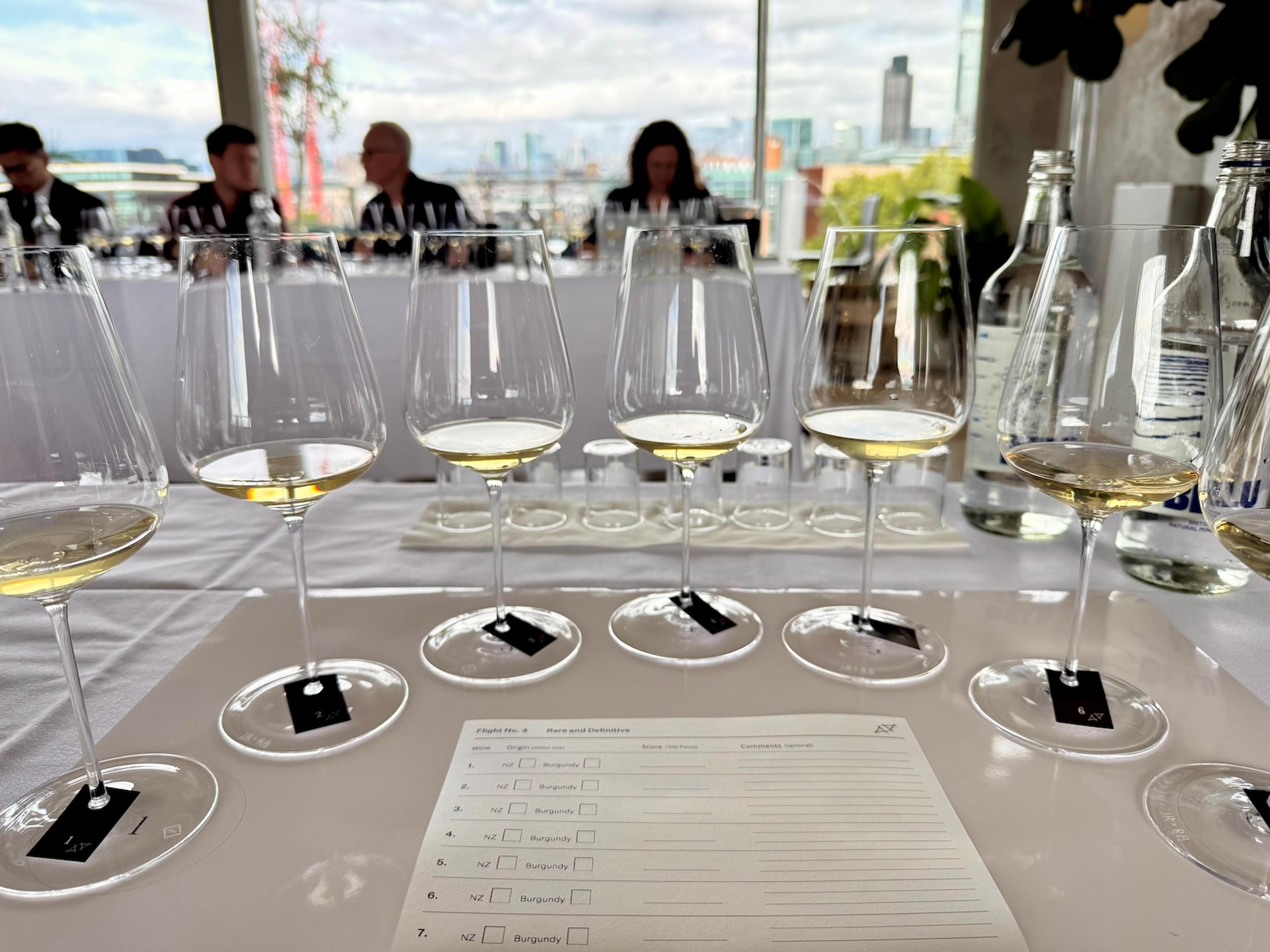
The IWSC Trusted Distributor initiative is a strategic partnership established by the IWSC. Partners receive a personalised IWSC Buyer’s report profiling their company and IWSC award winners which the IWSC shares with relevant members of their community. In addition to a feature in The Buyer, partners can also showcase a selection of wines to IWSC judges at one of their London judging dates and be featured on the IWSC website.
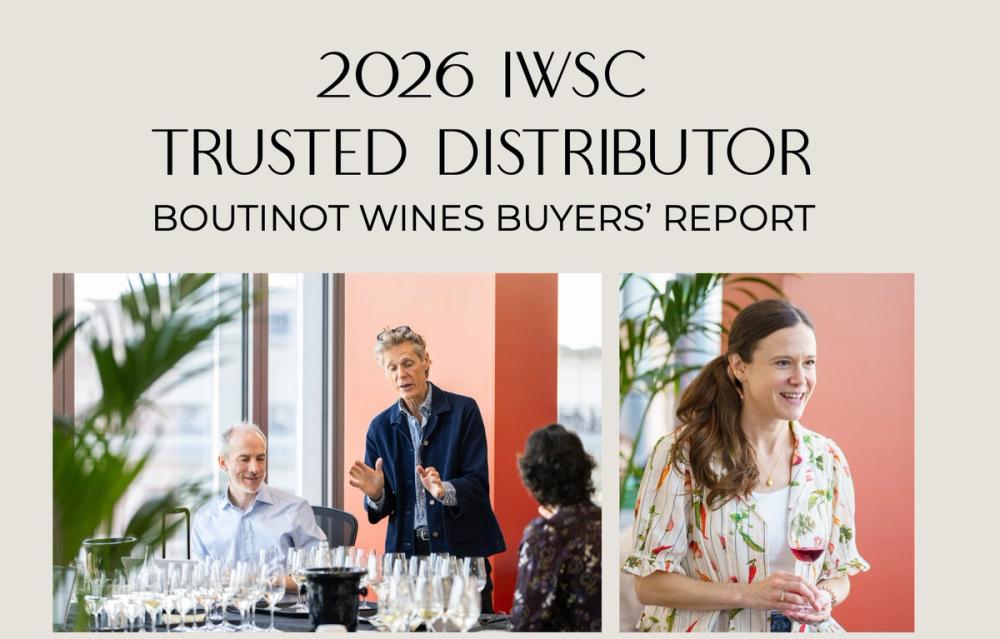
You can download the IWSC Trusted Distributor Boutinot Wines Buyers’ Report Here
Frustrated with the quality of wine available at the time in the UK, Paul Boutinot founded Boutinot Wines in Stockport in 1980. At first the firm was focused on selling French wine to UK restaurants, and Paul’s philosophy of offering great quality wines at fair prices still stands. Today Boutinot has grown to become one of the UK’s largest and most respected wine importers and distributors, with over 1,600 wines on its books and 200 employees.
Distributing primarily to the UK on-trade and independent wine merchants, Boutinot has a flourishing winemaking business, producing wine in France, England, South Africa and New Zealand, which it sells in over 60 markets.
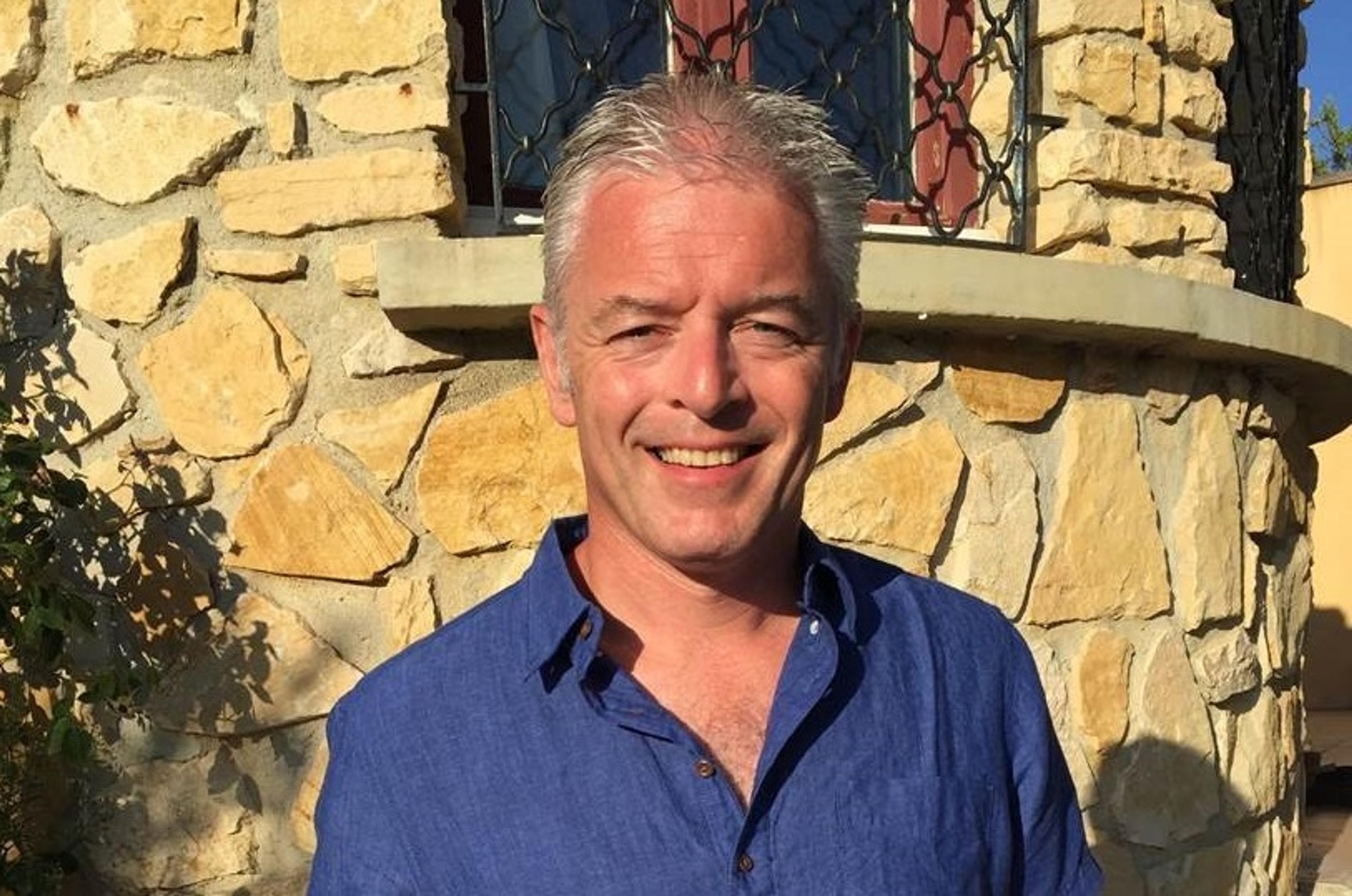
Alex Gittins joined the company from Majestic as product manager in 2015. Since then he’s worked his way up to the position of head of product management, a role that sees him lead both Boutinot’s wine portfolio strategy and the product management, technical, and commercial management teams. Here he talks to Lucy Shaw about the opportunities for Boutinot to grow in a challenging market.
What is Boutinot’s USP?
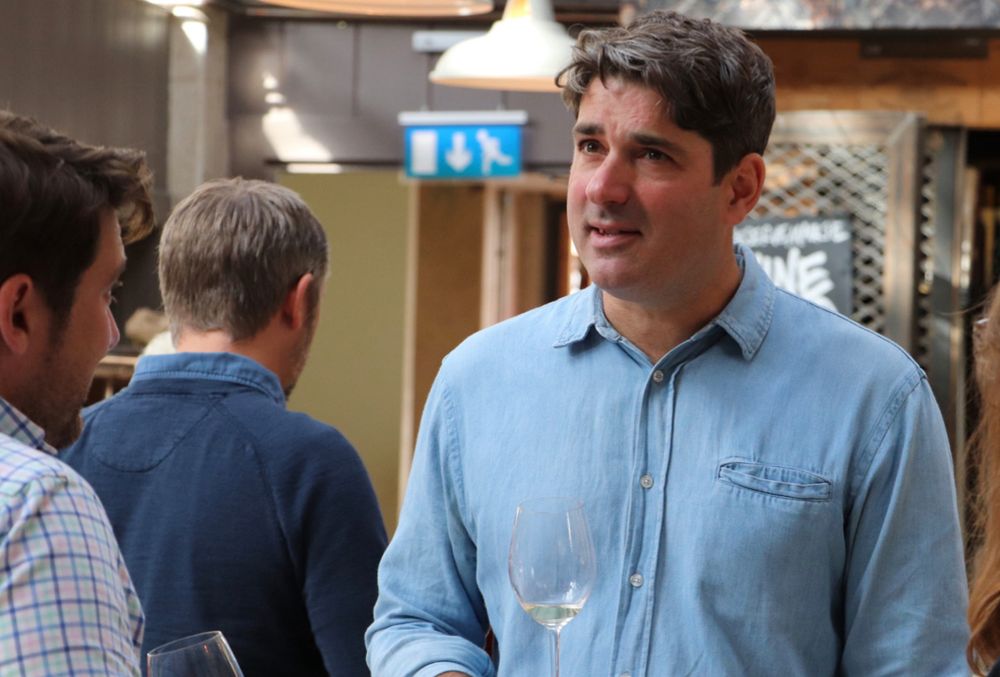
Boutinot's Alex Gittins says Boutinot is in full control of 60% of its range
We’re a little different from other distributors in that we own wineries in the Rhône Valley, East Sussex, Franschhoek and New Zealand’s South Island, and have joint ventures in Italy, Spain and Argentina, meaning we’re in full control of 60% of our portfolio when it comes to things like quality control, pricing and labelling.
We have an office in Macon and a team of winemakers in France sourcing and producing wine from all over the country. Our business model means we can pass that value on to customers and over-deliver for them. We offer a huge range of wines at house level and above for restaurants and wholesalers. Delivering quality wines at good prices is at the heart of what we do.
What are the greatest strengths of your portfolio?
Our entry-level offering of higher volume wines is important, but we preside over 1,600 lines and work with 220 agencies from around the world, the vast majority of which are exclusive to us.
The producers we work with, from Bodegas Borsao in Campo de Borja, Emiliana in Chile and Araldica in Piemonte, share the same principles and all deliver good value at every price point.
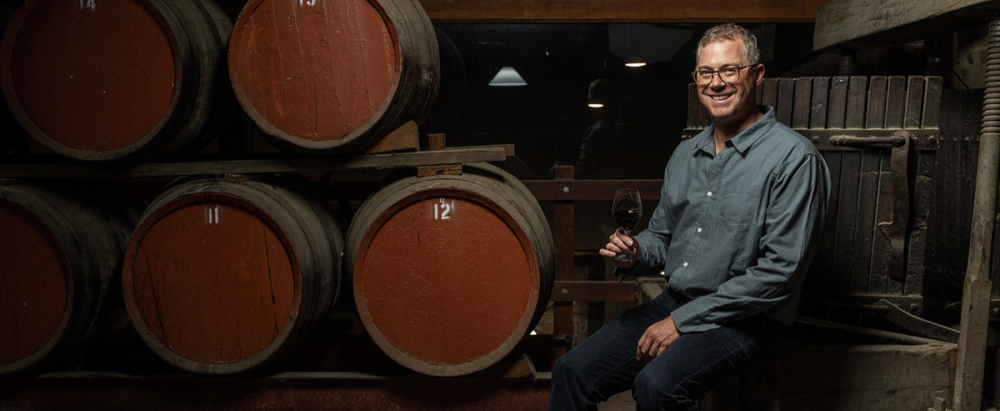
Brett Schutz, senior winemaker, Peter Lehmann Wines in Australia
We have long-term relationships with big name producers such as Marchese di Gresi and Poderi Colla in Piemonte, Gomez Cruzado and Valenciso in Rioja, Vini Graziano Pra in Soave, Henri Pelle in Menetou-Salon, and La Riche in Stellenbosch, and we recently became the exclusive distributor of Peter Lehmann in the Barossa, which is an exciting addition to our portfolio, as the wines are outstanding.
Tell me about some other recent additions?
We recently took on Pisano from Uruguay, who have been on our radar for a while. Its Albariños really caught our eye and sales are flying. They’re a bit more floral than those from Rías Baixas but share the same salinity.
Pisano’s Cisplatino Tannat is lovely too – it’s made in the fresh and lifted modern style consumers are seeking out right now.
Another new addition is Gradis’Ciutta from Collio in northeast Italy, whose Friulano and Ribolla Gialla wines have real character and specificity. They cost £20 at retail but really over-deliver for that price.
Do you shine a light on artisan producers?
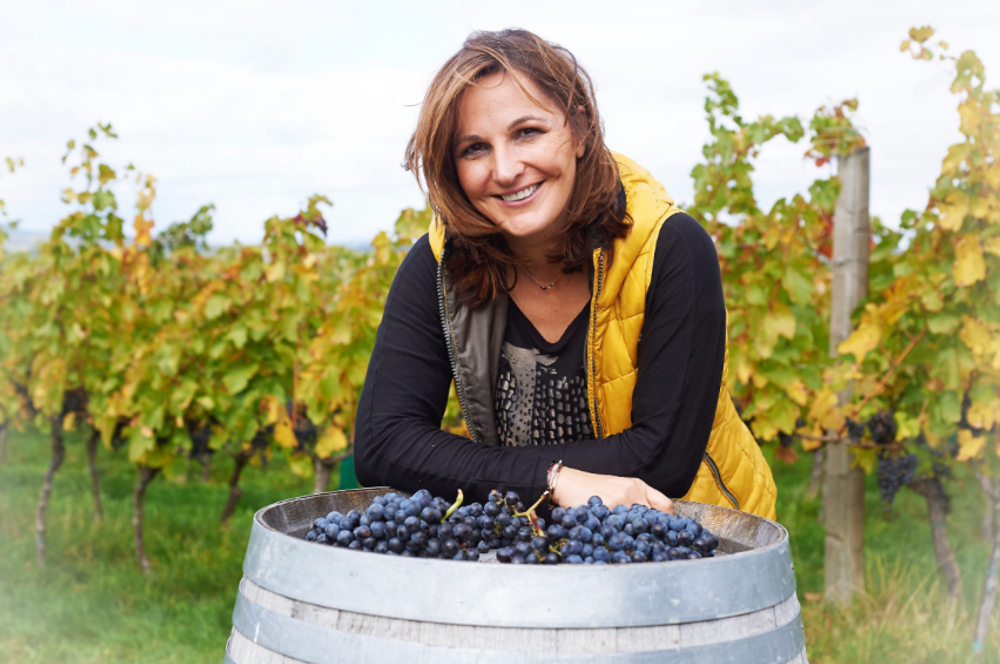
Silvia Heinrich is now part of Boutinot's artisan range
We have a separate portfolio called Third Floor Wines, which focuses on around 25 smaller producers that don’t have the volume for national listings but are perfect for independent merchants and the on-trade. They include more off-the-beaten-track producers like Matteus Scarbolo from Friuli, Silvia Heinrich from Burgenland, Daniel Fries from the Mosel, and sparkling producer Lena Macht Sekt from the Rheinhessen.
Germany features quite heavily in our Third Floor Wines portfolio, as it’s a country that can deliver amazing quality at a good price. People are drinking less but better, so it's important to have these artisan wines in our range to offer to the premium on-trade and indie merchants who are always on the lookout for something a bit different.
Which lesser-known regions are doing well for you right now?
Wines from Uruguay, Georgia, Greece and Lebanon continue to do well, as there’s a really high level of interest in them. We’ve added Château Mercian from Japan to our books and the wines are gaining a real following. They make Koshu, but also Chardonnay and Syrah.
The natural wine movement widened people’s horizons and buyers are more open than ever to wines from more far-flung regions. We’ve even noticed more traditional merchants embracing unsung regions and unusual styles. Burgundy and claret specialists are asking us for orange wines from Georgia, which is great.
How are you responding to current market trends?
We sell wines to over 60 markets around the world, so it’s vital for us to have a compelling range. Our joint venture with Araldica in Piemonte means we can source the best wines from all over Italy and bottle them at Araldica, which allows us to offer a very in-depth range of Italian wines. We do the same thing in Spain through our partnership with Bodegas Borsao.
What was a great price five years ago is very different to now. There are so many opportunities to access great quality grapes at very good prices right now because sadly producers are having a tough time of it.
Have you embraced non-alcohol and canned wines?
We’ve had to be open and inquisitive from a buying point of view – you can’t ignore changing consumption habits, so we’ve tasted a lot of low- and no wines and have found some great examples over the last few years.
We’re the exclusive distributor of Chavin, a non-alcohol wine specialist based in the Languedoc that has a good portfolio of alcohol-free wines with varietal expression, including a Pinot Noir with a lovely summer fruit character.
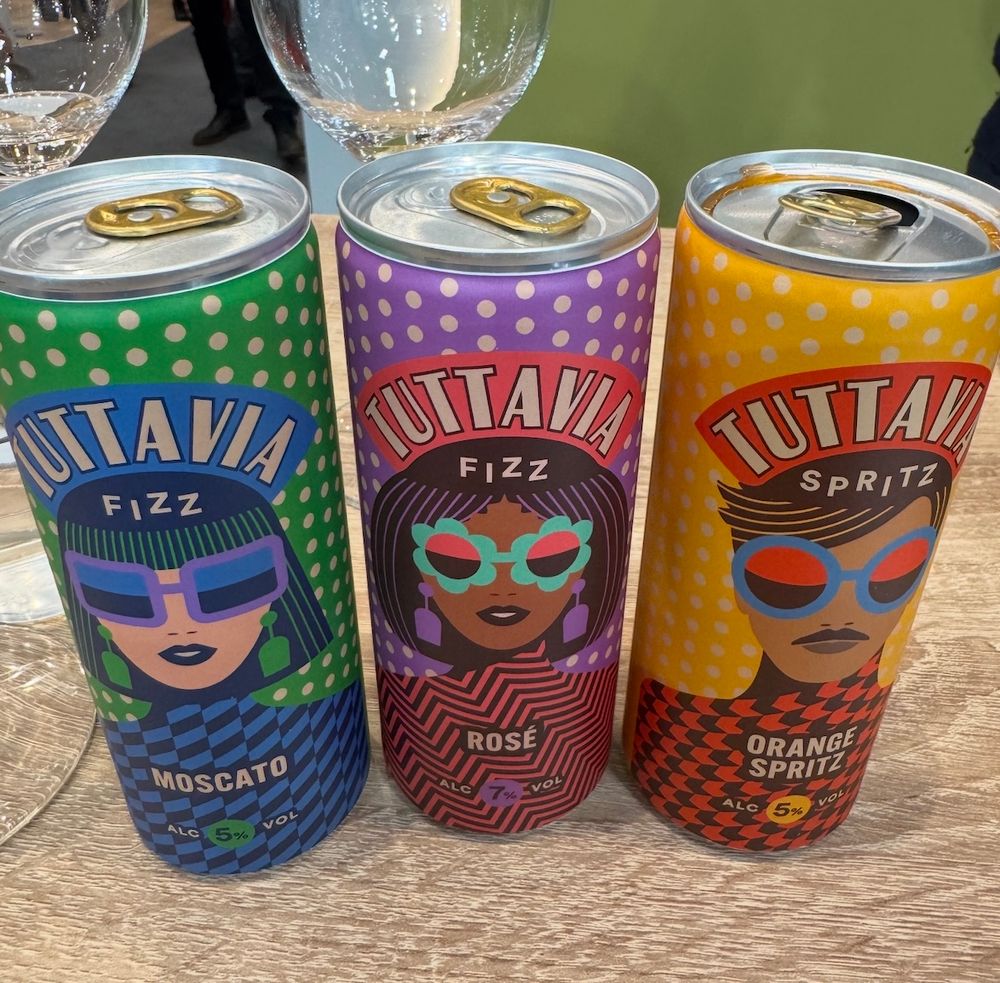
The Tuttavia cans on display at this year's Wine Paris
We need to appeal to new customers, so we launched a quirkily designed, Moscato-based canned wine brand called Tuttavia that has attracted a lot of attention and sold half a million cases. The 5% abv range is made at Araldica and includes a rosé, peach moscato, and orange spritz.
What are Boutinot’s values and how do they shape what you do?
Our mission is to make great quality wine accessible to all. There’s so much great wine in the world and a lot of very average wine, so we’ve got to make sure that, after getting excited about discovering new wines on buying trips, that they still deliver unbelievable quality and offer great value when we’re re-tasting them on a wet Tuesday in Cheadle.
They also need to bring something different to the table. We have a full portfolio and can’t just keep adding to it for the sake of it, but the new additions are the wines that people are drawn to. If a wine’s working well we’ll continue with it, but we remove wines every year that have become less relevant to our customers.
What sets Boutinot apart from other wine importers?
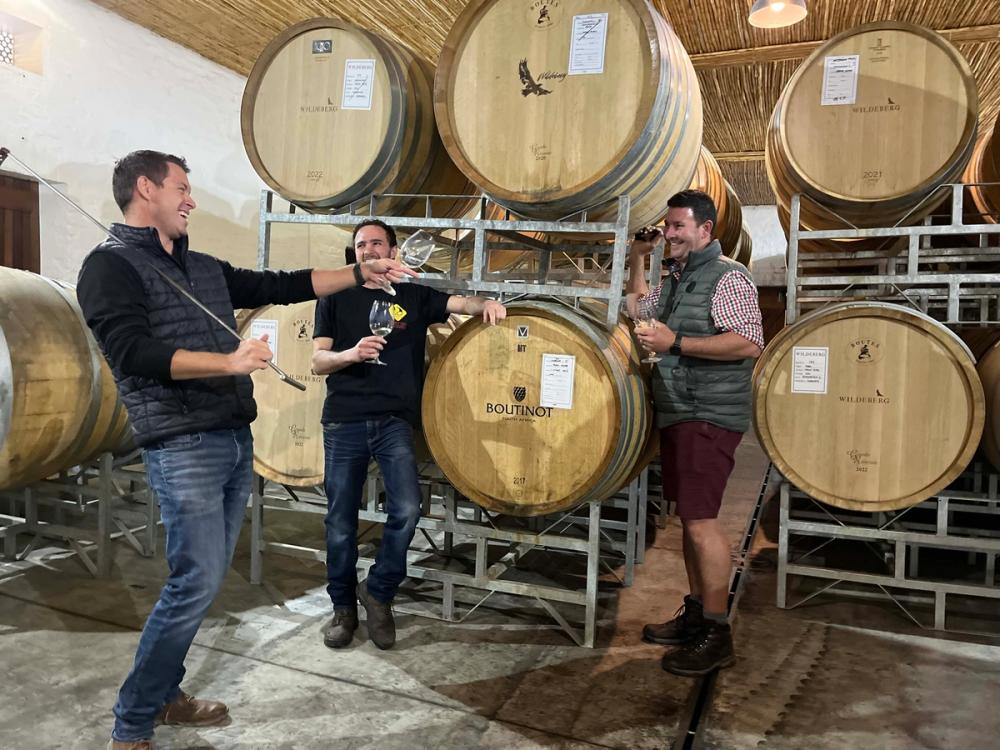
Boutinot has its own winemakers working with producers in key countries aroud the world - like here with JD Rossouw winemaker at Wildeberg in South Africa and Ryno Booysen Boutinot's South Africa winemaker
We’re a people-focused business: our people are at the core of everything we do. We want to prioritise our customers, do the right thing by them, and make their lives easier. In order to build a strong independent business you have to look out for your customers and their businesses, and offer them the kinds of wines that they don’t get from the competition.
You should never take your customers or producers for granted, and never ask them to do something that isn’t in their own interest. Our partners’ success is integral to our own, so maintaining their trust is key.
How do you ensure reliability when it comes to order fulfilment?
It all comes down to having a great team. We have a 13-strong customer service team at our HQ in Cheadle who have gotten to know our customers well and regularly visit them. We also have a long-term partnership with LCB who fulfils our deliveries. They can deliver five days a week, which is important for our on-trade customers.
Our stock control team works closely with my team to make sure that our wines are in stock. Moving wine around the world has become more complicated since covid and with the various geopolitical challenges, so we’ve had to get better at it. Every wine is stock checked weekly, which is a huge job.
Is working sustainably important to you?
Very. At the end of last year we released our first impact report to help us understand the key areas we can influence and set targets for the future. Chief among them is reducing our emissions, so we’ve moved a lot of our wines to 300g bottles. Some of our partners, like Emiliana, lead the way when it comes to sustainability and are now certified as B Corp and Regenerative Organic.
Right now 56% of our producers have some sort of sustainability accreditation, and our goal is to increase that to 66% by 2030.
We’re also shipping more of our entry-level wines in bulk to the UK due to the environmental benefit. From a people perspective, every employee gets their birthday off and four wellbeing days off a year where they can volunteer or spend time outdoors. We need to look after our people.
What are the biggest opportunities within UK drinks distribution?
A rebasing is going on all around the world. In places like France, Spain, Australia and Chile the scale of the vineyards being grubbed up is huge. There’s a massive decline in vineyard land but it’s needed. There will be good opportunities for those that get it right. We need to manage our way through this choppy period.
There’s evidence to suggest that wine consumption will increase in the years to come, and that we’ll see growth again. Distributors need to be adaptable and able to respond to new drinking trends and consumer habits. We’ve had to understand and embrace new categories like low and no, RTDs, and new packaging formats, which are becoming increasingly important.
There are challenges right now for sure, but also plenty of reasons to be optimistic about the future of the drinks trade.
How about wine buyers, what are they currently looking for?
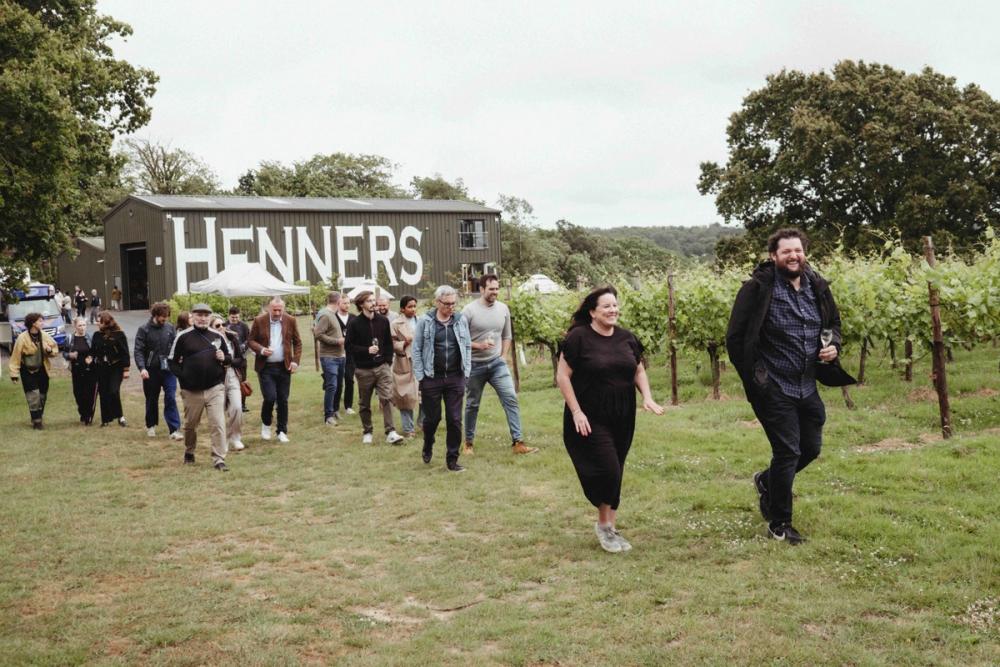
Owning its own wine production is a key part of Boutinot's succesful strategy - it acquired English wine producer Henners in 2017
They want businesses that listen to them, understand what they want, and give them good reasons to buy. There will always be a market for wines with great stories behind them that are rooted in the people that made them: those are the wines that excite people and link back to the romance of wine.
Independents need wines with those stories and we mustn’t lose sight of that.
It’s a challenging time for hospitality, so it’s important to have a lot of options at house and house plus one level. We’re trying to encourage our on-trade customers to make their lists interesting and diverse rather than solely focusing on price, as people are willing to pay for quality.
For this to work you need people who can bring the wines to life and sell them, which is where our Boutinot Wine Training Academy and WSET courses come in. Wine is a complicated subject and we have a role to play in helping the on-trade to navigate it.
Looking ahead, what are your top priorities?
To keep growing our business and doing the right thing by our customers. If we do that it means that we’re looking after our customers and our people. But any growth needs to be sustainable. We’re privately owned, which means we haven’t got venture capital money trying to make a quick profit. We’re in control of what we do and aren’t under pressure from others, which is a good place to be.
How do IWSC medal wins help you as a distributor?
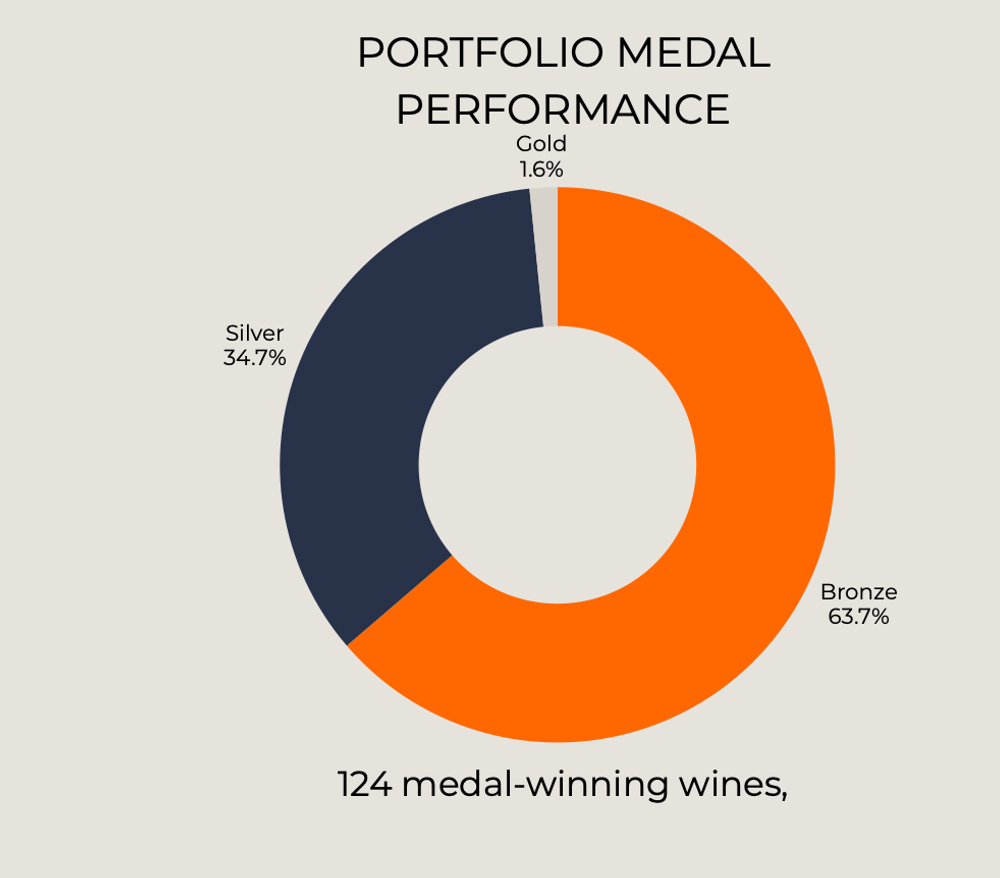
Boutinot's medals in the most recent IWSC competition
We’ve worked with the IWSC for a long time. The competition is globally recognised, so medal wins mean a lot to us and our customers respond well to them. Award wins from the likes of the IWSC are a real endorsement for our wines and the producers we represent. We’re proud of our wins and spread the word about them via features, blogs, and mail shots. The impartiality of the awards means everything.
* If you are a UK importer who would like to know more about the benefits of the IWSC Importer Partnership programme, contact the IWSC Team at marketing@iwsc.net.
* You can download IWSC's Trusted Distributor Boutinot Wines Buyers Report here.