Tell us about your work and what you do?
Fredrik Medhus: We’re a drinks company that serves the off-trade, on-trade, and duty-free. Our main client in England is Hattingley Valley, and we also work with Hundred Hills, The Heretics, and Ambriel. It's a unique market because the monopoly [Vinmonopolet, Norway's state-owned retail monopoly, whose nationwide stores are the only ones allowed to sell wine for home consumption] accounts for about 90% of the total wine market. Producers from England are treated equally to the big houses from Champagne.
Can you tell us a bit about the wine scene in Norway?

Fredrik Medhus says Nova Beverage Group is having great sustained sucess for English wines
Medhus: So I'm not a monopoly guy, but I'm a wine monopoly guy because the monopoly ensures that every producer and importer is treated equally in a kind of social democratic way. Since we’re not a wine-producing country, we drink and care for all parts of the world. One day you can drink Greek wine, the next day maybe English wine, and then maybe wine from Lebanon.
It’s a bit like the food scene in England: it’s amazing because you also eat food from all parts of the world; we do the same with wine.
Sander Johnsson: It depends on which city or part of Norway you are in. Oslo is very dynamic - more natural wine bars and restaurants pouring natural wines. And in Stavanger, where I'm working, you have the oil money - a lot more new money, so it's more traditional wines: Grand Cru Burgundy, Bordeaux, Barolo. But you're starting to see a couple of restaurants there focusing more on natural wines, or more niche wines from Spain, the Loire Valley, South Africa.
It also helps that we have a lot of ambassadors for Star Wine List - people working hard to build good wine lists, win awards and become more international. And it's not just the older generation drinking wine anymore. Some of my friends outside the industry are starting to get into wine - and of course, they're starting with the natural wines.
What kind of wines do Norwegians like to drink?
Medhus: We can tolerate high acidity. The French first paved the way [towards the types of English wine we enjoy] with unoaked Chablis, and I think we were one of the first markets to really appreciate that. If you don't have oak in the product, it feels more linear and with higher acidity, and it matches fantastically with our seafood.
Then the Germans came with their Rieslings, and we became the top drinkers of German wines. In fact, Norway is the only country in the world that drinks more German wine than French wine. So, when the English came around, we had the palate for it, because you are in a marginal climate, which tends to have higher acidity.
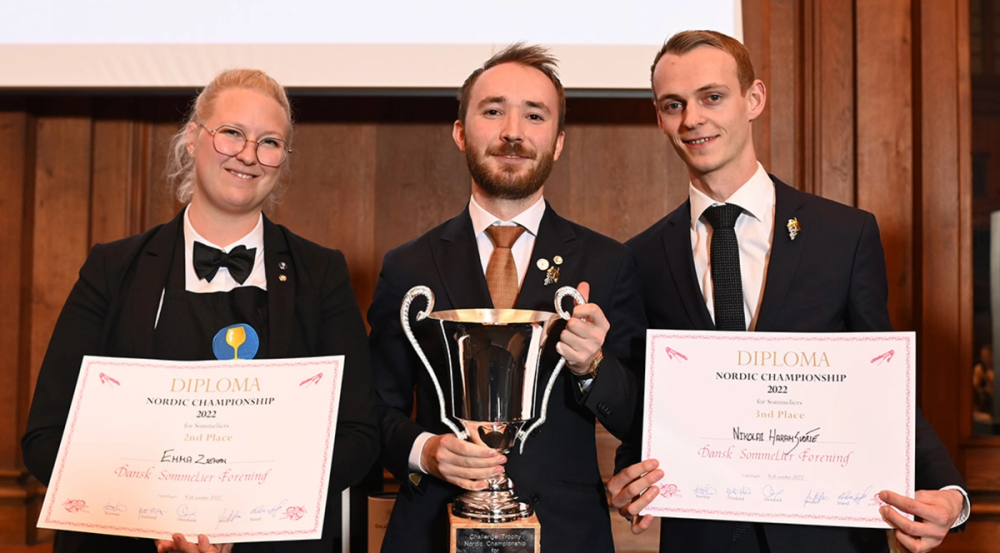
Sander Johnsson, formerly sommelier at Michelin three-star restaurant RE-NAA in Stavanger and 2022 Nordic Sommelier Championships winner
Johnsson: Since we are mainly a beer-drinking country, the ordinary consumer is very focused on price point - and, depending on where in the country you are, alcohol content: the stronger the better. I think that's why there's been a lot of Italian wine, especially the big, bold reds like Amarone.
But trends change fast here - that's a big thing in Norway, we follow trends quite quickly. Lately there's a trend towards lower ABV, with new generations coming in and liking the fresher, crisper styles.
With sparkling, of course a lot of Prosecco, but you see that starting to die out a little, with the rise of the cider industry replacing the fruitier sparkling wines. But we like to celebrate - we drink a lot of sparkling wine on May 17 [Norway's Constitution Day].
So I think it's quite a nice all-round market now, with a lot of curiosity.
Why has English wine become such a hit in Norway?
Medhus: The best comparison to the English success in Norway would be beer - it's a little bit like the craft beer trend. It was not one source. It was journalists, bar owners, and the population. You get sick and tired of drinking Carlsberg all day, right? And it's a little bit like that here. The good thing is that when you get into one monopoly shop, or two, or three, and your product performs, the monopoly keeps it.
The English wine revolution has been amazing, but it’s taken a long time. In the first years, we all lost money on English wines - I say this now with producers that I love. We lost money on Hattingley for several years, and I most likely consumed more than I sold in the first year, because it was not a category. Now Hattingley is the biggest player in Norway on sparkling wines, and of course Gusbourne and Nyetimber - those three are the ones doing the best in sparkling. And with still wines, we have Simpsons doing insane volumes.
Why did you want to focus on English wine - what makes it so interesting to your customers?
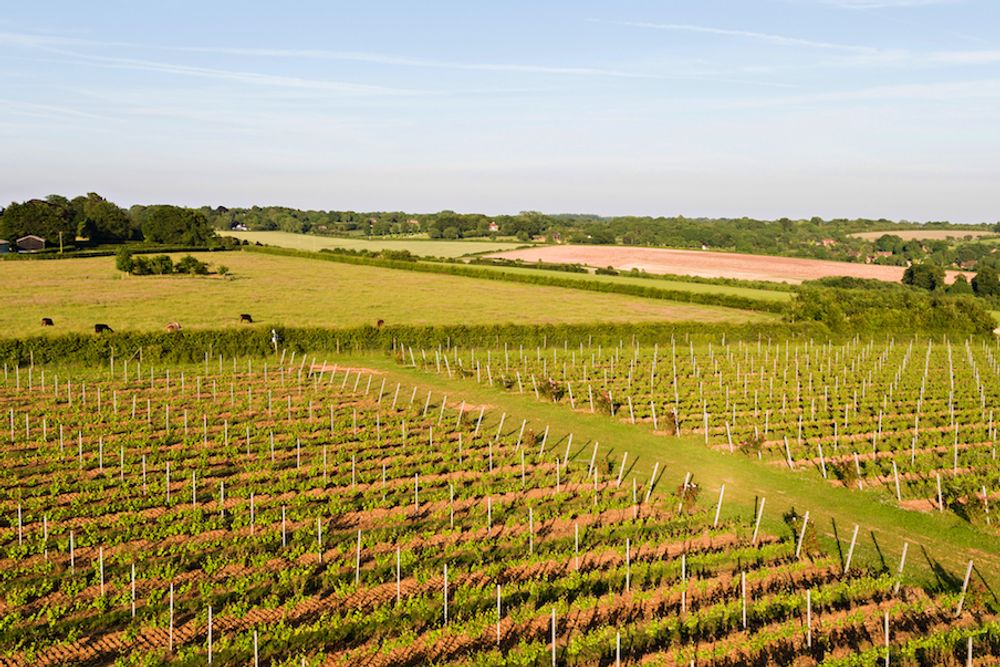
Hattingley Valley is a big sucess in Norway and the main English wine producer partner for Nova Beverage Group
Johnsson: I think we enjoy experiencing new things and finding alternatives to the traditional stuff, where in recent years the prices have become way too high. What was intriguing about English sparkling, especially at the start, was that it was a more available version of Champagne with almost the same quality. But now you start to see that the quality, especially with brands like Langham, which is my favourite, could be Champagne, and the price is still not at the same level as the top, top producers. So it's a more available, everyday sparkling wine, but still of amazing quality.
Serving it to guests, it's something that surprises people: “Oh, it's English wine - they make good wine there as well?”
I always think it's fun to serve new things to guests who might otherwise have a narrow view of wine or think that all good wine is from France or Italy. That's what's intriguing about English wine: it's something new, something different, something challenging the norm.
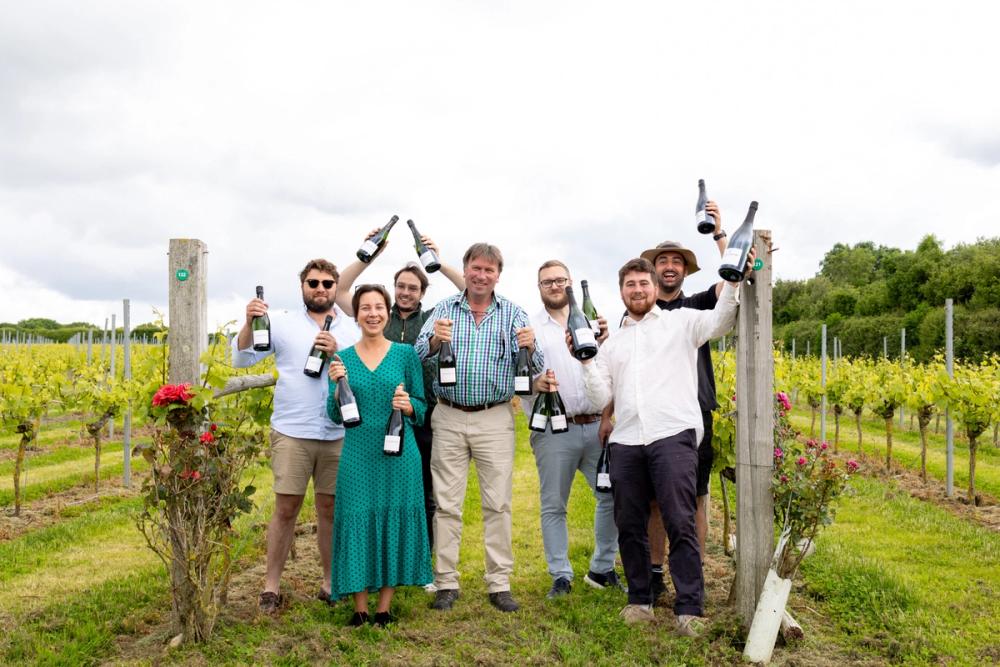
Langham Winery's styles of wine also work well in Norway says Fredrik Medhus
With Langham, we work quite closely with their importer, so I discovered them when I first came back to Norway a couple of years ago. The oxidative style of Champagne that Tommy Grimshaw [Langham’s winemaker] pursues is inspired by a style I enjoy, and then you have the English acidity as well, which I love. It was also a bit different from a lot of the English wines we'd been familiar with for almost a decade, like Nyetimber and Ridgeview - we felt they were trying to do something different, more towards the grower producers that I myself enjoy drinking.
What determines what English wines you want to list and work with?
Johnsson: After a lot of years, people are starting to get more familiar with English wine - you see the big names like Gusbourne, Nyetimber, Ridgeview being listed all around Norway. But when it comes to what I want to show, it's more the newer, up-and-coming producers, and more towards the grower producers. We’re also listing more and more still wines as well, and small-scale producers.
Now, many people are familiar with the big names, so I want to show something they are not as familiar with.
Which styles and regions are particularly popular?
Medhus: It’s still dominated by sparkling wine - though I don't think it always will be. Because of your climate, it takes time; it's much safer for producers to make sparkling wine than still wines. But of course, it's coming. Some of the still wines are becoming like old-school Chablis; it's a little like taking the time machine back to pre-global-warming times.
On regions - I think it's a little bit like Champagne: people mainly buy the house and not the region. Whether you buy grower Champagne or grower UK, you're still buying the producer.
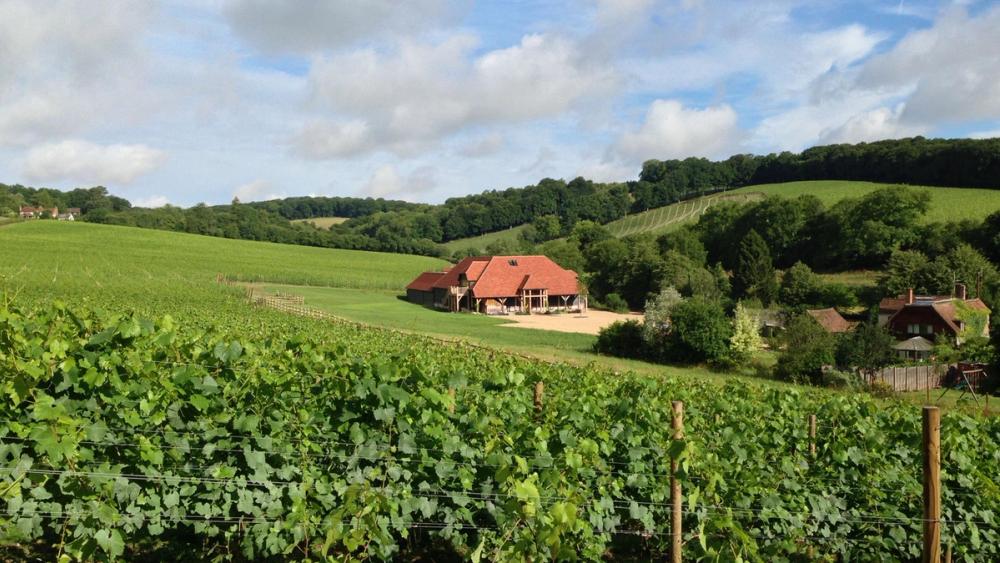
Hundred Hills is another Norwegian favourite for Fredrik Nedhus
My two favourite brands are Hundred Hills from Oxfordshire and Hattingley Valley from Hampshire - I don't think most people know the regional difference, but of course the connoisseurs, the sommeliers, the journalists know the difference. What the UK needs to do is add more protected regions, provide more information about them, and get more single vineyards. All these things will come into play when your country has been producing wine for longer.
What price points are you looking to sell at to the on and off-trade?
Medhus: In Norway, wines are extremely expensive. What you do in the UK - watching the football, drinking cheap beers, drinking cheap wine, having lots of fun with friends and family - it doesn't exist here at all, because it's €13 for a pint in the pub, and the same for a glass of wine.
But if we go to the monopoly shop, the cheap wines are extremely expensive - and from a certain price point, expensive wines are cheaper, because of our taxation system [and the lower mark-up that the monopoly adds compared to private retailers internationally].
In our market, the £6 Australian wine you might buy in a UK corner shop doesn't exist in Norway – it costs £18 here. At the monopoly/off-trade, I would say all the English wine success stories are cheaper in Norway than in the UK - not by much, but the same level or a little bit cheaper.
On-trade is maybe three to five times the off-trade price. The cheapest Hattingley retails for €35, and I think it's around €37 if you go to Oxford Street - so cheaper. But the same bottle retails at €120 in a restaurant. It's often four times the price from the monopoly to the restaurant.
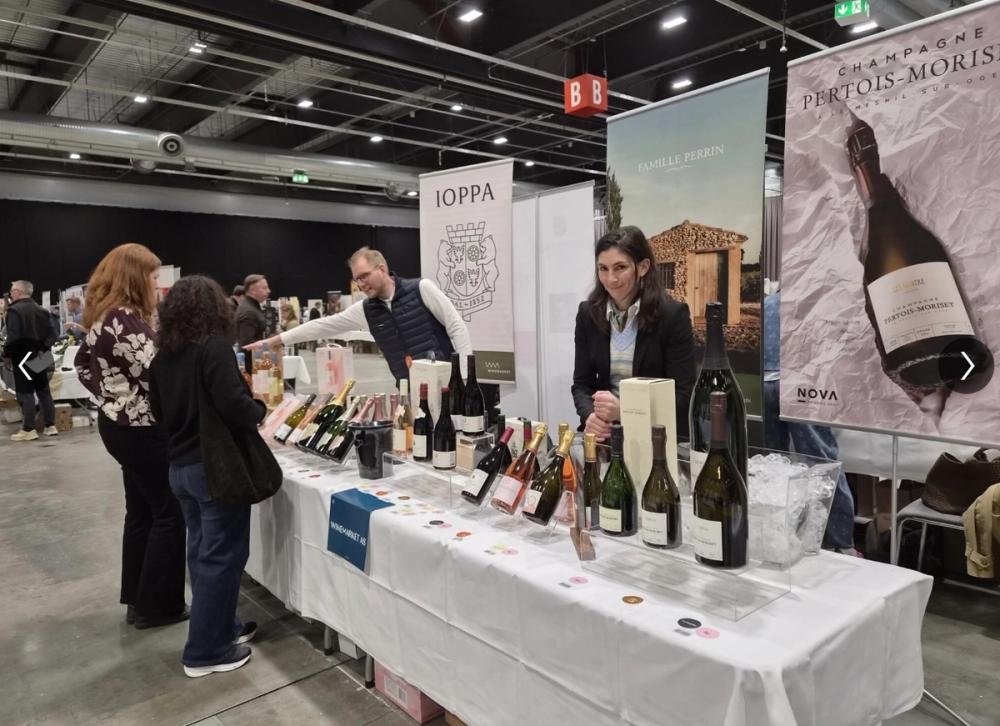
Nova Beverage Group exhibiting at trade event with Norway's drinks monopoly Vinmonopolet
Johnsson: There's been a lot of discussion about the wine monopoly - when I was studying in London, there was a lot of talk about the open market versus the monopoly, and the people lecturing there were quite negative towards it. But I think for those of us who enjoy good wines, the monopoly is quite nice, because the cheaper wines are maybe a bit more expensive, but the expensive wines are cheaper - everything is on a set tax, everything is on the same price structure. So when the Burgundy releases come, I think Norway is the cheapest place to buy a bottle of Romanée-Conti.
How knowledgeable are your customers about English wine?
Johnsson: Norwegian customers are not as knowledgeable as they are with French wine, but most people we are serving English sparkling wine to have heard that they're making wine in England. Some of them have maybe tried it before - maybe not the same producers we're pouring - but they are familiar with English wines in general. People are not as surprised anymore when we pour an English wine.
If they are, why do you think that is?
Medhus: Buying a bottle of wine or a beer in Norway is a little bit like an investment, right? Because it's not cheap. Even a Carlsberg, it's not cheap. So when you put your money on the table for something, you are obliged to learn something about it.
What are the biggest sellers?
Johnsson: It depends a lot on the people, but I think it tends to go more towards Blanc de Blancs - more Chardonnay-based or white-grape wines, the fresher styles. What most people are drinking now, buying in the shops, I would say is Gusbourne, Simpsons, Nyetimber. What we are pouring is something we want people to buy more of, because we like the guys making the wines and we like the wines. It's the sparkling wines of England that people are more familiar with, so that's what they go for.
What is the drink of choice for the average Norwegian when watching football?
Medhus: Beer! If we look at this World Cup, it hasn’t driven that many wine sales, even with the good summer we have had [in Norway] so far.
What will you be drinking with the game?
Medhus: Kinn, in my opinion the best Norwegian microbrewery.
Johnsson: Norwegian beer, but it depends where I'm going to watch and what they have on draft. I’ve asked to leave service early because of the game.
What is your prediction for Saturday night?

Medhus: Norway win 3-1. So sorry, mate. I love England but you have a curse, and it’s called 1966, and I feel so sorry for your boys.
Johnsson: It will be a close game - I've not been that convinced by England yet. I think they were good against Mexico, but it will be close. I would say 2-1 to Norway: Haaland with one goal, Nusa with one, and then Harry Kane with a goal for England.
What English wine would you pair with the game?
Medhus: After the match, regardless who wins, I’ll open a bottle of Hattingley Valley.
Johnsson: It's a very special occasion that Norway is in the quarter-final of the World Cup, so it has to be the Langham Perpetual Cuvée - a special bottle for a special game. I have it in my wine fridge now.
It will be a good time to pop that one, especially if Norway wins - then it's definitely getting opened.
* To find out more about Nova Beverage Group click here.
* Brit Pop was founded by Josh Dell in 2025 during his wine studies at Le Cordon Bleu Paris. Brit Pop works with British wine producers to run pop-up events and tastings across the world in key export markets to help them target key importers and bring them together at fun, interactive wine events. Brit Pop works with British wine producers to run pop-up events globally, helping them access target export markets. With events in Paris, London, Helsinki and New York, they work with a broad range of winemakers including Blackbook, Danbury Ridge, Domaine Hugo, Hundred Hills and Tillingham.