Digby Fine English borrowed its name from Sir Kenelm Digby, designer of the modern wine bottle (with a punt, enabling the bottle to withstand more pressure), adventurer, privateer, philosopher and alchemist. Where better to host a press trip then, than Sir Kenelm’s family seat, Minterne House in Dorset.
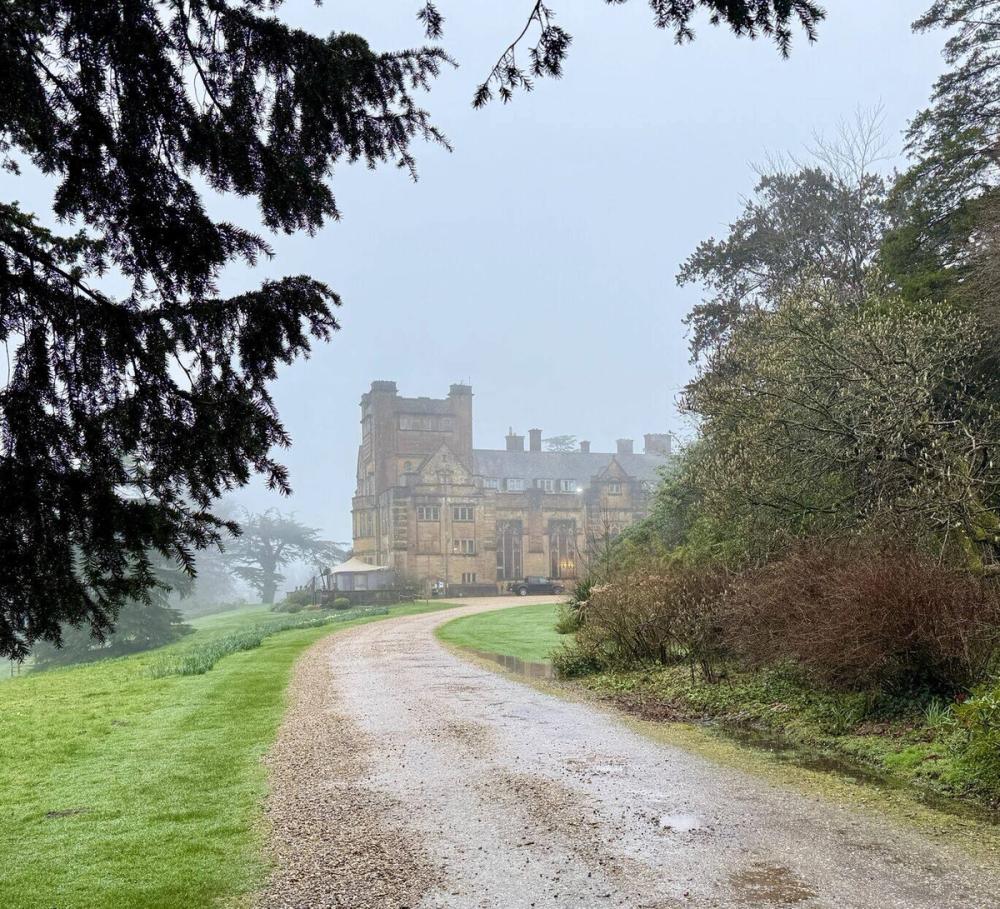
Minterne House, Dorset, the family seat of Sir Kenelm Digby
We were warmly welcomed into the private home and gardens, with the ‘pursuit of joy’ put into practice straight away with a healthy dose of competition by way of an escape room, sabrage competition and treasure hunt via some background on Digby and Sir Kenelm.
Perhaps it is the bold spirit of Sir Kenelm which Clough channels, when he claims the brand is “not afraid to break norms”. The idea for its négociant model was born from a desire to focus on quality. Advice they received at the beginning of the business was to not play the lottery of buying a vineyard and hoping it was on the best site. They heeded this advice and instead tasted wines from growers across the southeast of England in order to buy the best fruit and base wines, focussing instead on becoming masters at blending.
Clough provided a small insight into this blending with a masterclass and tasting of base wines as well as the finished products.
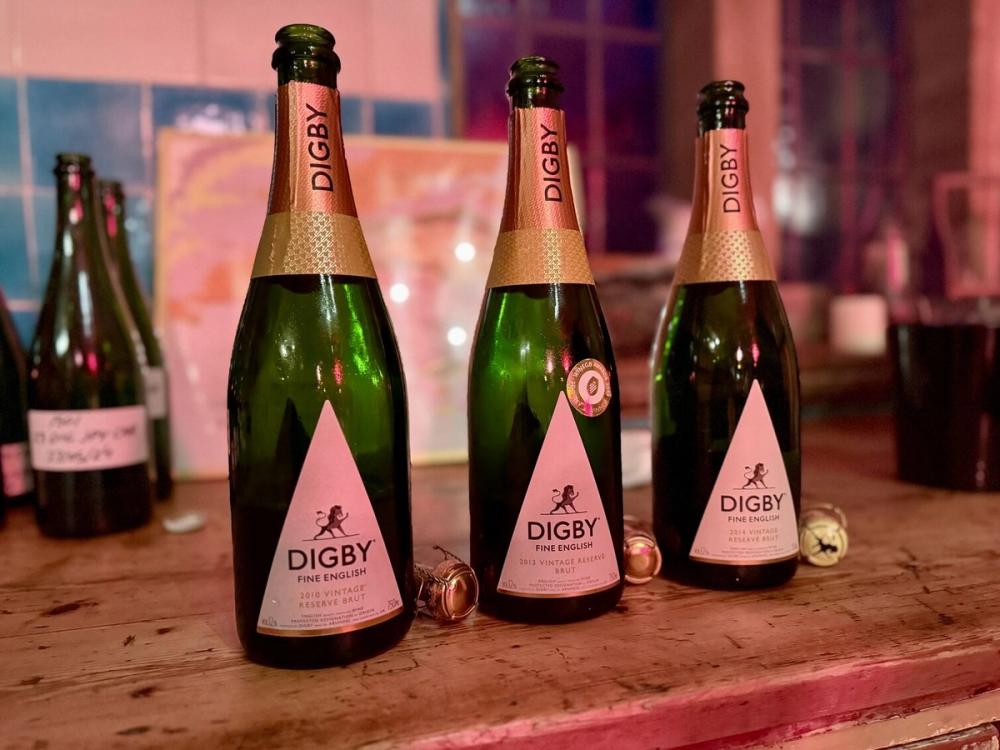
The flagship wine Digby Vintage Reserve Brut is not made every year, Clough explaining that he is looking for something which can age for 20-25 years. Based on two-thirds Chardonnay and one-third Pinot Noir, 2014 Vintage Reserve Brut has digestive biscuits on the nose, with classic green apple and mellowed hig acidity. 2013 Vintage Reserve Brut is from a cooler vintage with more savoury and herbal notes under the biscuit and caramel. 2010 Vintage Reserve Brut is deliciously rich and decadent after more than seven years ageing under cork. The next vintage, 2018, will be released next year.
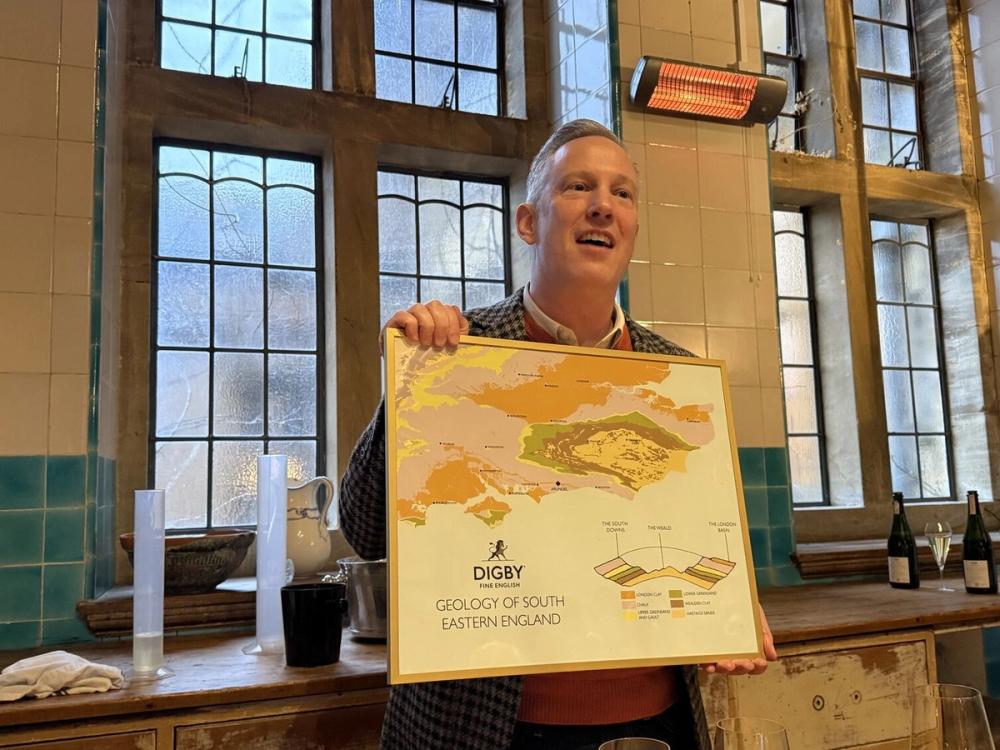
Trevor Clough - giddy about greensand
Diving into the geology of the south of England, it becomes clear that Clough is giddy about greensand, something he sees as uniquely English. He describes Chardonnay from greensand as having “energy and a quiet sophistication… structured and linear like chalk but with an umami growl”.
It is surprising then that the first vineyard Digby decided to invest in, Hilden in Kent, is on clay soils. But the key to Digby, Clough reminds us, lies in its blending. Dermot Sugrue is consultant winemaker for the brand, with Clough taking a hands-on role with the assemblage, and now with plenty of experience, 17 vintages in.
Alongside Hilden, Digby also now has a long leasehold on a vineyard in Sussex. Clough is adamant that Digby will always be a négociant, however, and while they have core growers, they are not afraid to make changes if they need to, citing a grower they no longer work with who hadn’t adapted to the warming climate. “We plan on never changing,” Clough says, “but at the same time it’s always onward and onward, and paying attention to things that are happening around you”.
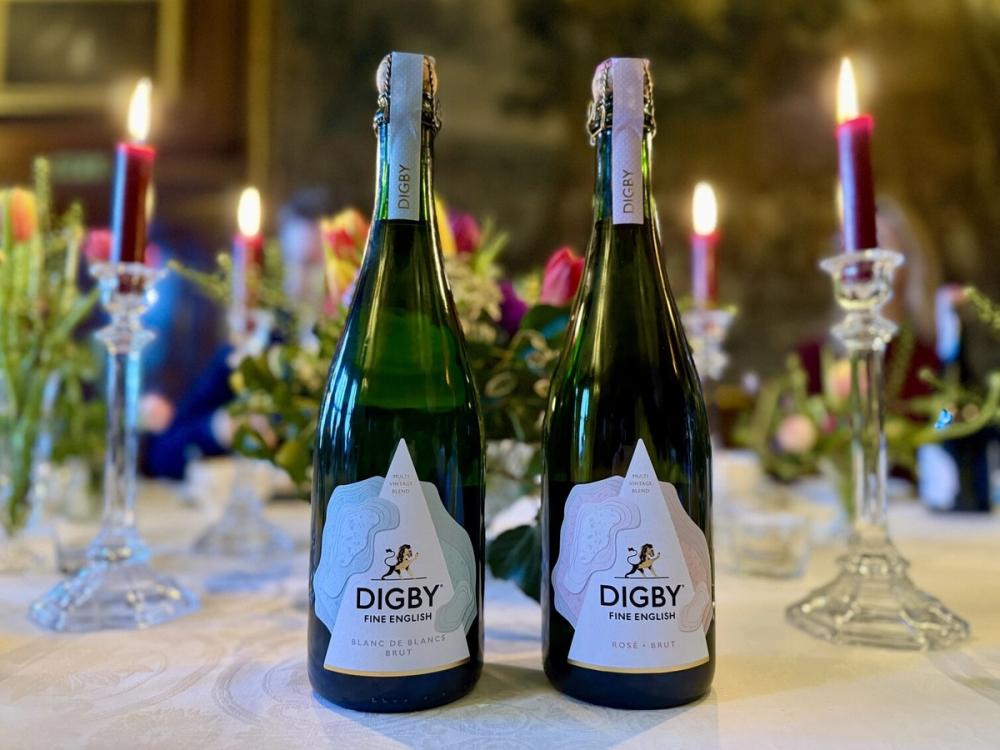
Over dinner we tasted the two brand-new multi-vintage wines, being released for the on-trade market. Clough says they want their non-vintage wines to be “luxuriously, joyously quaffable”. The Blanc de Blancs Brut MV is a true multi-vintage blend of Chardonnay from 2018, 2019 and 2020. When tasting the wine from a solera system used for reserve wines, the team realised the wine would be fantastic to release in its own right. With a lovely depth of fruit, and both richness and freshness, Clough sees this as a gastronomic wine, hence the focus on on-trade.
Digby Rosé MV is also made for food pairing, showing notes of rhubarb, red apple and raspberry, with creaminess and freshness. The base year for the rosé is 2018, mostly from the Hilden vineyard, bringing warmth and floral character.
The new labels on the multi-vintage wines reflect both the terroir maps and soil layers which have become a bit of an obsession for Clough, as well as the layers of texture and flavour that long ageing and winemaking build. The absence of foil is a conscious choice to show off the cork, “quintessential” to how the wines age and express themselves.
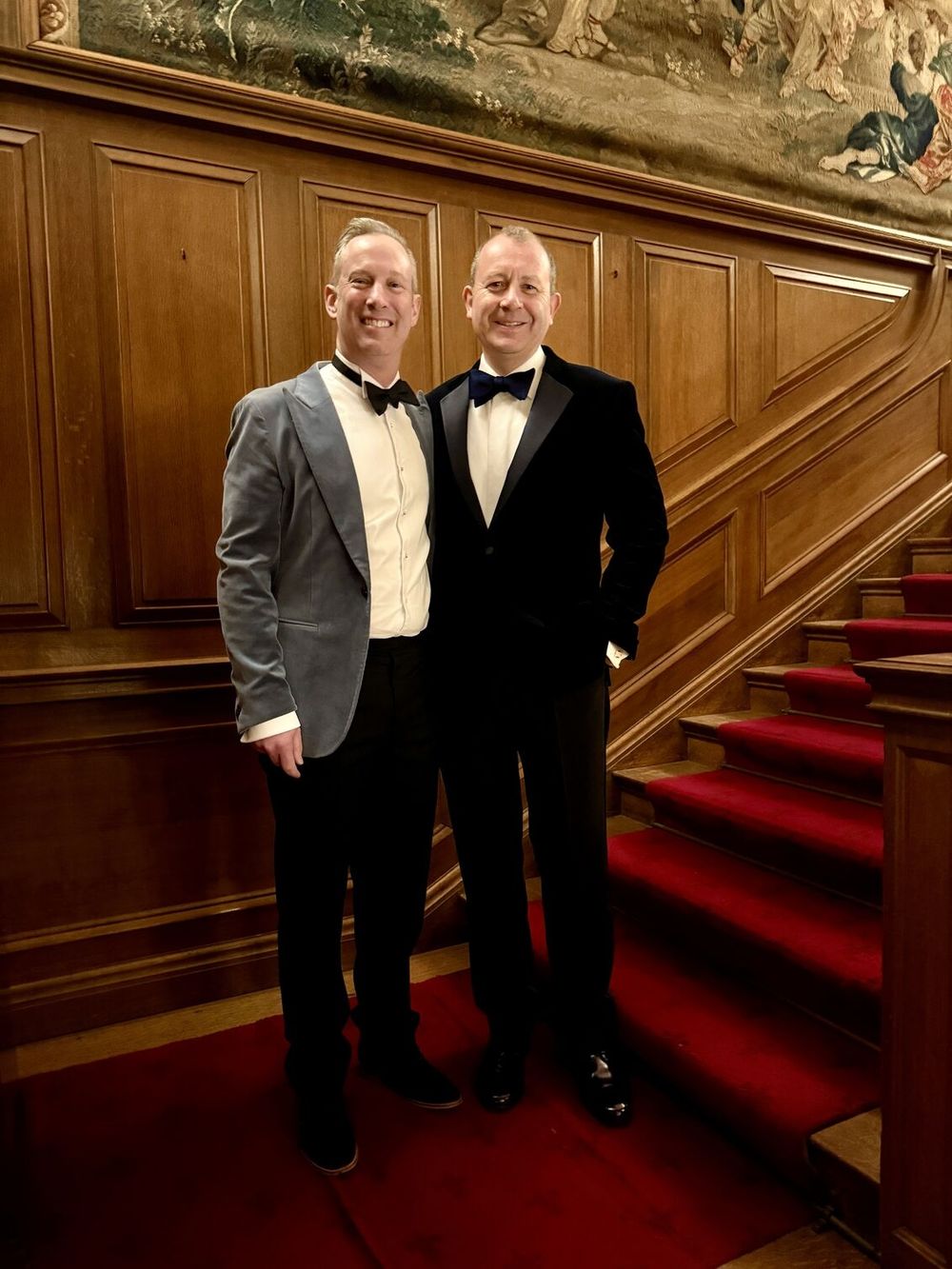
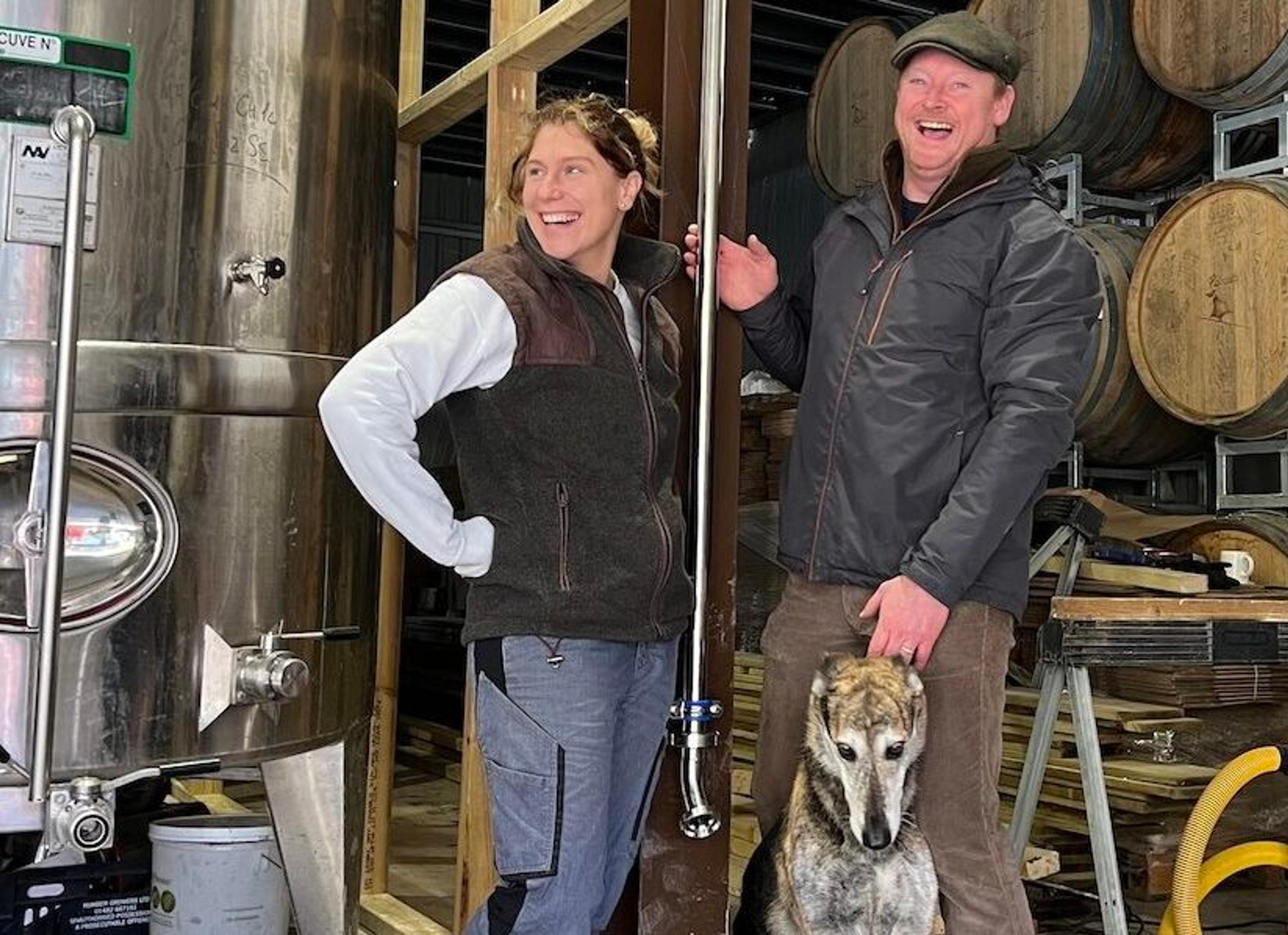
Trevor Clough and husband Jason Humphries
So what is next for Digby? As well as the new focus on on-trade, a hospitality venue, in addition to the existing tasting room in Arundel, is also on the cards, although Clough won’t divulge more details yet. He says “it’s been an interesting couple of years for hospitality but sometimes you have to just triple down and go for it!”
With the négociant model proving successful and new multi-vintage wines aimed at the on-trade, Digby seems perfectly poised to continue pursuing both excellence and joy in equal measure.
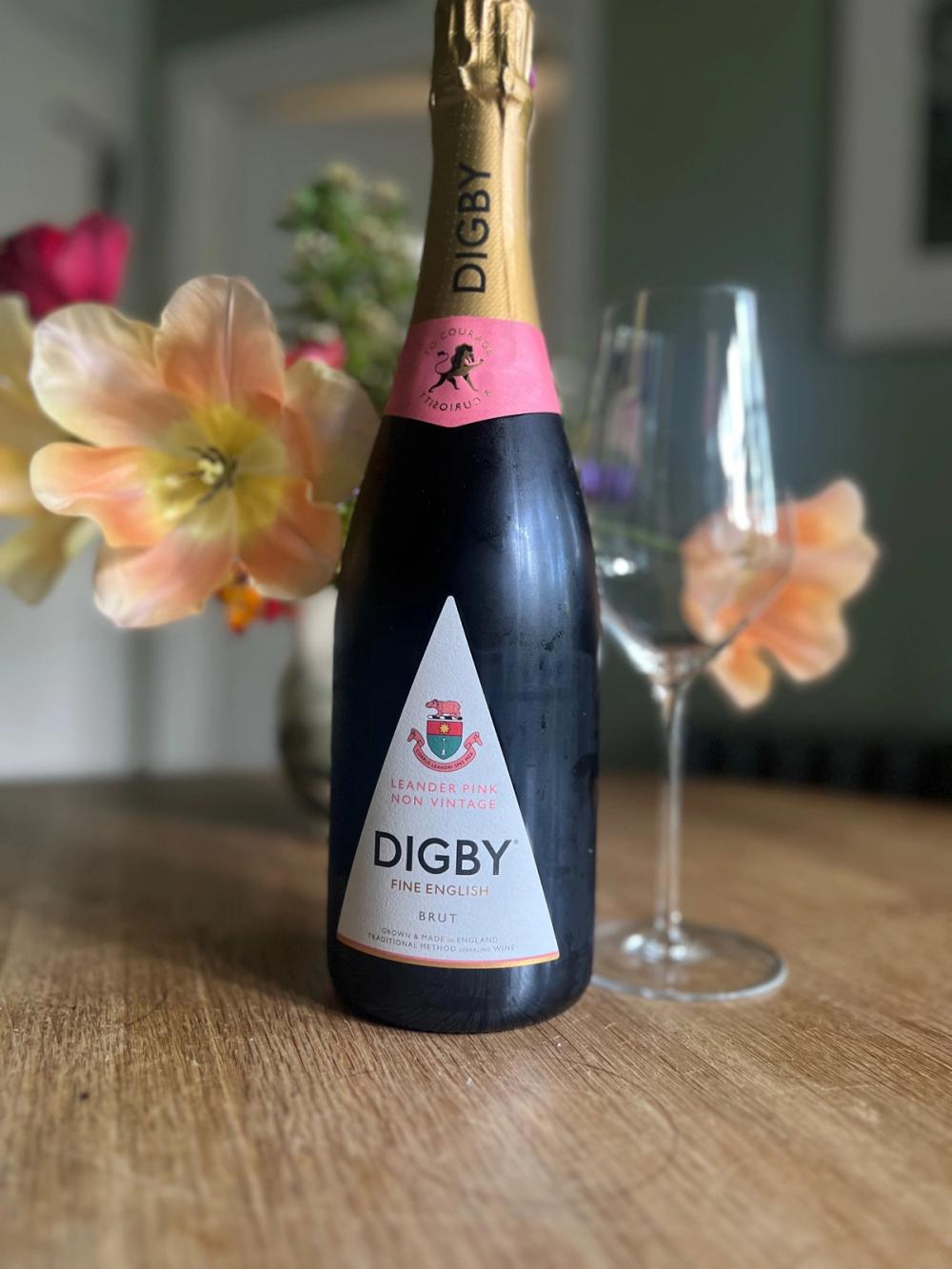
Digby Leander Pink NV Brut
Peter Dean adds - A very classy and moreish sparkling rosé that shows how far the category has come in England – the balance is well managed avoiding both the austerity of some early English rosés and over-bearing sweetness.
The wine is named after the Leander rowing club to which a contribution for each bottle and glass sold will be made by Digby. The wine has just secured a placing with BA's Club World, the second of its wines to do so.
Tasting: Pale pastel pink; substantial head on first pour, this lively bead settles down into a finer thread, the nose has red fruit, strawberry shortcake; on entry the wine has a delicious ripeness that has the right amount of sweetness for drinking solo or pairing with a wide range of sweet and savoury dishes. The balance is just right between fine red fruit flavours (rhubarb, wild strawberry, redcurrant) and a lean, aspirin/ mineral-charged palate that finishes on pink sherbet lemon. Elegant and sophisticated.