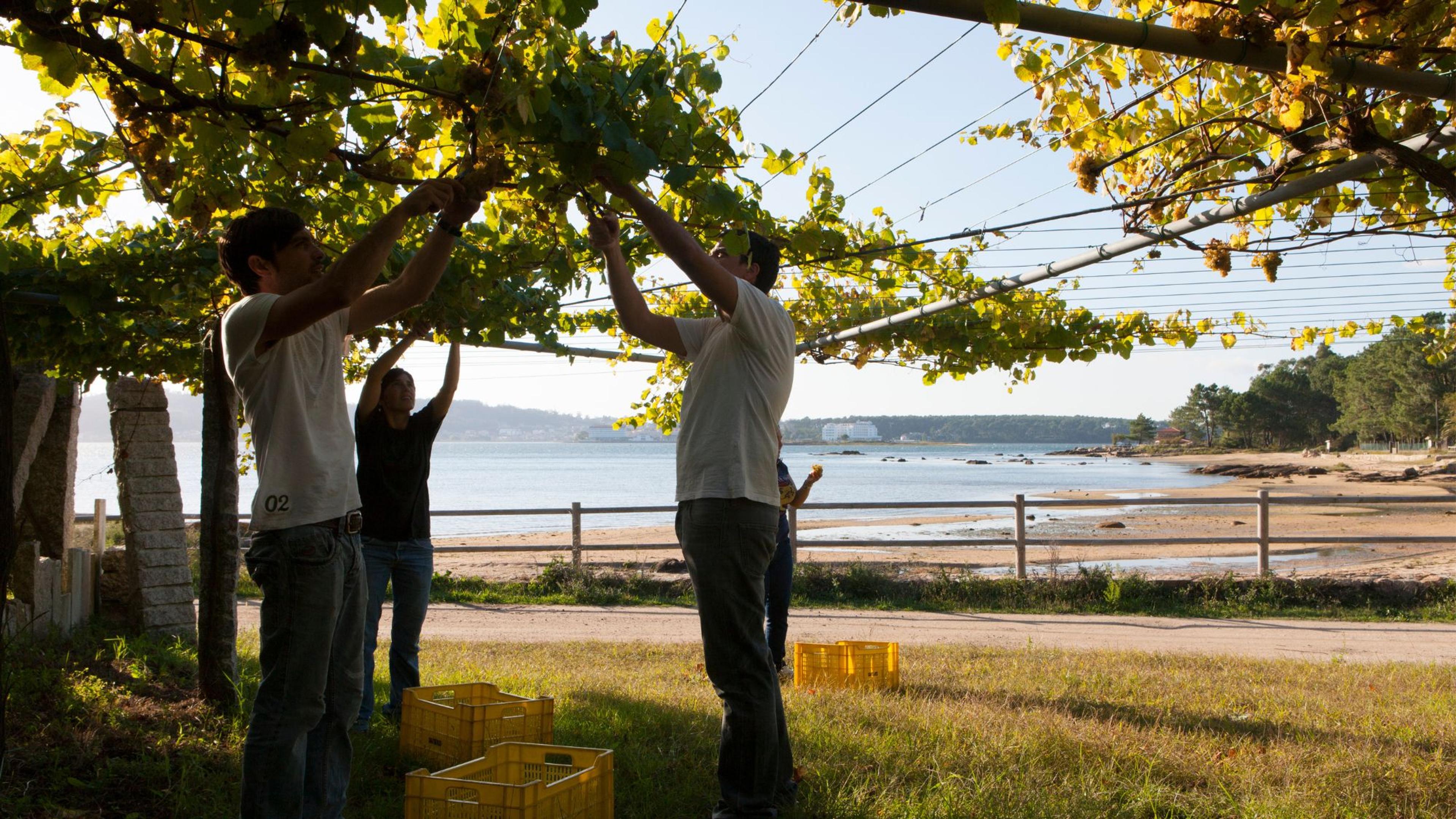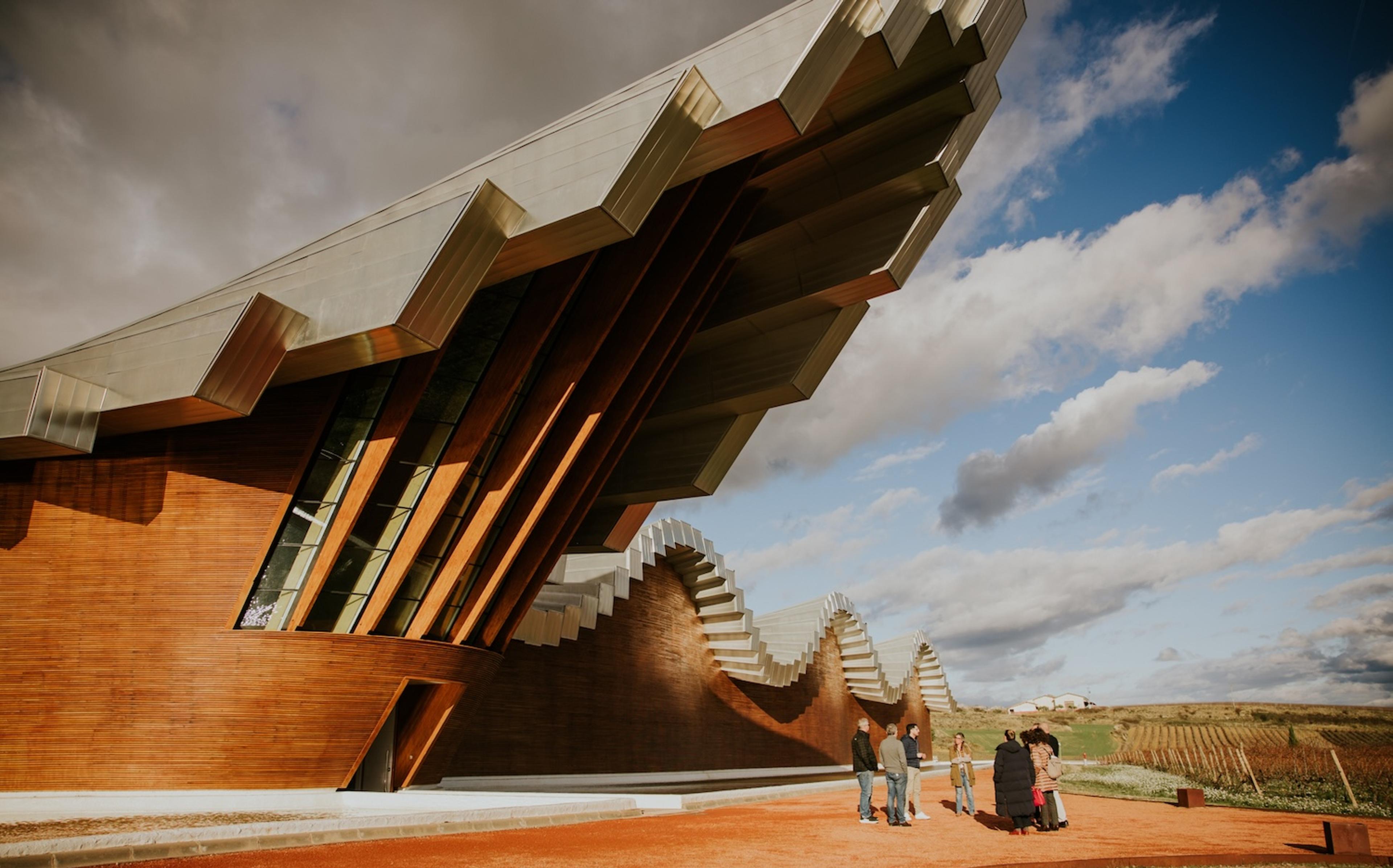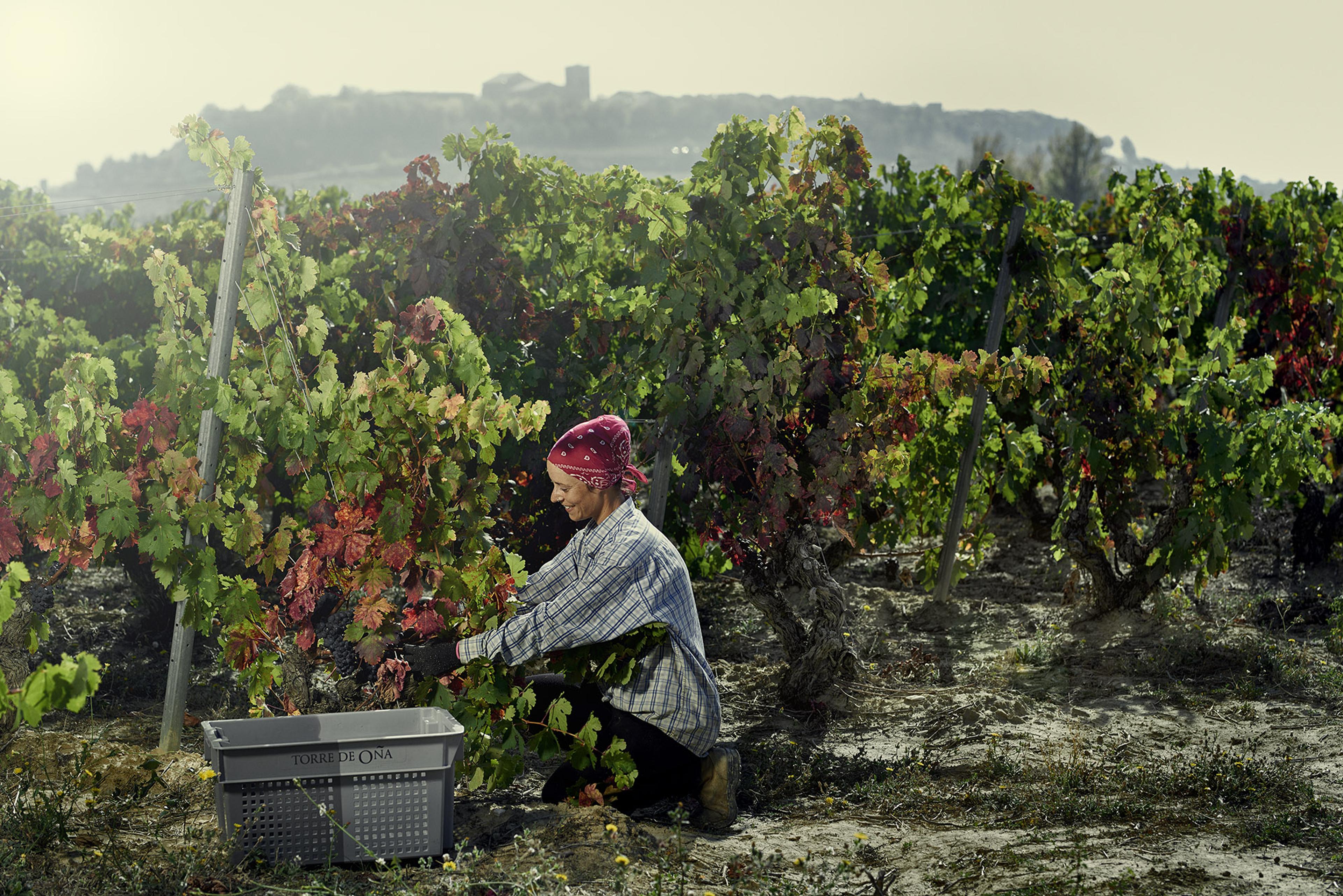
Founded by five families from Rioja and the Basque country, “I think they wanted to drink wines together… and it was the best way to do it” Olga Verde jokes, La Rioja Alta was one of the pioneers in moving white wine production from Rioja to Galicia. In 1988 it bought Lagar de Fornelos in the O Rosal sub-region of Rías Baixas. The previous owners were boat builders, and the winery was just a hobby for them, with a small vineyard of 3 hectares.
Under La Rioja Alta the estate has grown to 88 hectares in O Rosal, a large plot not easy to acquire in Galicia, where hereditary laws and traditions mean landholdings are fragmented. Verde comments that many owners are reluctant to sell or rent “because people feel very close to the land.” Lagar de Fornelos also owns 18 hectares in Cambados in the sub-region of Val do Salnés, bringing its total vineyards to 106 ha.
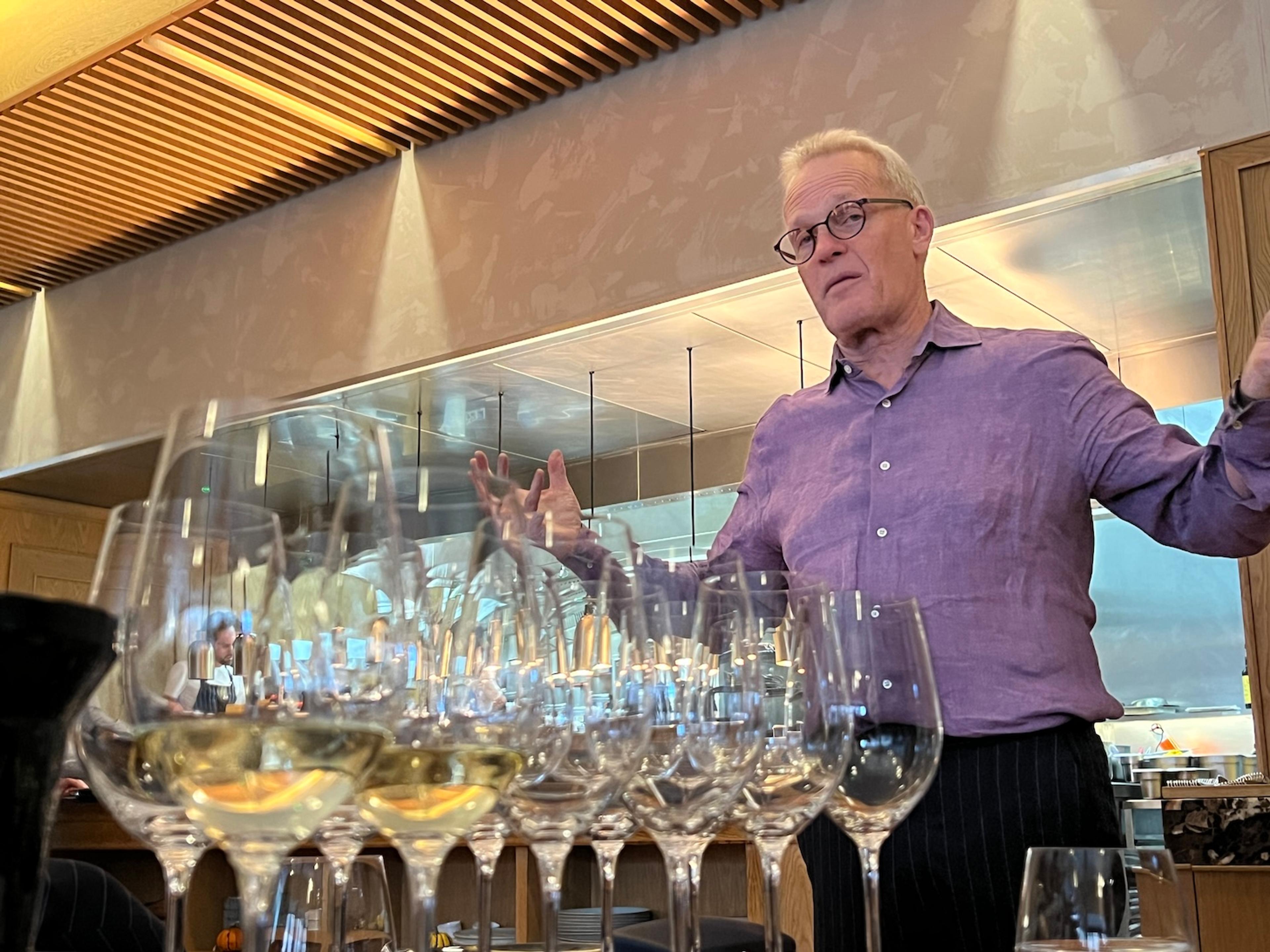
Over a continuous flow of dishes at buzzy Legado, Verde talks us through the portfolio of wines from Lagar de Fornelos.
When La Rioja Alta bought the winery, it started making only one wine, Lagar de Cervera, an Albariño named as a tribute to the previous owners. Verde explains that in O Rosal, several native varieties are grown alongside Albariño, including Loureiro, Treixadura and Caiño Blanco. Lagar de Cervera is 100% Albariño but a blend of two areas: 30% from the plot in Cambados and 70% from O Rosal.
In O Rosal, the schist in the soil (unusual in the granite-led Rías Baixas) gives volume, depth and stone fruit flavours to the wines, Verde explains, while the granite in Cambados gives more citrus notes, salinity and verticality. She counts herself lucky to have Albariño from both areas for balance.
Verde says the winemaking is “very simple” to try to retain the purity of the Albariño. Handpicking is mandatory in Rías Baixas, and Lagar de Fornelos has its own optical sorting machine. They use their own yeast from a selection made in the vineyards, and the wine will remain on the lees for 3-4 months, with frequent bâtonnage.
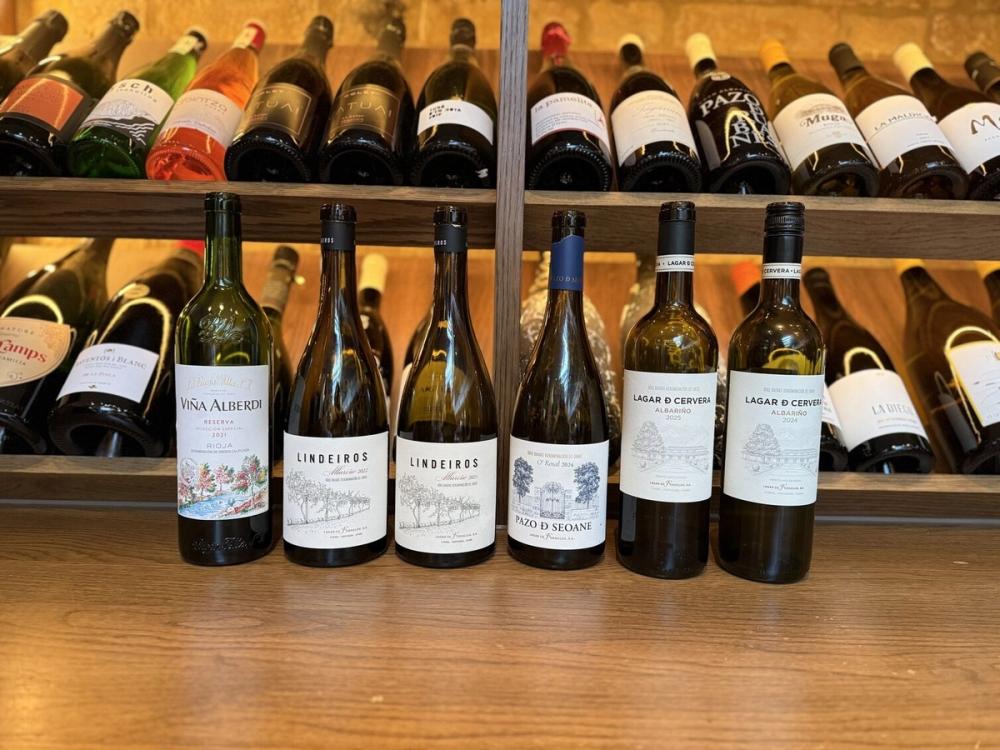
Lagar de Cervera Albariño 2024 is rounded with a lovely texture from the lees contact, refreshing citrus with riper peach and florals on the nose. Lagar de Cervera Albariño 2025 was recently bottled and is spritzy, saline and fresh with herbal and citrus notes and a long finish.
Pazo de Seoane was first made in 2011 and is a traditional O Rosal blend, which must be at least 70% Albariño/ Loureiro. Verde remarks that because Albariño is so well known, it is somewhat challenging to label Pazo de Seoane as ‘O Rosal’ rather than Albariño, but it is important because “it talks about a landscape, it talks about our land”.
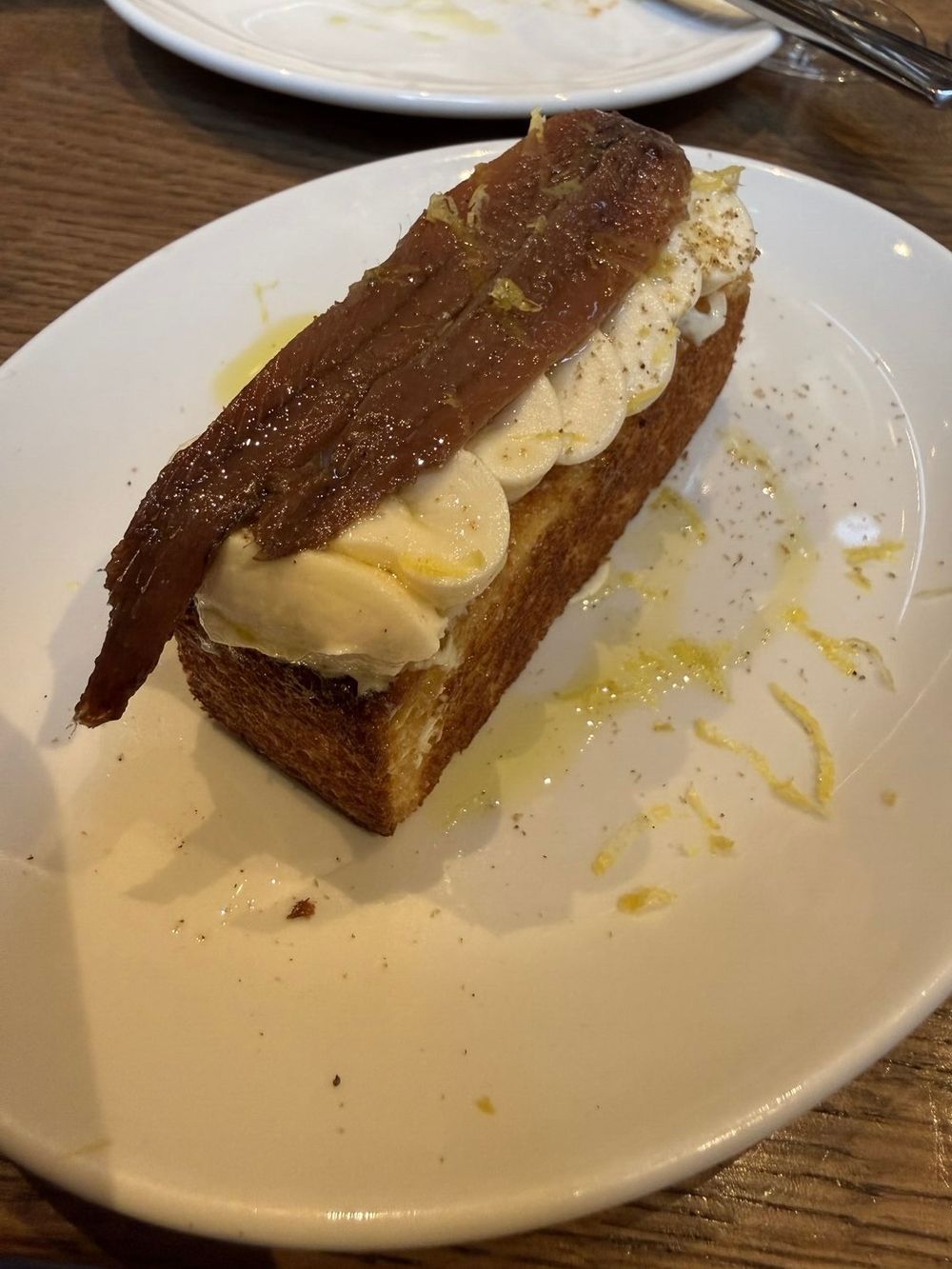
Verde gives us a rundown on the other native grape varieties and what they contribute to the blend: Loureiro bringing plenty of aromatics and floral notes; Treixadura yellow flowers, stone fruits and lower acidity; Caiño Blanco “a super variety” with high acidity, full body and more neutral nose. Pazo de Seoane 2024 is 81% Albariño, 12% Loureiro, 5% Treixadura and 2% Caiño Blanco, with 2-3 months on lees. Floral and herbal on the nose with good salinity, refreshing acidity and a nice weight on the palate, it is easy drinking and excellent with food. We tucked into pan con tomate with cecina, and a swoon-worthy anchovy with smoked cheese on toasted brioche.
As the dishes kept coming: grilled octopus with smoked paprika; skate wing tortilla with mojo verde; black fideua with rock shrimp and alioli, Verde presented the new vintage of Lindeiros, her premium Albariño. She explained that La Rioja Alta had searched for a long time to make a white wine with the potential to age as well as the reds in the portfolio. After many experiments, and a five year search for the best plot, the first vintage of Lindeiros was made in 2021, from ther oldest vineyard in Cambados, planted in 1987.
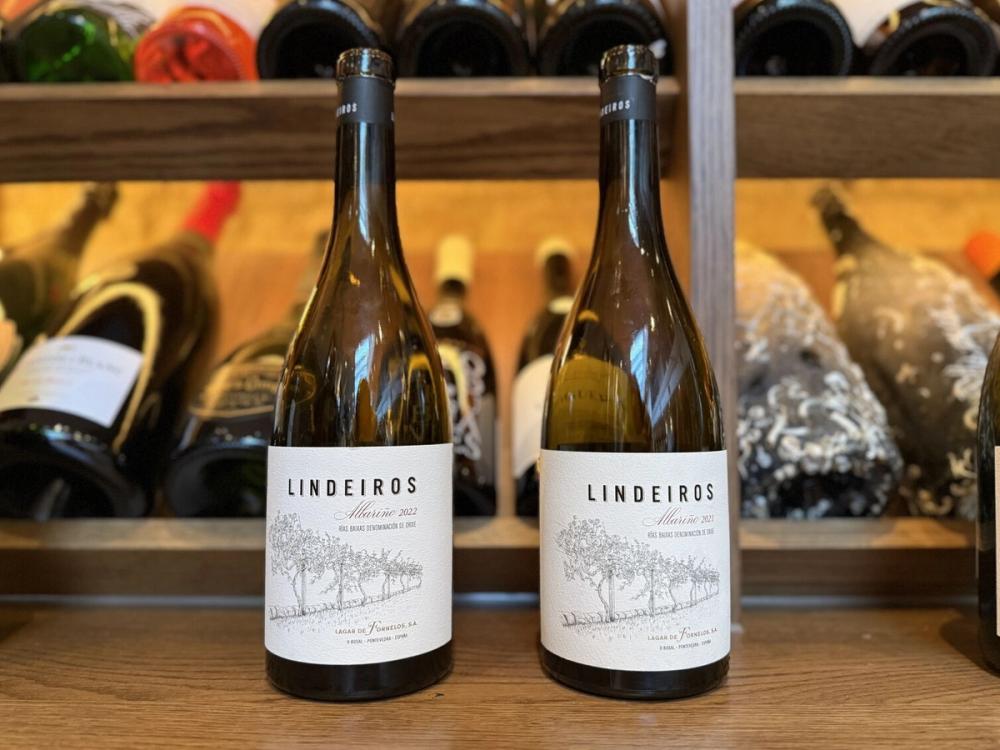
Aged in a mixture of stainless steel, concrete and second use 500L oak barriques, Lindeiros 2021 was surprisingly more youthful than the soon-to-be-released 2022. Lindeiros 2021 is a beautiful wine, a hint of vanilla, rounded and creamy with a buttery, rich nose, with peach and apricot, a hint of salinity and some spice on the palate. Lindeiros 2022 is more powerful and full bodied, with a slightly more restrained nose but lovely salinity, ripe fruit and complexity on the palate. 2022 was the warmest, driest vintage anyone can remember in Rías Baixas.
Verde admits that she has changed her mind on what makes the best vintage for ageing. Previously she thought cool vintages like 2021 were the best but after drinking very old red wines she believes warm, dry vintages give the structure which is needed for the potential to age: “We are in Galicia so we have the acidity, even if the year is warm”.
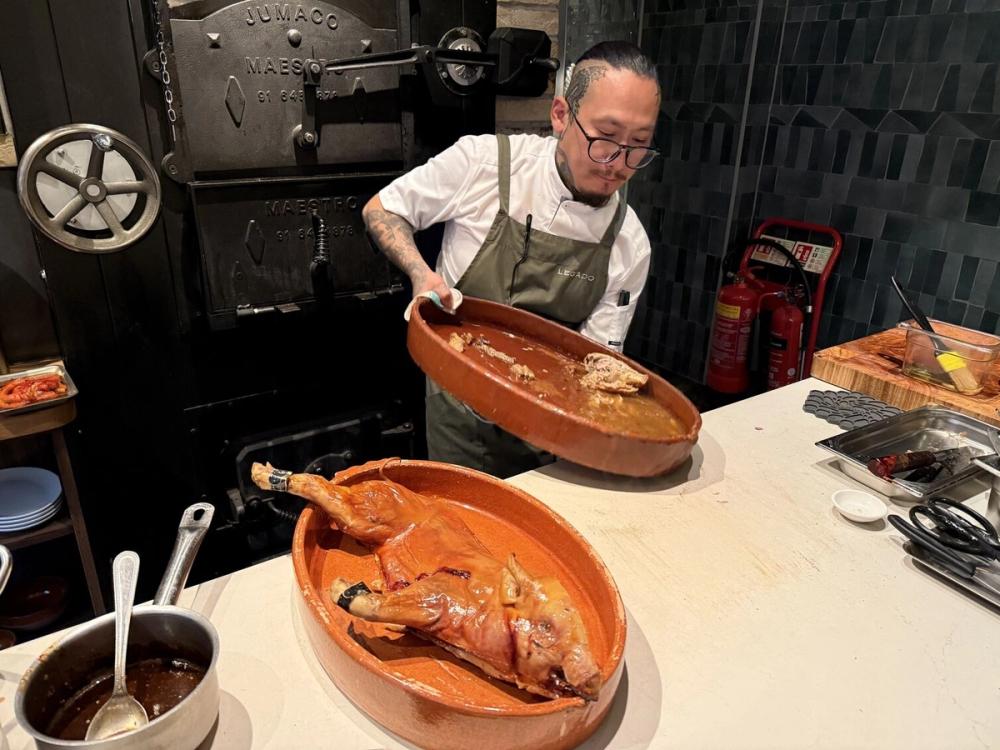
The star of the show at Legado is suckling pig, crispy and succulent and cut with a plate in a nod to Segovian tradition (thankfully without the theatrics of smashing said plate!). With the meat course, we moved away from the whites of Lagar de Fornelos to try the new release of La Rioja Alta Viña Alberdi 2021, only the second Viña Alberdi wine to be designated as ‘Selección Especial’. This special selection is a label La Rioja Alta uses when they think the wine is ‘perfect’: something which has only been used nine times in 135 years. Aged for two years in oak and two in bottle, this Reserva shows classic coconut and vanilla oak on the nose alongside concentrated red berried fruit, smooth soft tannins and spice and toast on the palate. There were murmurings around the table that the RRP was surely a typo, it’s incredible value at £21.
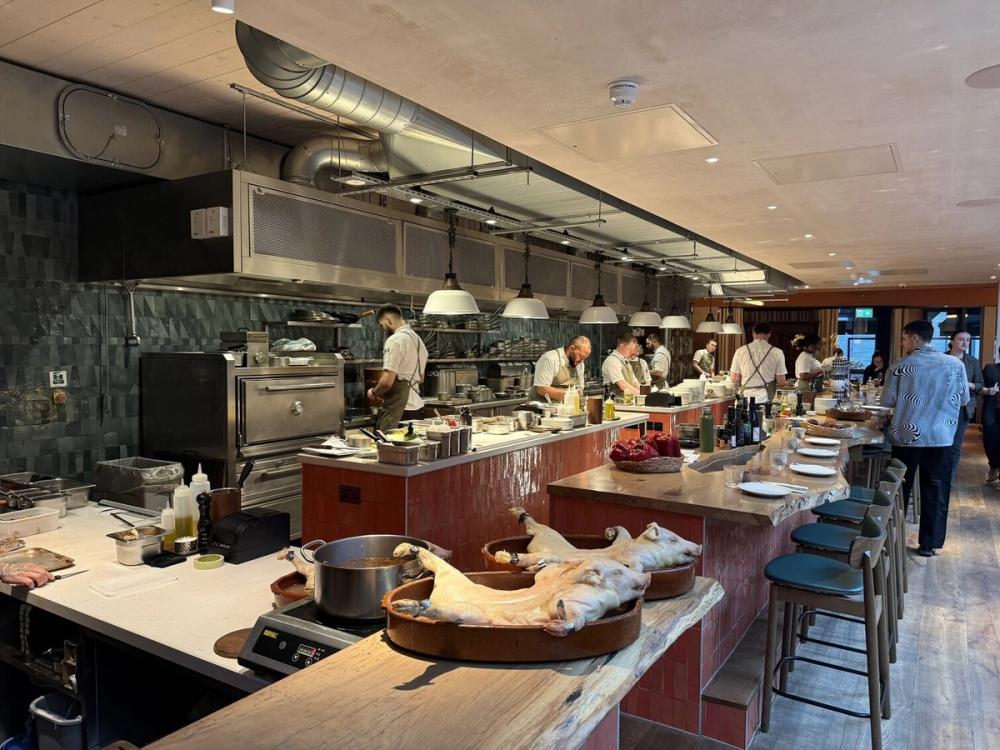
Legado, newly opened in London
The lunch venue choice wasn't just about the Spanish connection. Legado, which means 'legacy', is female-led, as is Lagar de Fornelos under Verde's direction, something which is reflected across Rías Baixas. Verde joined Lagar de Fornelos in December 2024 and her enthusiasm is infectious: “I love my job, I love being a part of La Rioja Alta, I'm very proud”. With her focus on terroir, ageing potential, and championing native varieties, Verde is proudly building on La Rioja Alta's legacy.