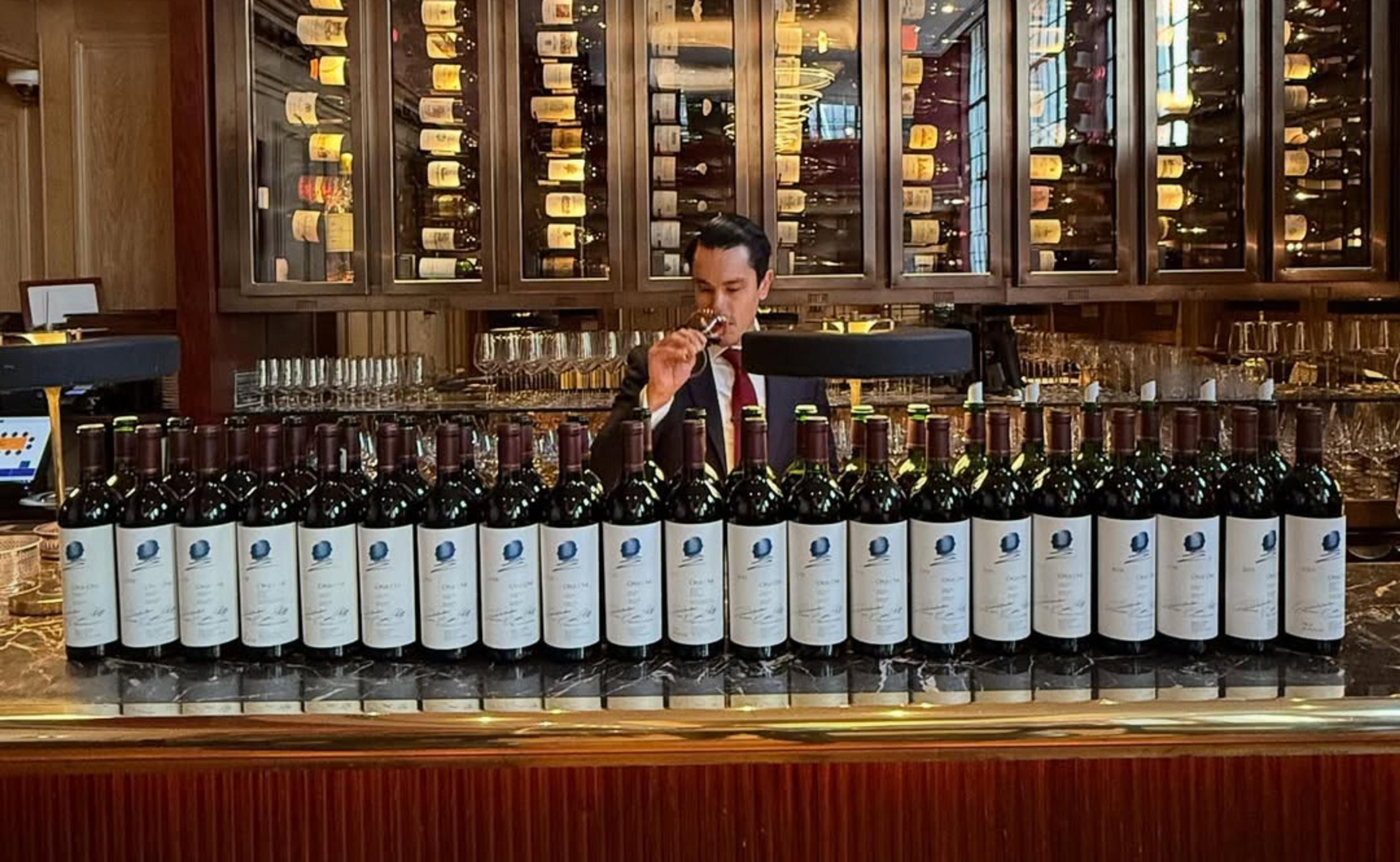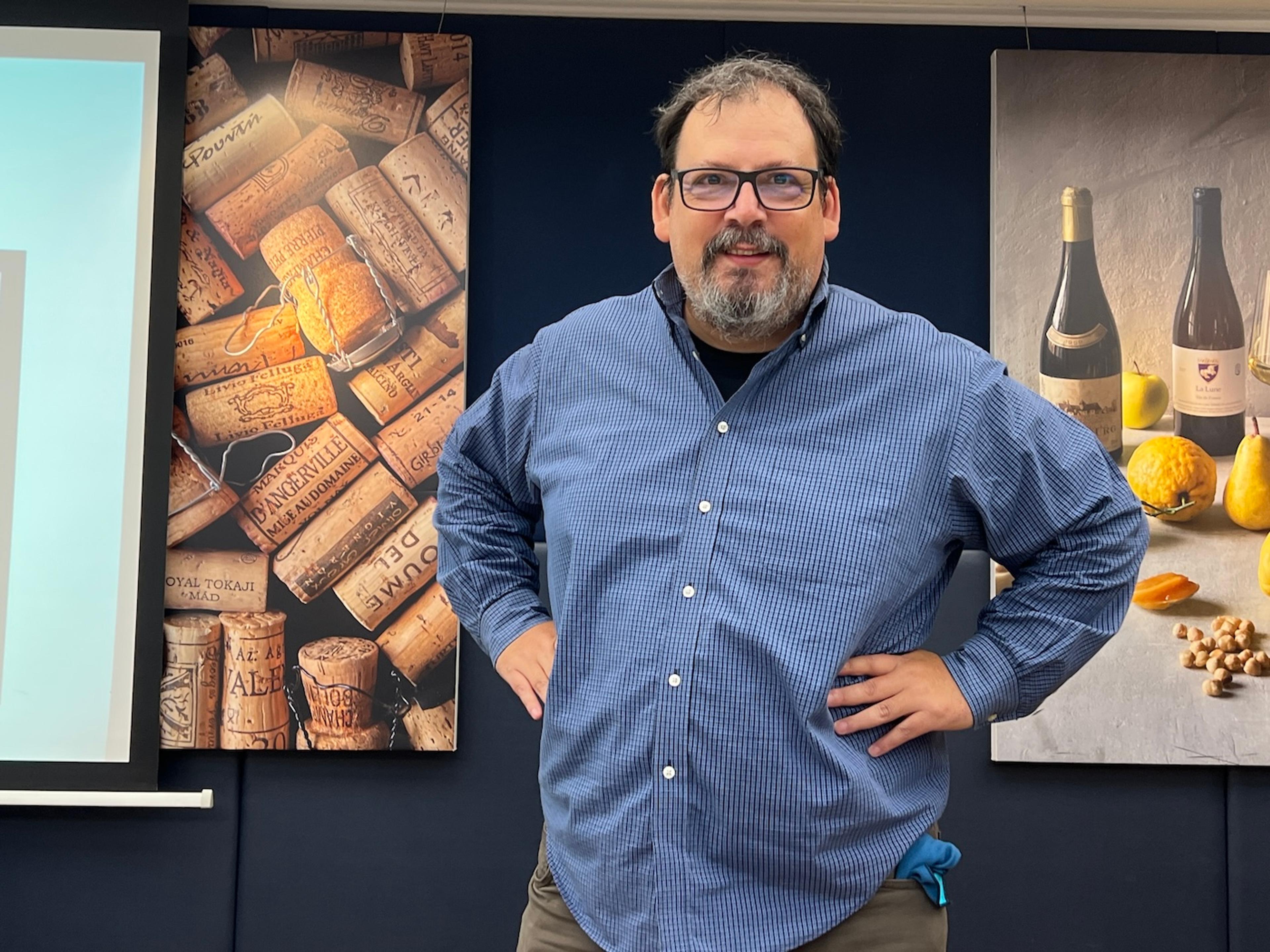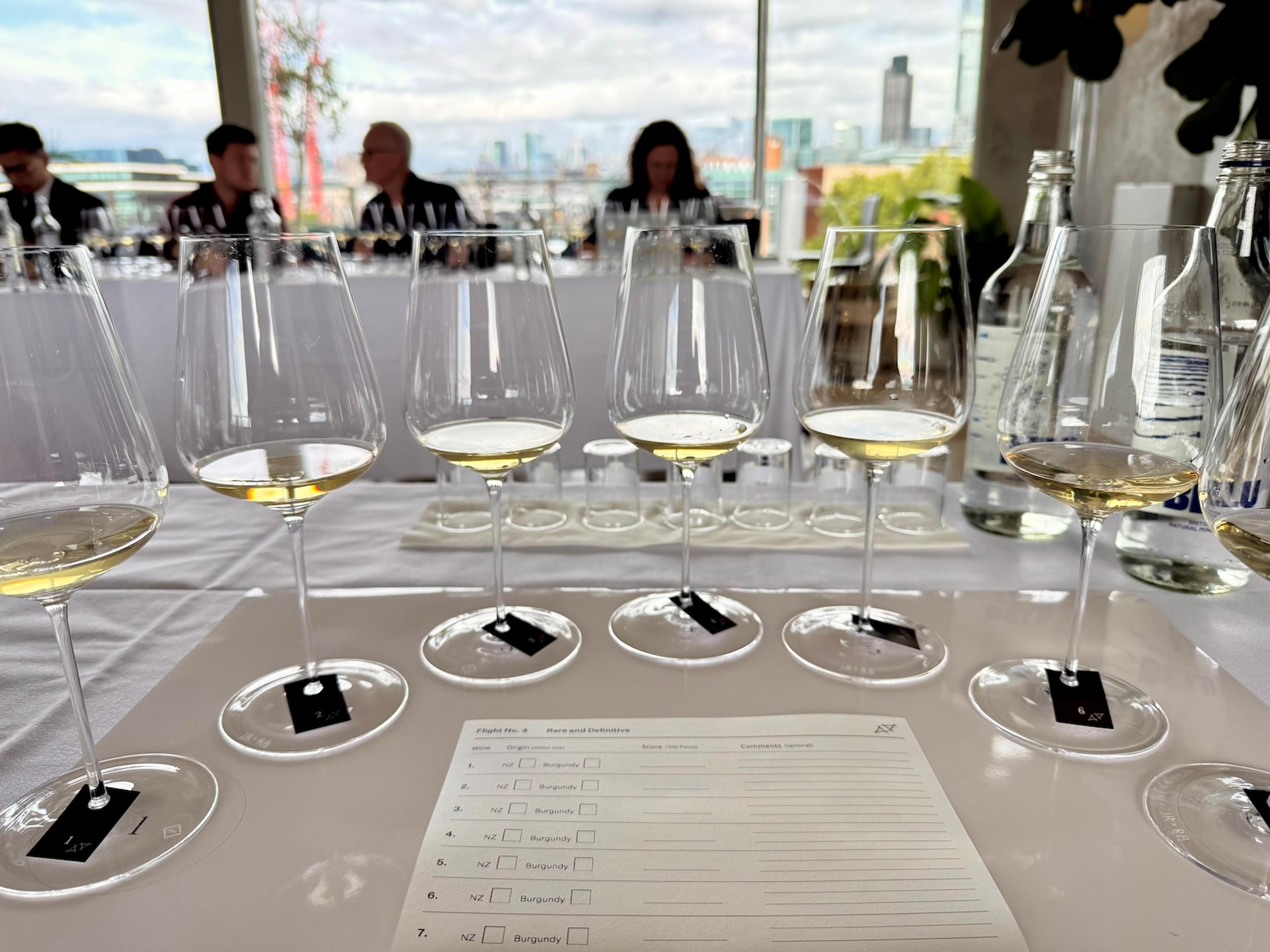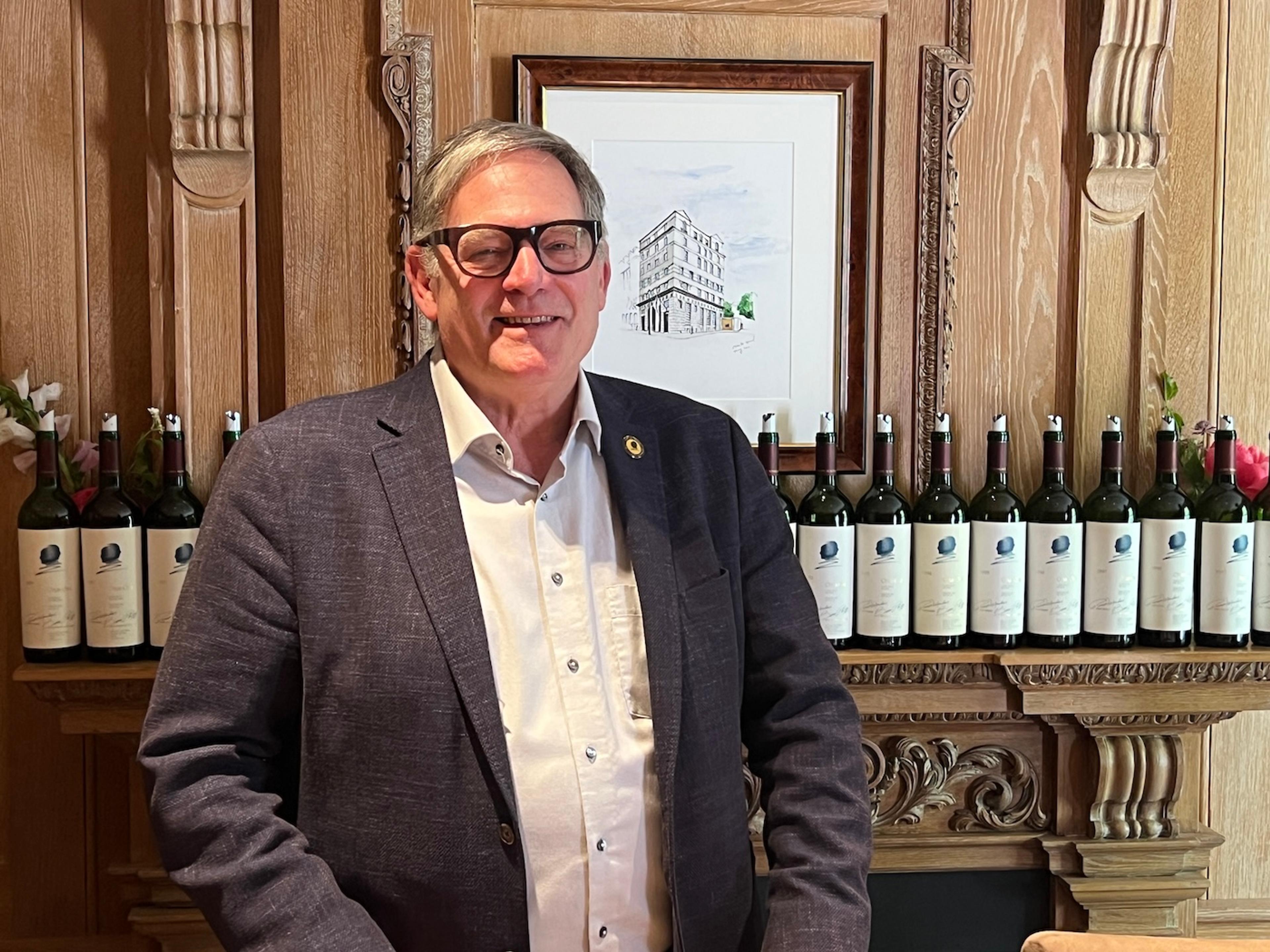

This was the second mammoth vertical tasting of Opus One to take place in London over the past six months. The first was in November 2025 tasting 21 vintages from the years 2001-2022, the second, most recent tasting in May 2026, was tasting 22 vintages from the first vintage 1979 to the year 2000. The format was the same on each day – two mini-verticals with a break in-between, both tasted with winemaker Michael Silacci and newly appointed director of winemaking, Meghan Zobeck.
Silacci joined Opus One in March 2001 as a day-to-day winemaker and was officially named winemaker in 2003. As such, he admitted that he obviously felt closer to the 2001-22 wines although, like everyone else in the room at wine club 67 Pall Mall, London there was an undeniable sense of privilege to be sat in front of this earlier flight.
Tasting so many wines with a winemaker as worldly wise as Silacci, who alternates between sharing insights into the vintages and relaying anecdotes about past and current winemaking techniques, is fascinating despite its discursive, unstructured approach. I, therefore, provide a blow-by-blow analysis of each wine at the end of this piece but before that here are some choice takeaways from the discussion.
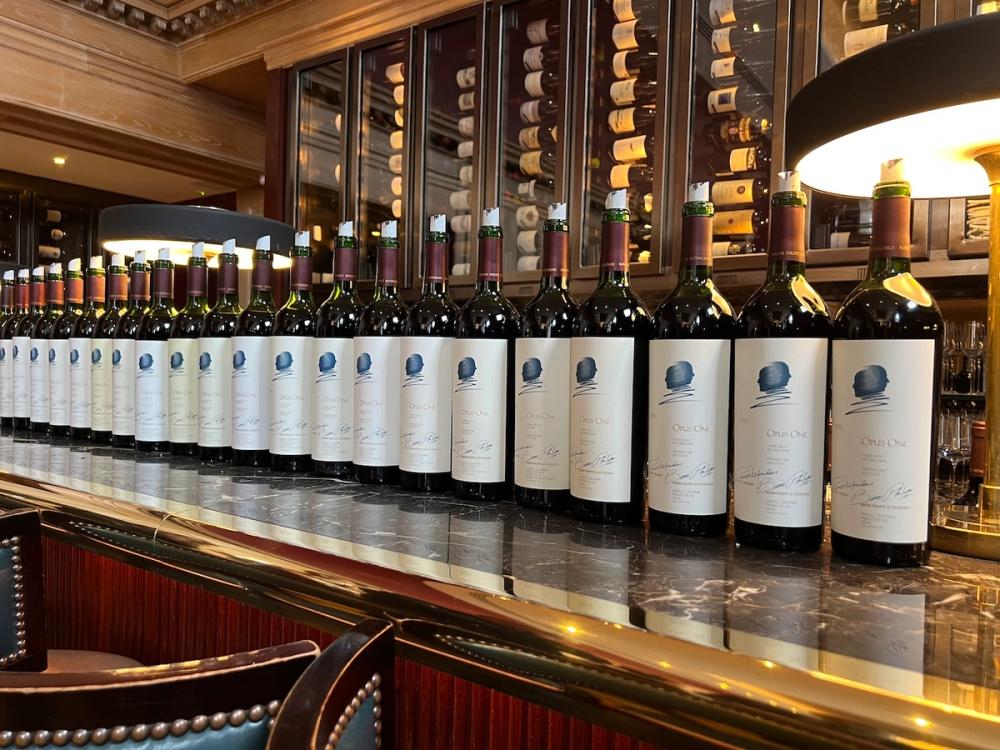
Historical tasting, 67 Pall Mall London, May 2026
Risks and intuition
Silacci says that for the past 26 years he has been taking calculated risks at Opus One which is very much in the spirit of Robert Mondavi who was always experimenting, especially when he first created this wine with Baron Philippe de Rothschild.
He takes skin contact as an example which was increased in 2020 to 44 days, then 32 days and now sits at about 20 days.
“I am guided by intuition – not so much by data; intuition gets you close and then data gets you closer, a bit like fine tuning. I make a decision intuitively and then look at the figures and then you have to decide whether to accept the risk or not – technology plays an important role but a lot of the time winemaking is conceptual. It’s important in making it grow that you take risks and continue to change at nuance level.”
In 2001 Silacci started a trial of irrigation intervals – withholding water from the vines in order to encourage the roots to drill down deeper into the ground. This was then extended to the entire vineyard. In 2006, a year with abundant rainfall, he practised 100% dry farming, in 2008 a warm year with a bit of frost, they were 95% dry farmed.
“In 2009 we gave a bit of water at bud break which releases nitrogen and it managed to turn the Cabernet Franc around, which was always a bit rustic – maybe we should have been kinder to it earlier,” he smiles.
The team tends to only give water to the plants during set and veraison, now the cover crops are helping retain water in the soil (there is a 10°C buffer between top of crop and soil).
“To stay at the top of the quality curve you have to take risks – Mr Mondavi and Baron Philippe de Rothschild were great risk takers. But you have to be reasonable you can’t kill the vines to see if they’ll survive without water for 10 years.”
Opus One was made in the Mondavi château from 1979 until 1991 when its own bespoke winery was opened – the Château then becoming the place where the team made experimental wines.
A recent purchase has been some amphorae, naturally enough, but also they have identified two single species of oak from which they make their barrels, “one that brings out bitterness the other brings out fruitiness.”
In 2012 Opus One started selecting its own natural yeast and since 2019 the wine has been made entirely using wild yeast, the winery having a range of different strains – Wolf, Hog, Squirrel – which are named after its character.
“It’s not enough to make a wine, it has to be a reflection of people,” Silacci continues, explaining that he teaches his vineyard workers about sap flow and photosynthesis so that they make informed decisions about their work – using the 80/20 rule, 80% reason and 20% passion.
The same equation is used to explain the importance of vineyard work to that done in the winery.
“80% of the quality of a wine comes from the vineyard so I tell them ‘you’re more important than me, take pride in it’.”
In terms of wine style he tries to get Opus One just under 14% abv “hopefully the way we’re farming will get us there, getting the right balance between sugar accumulation and ripeness,” he says.
As for how he works with his team. Silacci quips: “Someone said to me that ‘you are the Miles Davis of the wine industry… Miles Davis aged but his band never did – he just replaces the band – I do love the sassiness of youth.”
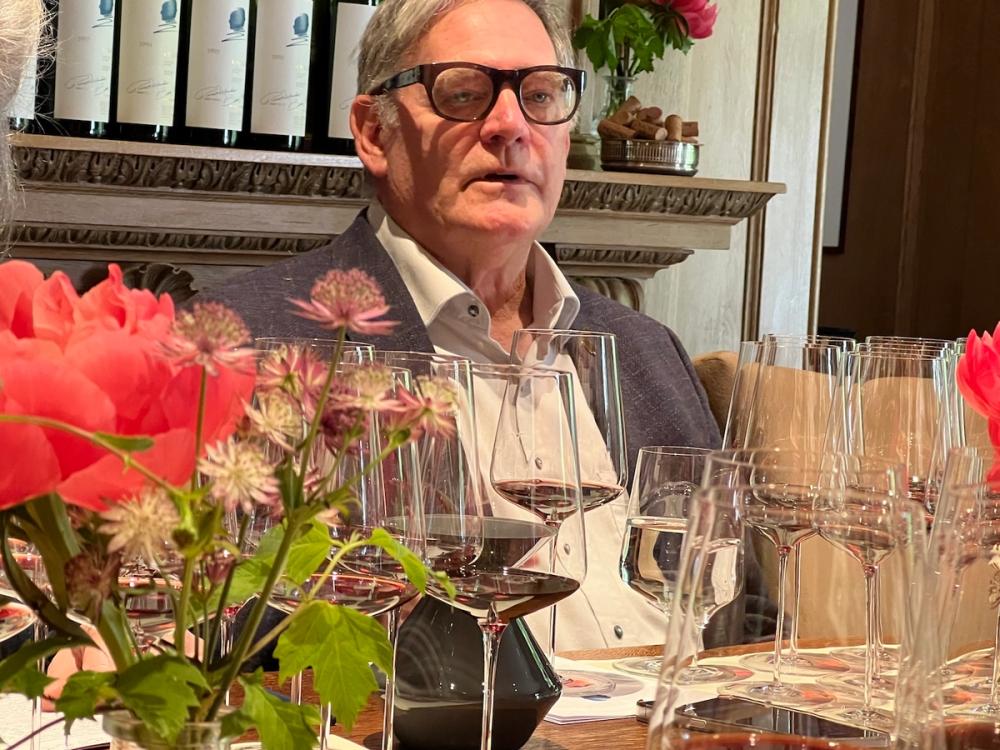
"It’s important in making it grow that you take risks and continue to change at nuance level." Michael Silacci.
Californian ripeness
From its inception the concept of Opus One was not to try and make a Bordeaux wine in California nor vice versa, but rather a blending of the two great winemaking regions, using the very best Californian Cabernet.
Although the initial meeting between Baron Philippe de Rothschild and Robert Mondavi took place at a wine convention in Hawaii in 1970 it wasn’t until 1978 that Rothschild invited Mondavi and his daughter to Bordeaux (only the American’s second-ever visit to France), with Mondavi being somewhat flummoxed by the Frenchman’s need to have lunch in the vineyards and get to know each other, the former being used more to get straight down to business.
“Rothschild asked Mr Mondavi if he was still interested – his office was his bedroom and there is a photo of him propped up in bed, his breakfast tray finished – and in an hour Opus One was agreed upon. There were three conditions – it was to be a classic red wine made in California using Bordeaux varietals; that you could share it with friends and family; and they should be stewards of the land and leave it in better nick than they found it.”
If the cultural differences between the two men was apparent from the get-go, that was nothing compared to the making of the first vintage which was carried out by Mouton’s long-standing winemaker Lucien Sionneau and Mondavi’s inexperienced young son Tim. They couldn’t communicate and, despite being instructed to work together they went off and made two separate wines.
Changes were made to length of time on the skins, time in the barrel and the use of press-wine (initially only free run was used) and the first Opus Wine was agreed upon.
As for the progression of style since those early years, Silacci says:
“The earliest vintages of Opus One were more austere, more tannic, more French in style and then becoming more warm and welcoming and that would be California.”
Interestingly the jammy, concentrated Napa style he attributes to the St George clone which was planted after California’s second major outbreak of phylloxera. The clone, also known as Vitis rupestris, is highly resistant to the disease but, because it is highly vigorous, produces a very large canopy which delays fruit maturity and ripening.
Silacci recounts how, in the 1990s, he saw two winemakers in a bakery boasting in a macho way about how much hang-time they were giving their fruit. Since then, he says, people have been discouraged from using St George rootstock.
Tasting Opus One 1979-2000
Generally speaking, all the wines had terrific balance with seamlessly integrated tannins, with only the 1979 showing its age, but even then only after considerable time in the glass.
There was greater vintage variation in the first flight of 1979-1989 than the second flight of 1990-2000.
In each review the growing season details are provided by Opus One.
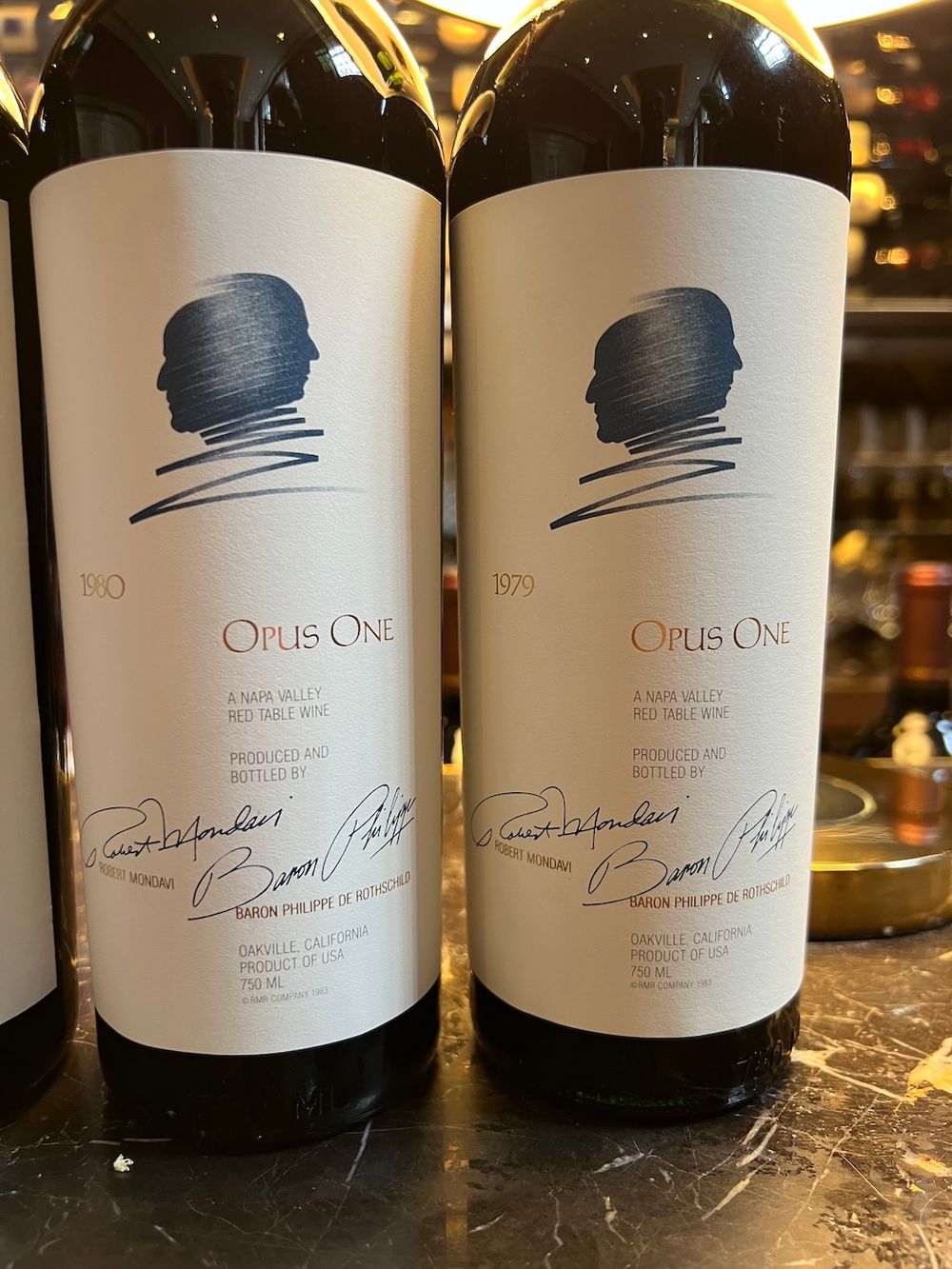
Opus One 1979
Cabernet Sauvignon 80%, Cabernet Franc 16% and Merlot 4%
10 days skin contact / 24 months in new French oak
A seemingly perfect growing season from bud break to the beginning of harvest, the 1979 vintage was challenged by rains in September. Early harvesting yielded clean, well-balanced fruit and a wine of power, resilience and finesse.
This first vintage is in good shape, bricking on the eye, sensational nose with tertiary developing and fabulously elegant in the mouth. Seemless integration and balance. After a while meat extract develops and the wine starts showing its age.
Opus One 1980
Cabernet Sauvignon 96%, Cabernet Franc 4%
10 days skin contact/ 25 months in new French oak
The 1980 vintage sustained one of the coolest growing seasons on record in Napa Valley. A two-week warm spell just before harvest increased grape sugars to hasten ripeness, resulting in rich, tannic, higher-acid wines with great promise of longevity.
Darker in colour with black fruit, liquorice, mulberry juice on the nose; in the mouth the wine is so fresh, micro-fine tannins, sweet and sour, with a blood orange note on finish – a much better balanced wine than the ’79 and lasted better in the mouth.
Opus One 1981
Cabernet Sauvignon 93% and Cabernet Franc 7%
10 days skin contact/ 22 months in new French oak
The 1981 growing year produced one of the earliest harvests in Napa Valley history. A very mild winter with lower-than-average rainfall gave way to early bud break and hot weather in June. The 1981 Opus One is elegant and moderately long-lived.
Like the ’79 this is russet-red. Bit of a disconnect between the nose and mouth – smells a lot older, slightly corky, more sous bois with cep; in the mouth the wine is juicy and plump – a lovely lean slightly citrus element. Enormous dry finish with flowers and ceps, meat juices. Very much alive – expressive and textured.
Opus One 1982
Cabernet Sauvignon 82%, Cabernet Franc 16%, Merlot 2%
9 days skin contact/ 23 months in new French oak
A wet winter and a warm spring produced perfect bloom and berry set and a record crop for the 1982 vintage. Cabernet Sauvignon and related varietals weathered the mid-September rains quite well, producing full-bodied wines requiring a decade or more of bottle ageing.
Dark garnet and dried black fruits on the nose. Showing really well with youthful vigour, great purity, lean, elegant, slightly more austere and resinous. Very juicy. No rush to drink this.
Opus One 1983
Cabernet Sauvignon 80%, Cabernet Franc 13%, Merlot 7%
16 days skin contact/ 23 months in new French oak
Rains in August were followed by dry, windy weather in September which protected Napa Valley’s red varieties from exposure to rot. A greatly reduced crop level produced lean, well-balanced wines for medium-term aging.
More subdued aroma-wise, opened out on the palate with good freshness, structure intact, textured, decent balance and levels of fruit, mineral note, feels younger than its age.
Opus One 1984
Cabernet Sauvignon 97%, Cabernet Franc 3%
17 days skin contact/ 19 months in new French oak
The absence of late winter rains produced warm soils and an early bud break. Although Oakville saw cool mornings as well as warm afternoons, the growing season was the shortest on record. Ideal temperatures at harvest yielded clean, well-balanced fruit and concentrated wines with good aging potential.
Apart from the 1979 this was the oldest on the nose by a long way; on the nose you find very ripe and cooked fruit, rumtopf, black tea; such a contrast to the mouth which is just so fresh, with firm acidity, less detailed than the ’83 with a ‘hot’ finish. A slightly mucky sample.
Opus One 1985
Cabernet Sauvignon 90%, Cabernet Franc 4%, Merlot 6%
21 days skin contact/ 17 months in new French oak
One of Napa Valley’s best vintages in a decade, 1985 saw an early bud break, a long, moderate growing season and dry, warm weather during the harvest. Wines are rich, supple and very aromatic, showing great balance and length.
To look at – see-through mahogany/ russet; perfumed with riper black fruit on the nose (more Napa), fresh mace; ripe, elegant with almost perfect balance – one of the wines of the flight so far.
Opus One 1986
Cabernet Sauvignon 87%, Cabernet Franc 9% and Merlot 4%
21 days skin contact/ 18 months in new French oak
In 1986, still another early bud break led to an even longer growing season than the previous year. Softer, more delicate fruit flavours resulted, with ideal levels of sugar and acid. Wines are harmonious, exquisite and long-lived.
Pretty, floral aromas, sweet fruit, bell pepper; in the mouth the wine is lovely and fresh, juicy with fine-boned tannins, a hint of spice and blackcurrant leaf – the greater percentage of Cab Franc making its presence felt more.
Opus One 1987
Cabernet Sauvignon 96%, Cabernet Franc 3%, Merlot 1%
24 days skin contact/ 18 months in new French oak
1987 followed the same early bud break pattern established in 1984. The growing season was dry, cool and moderately long. An earlier-than-normal harvest yielded clean, well-balanced fruit. Showing at once great suppleness and structure, the 1987 offers outstanding ageing potential.
This, the first year of drought, created much smaller berries which, with the high percentage of Cabernet Sauvignon brings more structure, and pronounced acidity to the wine. Young colour, almost transparent, nose and palate has cassis with hints of red cherry, tobacco, dried meat. Long finish, drying tannins.
Opus One 1988
Cabernet Sauvignon 85%, Cabernet Franc 13%, Merlot 2%
28 days skin contact/ 18 months in new French oak
Erratic temperatures throughout the first few months of the season caused some shatter in the grape flowers and uneven rates of maturation. The resulting smaller crop and smaller berry size yielded tannic, full-bodied wines of firm structure and significant potential.
Deep ruby-red; blackberry and dark plum dominate with cocoa, earth; on entry the wine is warm and smooth in the mouth, velvety framed by a core of firm but well-integrated tannins, sweet tobacco, leather, grippy on the finish
Opus One 1989
Cabernet Sauvignon 97%, Cabernet Franc 1%, Merlot 2%
31 days skin contact/ 17 months in new French oak
Normal weather patterns prevailed during the cool 1989 growing season, which produced typical crop levels. Unseasonably cool weather – which included late September and October rains – delayed the harvest, producing lower sugars and lean, vigorous wines with notes of cedar and spice.
Sweet cassis and red fruit dominate the aromas; on the palate this is rich, beautifully ripe and juicy, pixilated tannins, there’s a lean edge, cedar and spice, slightly resinous edge, chewy. But in a good place with a beautifully lush mouthfeel.
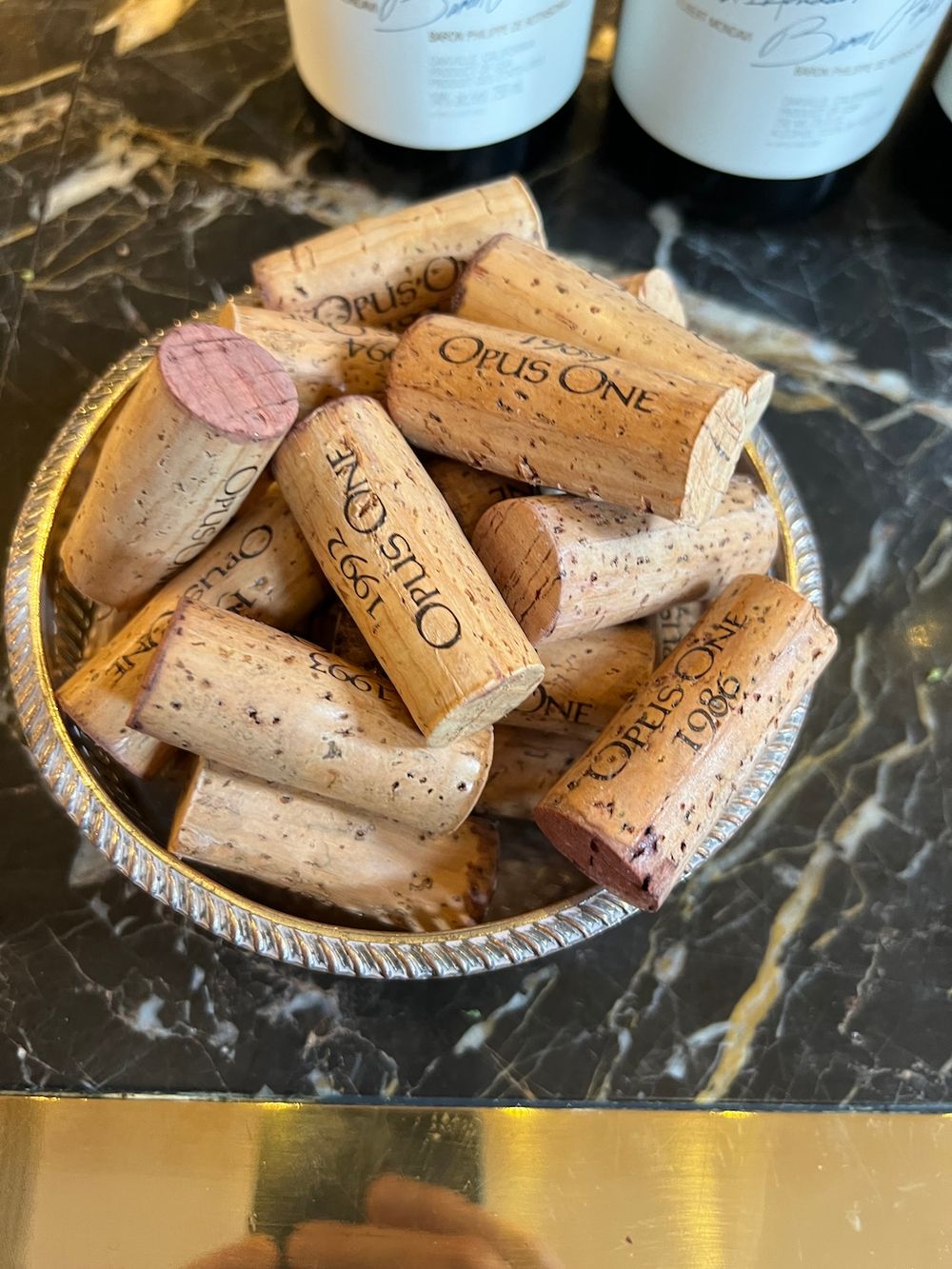
Opus One 1990
Cabernet Sauvignon 87%, Cabernet Franc 10%, Merlot 3%
30 days skin contact/ 18 months in new French oak
Cooler-than-normal winter weather led to a late bud break. Bloom and berry set were affected by cool temperatures and rain in late May, resulting in a reduced crop. Normal summer temperatures were followed by ideal harvest conditions. Comprised of 22 Opus One vineyard lots, the wines are aromatic, rich and resilient.
Beautiful elegance, complexity and depth to this wine; fabulous nose of blackberries and damsons; the tannins are resolved, medium acidity, wonderfully soft, warm, pretty, fresh and juicy with hidden, integrated tannins; amazingly complex.
Opus One 1991
Cabernet Sauvignon 93%, Cabernet Franc 6%, Merlot 1%
33 days skin contact/ 15 months in new French oak
Seventeen inches of rain in March ended the prospect of a drought year. The growing season was cool and protracted, producing a large crop and a late harvest. The vintage yielded wines of great structure, balance and length, offering persistent layers of flavour and a sweet middle palate.
The high levels of residual sugar in the wine are immediately apparent on the nose – so ripe and what I associate with Napa; sweet forest fruit, forest floor, earth on the nose; in the mouth the wine has rich blackberry, cassis, dark chocolate; smooth mouthfeel, soft, fine-grained tannins well integrated. Silacci says that this and the 1987 are personal favourites of his, for me I'm not a fan of that intense, concentrated nose.
Opus One 1992
Cabernet Sauvignon 89%, Cabernet Franc 8%, Merlot 3%
38 days skin contact/ 17 months in new French oak
Good weather led to normal bud break and excellent growing conditions throughout the spring. Mid-summer brought dry, warm weather with some hot days, accelerating the growth cycle. A very early harvest produced powerful wines with sturdy tannins requiring extended bottle ageing.
Much preferred the ’92 to the ’91; there is more restraint on the nose – red fruit and red liquorice; smooth entry, mouth-filling, with terrific poise and register on the palate, slight green note on the finish, slight herbal note (liquorice root?) but great presence. One of the hits of the tasting.
Opus One 1993
Cabernet Sauvignon 89%, Cabernet Franc 7%, Merlot 4%
42 days skin contact/ 18 months in new French oak
Abundant rainfall throughout the winter and spring provided favourable moisture to the vines over the growing season. Due to variable temperatures during flowering, the size of both the berries and the crop were slightly smaller than average. In late August and early September, the weather was cool at night, bringing some morning fog. As a result, the fruit was able to reach maturity at an ideal pace, arriving at Opus One in mid-September. The wine shows complex aromatics and supple tannins.
More reserved than the 1991; sweet fruit on the nose, pretty floral aromas, cloves; in the mouth the wine is structured, more austere, compact, more of a grip but still balanced with a juicy, velvety, cool core. ’92 and ’93 are much more my style of Opus.
Opus One 1994
Cabernet Sauvignon 93%, Cabernet Franc 4%, Merlot 2%, Malbec 1%
43 days skin contact/ 18 months in new French oak
Napa Valley’s 1994 vintage produced wines of extraordinary concentration, depth and balance. Winter and spring rains provided just 75 to 80% of average rainfall, but moderate temperatures kept the vines from becoming water-stressed. Sunny and dry, March’s weather resulted in an early bud break. The following months were cooler than average, extending the growing season significantly.
The extended hang-time has resulted in a sweet, concentrated, ripe nose like the 1991 (not my style). The nose has aromas of macerated strawberries, spicy cedar, liquorice. In the mouth the wine has immense power and intensity but is still balanced by freshness, with a firm grip on the finish.
Opus One 1995
Cabernet Sauvignon 86%, Cabernet Franc 7%, Merlot 5%, Malbec 2%
39 days skin contact/18 months in new French oak
Napa Valley’s 1995 harvest was ideal in almost every respect. A long, cool growing season yielded a mature and balanced crop. Picking at Opus One began on September 22nd and finished on October 11th, a period of dry, warm days and cool nights.
This is just out and out sensational – possibly my wine of the tasting. The complex nose has intensity and layers of spice (5-spice), tobacco leaf, red and black fruit; on the palate the wine is like a basket of cherries, ripe but structured, elegant, silky fine-grained tannins. Wow.
Opus One 1996
Cabernet Sauvignon 86%, Cabernet Franc 8%, Merlot 3%, Malbec 3%
37 days skin contact/ 19 months in new French oak
A decreased berry set in May followed by sunny days and warm July nights brought the smaller-than-average crop of 1996 to maturity in mid-September. The growing season had 10 distinct heat spikes.
On tasting - the nose was a bit reductive, almost bretty, very different to the ’95. Still had hedgerow fruit and chocolate; in the mouth the wine was fresh and juicy with fresh acidity, firm structure, blackberry notes and espresso, beef juices. A green, resin note on the finish. Not wild about this vintage, although it might have been the bottle.
Opus One 1997
Cabernet Sauvignon 82%, Cabernet Franc 8%, Merlot 5%, Malbec 4% and Petit Verdot 1%
32 days skin contact/ 18 months in new French oak
Abundant sunlight in the previous vintage produced high fertility in the vine buds and a large crop in 1997, which Opus One thinned to the lowest per-acre yield in a decade. Though Napa Valley sustained rains in late August, Opus One’s vineyards were unaffected, as warm winds dried the vineyards quickly. Early harvest.
A vintage which offered that rare beast – quality and quantity. This is an incredible wine and one of the highlights on the day. Sweet, ripe nose with toasted oak and a lactic note – milk chocolate? In the mouth the wine has damson and blackberry, espresso and cloves, very fine integrated tannins, juicy, long and complex. Stunning.
Opus One 1998
Cabernet Sauvignon 91%, Cabernet Franc 7%, Merlot 1%, Malbec, Petit Verdot 1%
36 days skin contact/ 16 months in new French oak
Already slowed by El Niño’s winter flooding, the growing season of 1998 extended into late October, promoting a very long ripening period for the grapes.
Like 1991 and 1994, this vintage shows its long ripening period – there’s macerated red fruit on the nose, blackcurrants, oak and caramel; the wine slides effortlessly into the mouth, soft and warm, elegant, harmonious with a seamless texture, vibrant acidity, the finish is long and lush. Not my favourite but plenty to recommend.
Opus One 1999
Cabernet Sauvignon 84%, Merlot 7%, Cabernet Franc 5%, Malbec 3%, Petit Verdot 1%
40 days skin contact/ 17 months in new French oak
Early in the growing season of 1999, cool temperatures delayed bud break and bloom. Welcome spring rains reduced flower counts, decreasing the number of grape berries and increasing flavour concentration. Moderate summer temperatures allowed the vines to thrive and the fruit to ripen at a steady pace. A glorious Indian summer put the final touches of maturity on a fine harvest.
Less ripe on the nose than the 1998 with dark red fruit, plums and cherries, black pepper; in the mouth the wine feels a lot younger than the ’98, more austere with dense, grippy tannins. A concentrated wine, full-on, brilliantly textured with a classy polish.
Opus One 2000
Cabernet Sauvignon 84%, Merlot 6%, Cabernet Franc 5%, Malbec 3%, Petit Verdot 2%
44 days skin contact/ 19 months in new French oak
Normal winter rainfall and slightly warmer temperatures in early spring led to an early bud break, followed by a mild summer. Although veraison was also early; sustained cool temperatures over the summer led to slow ripening and an extended harvest.
Like the 1991, 1994, and 1998 this is fresh and velvety with Velcro-like tannins. Deep ruby in colour, aromas include blackberry, leather, earth and anise; the mouth is silky smooth, lush, flavourful with plums, liquorice and orange peel, the finish is long, soft and sweet. Well balanced with much still to offer.
Which wines to buy?
My favourite wines of this extraordinary flight: 1980, 1985, 1992, 1995, 1997. With 1995 being my top-rated. Many thanks Michael Silacci and team for an extraordinary tasting.