
Four days is just about long enough to get under the skin of the Chianti Classico wine region, but you sense it would take a lifetime to fully understand this famous part of the Tuscan countryside.
Known for its hilly landscape, dense forests, criss-crossing rivers and patchwork vineyards, the region is relatively compact but its undulating geography makes it time-consuming to navigate. Simple journeys on a map take way longer in the back of a minibus, but the lay of the land is so important here that the odd bout of travel sickness is a small price to pay for a better understanding of the region and its wines.
Across four days the Chianti Classico Consorzio gave our group of British-based journalists, sommeliers and educators a detailed look at the region taking in well-known, world-renowned producers as well as smaller, more boutique offerings.
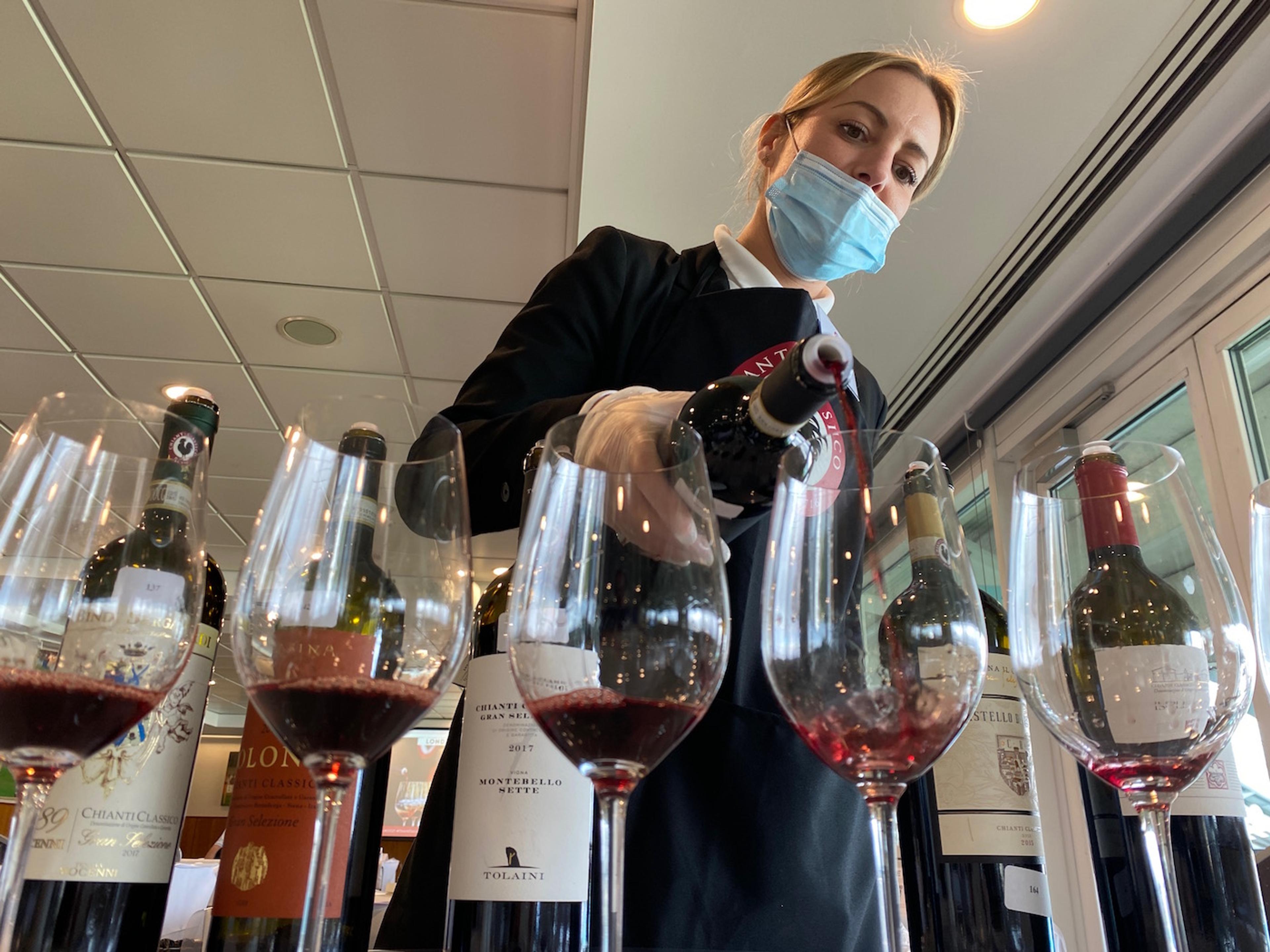
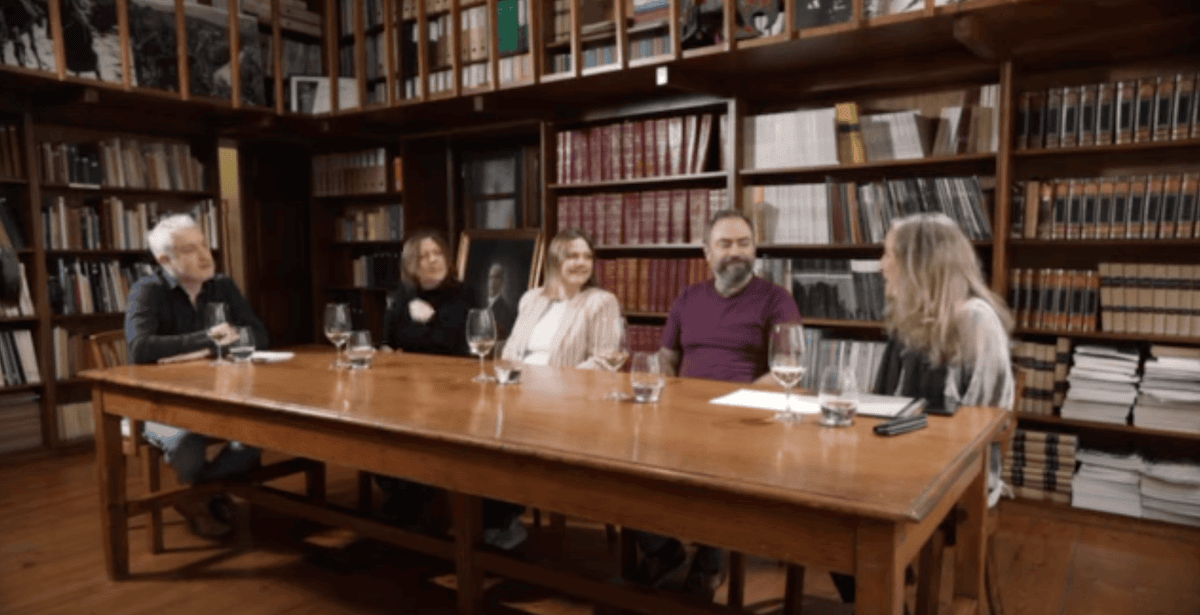
The week began with an important overview of the region and a tasting of wines from all 11 geographical sub-zones or UGAs (Unità Geografiche Aggiuntive), led by Caterina Mori from the Consorzio.
“I’ve spent the last ten years teaching people the difference between Chianti and Chianti Classico,” said Mori by way of an introduction, and you suspect that the general misunderstanding of the two regions keeps her up at night.
There’s an important distinction between Chianti and Chianti Classico, and one which many people overlook, conflating the two very different regions. Whereas Chianti DOCG has more than 15,000 hectares under vine and less strict controls, Chianti Classico DOCG has less than half that at around 7,000 hectares and a steadfast focus on quality red wine made from the Sangiovese grape.
The lay of the land
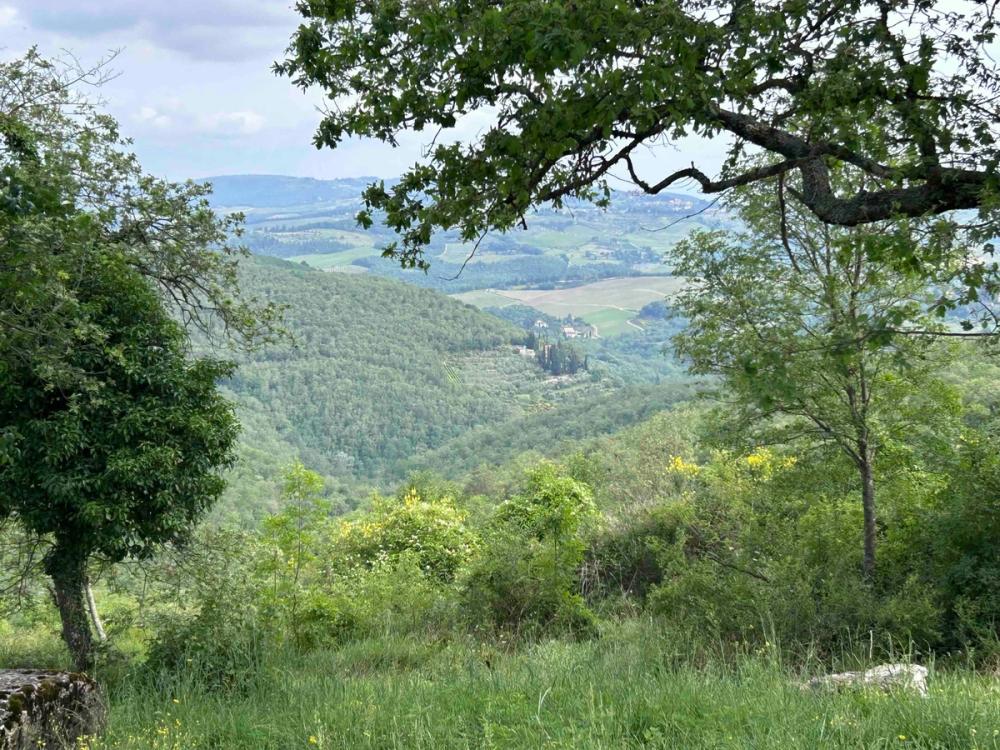
The forests surrounding the steep vineyards at Istine
The Classico region is located in the rocky hills between Florence and Sienna and is the historical premium-grape growing region of the area with typically higher elevations in the vineyard, more consistent terroir and stricter rules of what can be grown. White grapes have been banned since 2006, and red wines must have a minimum 80% Sangiovese. The region is famously represented by the black rooster, the most powerful marketing symbol of the region, it goes as far back as the middle ages and you will find it proudly on all DOCG wines from here.
“The landscape here is intact and beautiful, there are no factories. When people see the region they fall in love,” said Federico Cianferoni from producer Caparsa. There’s real pride in how things are done here and how stunning the natural landscape is, and Cianferoni is correct, there are no factories or industrial estates, let alone motorways. It’s an achingly beautiful part of the world.
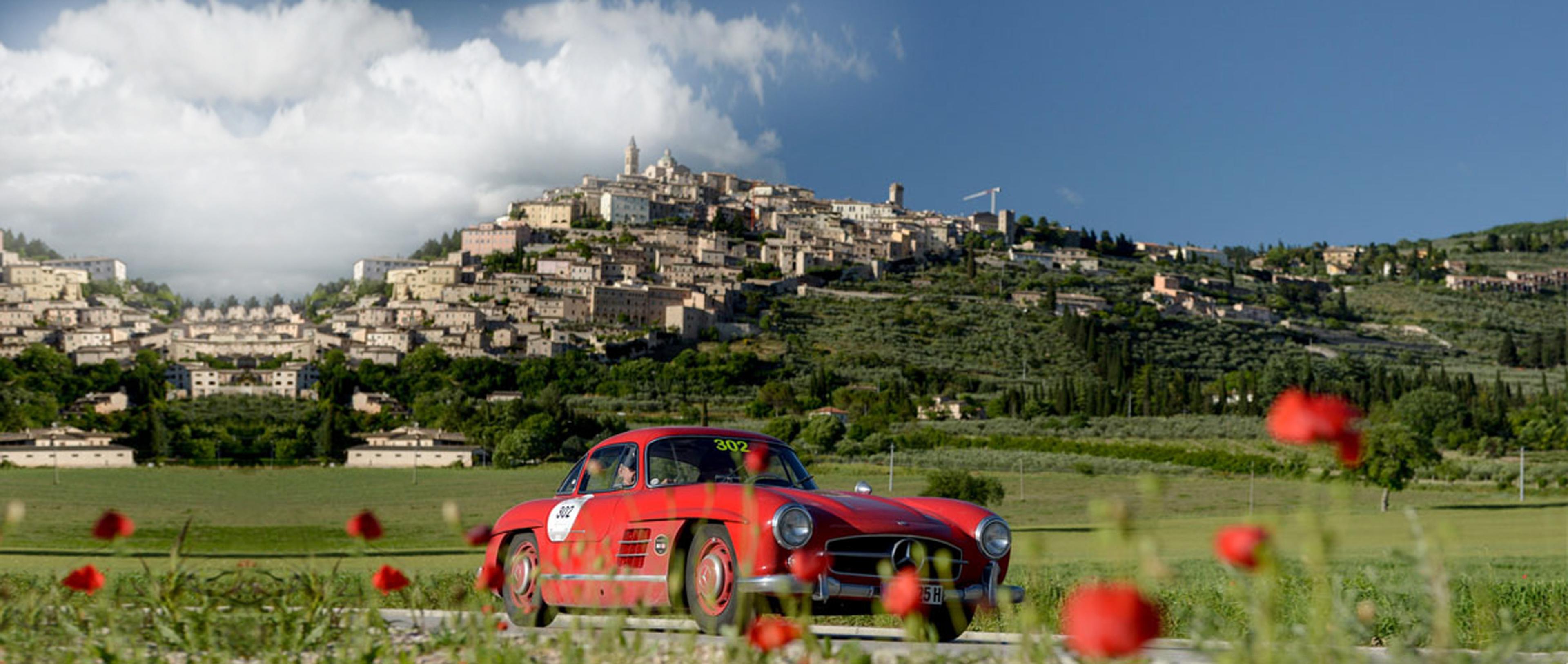
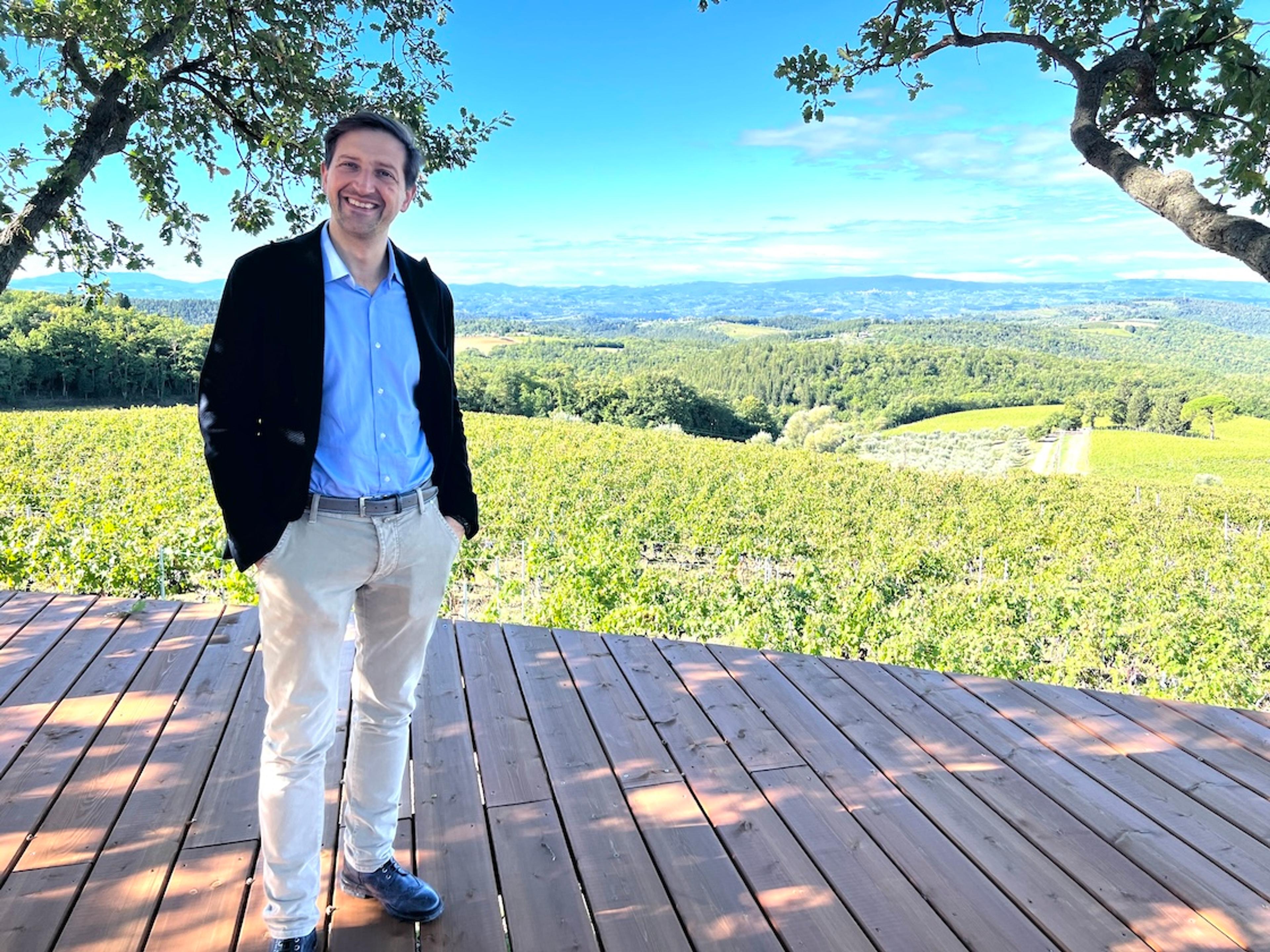
As you can imagine the landscape here plays an important part. The twisty hills and valleys mean that there are lots of small parcels of land, many flanked by forests, streams and hills which all play a part in the unique vineyard makeup. Fragmented, non-uniform vineyards make it hard to farm but also offer growers many different aspects and altitudes to work with, often within the same vineyard. Many sites which are north-facing and once struggled to ripen fruit, now – with climate change playing its part – offer some of the best vineyard sites in the region. This is a deeply historic, yet ever-evolving region.
The producers
This was a varied trip, and all the better for it. Quite often you’ll taste wines from one of two producers who perhaps have a number of sites across a region or country and make wine in a relatively uniform way. This was very different, offering a full spectrum of approaches and styles, some more mainstream, others very much on the leftfield side of things.
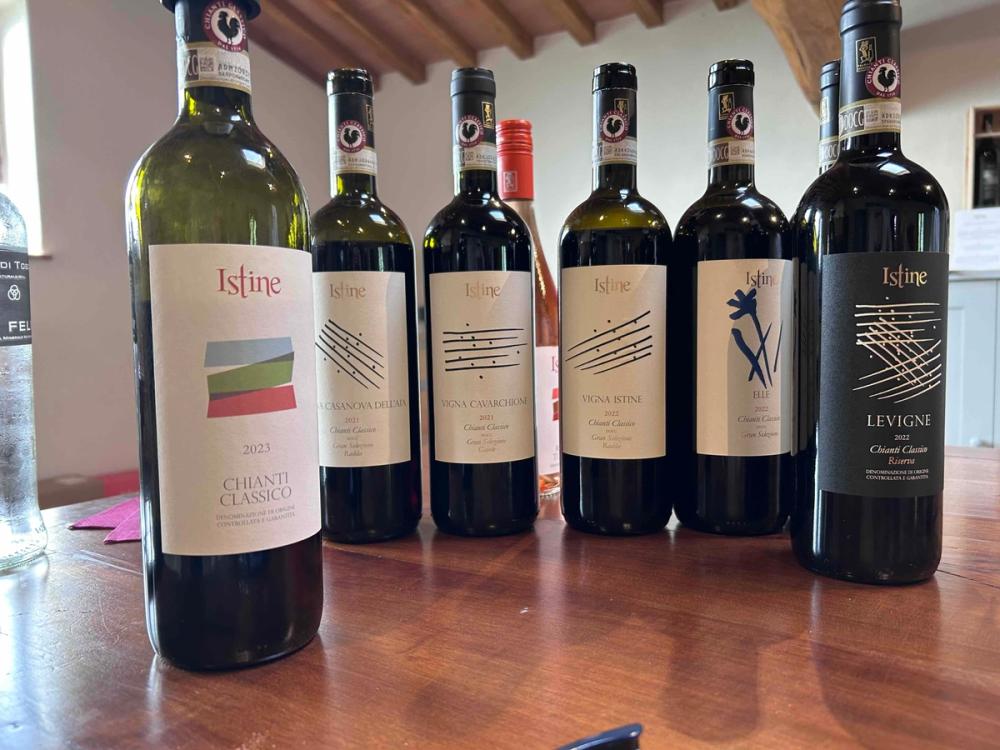
Sharp looking labels at Istine
The first producer we visit is testament to how things continue to change in this very old wine region. Istine, located in the Radda municipality, but also with some vineyards in Gaiole, is a 25-hectare estate which was relatively recently established. Until 2009 the grapes were grown and sold for bulk wine, but since then the next generation of the Fronti family has taken the product in-house and are making premium wines in the on-site winery from grapes grown on north-facing slopes. The previous south-facing vineyards have been removed to make way for olive trees, bee hives and donkeys.
The brand identity and winemaking is modern, and the wines fruit-forward and powerful. As well as Chianti Classico they produce IGT white and rosé wines, gin and vermouth.
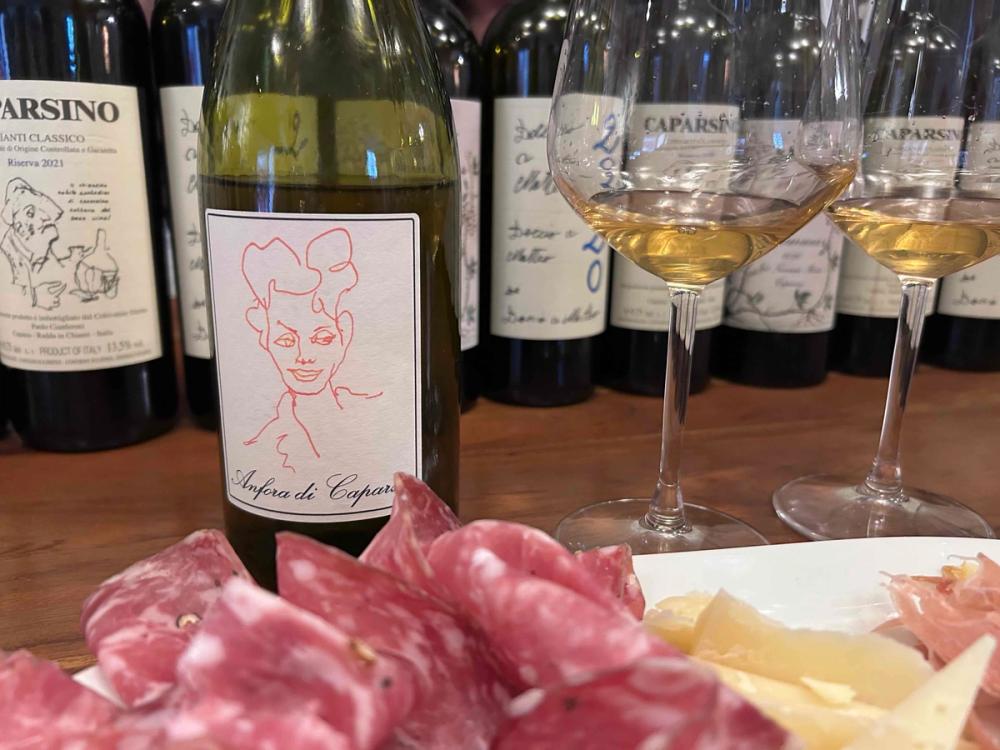
An exceptional flight of wines at Caparsa, including a delicate and floral orange wine
Gin and vermouth at 10.30 in the morning, what a start to the day! The next visit was to Caparsa, where Federico Cianferoni and his father Paolo led us through a vineyard tour and tasting of their classically-styled wines. Located halfway between Florence and Sienna, in the very heart of the region with north-facing vineyards on the banks of the River Pesa, this is a very picturesque setting. But don’t let that fool you, the land here is hard to farm, explains Federico Cianferoni, with early-season frost risks and late-season hailstorms. On the plus side, the remote location in and among the forests of Radda helps to lower and regulate temperature in the hot summers.
The wines are traditional and rustic, and this is a wonderful example of a family producer working the land and achieving excellent results. Much like Sophie Conte the owner and winemaker at our next stop Tregole who, after a vineyard tour up and down the hills at the bottom of a stunning valley, blind tasted a dozen barrels with us and made us guess the aspect of the vineyards the grapes were from. This was next-level hard, but what a treat.
Her wines are beautifully-poised and terroir-focused, with a hands-off philosophy in the cellar. It’s mostly Sangiovese, of course, but some Cabernet Sauvignon and Merlot too for her IGT wines, and even a white Sangiovese. Such a special spot.
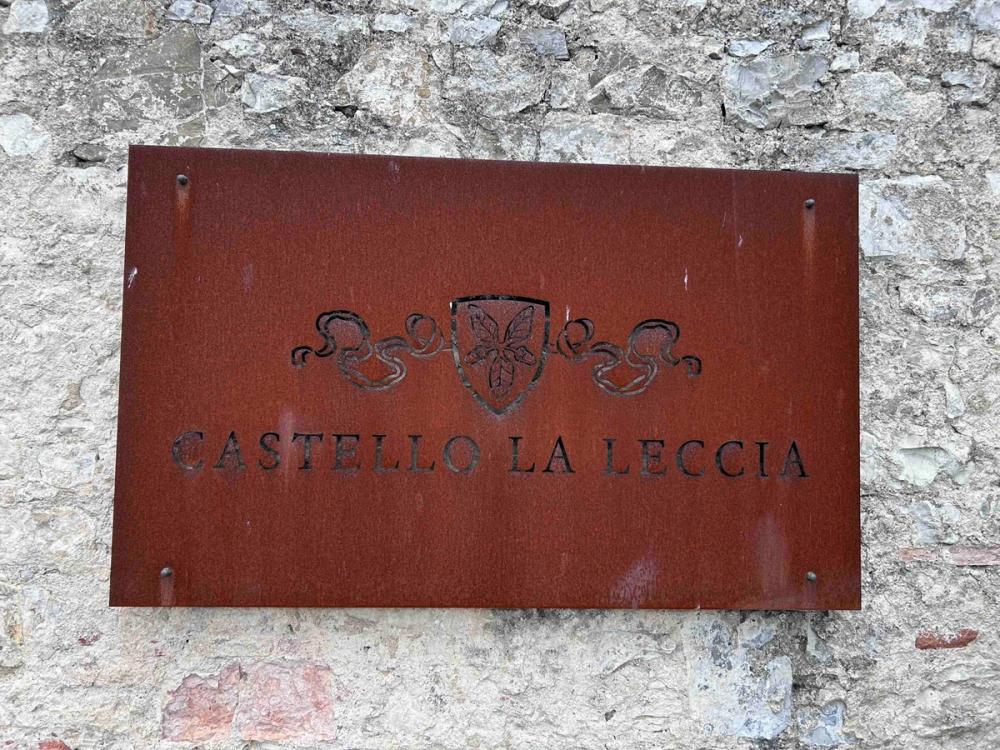
Castello La Leccia
The day ended with a wine tasting and sundowner cocktails at Castello La Leccia, a grand castle high in the hills offering tremendous views of the countryside, with views towards Sienna in one direction and Florence in the other. The castle, built in the 1100s, is now a rather fancy hotel with a small and pristine winery where it produces bright and polished wines from estate-grown fruit, the longer aged Chianti Classico Riserva from 2022 was a delight; smooth and inky. The perfect wine to complete a hard day’s tasting before negronis in the garden overlooking the vineyards.
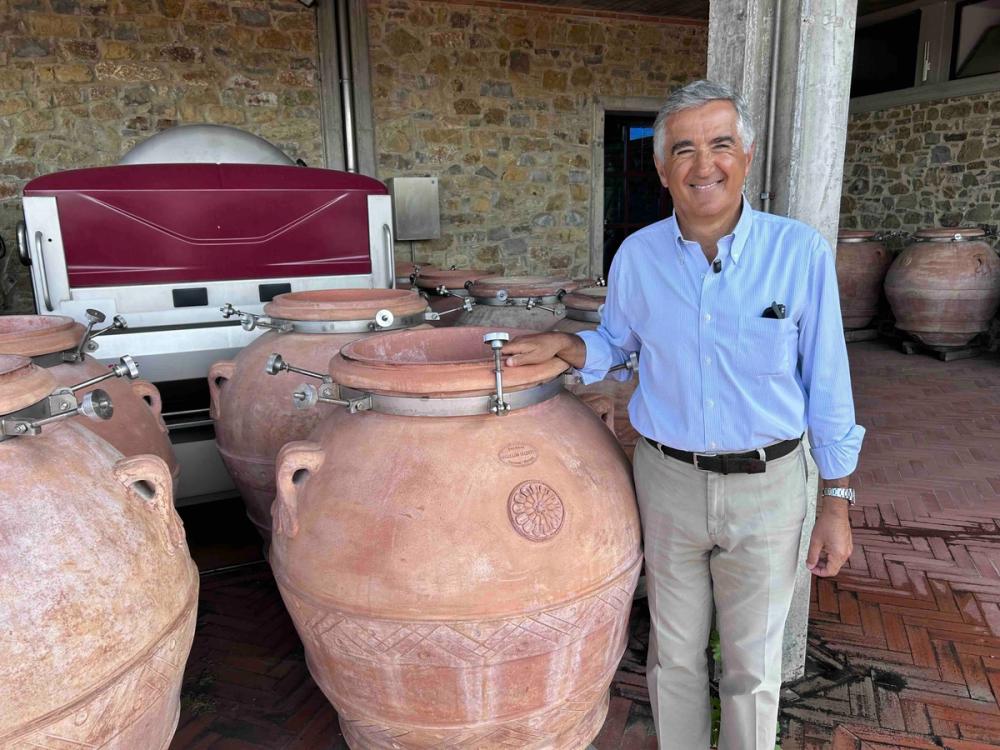
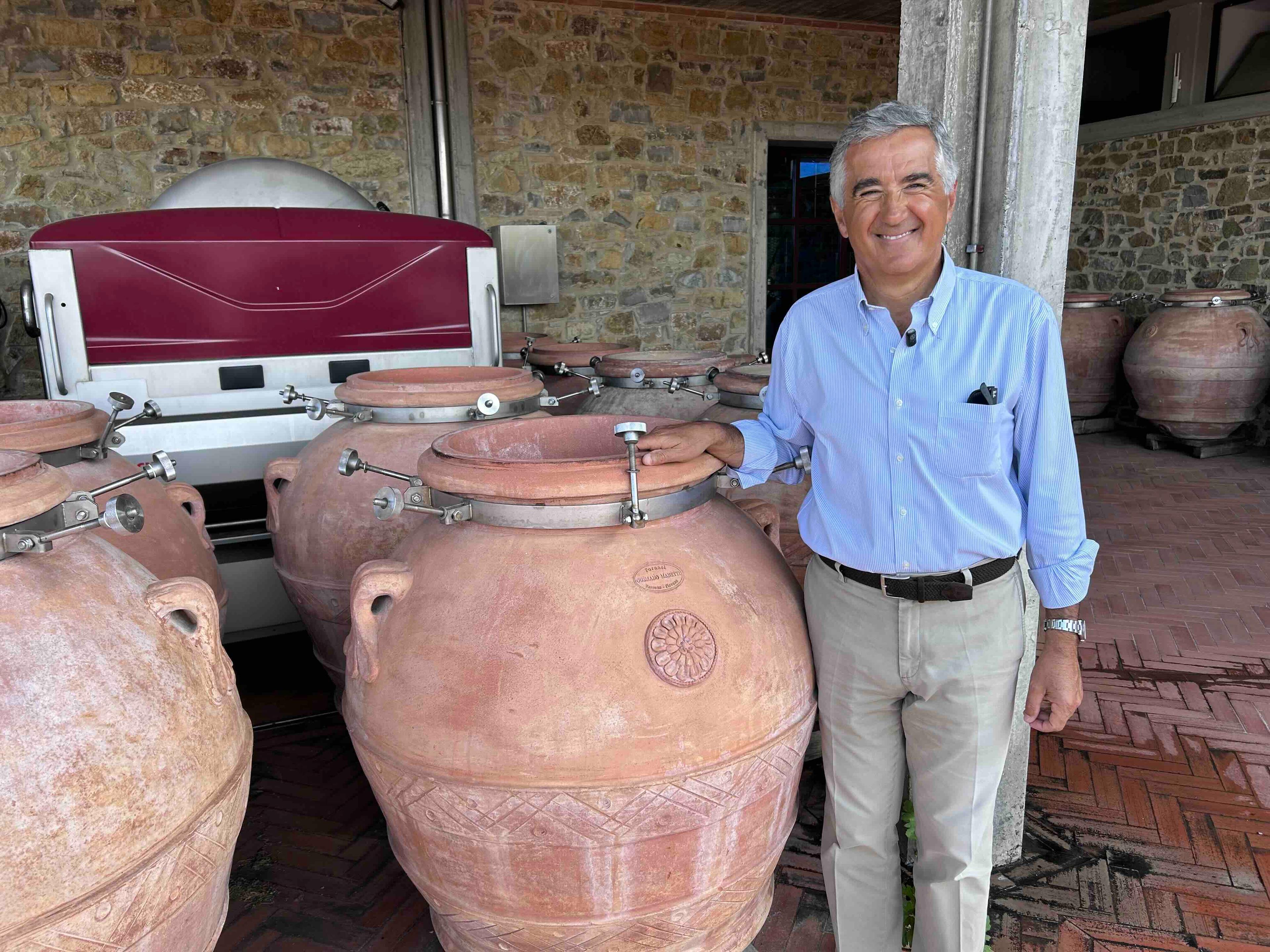
Giovanni Manetti at Fontodi - before making wine the family was in the terracotta business
Early the following day the first visit took us to the outskirts of the town of Panzano where historic producer Fontodi farms 107 hectares of land in the ‘Conca d’Oro’ (the golden basin), 70 hectares of which is under vine. We were shown around by Giovanni Manetti, who manages the family-owned estate alongside his brother Marco, and is also the current president of the Chianti Classico Consorzio.
The Conca d’Oro is a special place, explained Manetti. Due to the topography of the hills around Panzano, this area enjoys a long warm sunset down the valley and sits at 400-450 metres above sea level, offering ripeness as well as freshness. The estate has been organic since 1990, and biodynamic since 2000 and, as president of the Consorzio, Manetti is very keen to promote sustainable viticulture across the whole region. He told us a staggering fact that 60% of all vineyards in the DOCG are farmed organically or biodynamically, but he doesn’t want to stop there. Social and cultural sustainability are the next steps, he says, and form part of a serious new initiative from the Consorzio.
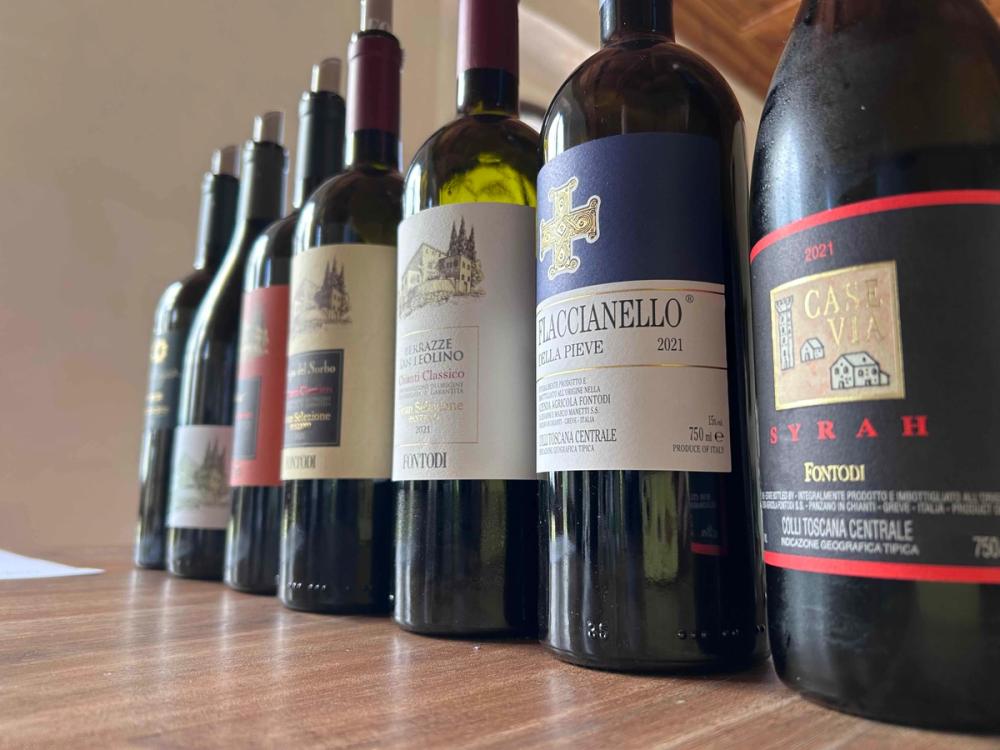
The Fontodi flight; classic and modern
Before we taste the Fontodi wines we are led past a row of pristine amphora, which the family produces itself as prior to owning the estate the family was in the business of terracotta. Very handy indeed. The Chianti Classico wines are precise and savoury, with balance and a focus on framing the fruit through a window of secondary and tertiary characters. The white wines really shone too, some of the best of the entire trip.
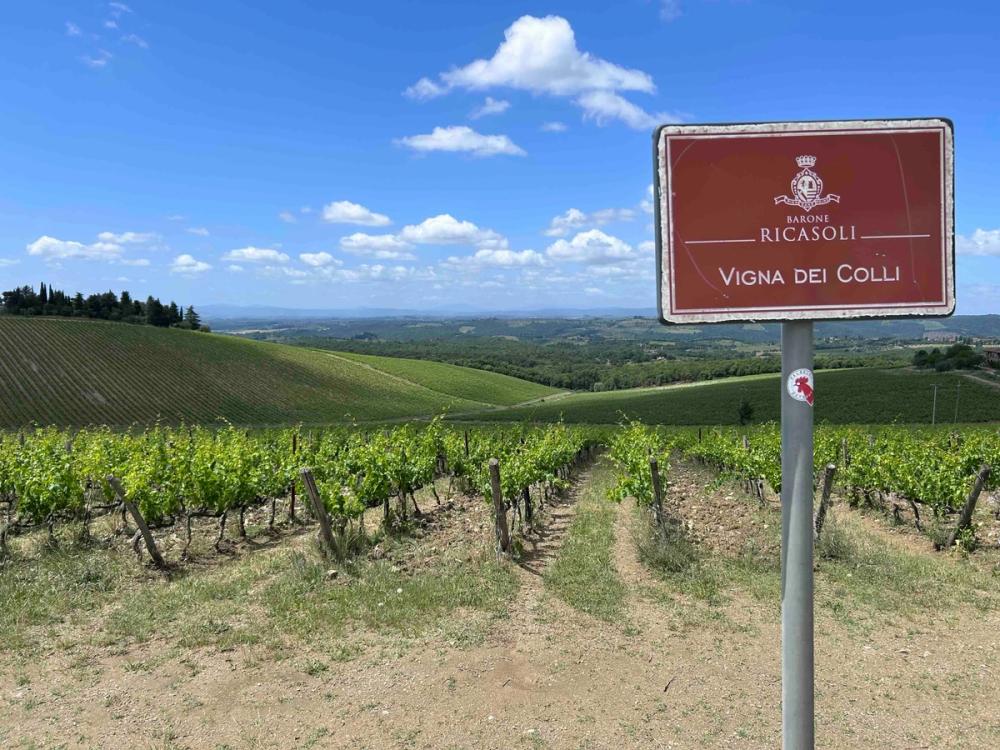
Barone Ricasoli’s famous Vigna Dei Colli vineyard; this is Italy’s oldest wine estate
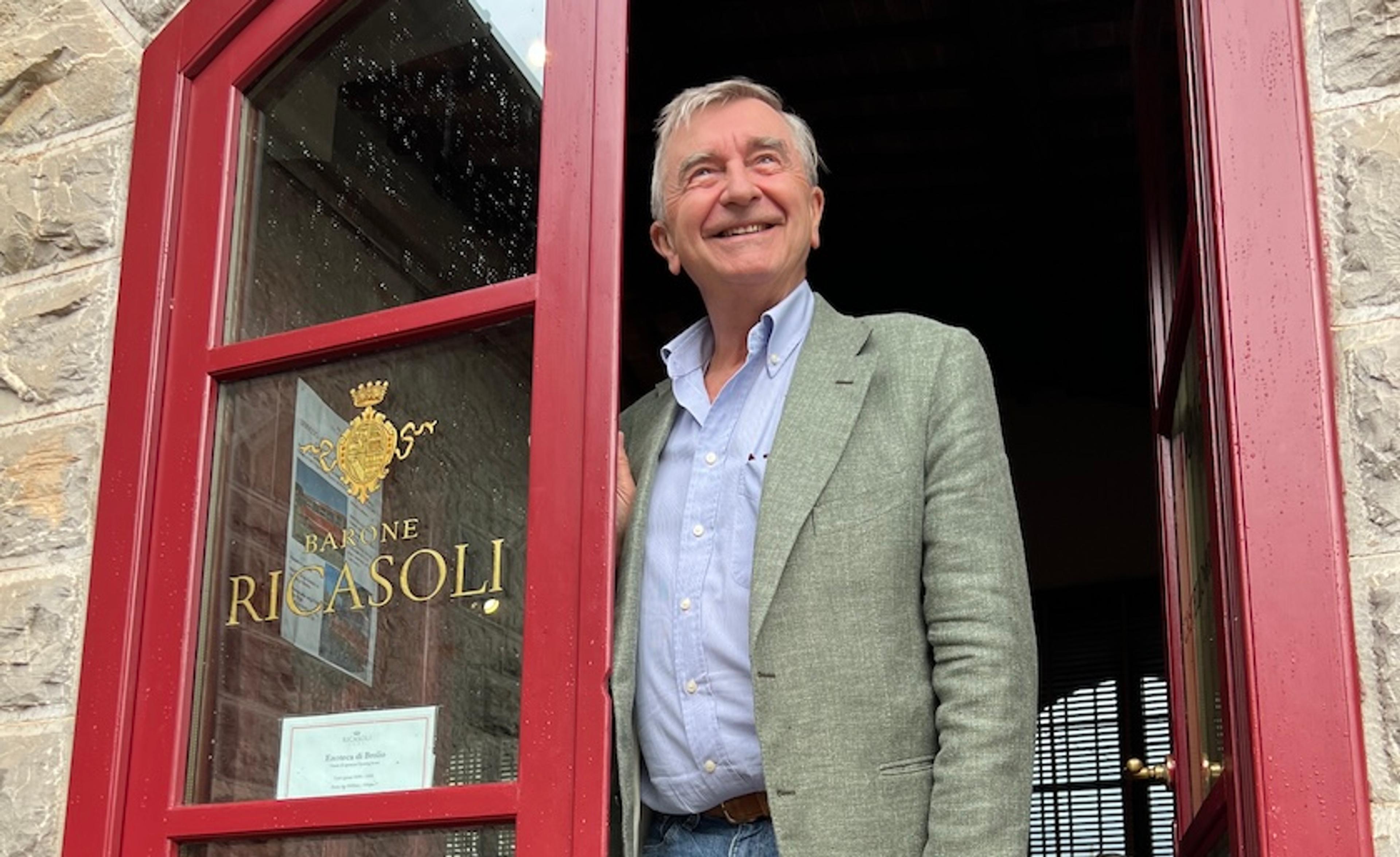
From the president to the baron, the next visit took us to Barone Ricasoli, founded in 1141 it’s the oldest estate in the region and one of the four oldest wine estates in the world. We were greeted by Francesco Ricasoli, the 32nd baron, who wears the crown lightly; he was more interested in showing us soil maps of the estate’s vineyards than talking about what it means to be a baron.
The wines are stylish and poised with tension and herbaceous notes running through them all. There’s a distinct Bordeaux Chateau feel to the whole operation, from the wines through to the labels and the tasting room itself… very classy.
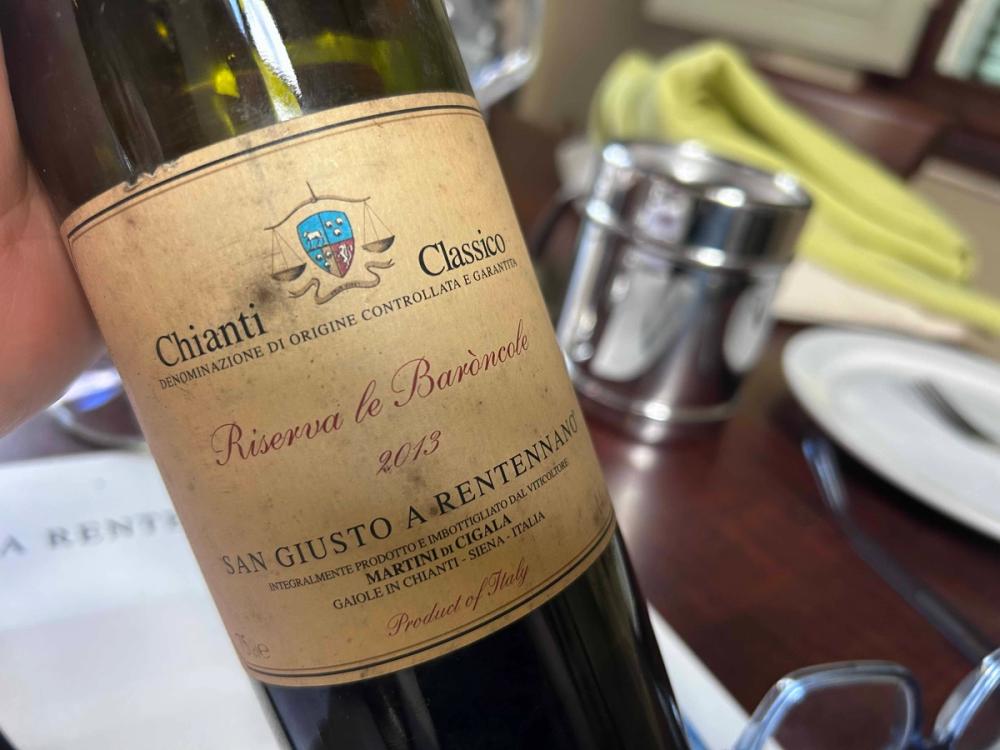
Stepping back in time at San Giusto A Rentennano; a rare Chianti Classico from the estate’s library
We travelled to the south of the region for the next visit at San Giusto a Rentennano, a former medieval monastery of Cistercian nuns which overlooks the Arbia river. Here in this rustic commune the Martini family runs the estate and we are shown around by Luca Martini, first in the vineyard for a lesson on green harvesting and the virtues of hail netting to act not only as a barrier to hail but also as ‘sunscreen for the grapes’, then to the cellar. Deep, dark tunnels take us through to rooms filled with cages of old vintages, including a room dedicated to Percalo, the estate’s iconic super-Tuscan.
The tasting is a delight, taking in the most recent releases of Chianti Classico (rose petal and spice) as well as a couple of library wines, the powerful La Ricolma 2018 made from 100% Merlot being the highlight.
We ended the day at Dievole, an estate high up in the hills where, as well as pristine vineyards and winery, you’ll find a top end hotel offering fine dining and a choice of swimming pools. After a tour of the vineyards, of which there are 150 hectares planted on diverse soils of marine origin, and the winery with its uniform concrete tanks and large format oak, we head underground to the historic cellars to taste the wines.
The Petrignano Chianti Classico 2023 is the standout, a fresh and exciting style of Chianti Classico made in concrete and large format, old, un-toasted oak, where freshness and verve are front and centre, the juicy berry-driven fruit unmasked by oak influence.
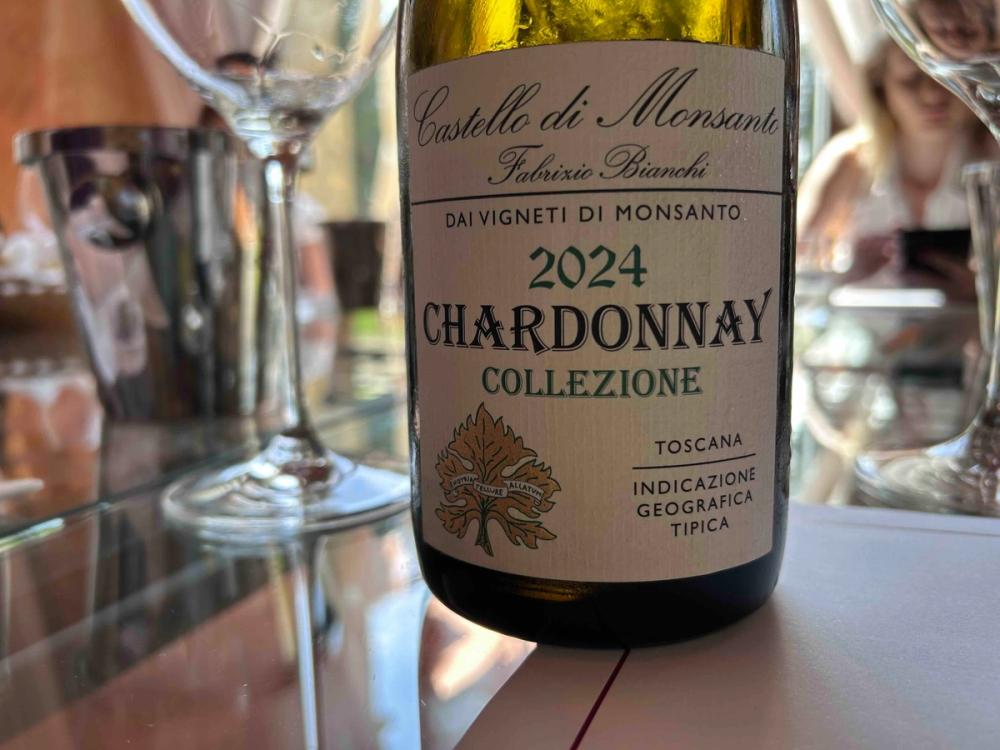
Although not Chianti Classicos; the whites are strong here too, with the Chardonnay grape producing some of the best
The following morning, and on the final day of the trip, we visited the famous Castello di Monsanto, where we received a guided tour of the vineyard and extensive cellars from Laura Bianchi. This is another family-owned and run estate, one of the best-known Chianti Classico producers globally, famous for its Il Poggio wine, the vineyards of which we visited. Bianchi told us that as it’s a multi-aspect vineyard there are three grape harvests for the site; south, south-west and north.
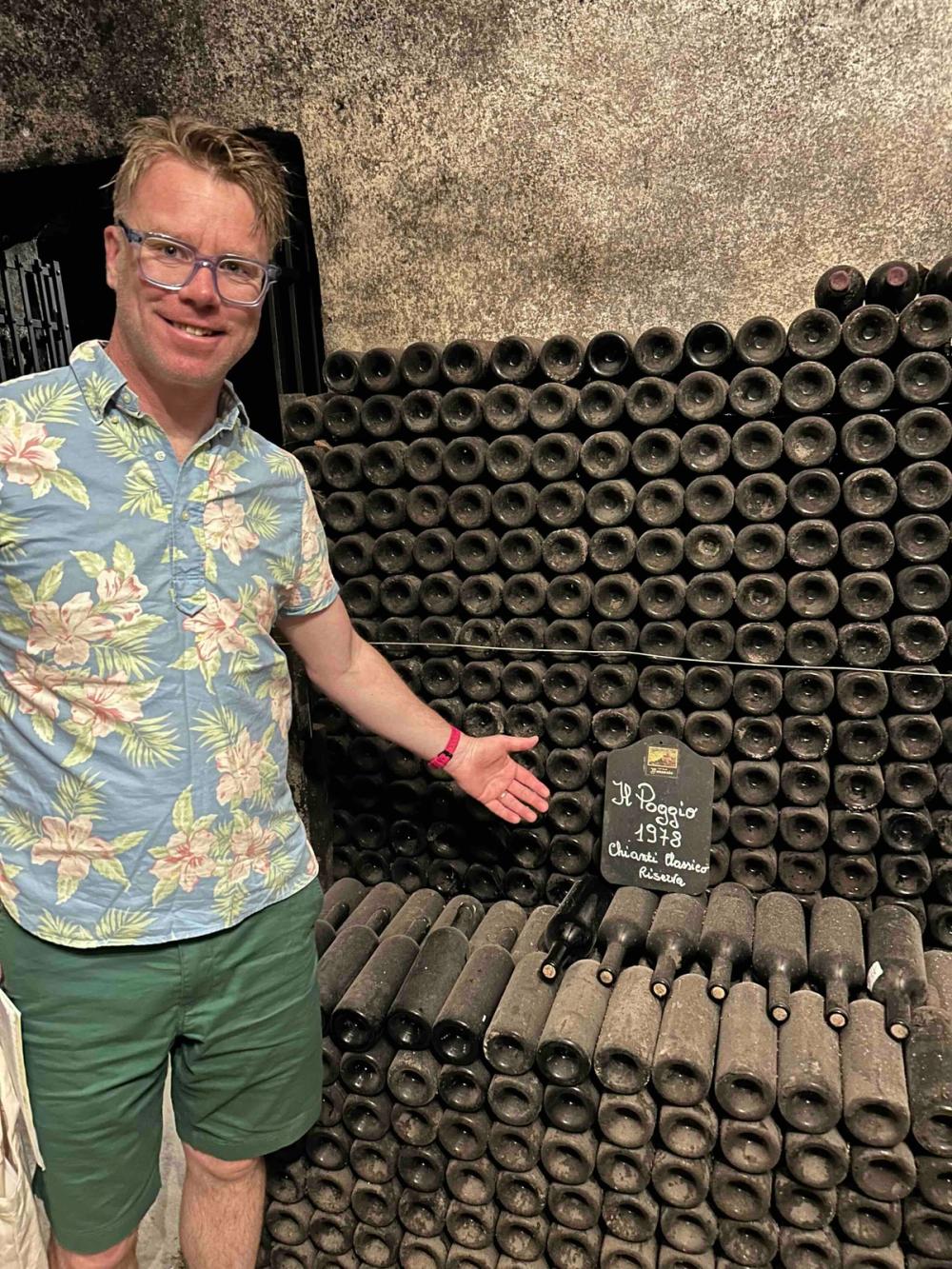
Chris in the Castello do Monsanto cellars, with a stash of Il Poggio from his birth year
Then we headed underground to the extensive tunnels of cellars with room upon room of old vintages and dusty, barely recognisable bottles. The tasting that followed included the current-release Chianti Classico as well as a racy and mineral Chardonnay and three vintages of Il Poggio, including a library wine from 1980. Delicious!
The trip finished in glorious style at the down-to-earth Cigliano di Sopra, where a kitchen garden full of tomatoes and herbs, bees and butterflies enchanted everyone. Winemakers Maddalena Fucile and Matteo Vaccari took on the estate a decade ago when it was primarily used for bulk wine grapes. In the first year they made just 1,000 bottles of mainly Sangiovese, and now they are pushing 20 times that, and have maxed out capacity in the tiny winery and cellar.
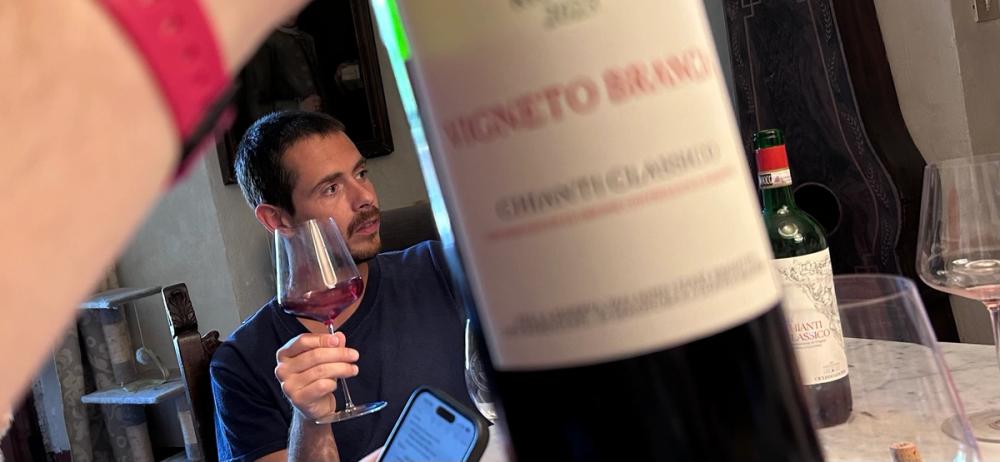
Matteo Vaccari looking pensive as he shows his wines over lunch
The wines, which were enjoyed over a rustic, homecooked lunch of spaghetti carbonara (according to one of the sommeliers, the best they’ve ever had!), brimmed with soul and a real sense of place. Crunchy, elegant reds full of concentration and purity.
This final visit showed just how diverse a region Chinati Classico is and that the large well-known names can co-exist alongside younger, more leftfield talent while all challenging the same energy and enthusiasm for the Sangiovese grape and this dynamic, picturesque region.