
Bordeaux wine is red, expensive and made to age. At least that’s the commonly held perception of the traditional French wine region, and a myth that CIVB chief Allan Sichel is keen to debunk.
“It’s not all red, pricy and made to lay down for years,” he insists, conceding that while over 80% of production is still red, the balance is slowly shifting – in 2015, for example, over 85% of production was red, while only 8.5% was white – now over 10% of all production is dry white wine.
But there’s no denying that it’s an uphill battle to change entrenched consumer perceptions, and certainly not something that can happen overnight. But Sichel is nothing if not determined, and cites the current marketing campaign, Join the Bordeaux Crew aimed at a younger audience which he claims is making major inroads in challenging accepted wisdom.
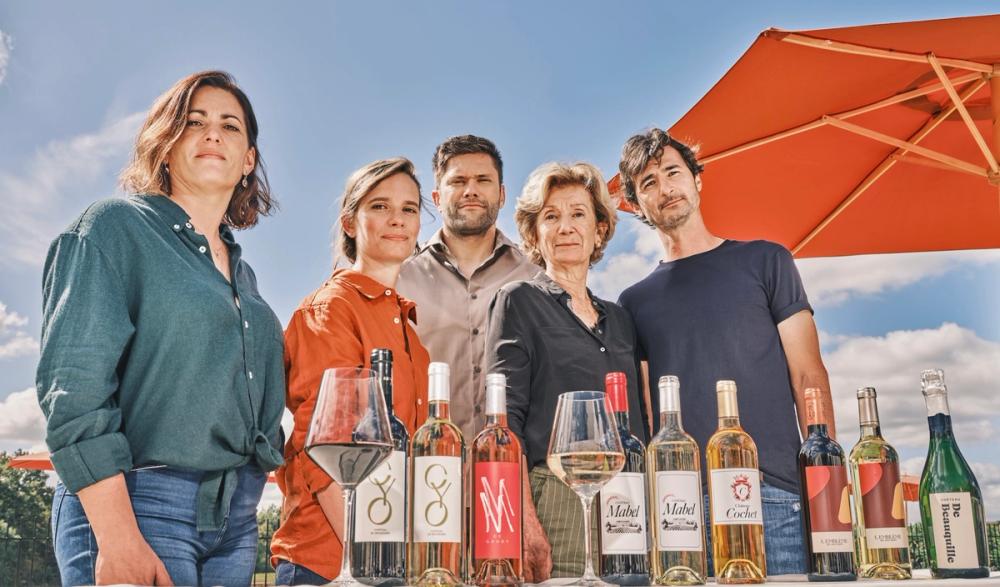
The Bordeaux Crew marketing campaign is a major investment by the CIVB to re-position Bordeaux in the eyes of mainstream consumers
“The challenge for Bordeaux is to show that there are lots of different styles of wine that the consumer does not automatically associate with the region,” he says.
Certainly consumer research backs this up, showing that while awareness of Bordeaux is high – with over half (51%) of wine drinkers consuming Bordeaux – it is also considered a high quality product, though largely assumed to be red, and usually associated with formal occasions.
“Therefore we still have quite a job to show the dry white wines, the sweet white and the rosé, but even within the red category, the fact that there are a whole range of different types of wines.”
Marketing campaign
To challenge longstanding misconceptions, the CIVB’s ongoing marketing campaign has been paying dividends, according to Sichel.
“It’s been very well received, and all the feedback and measurements indicate that it’s been successful, though we still have an awful long way to go.”
The lynchpin of the campaign is social media, used to spread the word, along with magazine advertising, in an effort to younger drinkers. Sichel says studies in the UK now show a renewed interest in the region amongst this age group, who are becoming more invested in the wine category overall.

The Bordeaux Crew marketing campaign has involved a lot of targeted social media
“Young people are definitely becoming more interested in Old World wines,” he says. “They want to understand what they are consuming and they tend to be more open minded too. They are also looking for new things, for diversity, and I think we have some fantastic stories to tell.”
Role for Bordeaux in UK on-trade
But given the sheer amount of competition from established players as well as up and coming wine regions, is there still a place for Bordeaux, traditionally a stalwart of any self-respecting list in the UK on-trade?
“We want to maintain that association that exists between Bordeaux and eating and dining, but we also want to encourage other drinking opportunities and occasions.”
He points to the changing habits in France, where the conventional family dinner is in decline and people are increasingly drinking wine outside formal meal times which he regards as an opportunity for the changing face of Bordeaux wines.
Bordeaux, along with other French producing regions, has been facing a number of stiff headwinds in recent years. Since 2019 it has been dealing with dwindling exports to China, the fallout from the Covid health crisis, economic uncertainty and a succession of poor vintages caused by various climatic events, from drought to frost and hail.
2024 was a case in point, with one of the lowest harvests on record, weighing in at around 3.3 million hectolitres, down by 14% compared to 2023, and the long term average of 4.2 million hl.
“It’s very low in volume,” confirms Sichel. “And mainly down to the meteorological circumstances over which we have little control. It’s difficult for growers because their costs are fixed, and the costs over the whole farming season are spread over a smaller volume.”
2025 vintage
There is better news for Bordeaux from the 2025 vintage which despite early challenging growing conditions resulted in a potentially "brilliant" vintage thanks to intense summer heat, which helped produce very ripe grapes, with low yields (especially for reds), and concentrated fruit, should result in rich wines with good tannins and freshness and, according to the CIVB "reminiscent of the 2005 and 2015 vintages.
The lower yields will be welcomed in a region which is still going through a major grubbing up programme in order to balance out supply and demand. The Gironde region, for example, has seen 9,500 hectares of vineyards removed, a 8% reduction to 94,700 hectares, a level not seen for almost 30 years. This will reduce potential wine production, and help to bring yields in line with market demand.
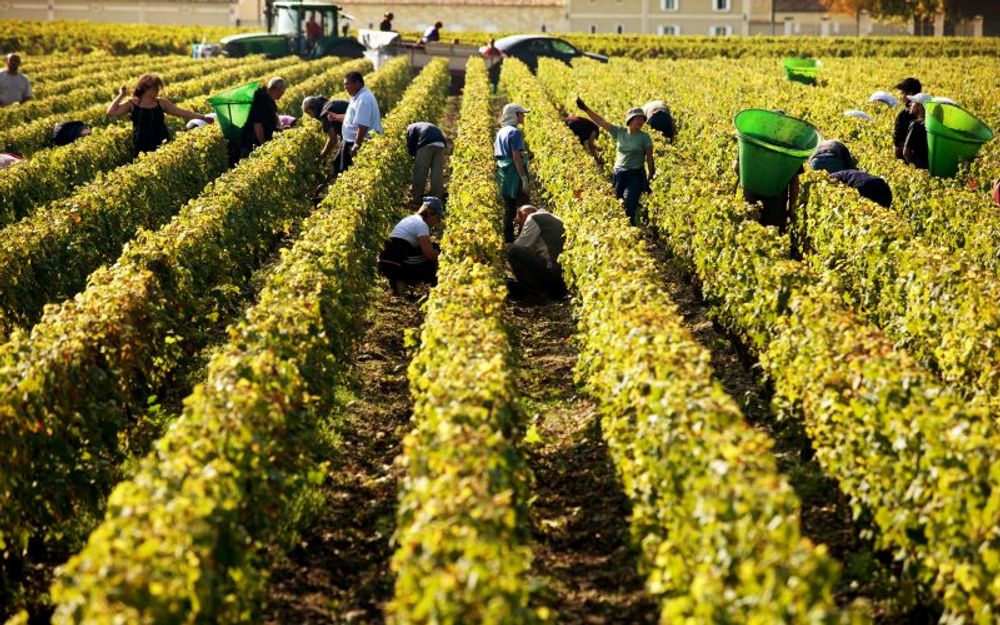
Bordeaux's low yield 2024 and 2025 harvests will help balance out demand
This year's vintage comes on the back of a low yield 2024 harvest too.
“We’re back to more traditional levels of alcohol, around 12.5%, which is a more classical Bordeaux style, very fruity, very clean,” says Sichel.
He says he is looking forward to presenting the latest vintage to market, given the global demand for lighter, fresher, lower alcohol wines.
“These trends are universal, possibly with the exception of China. There, they are still looking for traditional, heavier, more powerful alcoholic drinks.”
Sichel believes, however, that in time, and with the number of Chinese travelling and observing what happens elsewhere, that this trend will also eventually trickle down to China.
“At the moment China is an outlier but given the richness and diversity of Chinese food, I wouldn’tbe surprised if they soon start seeking out softer tannins and fruitier wines as well.”
Bordeaux’s overall exports continue to be strong, though the domestic market still accounts for over half of production (58%). The US, whichis now the biggest foreign market leapfrogging China to bag the number one position, has seen strong growth in the past year, up by a hefty 13% in value and 9% in volume.
Shipments to the US
A big driver for growth across the pond, according to Sichel, has been the looming spectre of taxes threatened (and now implemented) by President Trump’s administration.
“There was a big increase in imports by American importers at the end of 2024 to protect themselves from possible tax and tariff increases, giving them a bit of leeway for a few months,” says Sichel. “But the US has always been a strong market for us and even though growth in 2024 was spectacular, we’re can usually rely on growth rates of around 1 – 2% a year.”
Another notable element of the US market is the growing interest in Merlot.
“While the States has traditionally been very focused on Pinot Noir for some years, I would say that there’s been a definite comeback for Merlot – they are interested in its fruitiness, the smoothness of the tannins. So I’d say there’s a real opportunity here for Bordeaux because that is one of our key varieties, helping us to develop our exports to the US further.

The big drop in Chinese wines sales of Bordeaux has had a big impact on the region
While sales to the US have been booming, the converse has been the case in China where shipments have nose dived since a record year in 2018.
“We’ve seen a constant drop of exports to China since then, with volumes down to about a third of what it was back in 2018,” he says.
Sichel attributes this slump to the economic situation in China, along with the Chinese desire to develop their domestic product, giving the local burgeoning wine industry a big boost.
“Chinese vineyards are vast and nearly as large as France’s at around 700,000,” he points out, though it is difficult to glean what proportion of fruit is earmarked for winemaking, and what for eating grapes. “But their objective is clearly to develop their vineyards further, and to refocus consumption away from plant spirits and more towards wine.”
Along with a growing awareness and interest in wine amongst Chinese consumers, consumption is also on the up
While exports to China have been declining, sales to other Asian countries have been faring better, with shipments to the likes of Vietnam, Malaysia and Singapore all growing well, albeit frommuch smaller bases.
UK exports
Meanwhile the UK continues to be an extremely important market for the Bordeaux wine trade, and is the biggest European market for the French region, and third worldwide after the US and China.
However, there was a 23% drop in value of shipments to the UK between 2023 and 2024, though as Sichel points out,that was on the back of a record 2023 which was boosted in no small part by the shipment of en primeur campaign, which enormously inflated the value.

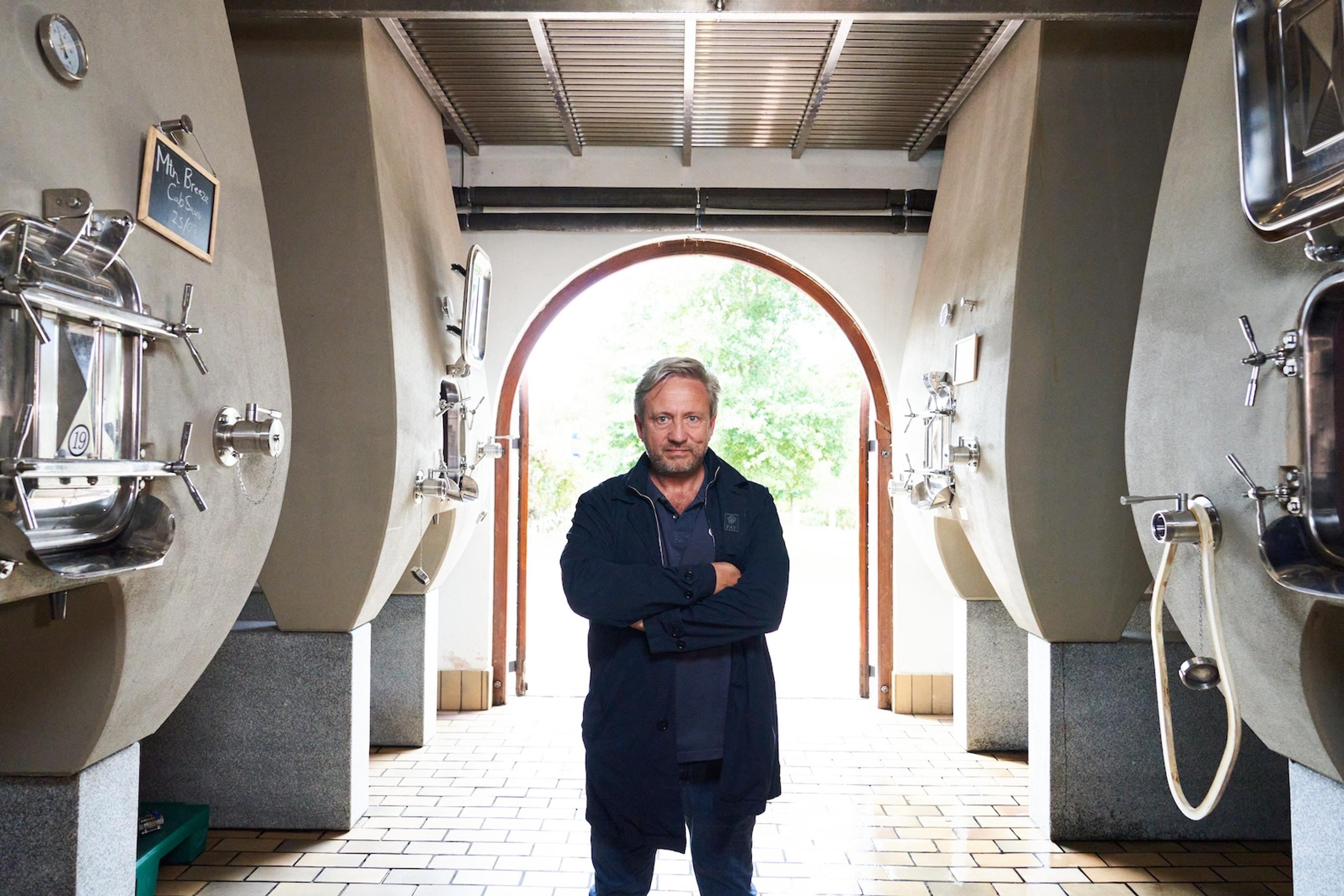
The CIVB's Allan Sichel
”When the shipment of en primeur campaigns intervenes, these statistics bring in the physical shipment of the wine, and that can enormously boost the value. And when there is a less successful en primeur campaign the following year the value can be a lot less by comparison. There’s always a very interesting statistic with the UK market – the value of exports of Bordeaux wine out of the UK is higher than the value of imports.
"That’s down to British wine merchants buying wines en primeur at the cheapest possible prices, keeping them in bond in the UK for years, sometimes decades and then selling them across the world. So although most of the wine that is imported by the UK is drunk in the UK, a small proportion is re-exported at a very high value elsewhere,” he explains.
The UK also differentiates itself from other foreign markets, according to Sichel, down to the sheer level of expertise found on these shores, and the level of influence it has on other key markets.
From wine critics to journalists and world renowned qualifications such as the WSET, the UK continues to exert a disproportionate influence on other global markets.
This is something that Vignobles Silvestrini’s Sabine Silvestrini has noticed. As a winemaker and tutor for the Bordeaux Wine School which has a partnership with the WSET she says that their English-trained people contribute to the significant UK influence on the overall wine market.
Opportunity for Crémant
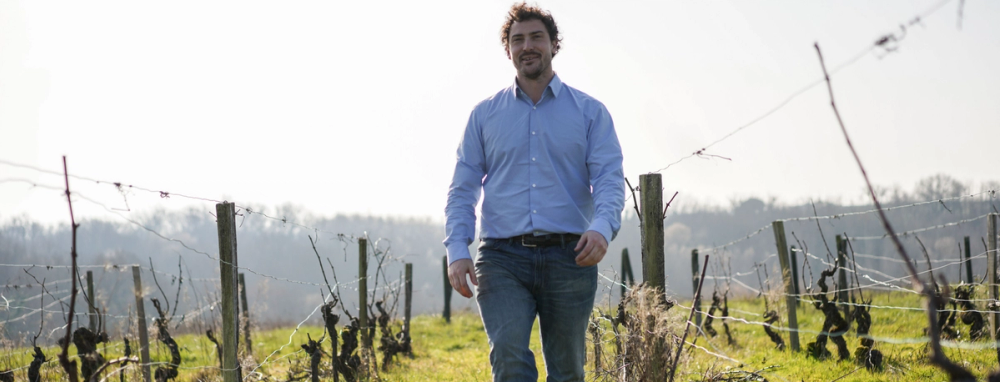
Hugue Hardy at Château Faugas
Another notable feature of the UK market is the huge popularity of Crémant, with sales almost doubling between 2023 and 2024, which winemaker Hugue Hardy from Château Faugas which is particularly known for its sweet white wines attributes to both quality, and the consistency of the product.
“We respect our source and our consumers, and it’s also a matter of price,” he says, adding that the big supermarket discounters have played a key role in popularising the French sparkling wine. “The sparkling wine category keeps growing, both in the UK and elsewhere, and people like the fact they can get different styles of sparkling wine. Crémant is definitely benefiting from the fact that the category overall is growing, and other growing areas aren’t able to extend their production, so Bordeaux is benefiting from that.”
Sichel adds that after analysing where Crémant is sold in the UK, he was surprised how little of the French fizz the traditional supermarkets carry. “It seems that the hard discounters are driving the sales.”
The enhanced reputation of the discounters has also helped boost sales, according to Vignobles Silvestrini’s Sabine Silvestrini.
“When they started out there were really cheap products and the quality wasn’t so good. But now it’s really common for people to source their wine there. I think the discounters wine offering has improved a lot as well.
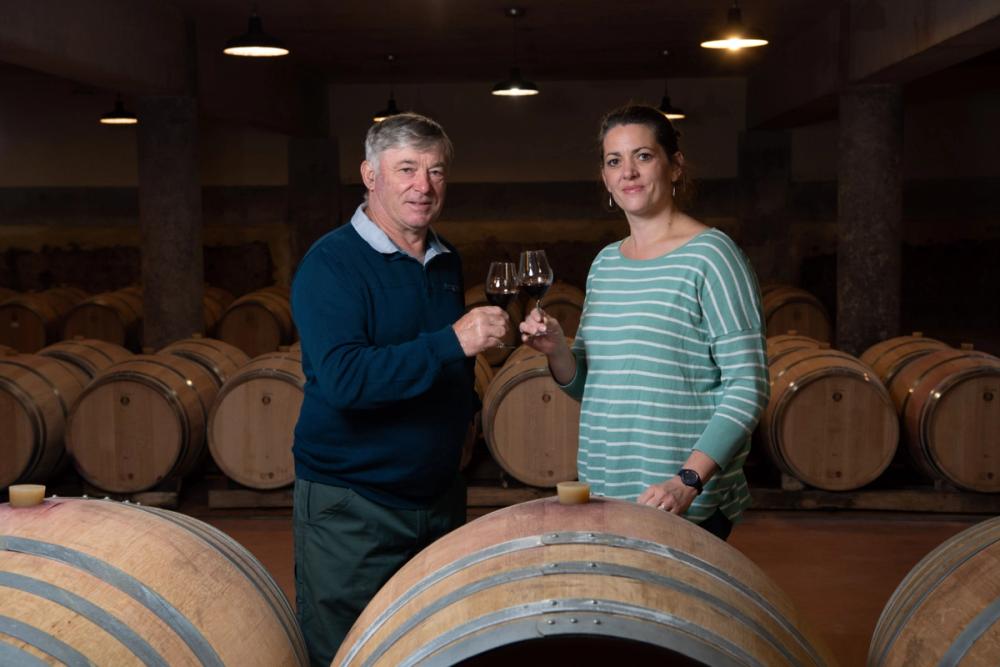
Sabine Silvestrini sees a lot of opportunity in the UK for Cremant
“They are now challenging the traditional supermarkets with the same level of quality but maintaining very low prices to attract customers.”
While the UK has a reputation as being extremely price sensitive, Sichel points out that the average selling point in the likes of Belgium and Germany is actually lower than that in the UK.
“Of course it’s still very challenging in terms of price, but the UK does expect a certain level of quality and they are – moderately - prepared to pay for it.
The winemakers say they believe that that one area of potential future growth within the UK market lies in dry white wine, driven, by the British love affair with Sauvignon Blanc.
“The UK is the number one export market for dry white wine within Europe, with the freshness and balance of aromatic complexity that will appeal to them.”
Wine tourism
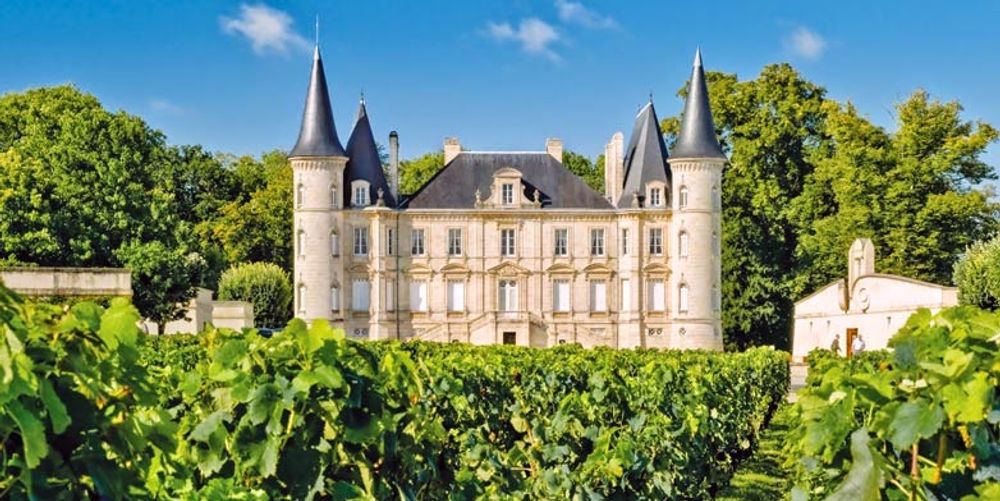
Bordeaux is one of the most visited cities in France to add to the appeal of its vineyards
Wine tourism is something that Bordeaux has only recently begun to embrace. While once it may have been intimidating to visit a Bordeaux chateau, producers are now actively welcoming visitors and making their experience more about having fun on the estate, offering activities such as cycling through the vineyards or actually staying on the estate.
“Showing the faces of the producers is really important in this respect, to bring consumers closer to the growers themselves, hence a lot of development in wine tourism in Bordeaux, which has traditionally lagged behind other wine producing regions in this area,” says Sichel.
“Bordeaux is definitely now catching up with other regions and countries which have been very big on wine tourism,” confirms Hague. “In the past growers were not so in contact with their customer base, but all that is changing. Producers now realise how important it is to be open and show their wines and explain their philosophy.”
Bordeaux city too has also become something of a weekend destination in its own right, with two thirds of visitors undertaking some kind of wine experience – even if they had not planned to do so.
The changing face of Bordeaux production
Production is mostly red, but increasingly diversifying
- 8.5% red wine vs 85% in 2015
- 10.5% dry white wine vs 8.5% in 2015
- 4% rose vs 4% 2015
- 4% crémant vs 0.8% in 2015
- 1% sweet wine vs 1% 2015
2024, a historically small harvest
2016: 5.77 m hl
2017: 3.5m hl
2018: 5m hl
2019: 4.9m hl
2020: 4.4m hl
2021: 3.77m hl
2022: 4.11m hl
2023: 3.84m hl
2024: 3.32n hl
Source: CIVB