
Hungary might be one of the world’s oldest wine producing countries - most famous for its iconic Tokaj sweet wines - but it has only been in its most recent history that it has started to get the respect and attention for its still red, white, rosé and increasingly sparkling wines too.
Such has been the pace of change and development in the Hungary wine industry that there are now breakthrough wines making waves in the market from producers that did not even exist 10 years ago.
Wines of Hungary ran a series of tastings and special events for UK wine buyers, merchants, sommeliers, importers, wine writers and influencers in London, Birmingham and Bristol
Thanks, in part, to a new generation of well travelled, innovative young winemakers, but also to the new levels of investment that have come into the sector from new financial sources and business entrepreneurs that have identified wine as one of Hungary’s untapped jewels.
It is that new energy and level of excitement that Wines of Hungary wanted to tap into and promote as part of an ambitious tasting campaign that it brought to the UK early in October.
A chance to showcase the diverse nature of the new Hungarian wine scene and bring its most innovative and dynamic producers to the heart of the UK wine market and face-to-face with many of the country’s most important national and regional wine buyers.
Roadshow of events

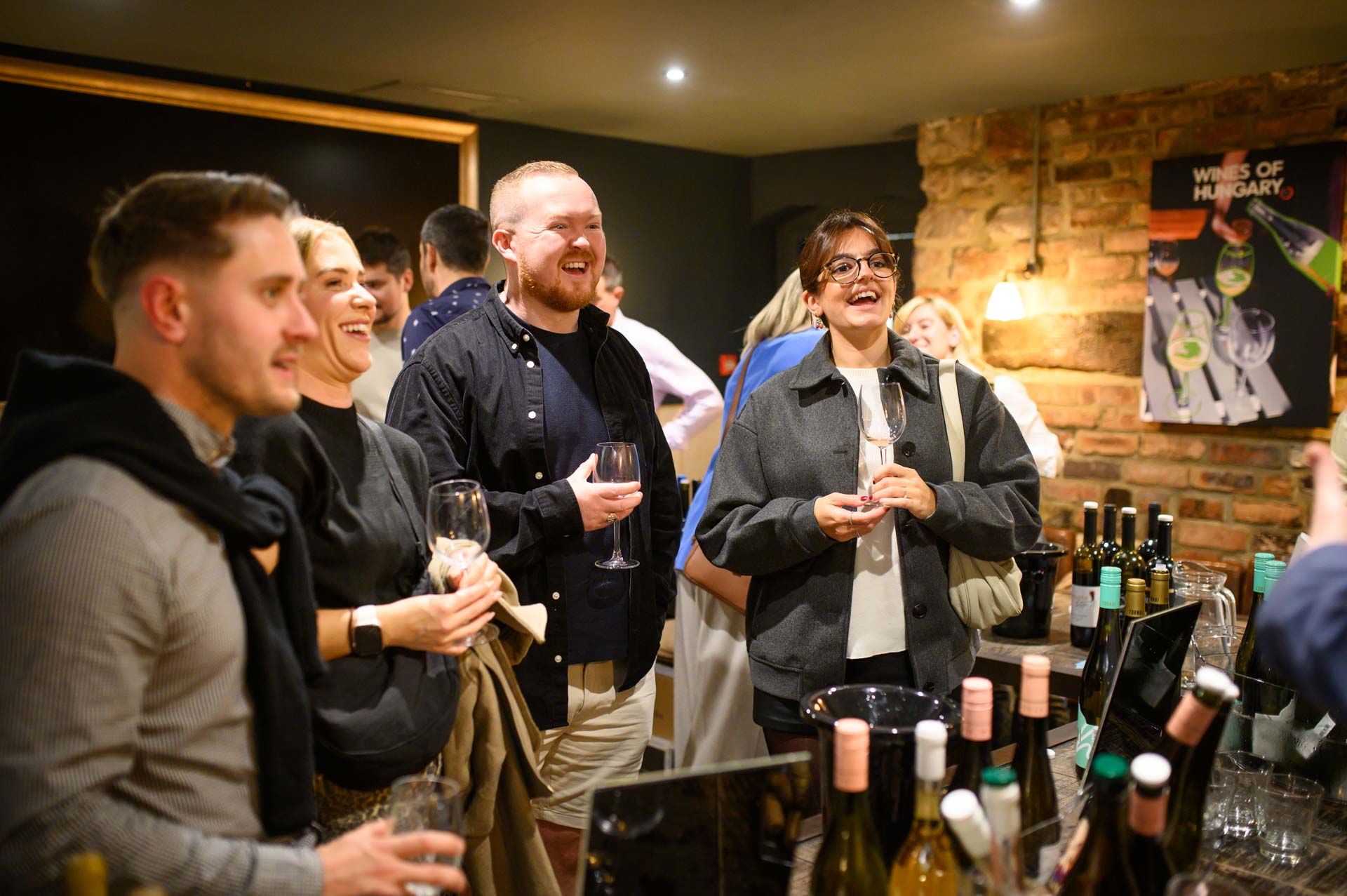
The Wines of Hungary roadshow tastings were designed to be both fun and educational including hosting them at venues such as London's East Cheap Records
A roadshow of tasting events that crucially kicked off in London with a trade tasting at BRIX LDN, followed by a press and influencer event at East Cheap Records. It then took the Hungarian wine story to two of the UK’s fastest growing wine markets in Birmingham, which was hosted a trade, press and influencer tasting at Vagabond Wines and then thirdly in Bristol with its final UK trade, press and influencer tasting at Racks Bar & Kitchen.
The chance for busy wine buyers to meet and taste wines from the 25 producers that signed up for the campaign. With all 25 taking part in the London and Birmingham events, and 12 - the wineries still looking for UK distribution - having their chance to shine in the standalone tasting event in Bristol.

Wines of Hungary's second roadshow tasting took place at Vagabond Wines in Birmingham
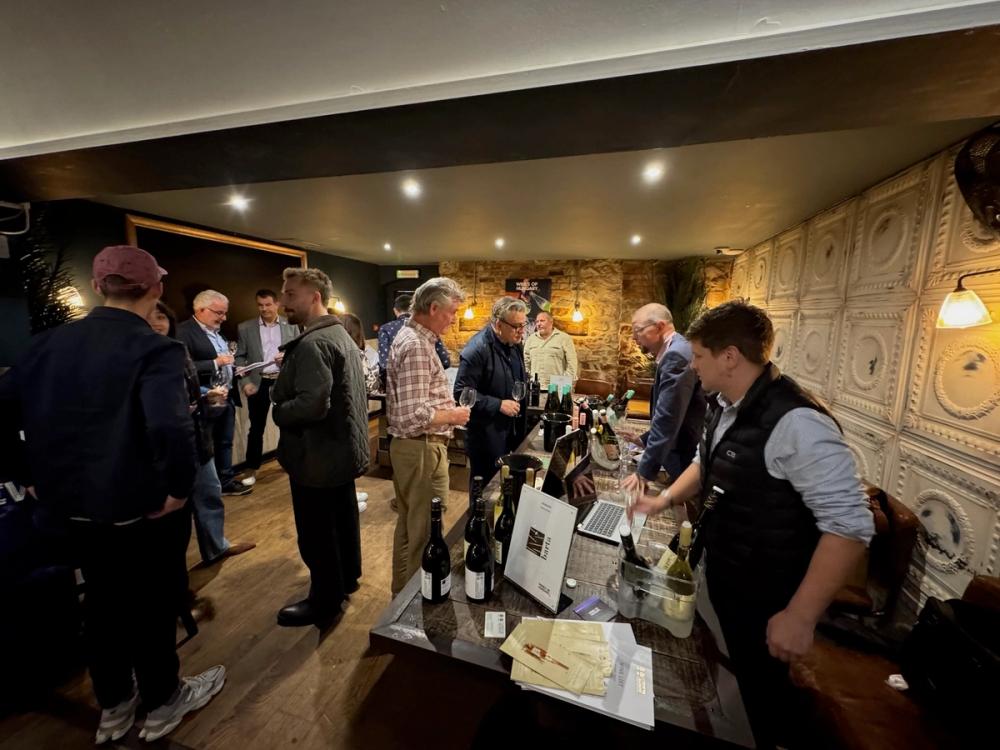
Raks Bar was the host for the Bristol trade tasting event
The Buyer was able to host a Q&A session with two of the producers and one of the importers at the Birmingham event featuring: Hajnalka Szabó from Füleky Tokaj Winery; Dániel Katona from Sauska; and Zsiga György, that looks after a number of Hungarian producers distributed by Delibo Wine Agencies.
Together they were able to speak for the rest of the producers in terms of why they are so keen to explore wider distribution opportunities not just in the UK but in target export markets around the world.
In particular, they focused on why they think the styles of wine now being made in Hungary are so suitable for the international market and how producers are embracing and promoting the country’s indigenous varieties and are proud of both the long-standing traditions of Hungarian winemaking, whilst also wanting to experiment, develop and introduce new viticultural and modern winemaking techniques to make their wines as market focused as possible.
Market focus
It was noticeable how well in tune the producers, particularly those with UK importers, were in terms of understanding the needs and demands of the UK market and what buyers might be looking for. In particular, this shone through in the wide range of fresh, easy drinking, approachable wines across whites, reds, sparkling and rosés.
It meant the tastings were not only interesting in terms of discovering and exploring what Hungary has to offer, but in finding market ready wines with the styles, alcohol levels and price points that buyers are looking for - particularly for by-the-glass sales in the on-trade.

Máté Csanaky, sales and export director for the Zsirai Winery believes Hungary has now found its "place" in its key export markets
The confidence of the producers was summed up neatly by Máté Csanaky, export director for the Zsirai Winery: “We believe Hungary has found our place in the market and has the chance to shine. We believe in our wines and in ourselves. Hopefully we will be rewarded in the market.”
These are producers and winemakers who have travelled the world to either learn and make wines in other countries, or spent time at major trade shows like Wine Paris and ProWein and listened to what key buyers want and are looking to make wines that will work well in their markets.
Here we go behind the scenes to talk to some of buyers who took part in the tastings, plus hear directly from Wines of Hungary about what they wanted to achieve from the campaign, and also get the views and insights from leading wine writer, Dr Jamie Goode, who what he sees as the biggest opportunities and potential for Hungarian wine.
Wines of Hungary: Key facts
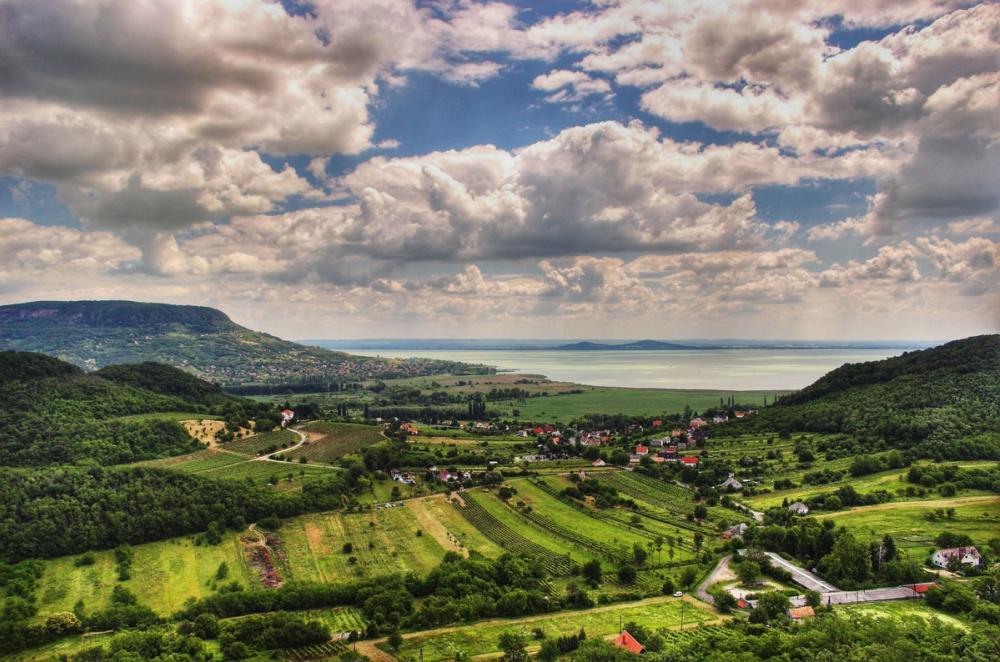
Hungary offers such a wide variety of terroirs and micro climates that make its wines increasingly appealing to ambitious wine buyers and importers
The Hungarian wine industry is divided into six main regions and 22 different wine districts. The six regions are
* Upper Pannon.
- Upper Hungary.
- Balaton.
- Pannon.
- Danube.
- Tokaj.
Together they cover 56,000 hectares of vineyards and produce on average around 268 million litres of wine a year.
A hugely diverse mix of soils and terroir, including volcanic, limestone, marl, loess and sedimentary helps make such a wide range of wine styles across its red, whites, rosés, sparkling and sweet wines. With a wide number of indigenous grape varieties being increasingly planted to support the international grapes that have also made their home in Hungary.
Hungary is dominated by its white grape varieties with 114 different varieties authorised to be planted in the country, accounting for 70% of all vineyards planted - see 40,000 hectares. Hungary also has 45 black grape varieties accounting for around 30% of all vineyards planted.
The volcanic soils of the Badacsony, Somló, Eger and Tokaj wine districts are seen as producing especially fine white wines with traditional method sparkling wine largely centred around the cooler wine districts of Etyek-Buda and Mór and around Somló, Tokaj, Eger and the Balaton.
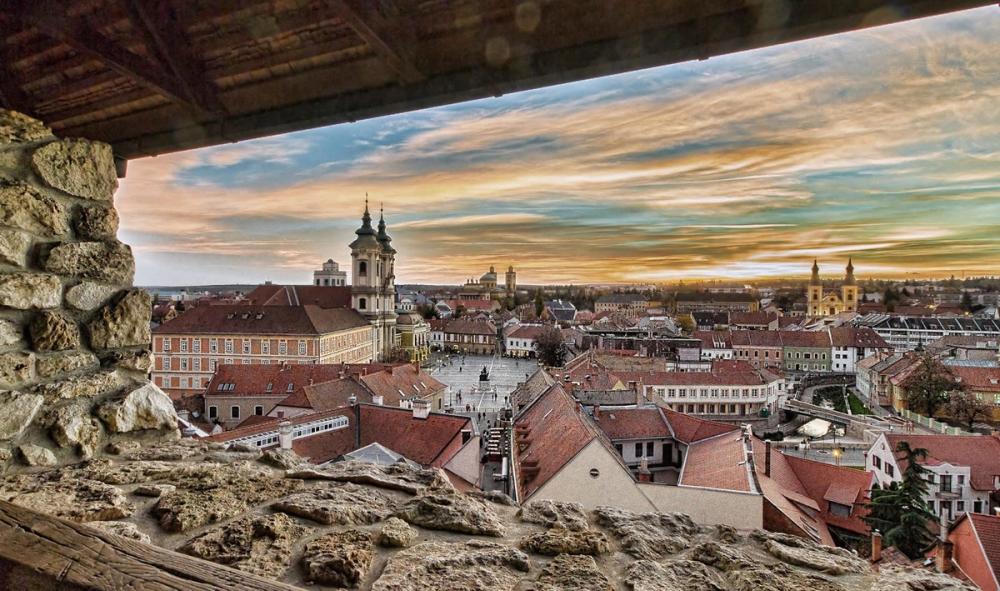
Eger has become one of the key emerging wine regions in Hungary for its fresh style of wines
Red wines are particularly suited to the climatic conditions of the Carpathian Basin, especially from Kékfrankos, Kadarka, Zweigelt and Portugieser. The main production areas for black varieties with thick skins and higher tannin content are found around Szekszárd, Villány and Csongrád. Villány is also now making fine ageworthy red wines made from Cabernet Franc, Cabernet Sauvignon, Merlot and Syrah.
Tokaj is rightly known around the world for its sweet wines, but you can also find good quality sweet wines being made in the wine districts of Mátra, Mór and Badacsony wine districts and the more historical areas of Eger, and neighbouring areas Ménes (Arad-Hegyalja) and Rust.
UK focus
Hungary exports approximately 1.3–1.4 million hectolitres of wine annually. Of this, the UK’s direct imports of bottled wine represent only 0.4–0.5% of export volume, but account for 3% of export value which positions it UK as a high-value, low-volume market thanks to its “consistent demand” for premium bottled wines.
Direct export figures, however, do not fully reflect the UK’s true market significance. Since 2021, following the introduction of post-Brexit excise and customs procedures, a substantial portion of Hungarian bottled wine has been routed through Belgium. Belgium serves as a bonded secondary-distribution hub for UK importers, freight forwarders, and consolidation operators.
When both direct UK imports and re-exports via Belgium are considered, the UK ranks among Hungary’s top three bottled wine export destinations, alongside Germany and the Czech Republic.
What Wines of Hungary wanted to achieve
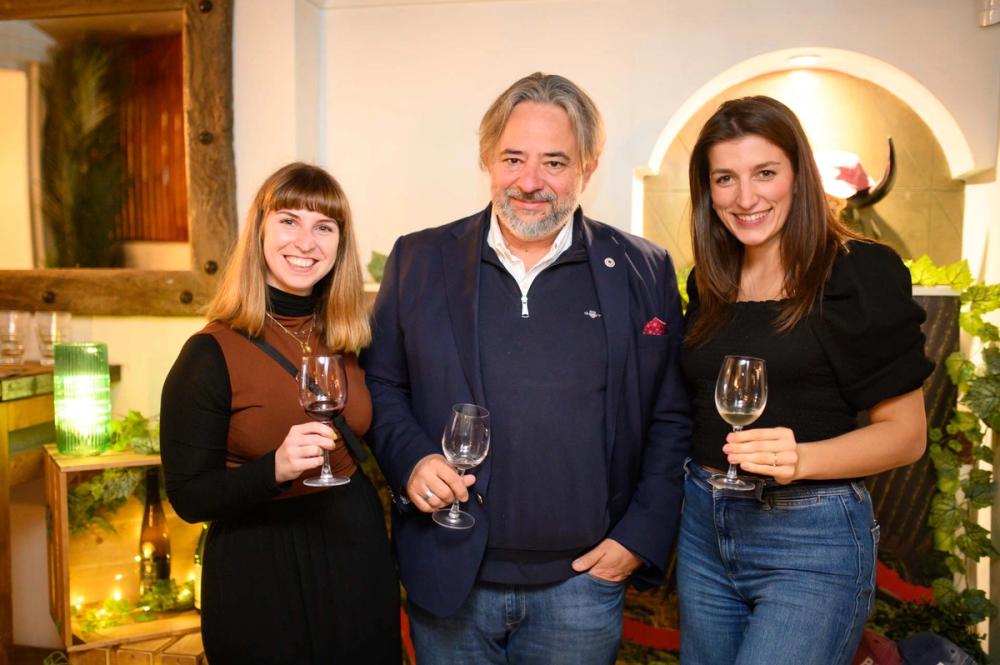
The Wines of Hugary team - Nikolett Garai, András Győrffy and Eszter Nagy - who helped mastermind and put on the roadshow tasting events in the UK with the BWP Group
To better understand why Wines of Hungary is so focused on maximising its potential in the UK Nikolett Garai, head of international marketing, Hungarian Wine Marketing Agency, was able to answer these key questions:
Can you explain your strategy behind the UK tasting campaign and what you wanted to achieve?
We started last year with a “whispering campaign,” speaking directly with the trade to understand where the real gaps and opportunities were. The message was very clear: there is a large segment of the UK trade that is curious but not yet confident about Hungarian wines.
Our goal was to give them exactly what they need—access, context, education, and great wines.
So we built a campaign around personal connection: meeting producers face-to-face, tasting widely, and offering masterclasses that tell the full story behind bor. Our aim was to convert curiosity into confidence and ultimately into listings.

Wines of Hungary's Pour Your Own Path campaign
The whole campaign was anchored by our tagline, “Pour Your Own Path,” encouraging both trade and consumers to step into something new, personal, and unexpected.
We made it a priority to keep the walk-around trade tastings friendly and casual, then switch gears and host a lively, party-style tasting with winemakers, press, and influencers at East Cheap Records in London.
Hungarian wines are fun, approachable, and delightfully unexpected and we wanted our venue choices to reflect exactly that vibe.
How did you choose which producers took part in the event?
We announced an open call to all Hungarian wineries already represented in the UK or actively seeking distribution. We shared our campaign messages—focusing on authenticity, lighter styles, and key varietals such as Furmint, Olaszrizling, Kékfrankos, and Kadarka—and invited producers who felt aligned with this direction. The response was overwhelming, which already told us a lot about the momentum behind the UK market.
How did you choose the cities for the campaign?
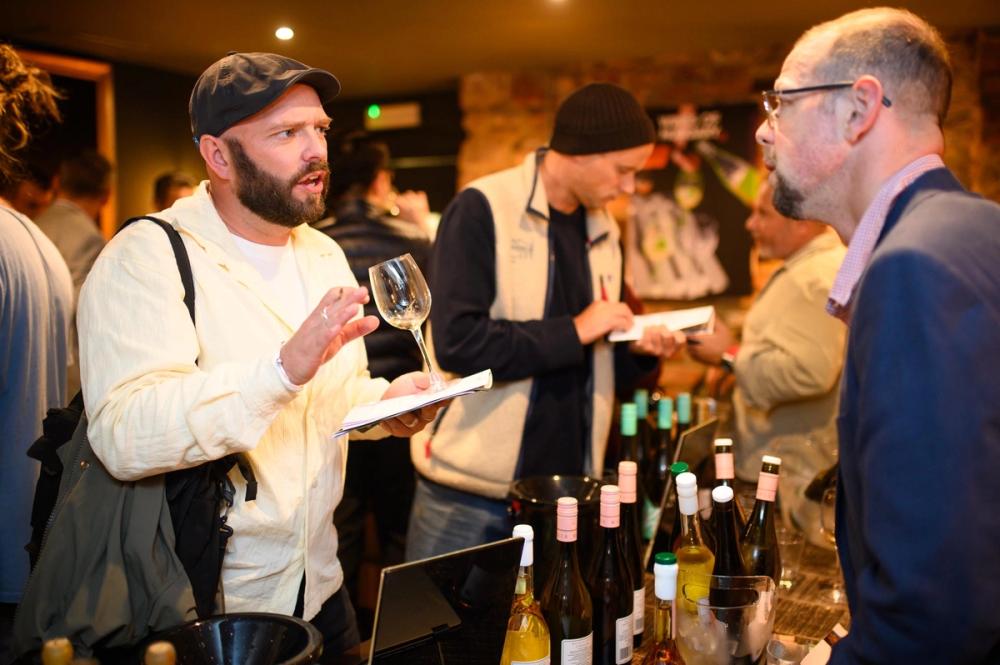
The Wines of Hungary tasting events saw over 30 producers take part and make valuable contacts with key potential wine buyers and partners in the UK
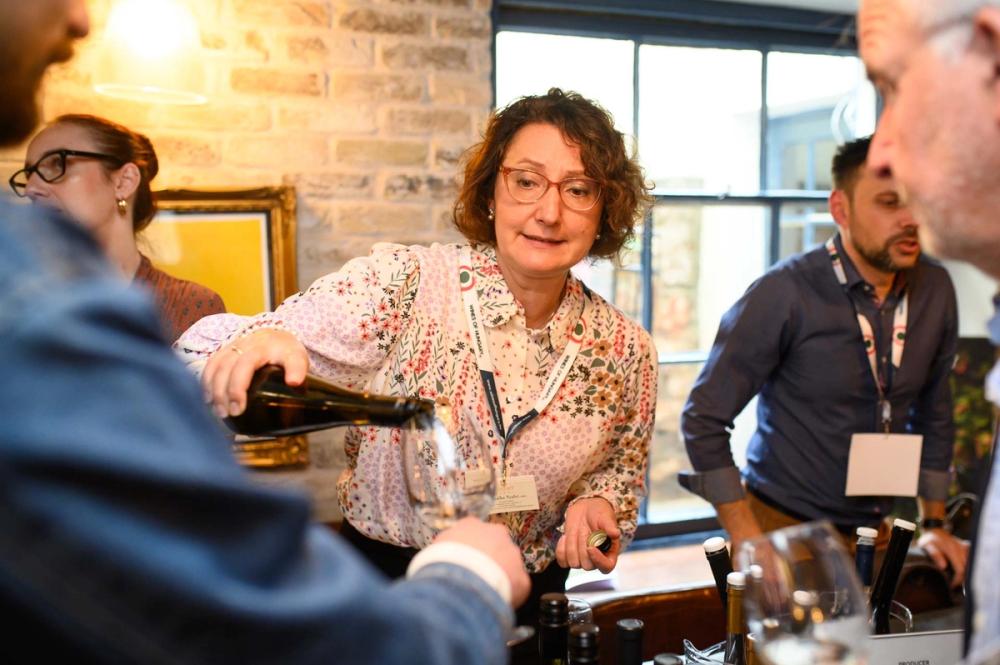
Hajnalka Szabó from Füleky Tokaj Winery
London is essential, but it can’t be the only point of focus. We wanted to broaden the regional scope and reach buyers in other key areas - especially in the south - so we selected Birmingham and Bristol, both strong hubs with solid trade communities.
Next year we’re taking the roadshow north to three other strategic cities to make sure the whole country has access to the category.
What is your overall summary of the events?
The campaign met - and in many cases exceeded - our goals. We reached the right audience, generated listings, increased visibility for a wide range of Hungarian styles, and created a strong emotional connection around our narrative. Most importantly, we saw the trade shift from polite curiosity to genuine excitement.
How successful were they in achieving your goals and why?
We look at this from three angles:
1. Success for the wineries:
We received feedback about immediate orders placed after the tastings, which is always the most concrete indicator. Producers also expressed strong enthusiasm for the turnout and engagement.
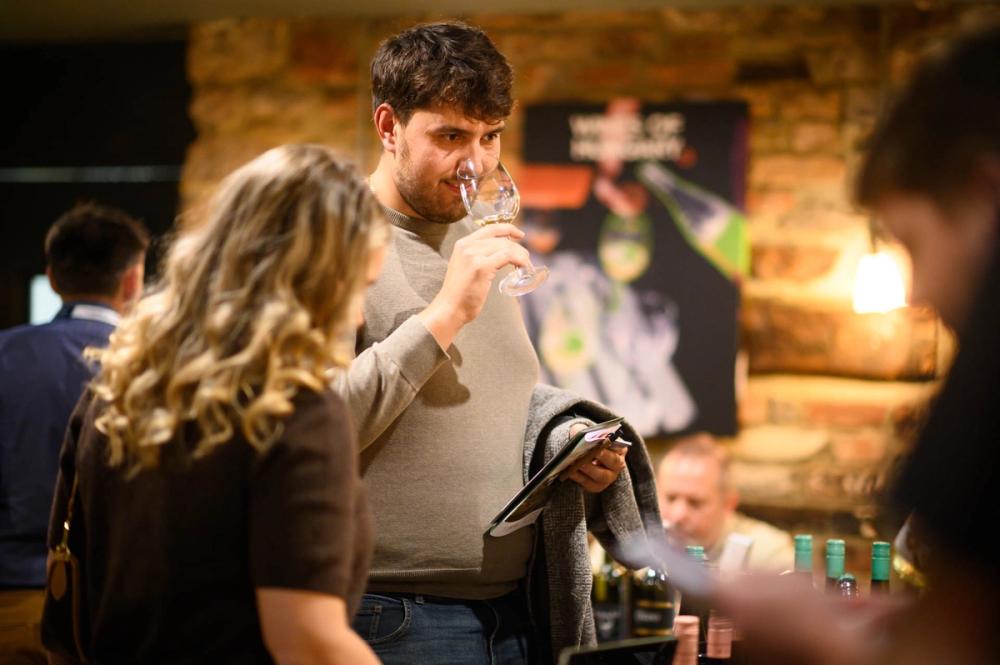
The Bristol event attracted a large number of local buyers and importers like Fine Wines Direct

Darren Mount of Grape & Grind discussing Saint Andrea's wines with export director András Bozó
2. Success for the guests:
Attendance exceeded expectations in all three cities, showing clear interest in Hungarian wines beyond Tokaji Aszú. Conversations showed a genuine spark for lesser-known categories—whether volcanic whites or lighter reds and plenty of epiphanies about our high-quality, hard-to-pronounce local grapes.
3. Success for our image-building:
We originally planned for 15–20 wineries per city, but interest was so high that we ended up with around 35 producers in each location. That shows trust coming from our wineries in what we started to do globally. Through masterclasses and open conversations, we successfully communicated our message: approachable, authentic wines with real stories.
What pleased you most about the response from trade buyers?
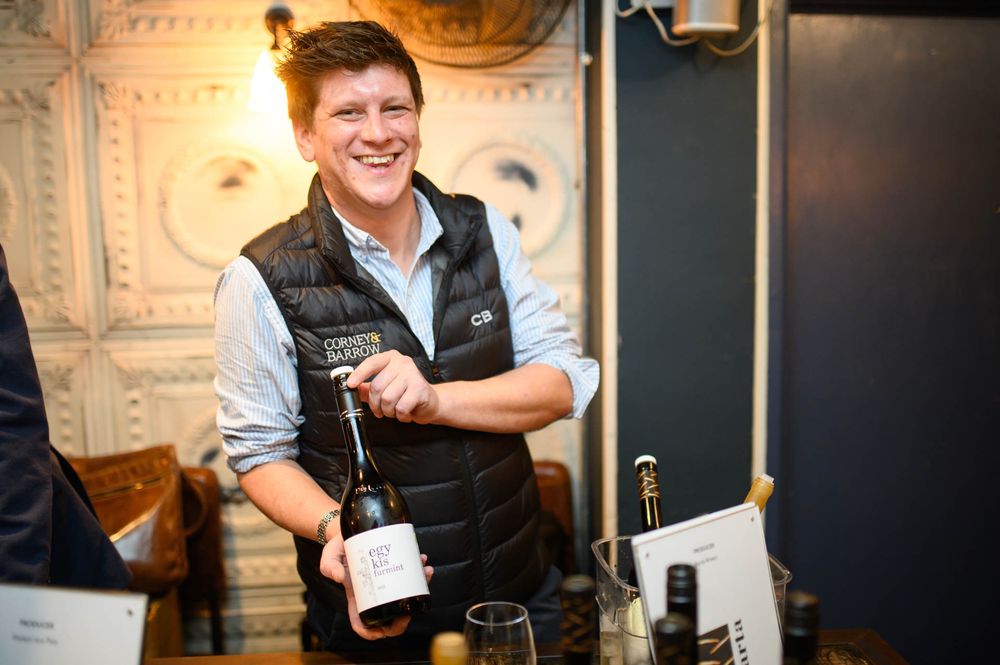
Corney & Barrow was able to show the wines of its Hungarian wine partner Egy Kis
The openness and enthusiasm were remarkable. Many attendees had previously joined BOR 2025, and they arrived with clear objectives: identifying certain producers, finding new categories, or exploring specific regions. The engagement level showed that the UK market is ready for more—and that our consistent messaging is working.
What surprised you the most about their thoughts on the wines and styles/price points?
Without question, the biggest surprise was the unexpected craze for Hárslevelű and sparkling wines. Hárslevelű repeatedly came up as a standout. We expected more attention on Furmint, but Hárslevelű really captured buyers’ imagination.
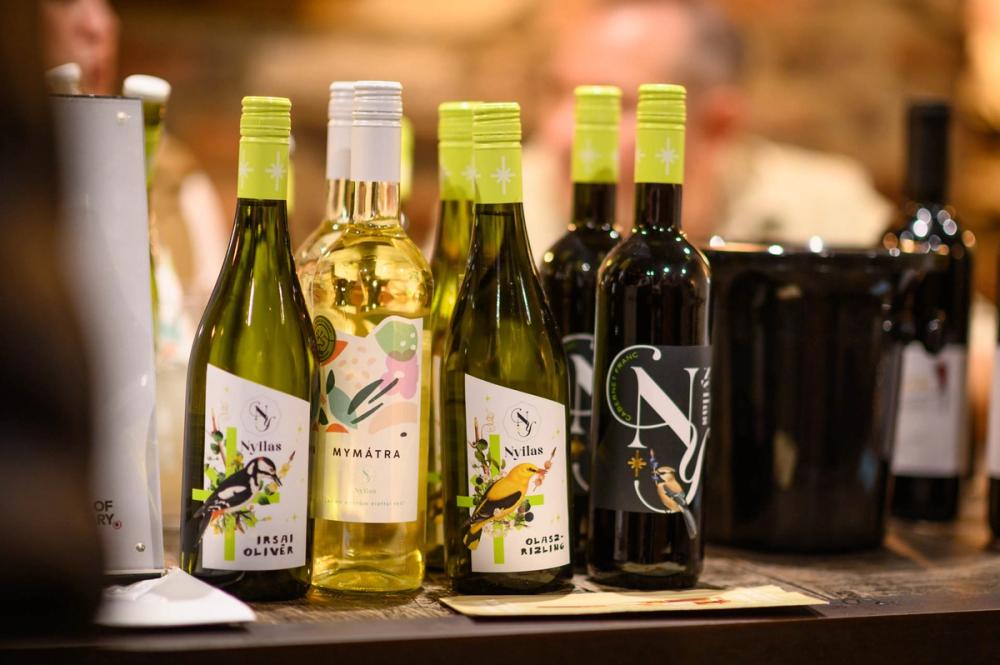
Buyers had the chance to taste a wide range of Hungarian wines
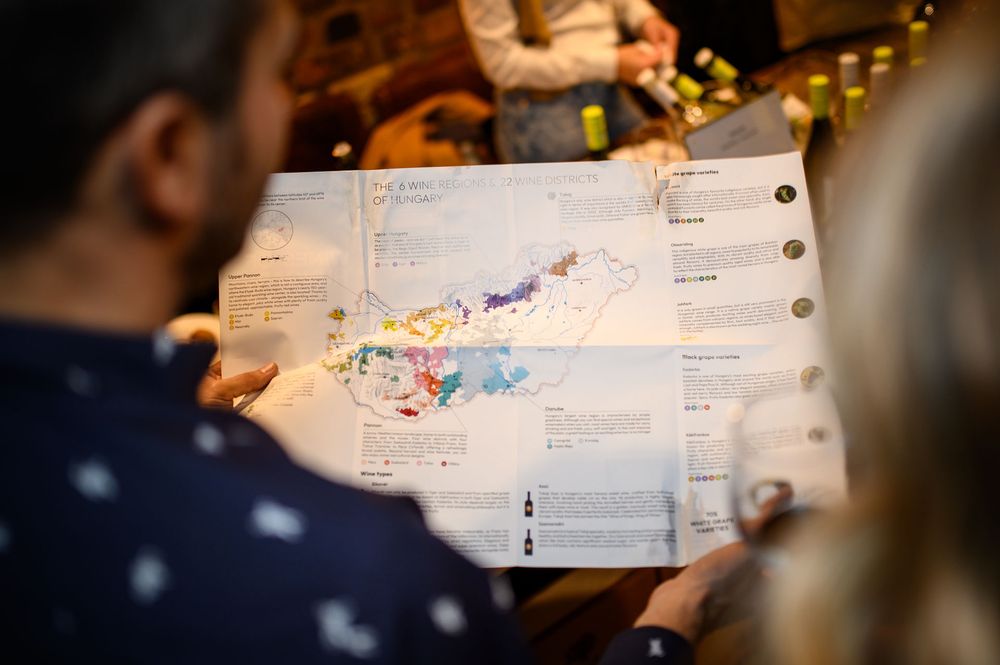
There was also strong appreciation for fruit-driven Kadarka and lighter Kékfrankos—styles that fit perfectly with current UK taste trends.
What did you learn from the tasting campaign that you can take back to your members?
Lighter, fresher, character-driven wines are a major opportunity - members should prioritise these in UK-focused ranges.
Clear storytelling around terroir and style is essential.
The UK trade responds best to relaxed, personally engaging formats rather than overly formal presentations.
To help wineries get market ready and meet the expectations of the trade, we need to invest more on education and market research.
The Buyers’ View
The Bristol tasting event at Racks Bar & Bristol saw a large number of the city’s most influential wine bars, restaurants, wine merchants and suppliers come and see for themselves what Hungary wines have to offer. Here’s some of their feedback on what they discovered.
Sam Hellyer, head of wine at Chiswick Auctions
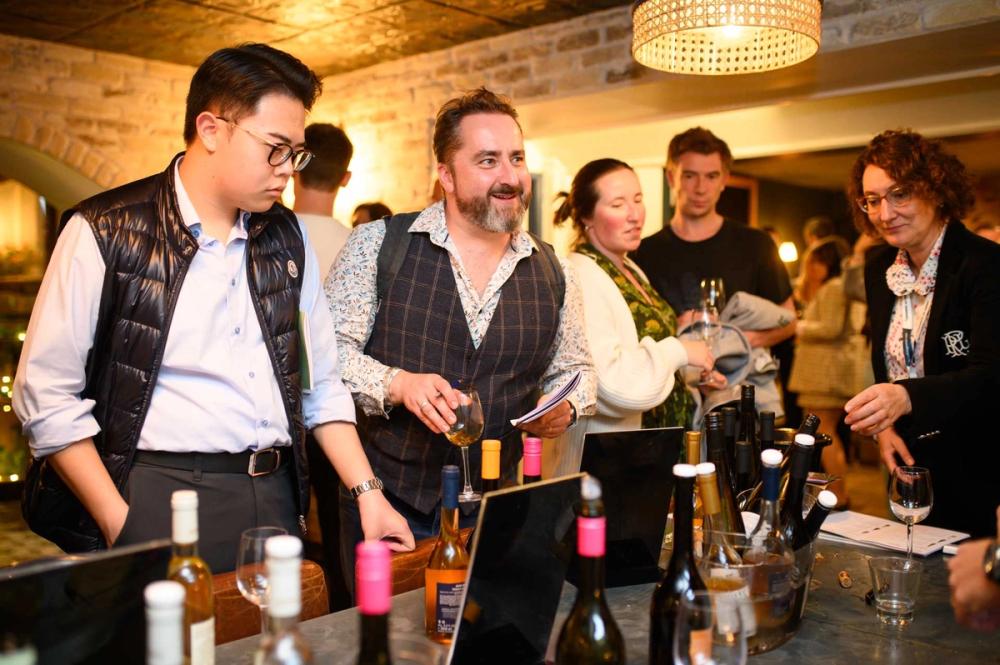
Sam Hellyer of Chiswick Wine Auctions was one of the first buyers to sign up for the Bristol event
It was a really good tasting, I saw lots of people I was hoping to catch up with as well as sampling lots of wines I probably wouldn’t have had the chance to.
Overall the quality was very high, there was a range of styles in the dry whites, and the flavour profile was broader than I would have expected.
The few producers using international grapes showed them most effectively when they were part of the blend. The straight Sauvignon, for example, I tried was good, but didn’t have enough of a unique typicity to stand out against the wider competition, and when tasted next to the other wines they were a sudden break from quite complex and more subtle styles.
I was incredibly surprised by the difference in style between the red and white wines. The whites were more complex with delicate elements and you could drink a bottle and get something different from every glass.
The reds were mostly big and weighty, bringing much more dark and stewed fruit (in many cases, not all) than I was expecting, particularly after tasting the complex and varied white wines.
Which styles of wine stood out for you and you think would have a good oppportunity in the UK wine market?
The highlights of the tasting for me were these following wines:
Etyeki Kúria: Etyek-Buda (Pinot Noir).
Nyilas Birtok, Nyilas Estate: Mátra (Cabernet Franc)/
Polgár Pincészet: Villány (Cabernet, Merlot, Cabernet Franc and Syrah blend).
Tornai: Somló (Hárslevelű)
Füleky Tokaj Estate: Tokaj (Furmint, Hárslevelű).
Ma’d Moser Tokaj: Tokaj (Furmint, Hárslevelű, Muskotály).
St. Andrea: Eger (Hárslevelű, Furmint, Sauvignon, Pinot Gris, Olaszrizling, Viognier, Rajnai Rizling, Chardonnay).
I favoured the reds using traditionally French grapes, and white blends or anything involving Hárslevelű.
If we can find a way to make Hárslevelű pronounceable in the English lexicon I think there’s a real opportunity, but do your entry level customers want to read Hárslevelű on a label, or do they just want a label-spanning picture of a faux-convict and a deep discount on the shelf every fortnight?
Trying to grow a brand in the middle ground that cares about and explores by grapes is very hard, but if you can get the grape onto the radar through those “Buyers Choice” wines that Marks & Spencer and Waitrose do I think there’s a chance to get people interested. Providing there is the right money for the wineries. There should be an opportunity out there, but making the transition from heritage to common knowledge is always a tough line to walk.
Ben Franks, managing director, Canned Wine Company
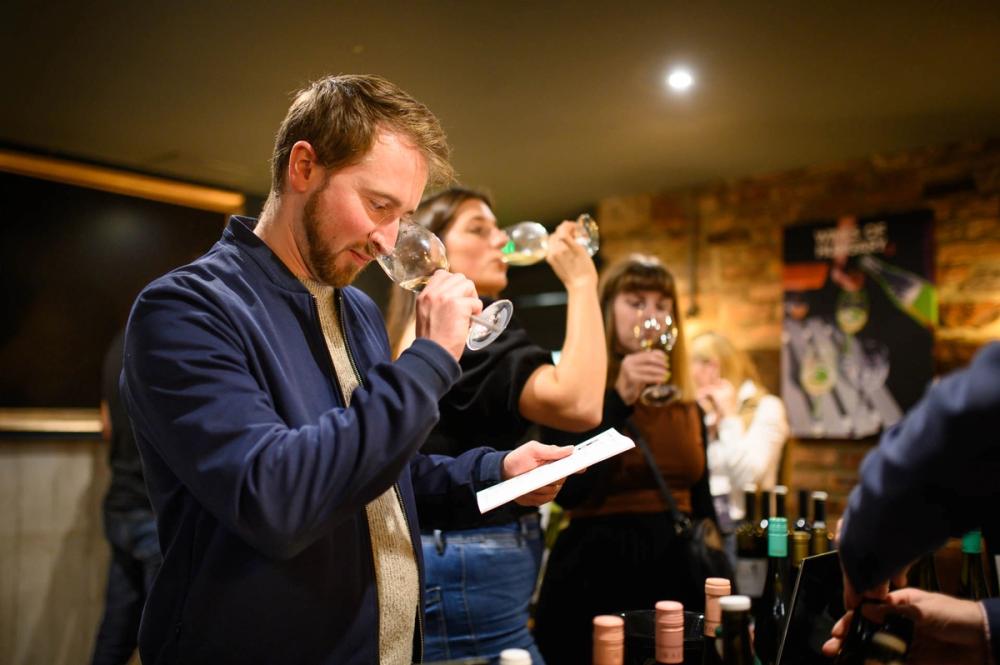
Canned Wine Company's Ben Franks has long been an admirer and buyer of Hungarian wines during his time at Novel Wines
What did you think of the quality of wines you tasted and how did they compare to what you were expecting?
I sold Hungarian wines for years at Novel Wines and going back for the event was a reminder of the gems on offer there. Lightening acidity, balanced by purity of fruit, and memorable wines - whether a nutty, orchard fruited dry Furmint or an indulgent, sticky-sweet Tokaji Aszú.
Which styles of wine stood out for you and you think would have a good opportunity in the UK wine market?
Furmint has been the flag bearer for great Hungarian wine but I think the personality of the wines of Szekszárd, from the juicy and crunchy Kadarkas that echo the older elegance of Beaujolais that has been a struggle to find as the world gets warmer, to the deep and spicy Bikavér 'Bulls Blood' wines.
Surprisingly I think there's some Sauvignon Blancs being produced that nail it commercially and could be great crowd pleasers for introducing people to Hungarian wines.
More interesting whites are being produced from grapes like Hárslevelű that offer curious wine consumers a really interesting balance of both honeyed character and almost tropical-like fruits.
Would you consider listing Hungarian wines in the future and if so which sort of wines would you go for and what price point?
I think any wine merchant that loves a mix of wine styles should be looking at having Hungarian wines on their list - and there's more out there to explore than having one Fumint and one sweet Tokaji. Go explore!
Giles James, founder of ID Wines
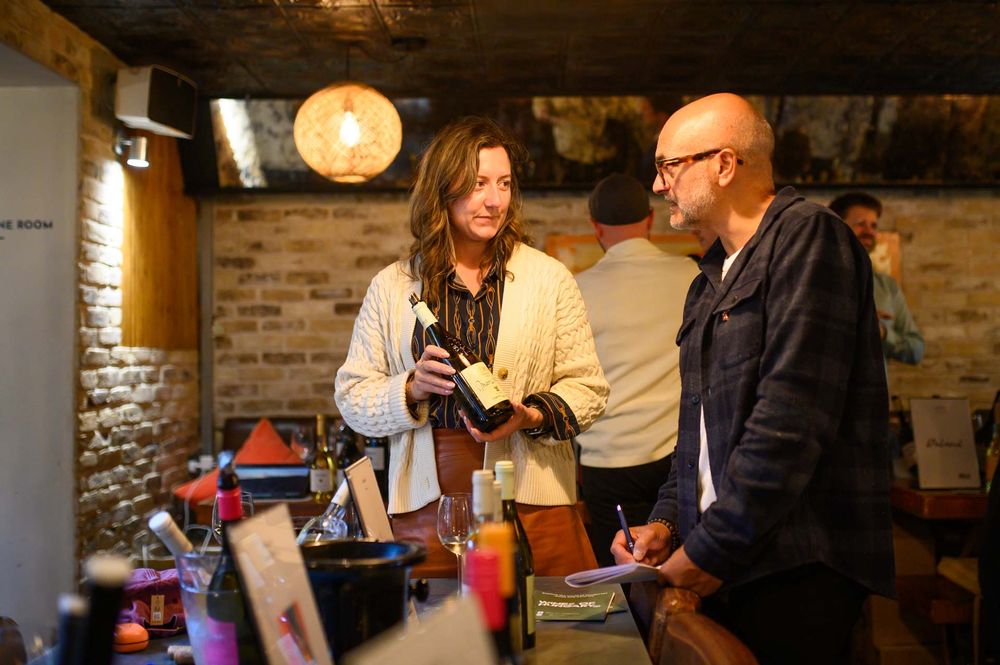
ID Wines' Giles James with Berkmann's Greta Megroff who was showing the wines of Oremus its Hungarian wine partner
Outside of having worked predominantly with the sweet wines from Hungary, my exposure has been to the dry whites made from Furmint. I was curious to try more of these and gauge any stylistic differences, but also see what other varieties were in use from the different regions.
Overall there was a consistency to the Furmints I tried, in terms of body, acidity and fruit profile. The points of difference came across from the use of oak, and fruit that was picked later. These later harvested, or botrytis affected wines shared some characteristics and flavours of their sweet counterparts, while remaining dry. Where the dry Furmints did have a little residual sugar these levels were well judged and lent a balancing hand by tempering the acidity and subtlely rounding out the fruit.
As a fan of white blends I really enjoyed the Egri Csillag wines from St Andrea. These are based on Harslevelű and must include at least 51% local varieties. I liked this from the angle that it maintained a tie to the land and the use of traditional varieties, while accepting what international varieties could bring to the party.
When it came to the reds I found a lot more variation in quality and balance. There seemed to be an over use of oak in a number of the wines and some pretty hefty alcohols, which put me off wanting to pursue tasting too many.
Once again I was drawn to the wines from St Andrea and the use of Kékfrankos in the traditional blends of Egri Bikavér. Kékfrankos may be better know as Blaufrankisch in Austria, and has structural similarities of fresh, bright acidity and a crunchiness to the fruit. The use of Merlot, Pinot Noir and Cabernet Franc, provided depth, structure and concentration to the wines.
From a pricing perspective they all generally sat in the same ball park. I think the reds might struggle price wise against their more commonly recognised competitors whereby the (dry) whites offer more uniqueness, diversity, discovery and value. They are a hand sell at present so would work well in indies and restaurants/gastro pubs that have staff trained to know how to sell them.
That said the wines from Nyilas Birtok were at the more entry level of the producers and could work well to offer more friendly prices to consumers wanting to engage this region.
Overall it was a constructive and insightful tasting and there is room and space for the country and region across the UK trade channels.
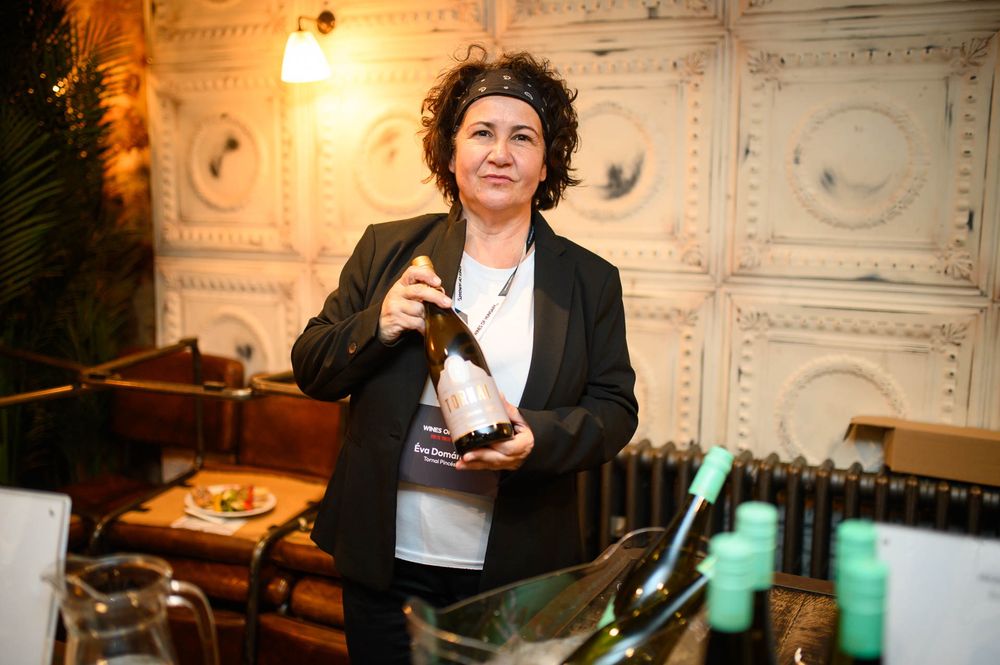
Éva Dományházi sales & marketing manager at Tornai Winery
Christopher Wicks - executive chef and consultant
The quality of wines were good with a lot of interesting grape varieties. The white dry wines were clean with some good young winemakers producing wine at a reasonable price point with character.
The reds, particularly the Kardarka, stood out as something which would have a future on current wine lists. Some of the Cabernet Francs were on coconutty, toasted oak which over powered the juice in my opinion but some people would enjoy it.
Last but not least Tokaj Aszú, particularly the Oremus, was a treat to taste again.
Overall it was a hugely enjoyable tasting with some wines that could sell on hipster level wine lists and other old more classic sweet wines that constantly perform. All in all an enjoyable tasting in Bristol and thanks for hosting.
Ben Mudditt, south west sales manager, Wanderlust Wine

Wanderlust Wines' Ben Mudditt, right, with Nick Bethell who runs and owns the Snobby's wine bar and restaurant in Bristol
Generally the wines were all of good quality and matched my expectations of what Hungary is currently producing. It’s evident the country is really focusing on dry wines, along with the difficult vintages they have had for aszú wines.
I personally enjoyed the Kadarkas, and those with a fresher modern style have got great potential. Similarly the Harslevelű wines that have great texture.
Outside of London Hungarian wines can be a tough sell at £15+ ex VAT to the trade. Therefore, I see the biggest potential for wines under €7 ex cellars.
Anett Luteranus, restaurant and bar operations manager, Homewood Bath
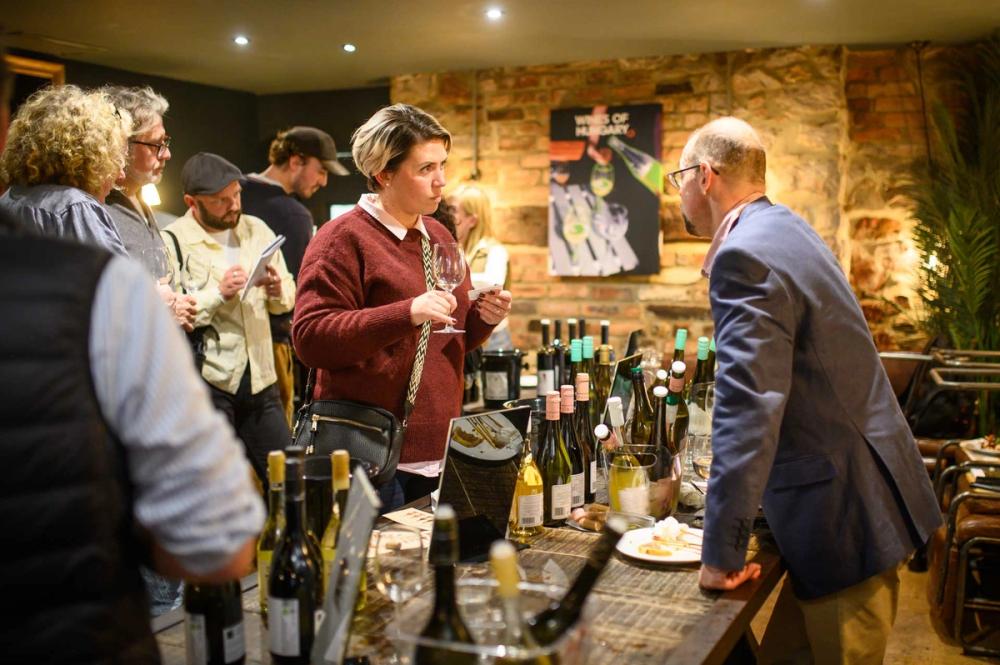
Anett Luteranus, restaurant and bar operations manager, Homewood Bath
It was fantastic to meet all the producers, taste their delicious wines and hearing all the information they had to share filled my heart with warmth. In general I think the quality was great, and there are certainly the right times when Hungarian wine could be enjoyed in the UK. It would, though, be important to have a sommelier or an enthusiast to talk to the guests and sell the wines otherwise customers tend to go for what they know and like. Introducing new grape varieties should be paired with knowledge.
As I am from the same region then Mandolás from Oremus is my all time favourite wine. I love Furmint.
I also really loved Maison Aux Pois Tokaji Aszú. It has an OK price point for the UK and is out of this world delicious.
Matyas Mezei, wine consultant
The quality of the wines were beyond my expectations. I purposely focused on the white ones, but some red wines also surprised me for their quality.
I would highlight the Tokaj Furmint and Szamorodni wines. Their fruity rich blend are definitely a potential for the UK market. They are also very versatile wines so you could definitely offer them to any restaurant or wine.
The prices the different suppliers distributing Hungarian wines in the UK are also very reasonable.
The Wine Writer’s View
Dr Jamie Goode
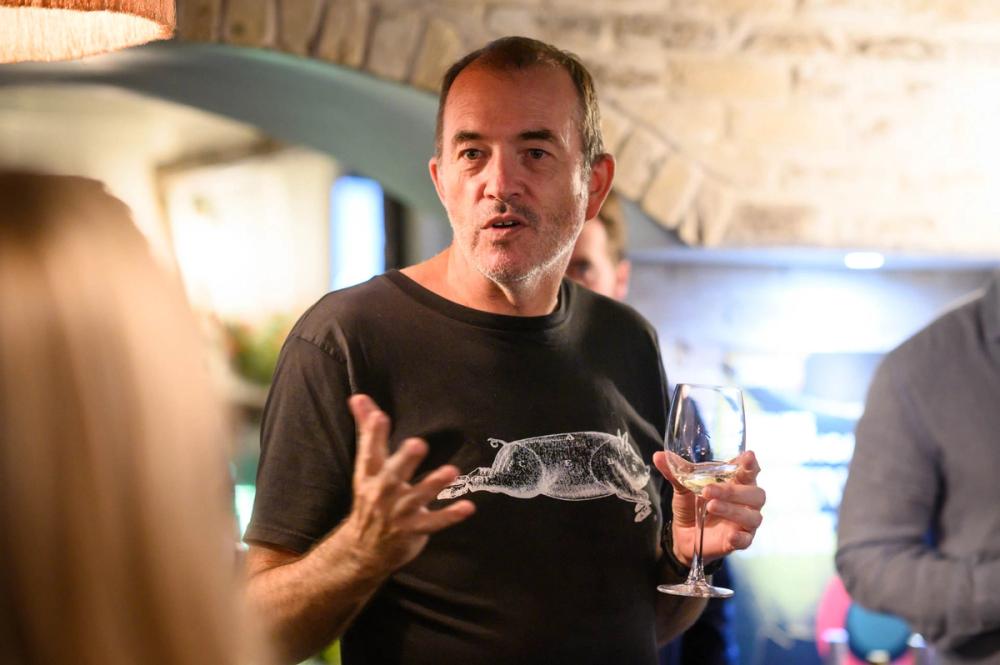
Dr Jamie Goode was able to share his experience of Hungarian wines to the Bristol audience of trade buyers, wine writers and influencers

The Buyer talks to Dr Jamie Goode, who recently visited Hungary for an extensive tour of its wine regions, to give his personal take on what he think Hungarian wines can offer the premium UK wine market. Goode was also able to share his insights to invited press and wine influencers at the Bristol event at Racks Bar and Kitchen both during an interview with The Buyer’s Richard Siddle, and then with a tasting where he was able to talk through selected wines with the guests picking out which styles of wines he thinks Hungary is doing particularly well.
What is your overall assessment of the quality of Hungarian wines vs 10 years ago?
There's now a lot of interesting wine coming from Hungary, and many of the leading wines now didn't exist a decade ago. Of course, not everything is amazing - that's true of all wine-producing countries. But the sorts of wines I've been tasting on my last visit and at the London and Bristol events make me excited for the future. I
It's not just Tokaji Aszú and a few dry Furmints, but interesting wines from across the country.
What do you think is driving those changes and has the potential to take its wines to the next level?
One factor is that the market is willing to pay a bit more for interesting wines. The other is that younger winemakers are now well travelled and are tapping into the international scene and this has given them confidence that they can do something interesting and internationally relevant from their terroirs.
It's imagination, vision plus the skillset to bring this vision into reality.
Where do you see Hungarian wines having the most potential for UK buyers for retail and restaurant wine lists?
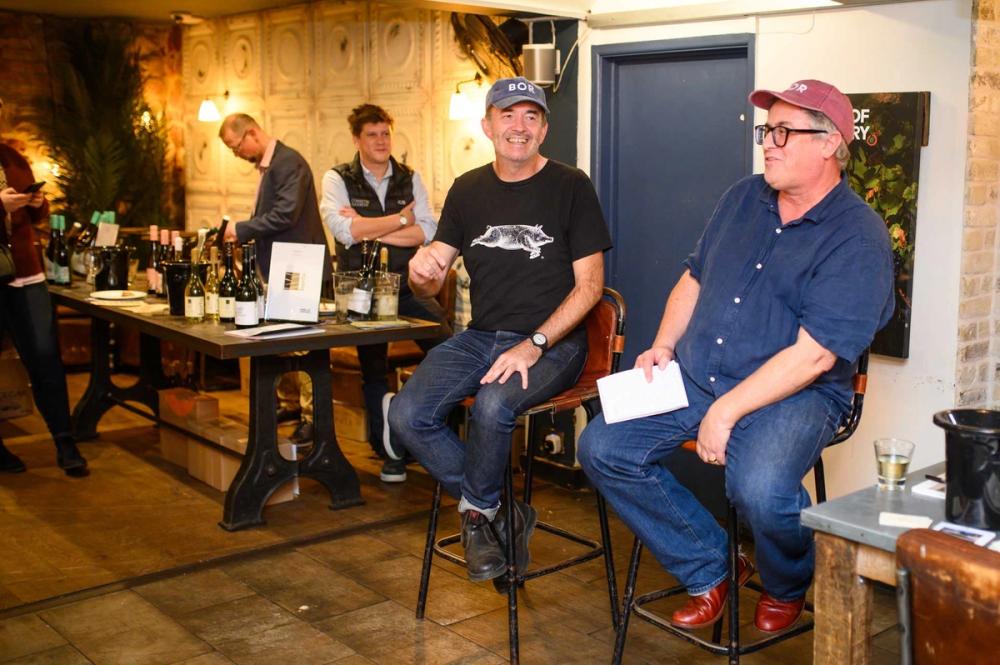
Jamie Goode in conversation with The Buyer's Richard Siddle at the Bristol event
For retailers, it's wines that fit into the £15-25 category with some personality and character. For restaurants, the fact that so many of the Hungarian wines are gastronomic and fresh means that once they are on lists, and people have tried them, there's a good chance they will be repeat purchases.
Having some Hungarian wines on your shelf or wine list shows that you are open-minded and imaginative, I think. They have to deliver, of course, and not just be novelties, but I think they do.
What would you like to see Hungarian producers doing next - where do you think they should focus their attention and efforts in the years to come?
I think focusing on packaging and labelling to make the wines look contemporary and stylish is a great investment. It sounds trivial, but local market tastes don't always align with international tastes. Lots of great-tasting wines don't get picked because they have packaging that doesn't show them at their best.
I think it would be good to see characterful, fresh, non-oaked styles at good prices, and then there's a big future for lighter, elegant red wines at modest alcohol levels.
It's great to see expensive high-end Hungarian wines thrive, but it's also good if there's a progression - a journey in terms of price levels for consumers to venture along.
I also think that sparkling and rosé could have a strong future, too. Overall, be fully Hungarian, but stay accessible to non-Hungarians!
The Participating Wineries
Here is the list of producers who took part in the Wines of Hungarian UK wine campaign, with, where appropriate their UK supplier. Those without a supplier listed are looking for UK distribution. Please contact Wines of Hungary for more details.
Nyilas Birtok - Nyilas Estate - seeking distribution.
Ma’d Moser Tokaj - Alliance Wine.
Világi Winery - seeking distributor.
Maison aux Pois Tokaj - seeking distributor.
Prestige Wine Collective - Harmonia Estate, Tokaj Excellence, Sipos Winery, Villa-völgy, Streit-Zágonyi Pince - seeking distributor.
Balla Géza Family Winery - Delibo Agencies.
Homoky Dorka Winery - seeking distribution.
Peter Benedek - Delibo Wine Agency.
Sabar Estate - Delibo Wine Agency.
Janos Markvart - Delibo Wine Agency.
Peter Pince - Delibo Wine Agency.
Pannonhalma Archabbey - seeking distributor.
Tűzkő Birtok - Eurobor Kft - seeking distributor.
Varsányi Pincészet Kft. - seeking distributor.
Sauska - Enotria.
Barta Winery -Corney & Barrow.
Füleky Tokaj Estate - Amathus Drinks.
Tornai Pincészet Kft - Astrum Wine Cellars.
Etyeki Kúria, Fine Wines Association - seeking distributor.
Tóth Ferenc, Eger, Fine Wines Association - seeking distributor.
Tokaj Hétszőlő, Fine Wines Association - Les Caves de Pyrene.
Vida Péter, Fine Wines Association - seeking distributor.
Zsirai Winery - Jascots Wine Merchants.
St Andrea - Best of Hungary.
Tokaji Kikelet Pince Kft.
Garamvári Szölöbirtok - seeking distributor.
Oremus - Berkmann Wines.
Royal Tokaji - John E Fells & Sons.
Vylyan Vineyards and Winery.
Polgár Pincészet - AWS Vinolex Kft - seeking distributor.
* You can find out more about Hungarian wine at Wines of Hungary website here.