With an illustrious history dating back to Roman times, Duché d’Uzès is an unlikely new kid on the block, but the reality is that its name would still be a stranger to most wine consumers in the UK, paling by comparison with its long-established near neighbours such as Châteauneuf-du-Pape or the vast Côtes du Rhône at its eastern border.
Established as recently as 2013 after 25 years of groundwork by a small band of determined producers, the appellation has much to prove, but it is going about establishing itself in measured fashion, with an emphasis on quality.
Introducing Duché d’Uzès
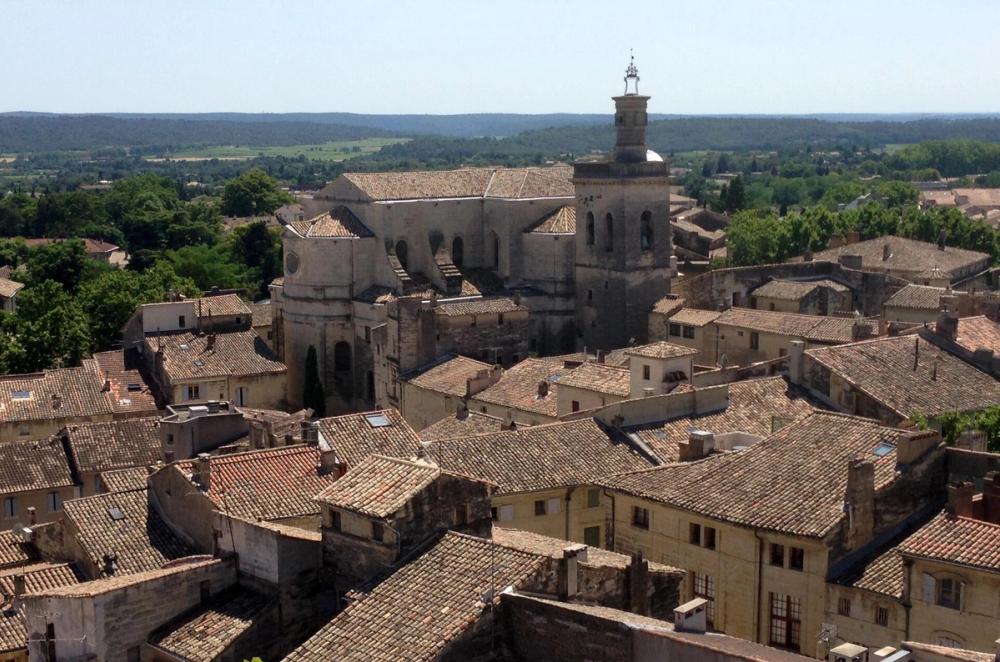
The medieval town of Uzès is the best place to vist to explore the region of Duché d'’Uzès
Perched atop a hill overlooking the rolling valleys that undulate from the Rhône Valley towards the foothills of the Cévennes, at the south-eastern edge of the Massif Central, the immaculately preserved Roman town of Uzès is a tourist mecca, its dominant feature being the château that remains the seat of its eponymous Duke.
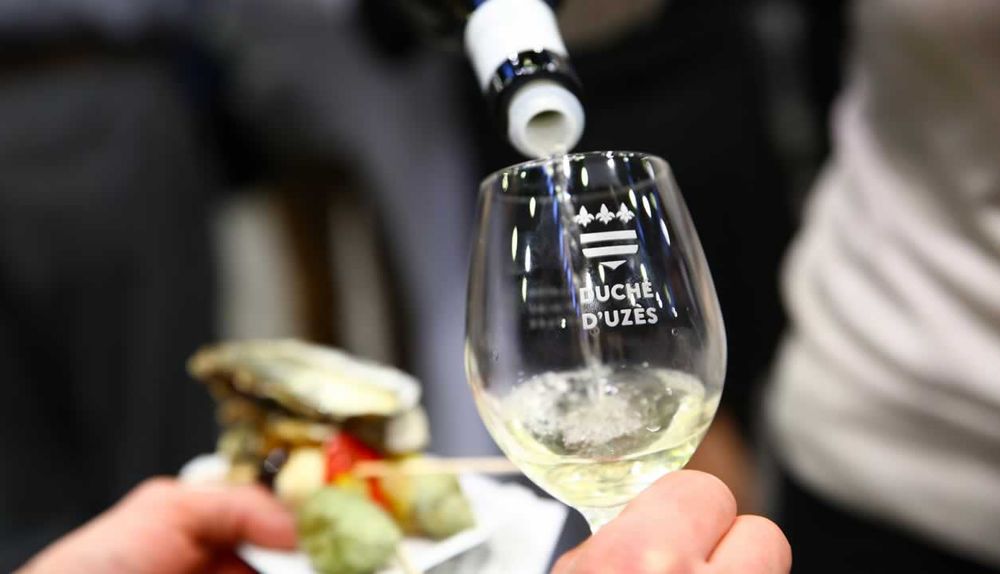
If he’s at home, the flag bearing his coat of arms flies from the tower and his distinctive fleurs-de-lys is also used as a logo for the appellation, a nod to the past that adds a sense of class. The town’s other famous resident was the writer Jean Racine, who in 1661 declared its wines to be “the best in the kingdom.”
Shaped rather like the wings of a butterfly, Duché d’Uzès has a production area of just 300 hectares (albeit with the potential for more than 2,000 ha); total output last year was 9,555 hectolitres; with just under 50 wineries using the AOC label.
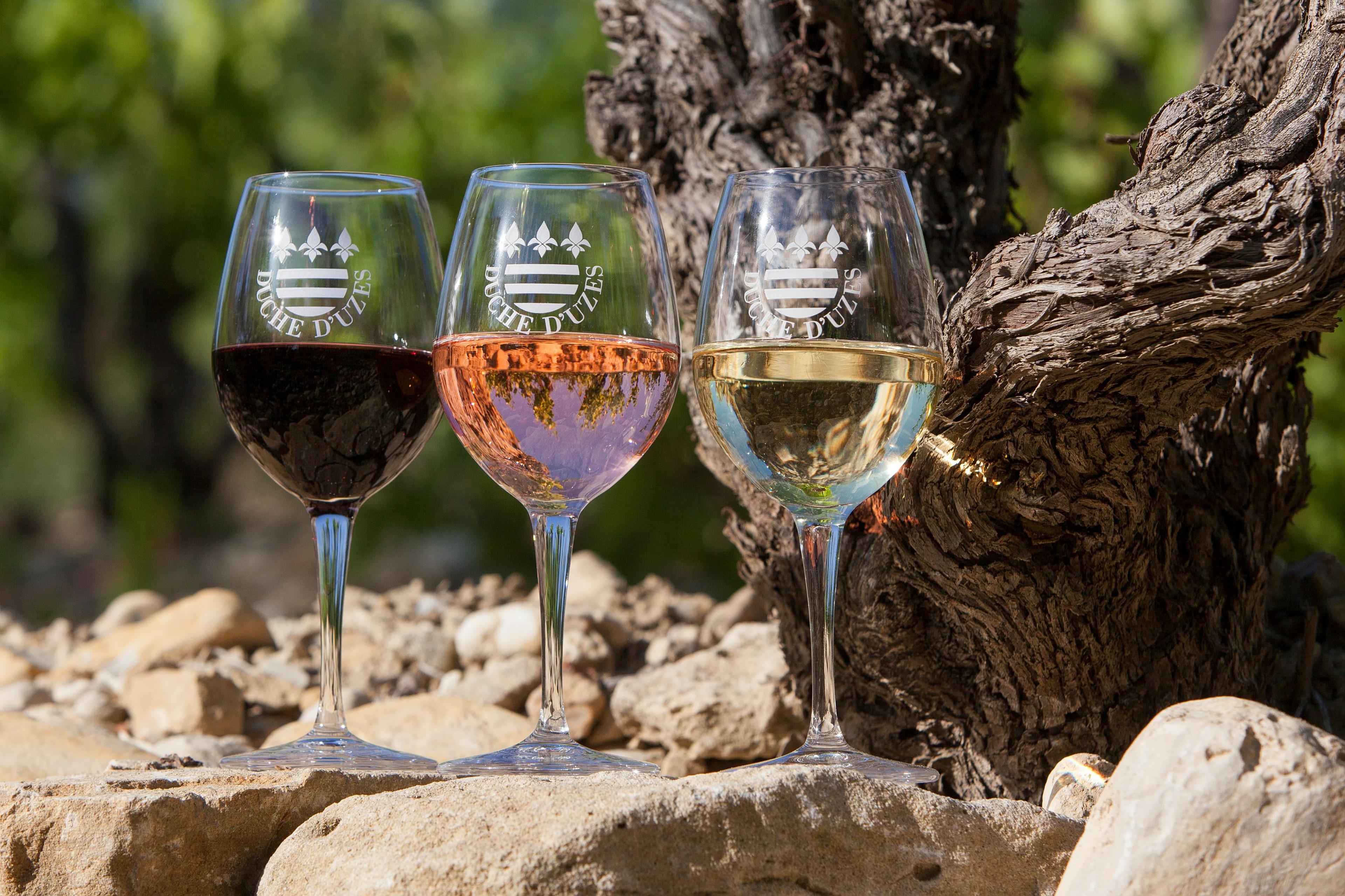
Exports account for between 10-15% of volume, offering plenty of headroom for expansion, while the region has a rainbow of colours, with red currently accounting for 53%, white 30% and rosé 17%.
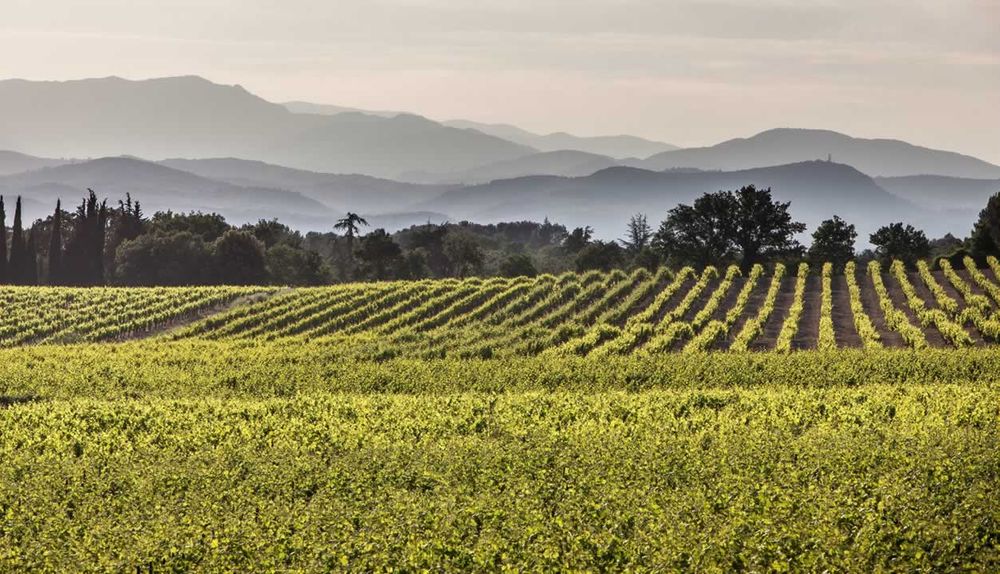
The region’s Mediterranean climate gives the wines a ripe, fruity character, while the nearby mountain range brings cool air, the diurnal range between day and night locking in freshness. The mix of sandstone, clay, cobbles and limestone throughout the region give it plenty of diversity from one plot to another.
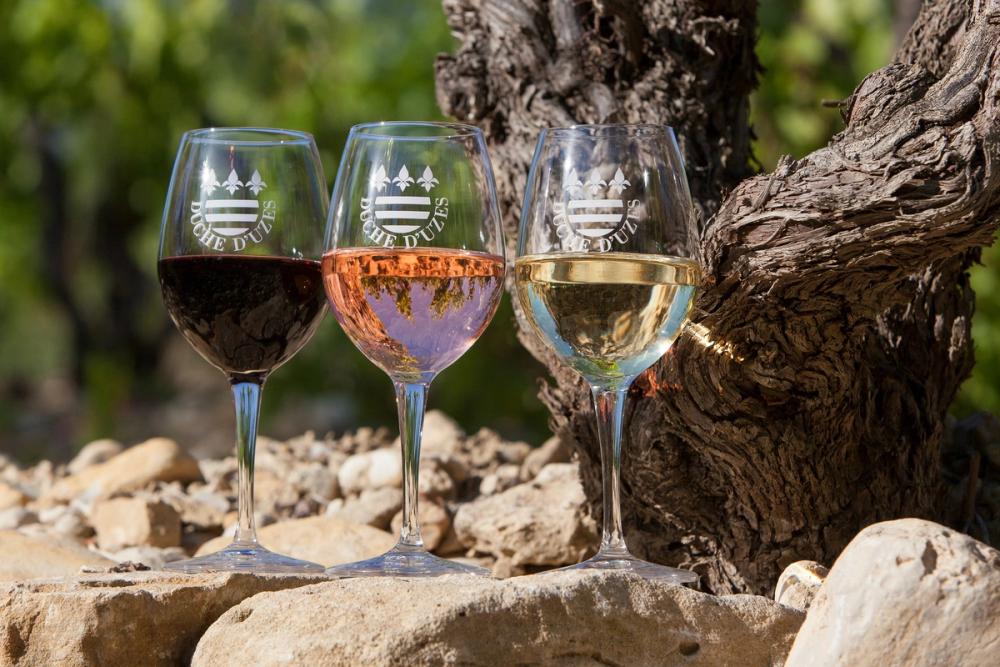
It was a great opportunity for leading UK buyers to fully exlore the wines from Duché d’Uzès
The climate conditions are well suited to organic viticulture, with 29 certified wineries, representing an impressive 42% of the appellation’s surface area, while 93% of producers have some form of environmental accreditation.
The wines of Duché d’Uzès are always blended, with the appellation having relatively rigid rules on authorised varieties and permitted proportions: Syrah rules the reds, supported by Grenache, with Mourvèdre, Carignan and Cinsault as complementary varieties available to winemakers.
While for whites, Viognier is the core grape, with blends required to contain a minimum 40%, supported by Grenache Blanc, with Roussanne, Marsanne and Vermentino allowed as complementary varieties. Ugni Blanc is also allowed (though we didn’t encounter any).
For rosé, Grenache and Syrah form the bedrock, with Mourvèdre, Carignan and Cinsault also permitted in smaller quantities. The average yield in 2024 was 33 hectolitres per hectare.
The buyers’ verdicts
To explore Duché d’Uzès and better understand its potential, The Buyer put together a team of top buyers and sommeliers, representing a broad range of outlets from specialist importers, indie retailers, wine bar operators and Michelin-starred dining. The group included:
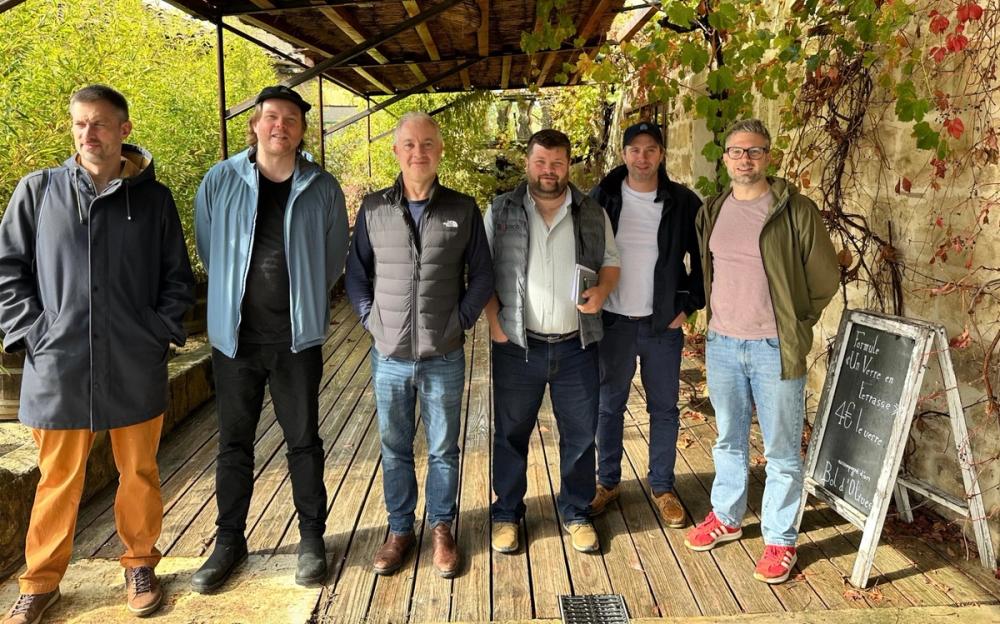
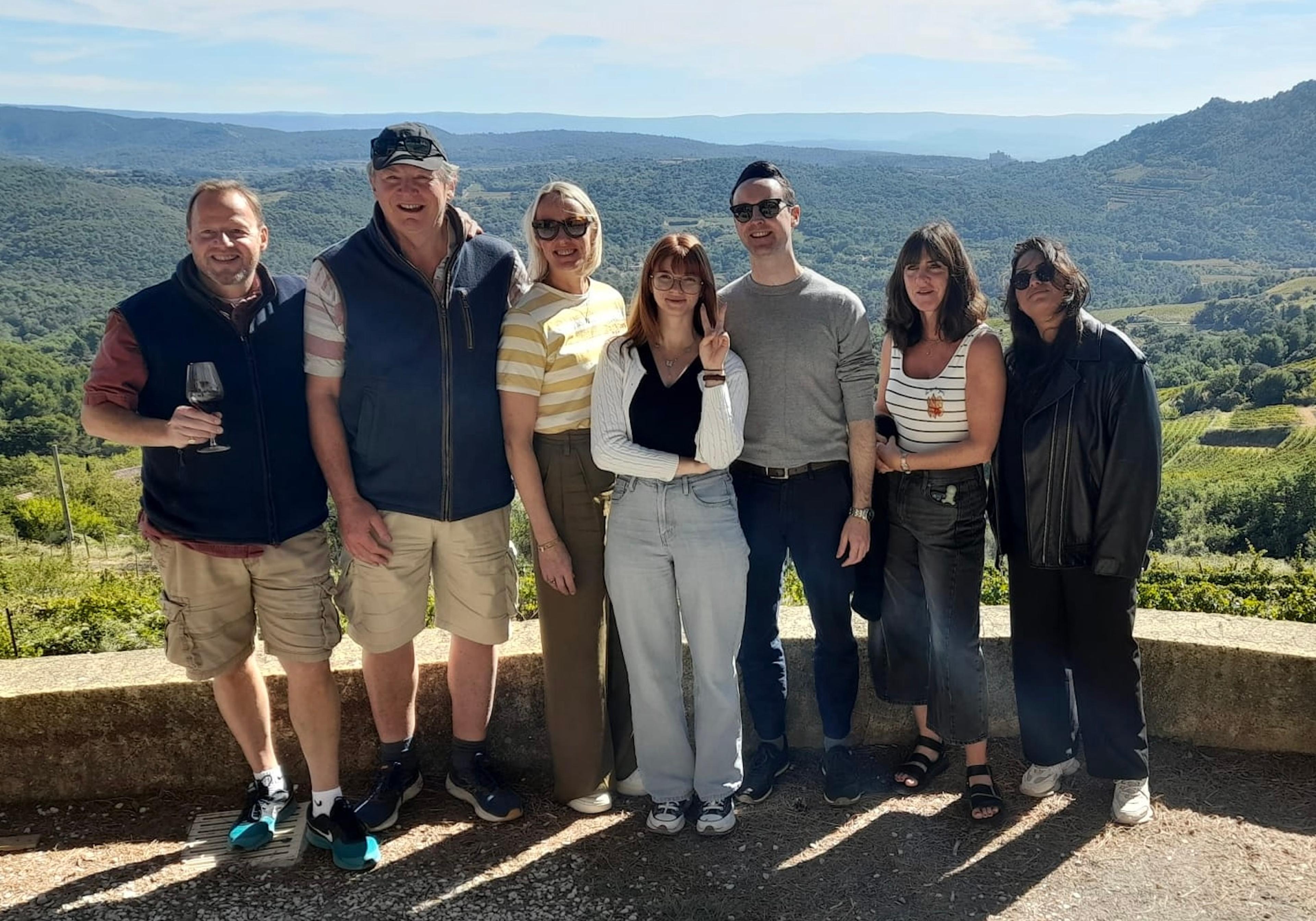
The buyers on the trip included from left to right Dymtro Goncharuk, Rory Sutherland, David Kermode, representing The Buyer, Stefan Botfield, James Stillwell and Nic Rezzouk
Dmytro Goncharuk, head sommelier at three Michelin star Alain Ducasse at The Dorchester.
Stefan Botfield, sales manager for Daniel Lambert Wines.
Nicolas Rezzouk, wine buyer for retailer and bar operator, Reserve Wines.
Rory Sutherland, wine buyer for Winecraft and Good Brothers Wine in Edinburgh.
James Stillwell, founder of mysomm.co.uk.
Spending three days in Duché d’Uzès, the team visited wineries and attended a series of lunches and dinners, tasting almost a 100 wines, meeting more than 20 winemakers and enjoying a taste of the region’s renowned gastronomy, while also taking in some of the famous sites, including the Pont du Gard, a Roman aqueduct, and Uzès’s vibrant food market. So what did our visitors make of the region and its potential?
For James Stillwell, Duché d’Uzès represented an exciting new find: “It has been really interesting to learn more about this relatively new appellation that seems to have very little presence in the UK market and to understand the differences when compared with the other Southern Rhône satellites ... I was impressed that quality has been such an important priority for the wineries and for the appellation body in setting down rules to ensure that Duché d’Uzès gains a serious reputation.”
So what was his verdict on the quality of the wines he tasted?
“The whites were fruit forward with some really good structure and bright acidity. As a group we all seemed to distinguish between the wines with or without Vermentino and I think the producers have got that message.There’s a much more gastronomic style of rosé, rather than the ‘piscine style’ to which we have become accustomed from Provence, which would suggest that these wines would be best suited to sommelier-led venues, as they might be a hard sell in the UK market as a result of the slightly darker colour.
“The reds were more of a mixed bag. I’m a Grenache lover so I really enjoyed the wines with the higher proportion of that grape in the mix.”
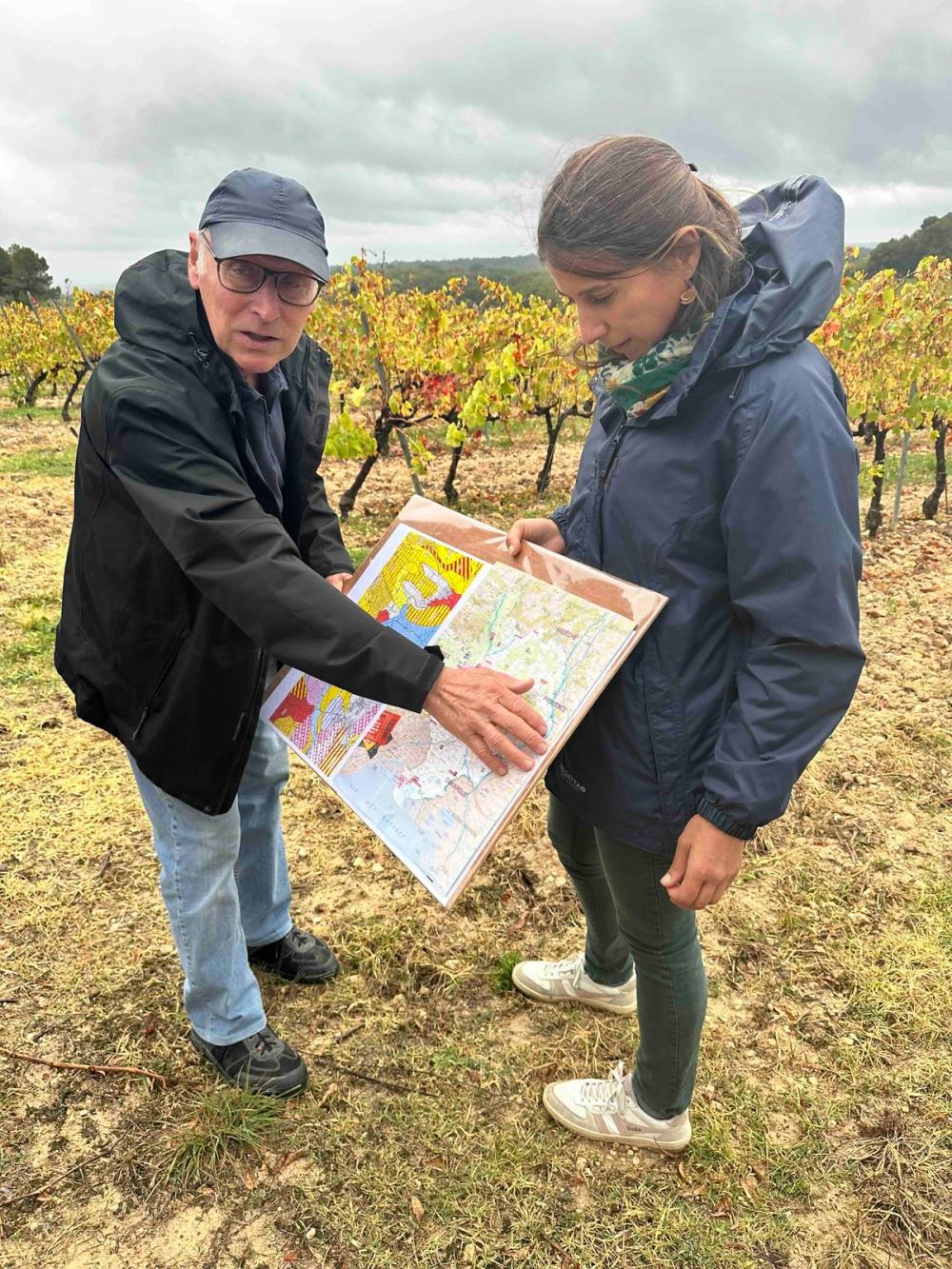
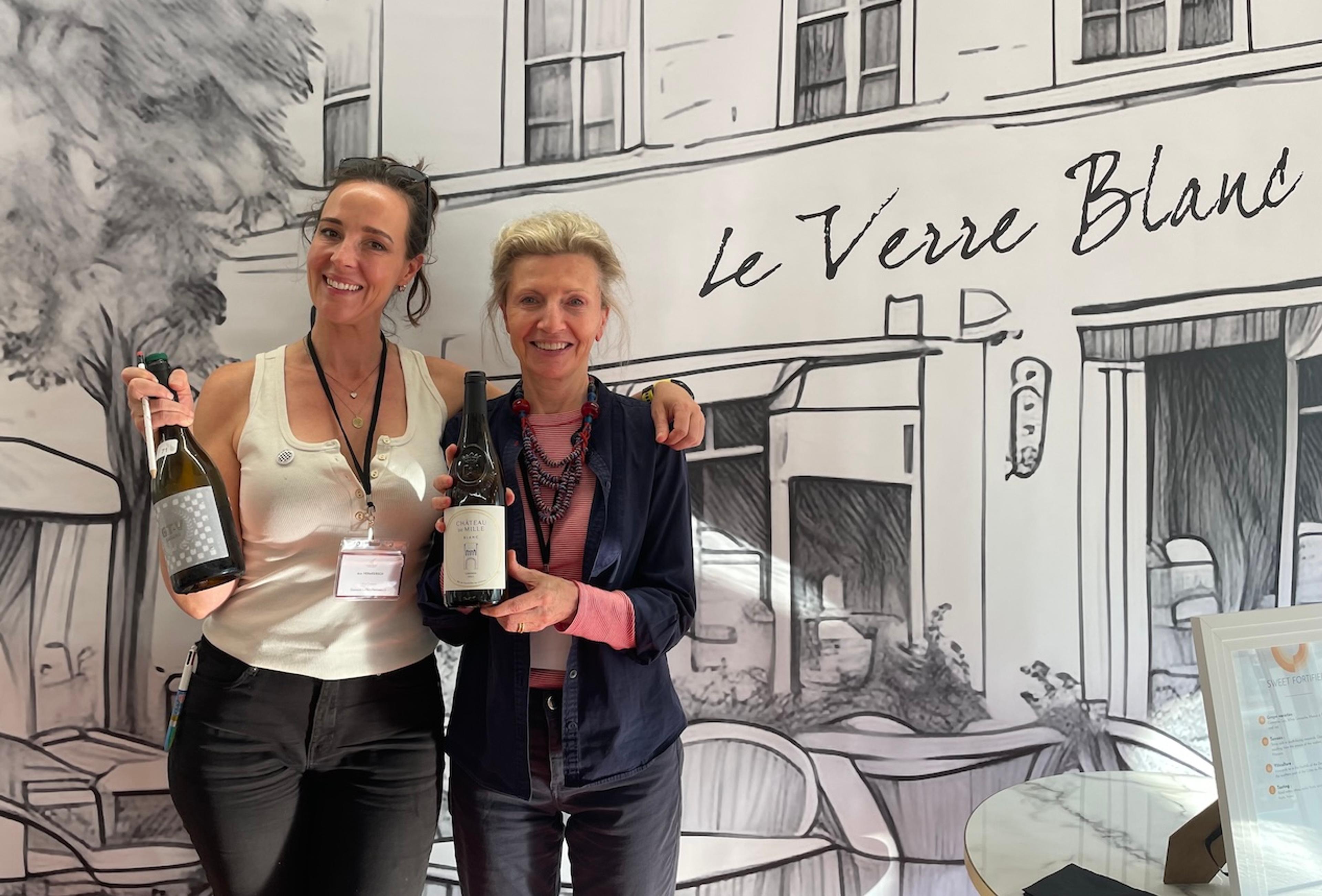
Amandine Dussere, the director of the AOC with Michel Guerber, a soil expert who helped with the preparatory work for the appellation status was able to give the group a good introduction to the region and its terroir
Stefan Botfield, who had some prior knowledge of the region, was struck by the value on offer: “It’s a fantastic appellation, but still very new so they are finding their feet, not in quality terms because that’s obviously there, but around finding a ‘house style’ to suit the region.”
He adds: “We found a very broad range of wines, while my impression is that the price point offers very good value. I would suggest that the wines are actually underpriced when compared with neighbouring regions, such as Rasteau or Gigondas: I think the Duché wines are coming in closer to a Côtes du Rhone price and that’s quite interesting because the total volume under vine here is clearly a fraction of the size.”
Good pricing
The price point was also highlighted by Nic Rezzouk: “The region was not on my radar before and, overall, we discovered around 20 producers offering varying styles, but consistent quality. The prices look really interesting: at between £15-£20 on the shelf, I think they are offering great value for money.I could see us bringing in a trio of the wines, red, white and rosé, perhaps with a rotation of different producers to add variety, so I think there’s definitely potentially a place on my shelves for these wines.”
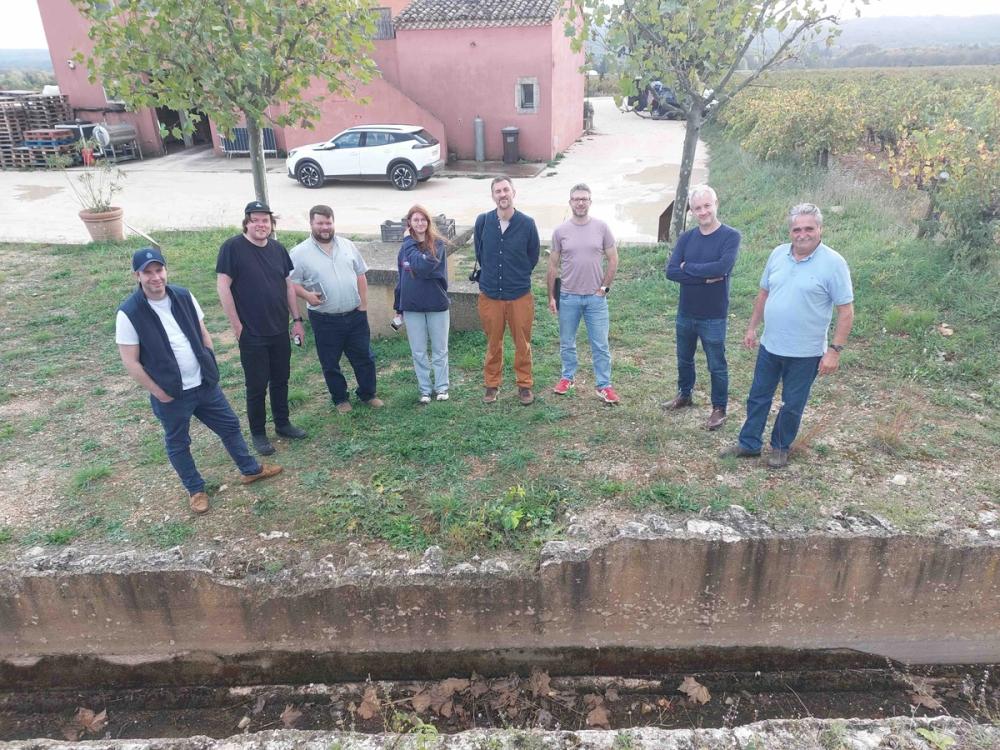
It was a chance for the buyers to mostly discover the region for the first time
For Rory Sutherland, it is the region’s mix of grape varieties that offers huge potential: “I think the appellation has controlled itself well; it became apparent after multiple visits that the strict usage of certain grape varieties, such as Viognier or Grenache in the blends, which I had feared might restrict producers, has actually led to them perhaps showing a little bit more of themselves.”
He adds: “I was also impressed by the high number of organic wines. The reds offered a different style than I might have expected from the Rhône, but they are gastronomic and I think there’s the potentialto give people a taste of the Southern Rhône with some edge, while, for the whites, the more mineral, energetic examples, especially those using Vermentino, offered huge potential to rival some of the popular wines such as Vinho Verde on shelves and by-the-glass lists. They need the right importers and marketing support to get these wines into the market because this is undoubtedly a region on the rise.”
Based on the intent interest of the buyers throughout the trip and mostly positive reaction to the wines they tasted, as well as the producers they met, this is a region of the Rhône Valley that won’t stay under the radar for long.
Buyers’ views
Nic Rezzouk, Reserve Wines
What was your knowledge of the region before going?
I only knew mainly about the main southern Rhône appellations. I had never heard of Duché d’Uzes before being invited on the trip. I did read Matt Walls couple of pages on it from his Wines of the Rhône book but that’s it. I was expecting big low acid whites and an array of high alcohol reds but I was always keep my mind open on what a region or a group of producers can do so I didn’t hang on to these preconceptions and generalisations.
What would be your overall summary of the wines and producers you met and tasted in terms of quality and styles of wine?
As a whole I think the quality was high, every single wine we tasted was good to very good. They are also, on the main, highly attractive commercially: good price, affordable, drinkable with personality. All the producers are genuinely passionate about the wines they make but even more about their region and their winemaking and agricultural traditions. They couldn’t have been more welcoming and generous. The whole thing combines into a great story to bring back and tell our customers whenever we can bring some of these wines over.
Which styles and price points do you think are best suited to your business - or another part of the UK wine market?
The mid-tier, which most wines tasted fitted in: €4 to 10€ ex cellar, the whites who have a great balance between richness, subtle complexity and freshness/drinkability and similarly for the reds, combination of purity of fruit, very fine grained tannins, often beautifully integrated, drinkability when young-ish but also worth cellaring for a few years.
I thought the wines where too much winemaking went into it were somewhat losing their identify, especially oak. Some wines need oak but the judging of how long, new vs old, and everything else can be perfected on some of the higher cuvées.
The best wines came from estates where a reasonable level of “hands-off” philosophy together with a super precise care of where the ferments are going and how the wine is evolving were the best wines.
Any thoughts on what you would like to see the producers doing with their wines to make them more competitive and relevant for the UK?
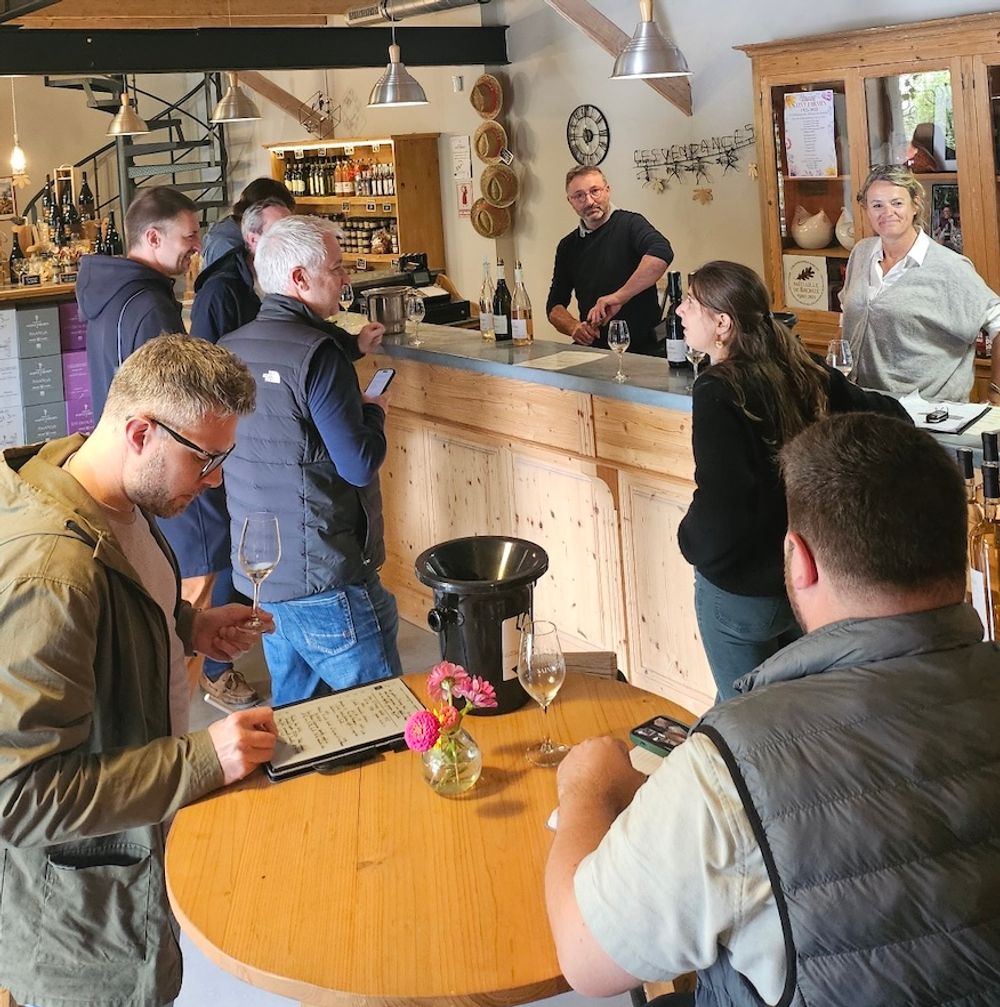
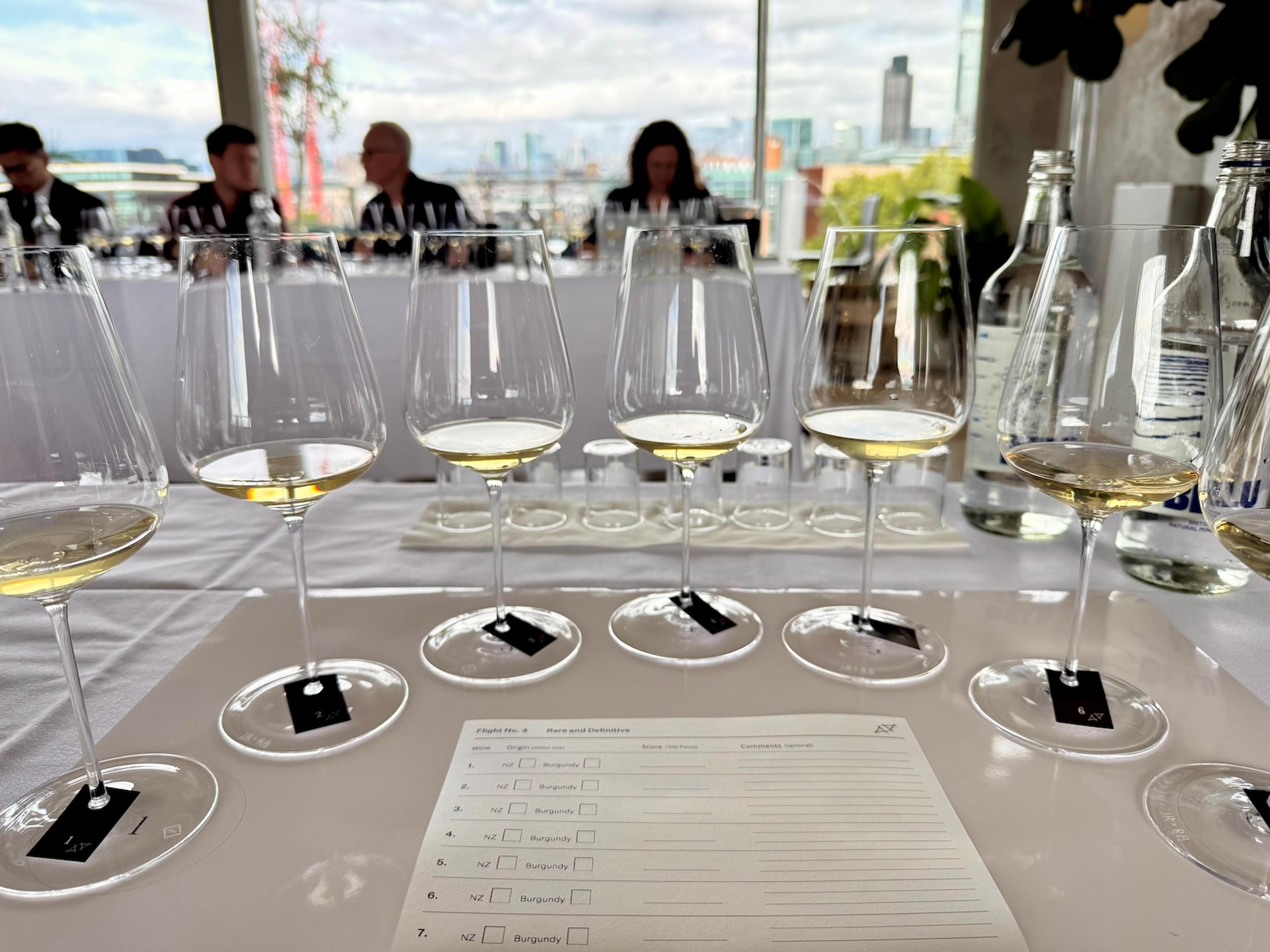
The buyers were able to taste a wide range of wines from across the region
Labelling is forever the hard nut to crack. There were some good labels and some that would just melt in with the rest of the retail shelves. Designing a label that is modern, attractive and informative is not easy and they need help from good marketing and design outfits to get there.
What is also valid for the rest of France: websites and social media storytelling.
Ideally we’d take all our customers to those regions so they can feel first hand what it’s like. But we can’t. So we need material, photos, videos, copy to support our own stories on the shop floor.
Stylistically for me: tannins management on the reds, those with very fine
integrated medium tannins are more likely to work. That said some of the more structured wines, to us winos, were also excellent but trickier to pitch to our audience.
For most wines I thought the pricing was good.
Dymtro Goncharuk
“Thanks to the price point the wines could be very useful for a pairing menu and also for by-the-glass lists. Duché d’Uzès offers the combination of a new appellation, to most customers, and also an unusual blend of grape varieties, especially with Vermentino, which could be a great selling point.”
He also highlighted the importance of good quality Viognier for sommeliers: “When putting together a tasting menu, I have the challenge that there are not so many high quality, fruity wines on the market; there is Condrieu, of course, but it is quite a small appellation with reasonably high prices, while most Viognier from the Languedoc does not offer sufficiently high quality, so I was very impressed by the quality of Viognier here.”
Rory Sutherland, Good Brothers Wine
Prior to visiting Duché d’Uzès, my knowledge of the appellation was somewhat lacking. I was familiar with better known neighbouring AOP, but I had never had the opportunity to try wines of the region. As my knowledge base was small, I tried my best to refrain from building an impression of the region as to assess it in its own right. I was excited to be venturing into unknown territory, and was particularly surprised and delighted by what I discovered.
Of the wineries we visited, it became clear that the character expressed by the producers differed greatly from my expectations. We started at Domaine Reynaud, who acquired organic certification in 2018, where it was immediately clear that the whites (2024 Cuvée Arpège) showed a welcome freshness by adding Vermentino to the blend - an addition that I felt gave immediate potential for the UK market, while Cuvée Elodie showed more finesse with broader honeysuckle notes.
Both whites were a fantastic introduction to the seriousness of the appellation, and made me stand up and take note.
The reds also showed very well choosing to express a Syrah heavy blend (80% Syrah, 20% Grenache) in the Cuvée Pomeyron and I was fascinated to see examples of both 12 month and 18 month ageing in barrique.
At Domaine Saint Firmin I was delighted to see Carignan blended into the Syrah heavy reds, and Roussanne into the whites alongside Viognier & Grenache Blanc - I was happy that even with 20% Roussanne, in Cuvée Ariane (and with eight months of oak ageing). It still managed to exhibit lightness and freshness, which didn’t feel dependant on the Grenache Blanc - a very appealing style.
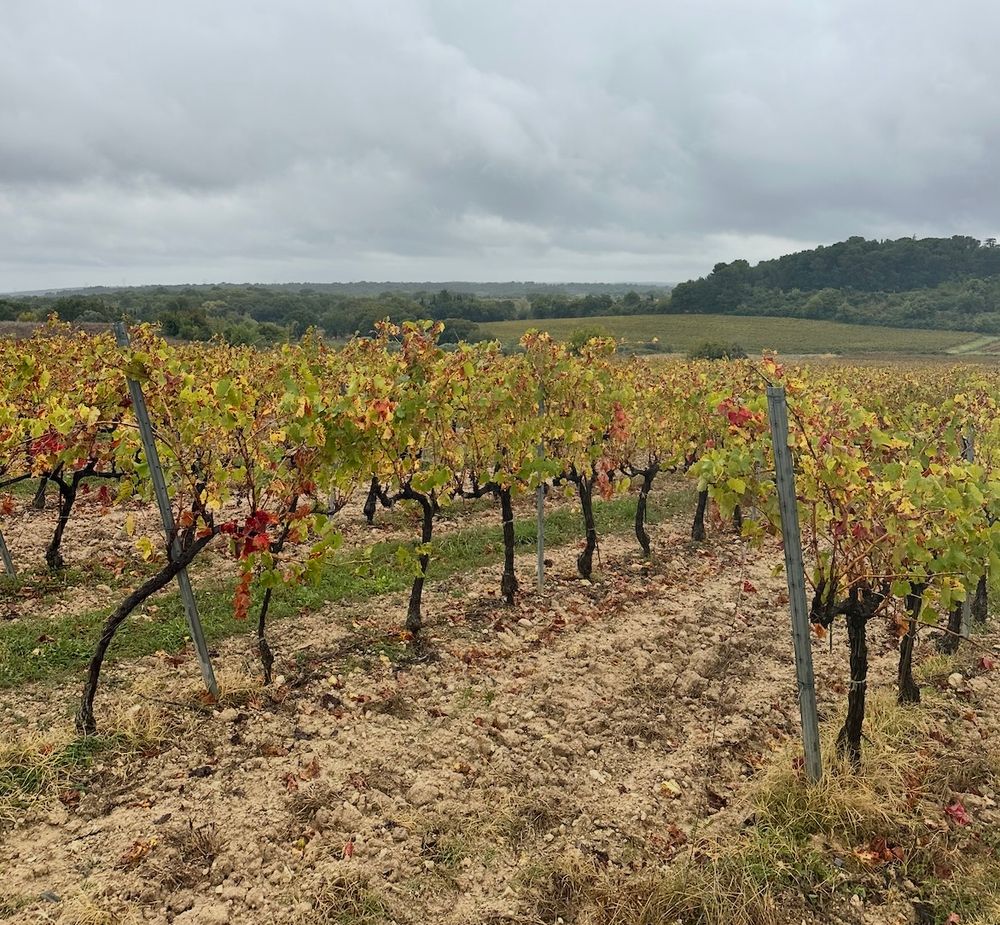
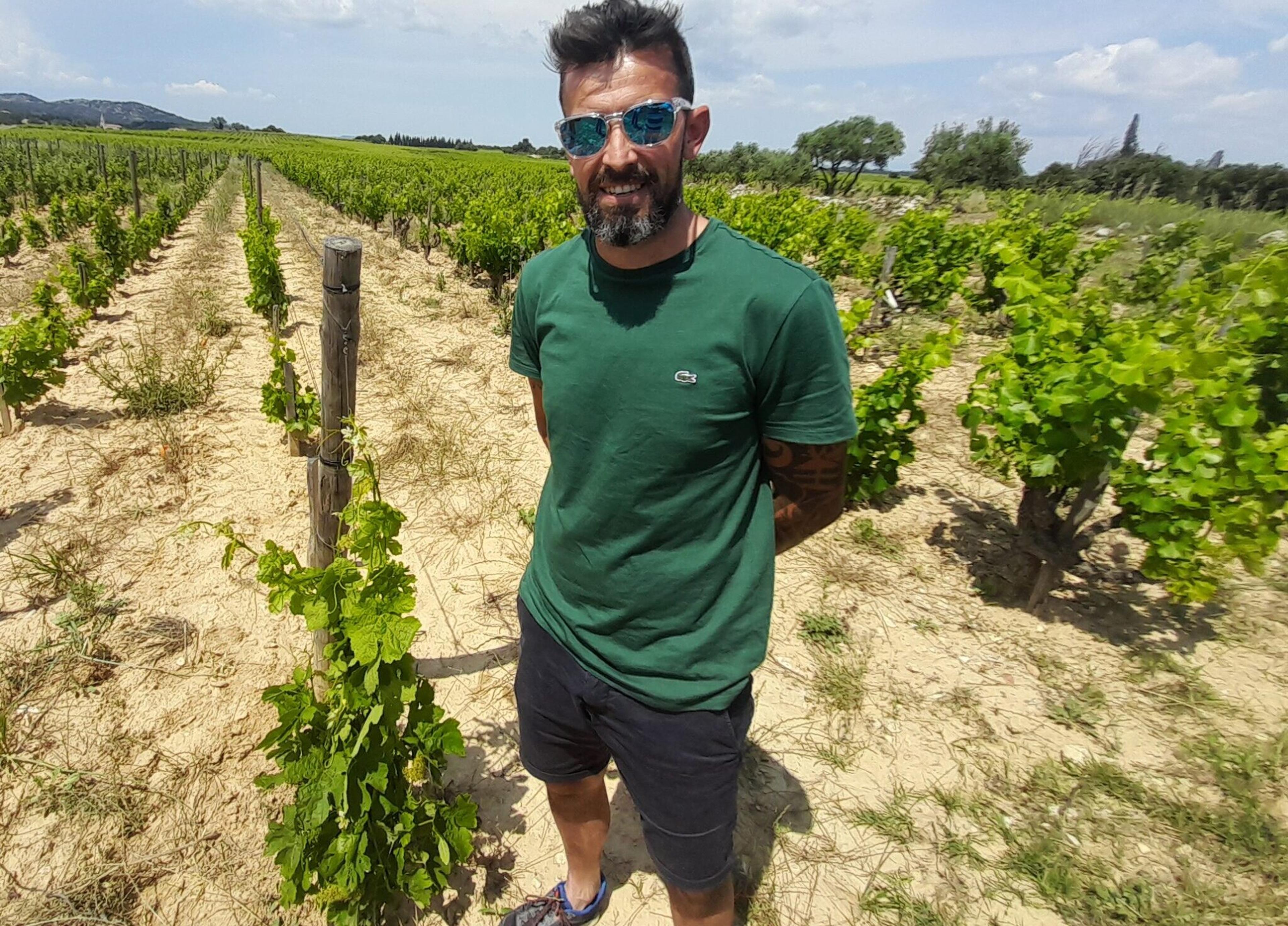
There is a lot of organic and biodynamic viticulture and winemaking in the region
Duche d'Uzès is a charming appellation with a fertile viticultural lifeblood. I was encouraged to see generational farming, co-operatives, and modern investment all on show, and for the most part there was a desire to farm organically (a very important factor in the UK retail market).
Modernisation has helped the appelation through use of mechanised processes - for example Domaine Deleuze-Rochetin can farm and process their harvest with just two people, whereas larger estates such as Château de Panéry have opted for technology in the vineyard during harvest to bring down costs.
The styles differ greatly from luscious Viognier, Roussanne & Marsanne oak aged blends, to light and fresh aperitif styles with the aforementioned addition Vermentino.
I felt the whites were very precise and while they allow the use of Ugni Blanc, we rarely saw it in the blend.
When it comes to the reds, two distinct styles were on show - Syrah heavy blends that benefited from oak or amphora softening, and Grenache heavy blends that utilised steel and fibreglass to give them more precision.
The rosé styles we tried were certainly on the right track, with most producers endeavouring to create style that isn’t Tavel, and isn’t Provence, but falls somewhere in between.
Highlights of the wineries would be Domaine Orenia - Les Vins Philippe Nusswitz, who impressed with his Orenia Blanc, and Orenia Rouge. The price point for these wines is incredibly competitive and I feel they would work well in the UK market.

Journalist and podcast host of the Drinking Hour David Kermode was able to co-host the buyers trip and represent The Buyer
Domaine de l’Aqueduc showed some serious potential for ageing on the Cuvée la Garrigue de Bornègre, and the price on this cuvée is seriously appealing for collectors.
I will be monitoring the wines of Thomas Faure - Domaine des Lys. He has two appelation reds that were showing fantastically well (Librotte, Duché).
Finally, I think Sarrazine of Domaine Deleuze-Rochetin would be interesting to look at for summer 2026 ‘chilled red’ drinkers.
I wouldn’t want to suggest the producers change anything regarding what they are doing. I made the mistake of misunderstanding the region until the second day, and I was concerned with what appeared to be constraints on blending proportion in the production of the AOP wines.
After an enlightening afternoon speaking to Philippe Nusswitz I realised very quickly that the region possesses the potential for uniqueness of character due to a small combination of factors. Firstly, it’s size and topography lend it to vast diversity within a relatively small area, secondly it’s strict-yet-playful blending opportunities allow for creativity and personality to be exhibited, while still managing to maintain a recognisable style for the AOP.
Lastly, the history and pride within the region - I was encouraged to learn of domaines being handed through generations, while also meeting up-and-coming producers who were interested in pushing the techniques and styles forward, evident in the experimentation with vessels for fermentation and aging that we saw.
We had a conversation amongst the buyers at breakfast discussing how we would approach getting these wine into the UK market. The consensus seemed to be that spending huge amounts of money on marketing in the UK was not the right thing.
What the AOP have done by asking us to visit the region is exactly the right thing. I feel that each of us in the group left with a desire to get these wines onto our lists and starting the education of the AOP from there.
Once we can educate and develop traction on the wines, only then should marketing begin.
James Stillwell
Prior to the visit, I had a fairly clear idea of the styles produced in the region and expected that value would be one of its key strengths. However, I wasn’t aware of the AOP status before the trip.
Each producer we visited showed real pride in the AOP, and there was a strong sense of excitement and momentum within the region. The wineries clearly enjoy experimenting with varietals that perform well in their respective terroirs, even if they’re not yet permitted under current regulations. This experimental mindset seems key to preserving the distinctiveness and identity of Duché d’Uzès. The wines also share a clear stylistic thread, which will help strengthen the region’s reputation and build consumer trust in both quality and provenance.
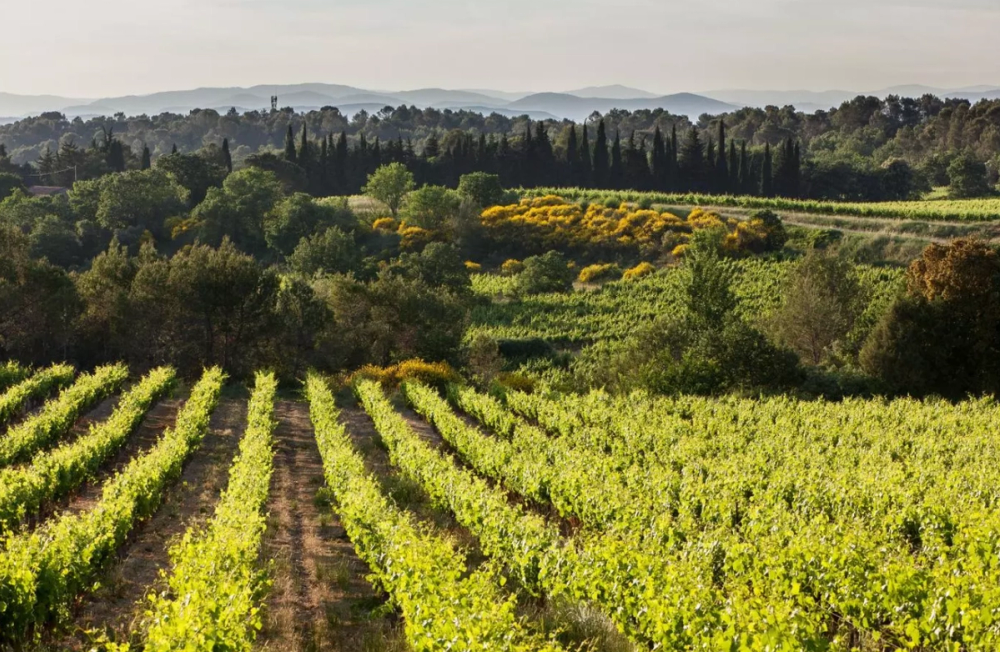
The region produces a wide range of quality red, white and rosé wines at attractive and premium pricing
There wasn’t a huge amount of variation in price point. However, when comparing to other Rhône appellations and New World wines, pricing remains an important consideration. From a wholesale perspective, a 14.5% ABV wine priced at €5 ex-works struggles to sell for much under £10 ex-VAT given current costs. Wines above that threshold will need additional market support to gain traction.
It was largely agreed that the white wines offered the most interest. There’s relatively little global competition for dry, aromatic, fuller-bodied white styles. Vermentino in particular stood out during the visit — it’s a variety that deserves wider consideration. Provence is seeing some success with its whites, though often at a higher price point.
Overall, Duché d’Uzès has a great deal to shout about, and I expect many UK wholesalers will be looking to add wines from the region to their portfolios.
Stefan Botfield, Daniel Lambert Wines
What was your knowledge of the region before going?
Unusually, I had fairly good knowledge of the region before visiting this time, due to having friends who live in the area. That said, despite visiting the annual Uzes wine fair once, I didn’t have knowledge of the AOP in any detail, only that I had tried a few producers previously and knew their quality level to be good. This visit was good in terms of formulating a deeper understanding of the AOP and its producers.
What would be your overall summary of the wines and producers you met and tasted in terms of quality and styles of wine?
We all agreed that the quality of the wines we tasted across the board was very high. Clearly the ‘taste every bottle, every vintage’ approach within the AOP quality check is working well as we were really impressed by the quality level across the piste.
The styles of wine are certainly accessible for the UK consumer, the reds having a lot in common stylistically with other Rhône areas so there’s definitely a relatability there.
Stefan Botfield says Duché d’Uzès has great potential but needs concerted effort to raise its profile in the UK
The whites I found really interesting, Viognier dominant which is a grape consumers ask for regularly and though the majority of producers played around with percentages within a Viognier, Grenache Blanc, Roussanne blend, I actually particularly took to the few that were producing Viognier, Grenache Blanc, Vermentino, the latter of which gave the overall blend a real lift and freshness.
Which styles and price points do you think are best suited to your business or another part of the UK wine market?
In terms of styles, I think the reds need to be balanced in terms of their tannin structure, but generally are all pretty commercial, the whites work well with the Vermentino and I think may be stylistically better suited to the UK market than those blended with Roussanne.
Price-point wise I would like to see reds retailing in the UK at £20-£25 and whites at £15-£20. This would bring them in line with other smaller and less known Rhône appellations and I think is reflective of the current quality level.
Any thoughts on what you would like to see the producers doing with their wines to make them more relevant for the UK ?
The UK market is a very progressed and very competitive market. In a declining market, the Rhône has so far been resilient in terms of its UK sales, but unlike the domestic market it competes with market share from not only its other European neighbours but from wine growing regions globally.
The market therefore needs support. Making an initial sale is one thing, but building a brand identity in the UK - either for the individual chateaux or for the AOP, is quite another.
Duché D’Uzes is so far largely unknown as an appellation even within the UK wine trade itself let alone with the general public. First steps seemingly would be working alongside good UK agents, marketing plans would need to be implemented starting with engagement within the trade (competition entries, press coverage, tasting opportunities etc) to properly seed this new AOP within the trade, alongside regular trade visits to the AOP to build knowledge within the UK trade.
* To find out more about the region go to AOC Duché D’Uzes website here.