
Canada is a much-overlooked wine producer, despite the often-exceptional quality of its winemakers and wines. Aside from the UK’s always enjoyable annual Wines of Canada tasting, at the Trafalgar Square embassy, there are little, or no, trade events specifically for the country, although importers such as Liberty, Bibendum, Flint and Yorkshire Vintners do stock Canadian wines.
I had the good fortune to visit the country in early to mid-October, which, in many cases, was harvest time. The focus was on wines of Ontario and Okanagan, without overlooking the very good, particularly sparkling, wines from Nova Scotia.
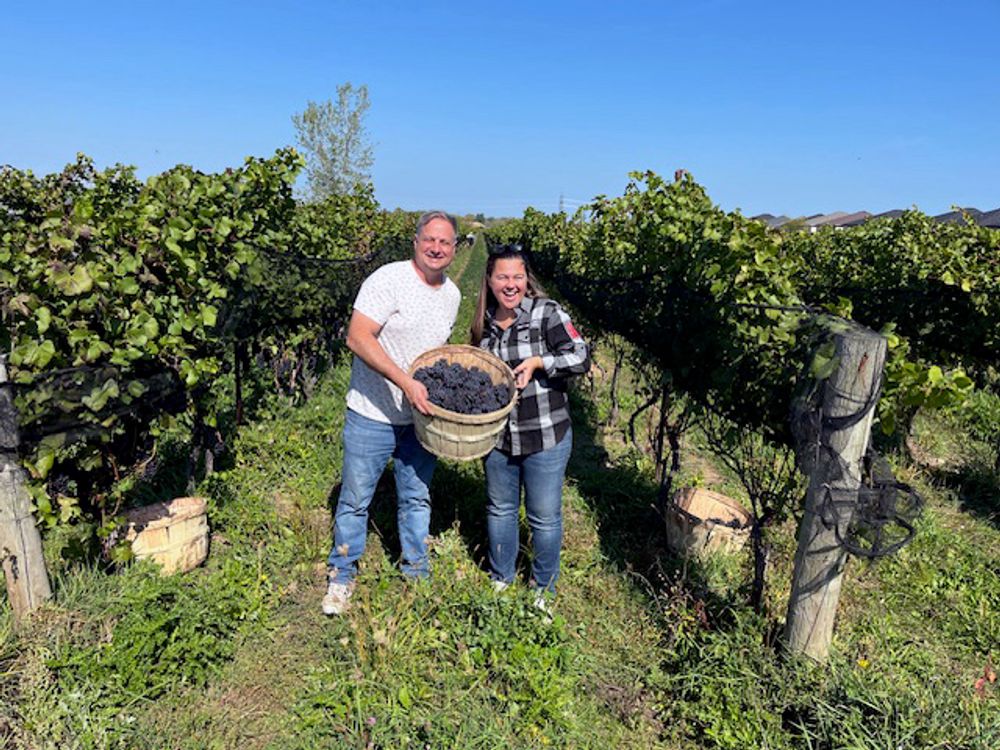
Ilya and Nadia Senchuk at harvest, October, 2025
Highlights of Ontario
Ontario is generally regarded as a cool climate region, with crisp, fresh wines, significantly influenced by the Great Lakes. Okanagan in British Columbia, has an extremely large diurnal range in temperatures, resulting in fruit-forward, yet fresh wines, with characteristic, textural finesse.
The journey began with a train trip from Toronto to the sleepy, but quaint village of Grimsby, then a short ride to Leaning Post Wines, run by the genial husband and wife team of Ilya and Nadia Senchuk.
Harvest was in full flow and the Pinot Noir was showing remarkably well, both on the vines and later in the glass. I tasted a wide range of wines with Ilya, including a rather light, but stylish Riesling 2023, from Grimsby Hillside and a Cabernet Franc 2020, which was powerful, but well balanced, with drying red fruits and peppery, savoury and herbal notes.
Best in class was the Chardonnay Senchuk 2022, which Ilya aptly described as “combining stony, rocky minerality, with intense power and age-ability, but still moderate ABV.”
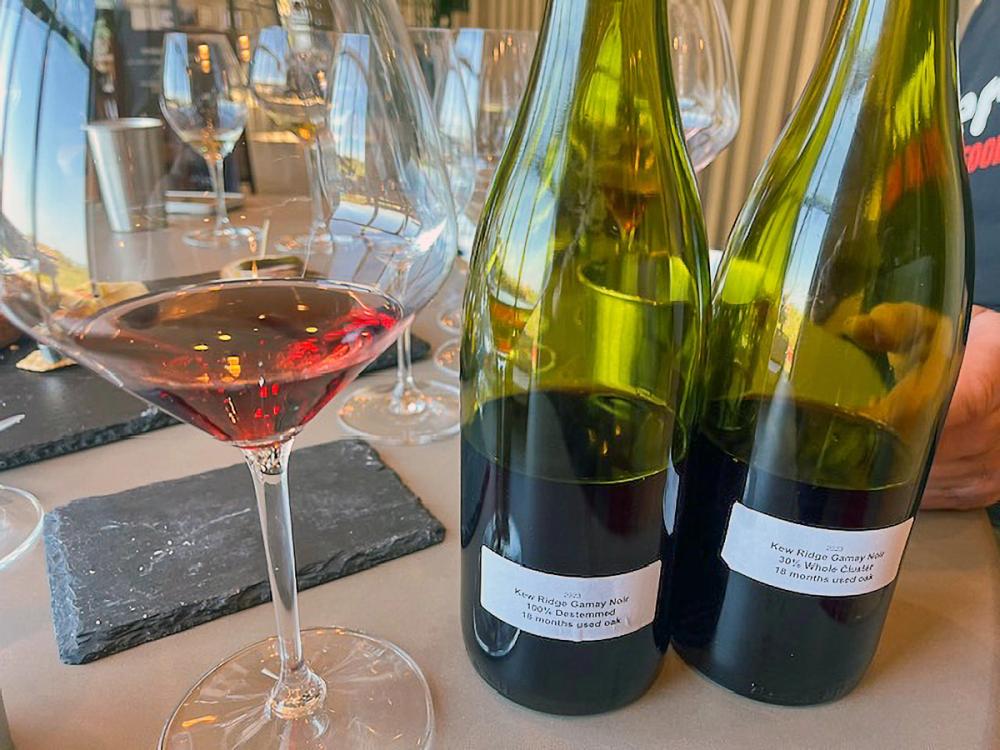
Kew Ridge Gamay from sample bottles at le Clos
Classic Burgundy varieties
Dom le Clos Jordanne was the next stop which has recently been revitalise and modernised, after an initial Burgundian/ Canadian collaboration some 25 years ago.
The estate is situated in Beamsville Bench, Niagara Peninsula and is overseen by the ’force of nature‘ that is the inimitable, Thomas Bachelder.
I was joined for the tasting by Andrea Peters, the senior PR manager for Wines of Ontario.
As well as the textural elegance of le Grand Clos Chardonnay 2023 and le Grand Clos Pinot Noir 2023, the rather exciting discovery was a Pinot Beurot 2023, the Burgundian name for Pinot Gris. This was crisp, fresh and tropical fruit-forward, with very well integrated oak. Andrea Peters was also enchanted by the wine commenting “it has a quirky freshness, yet an underlying complexity.” Proof positive was that we both bought a bottle!
We were joined mid-tasting by Thomas Bachelder himself. We had a quick tasting of two 2023 Gamay Noirs, both from Kew Ridge, still from the sample bottles, which were very fresh, but oozed potential.
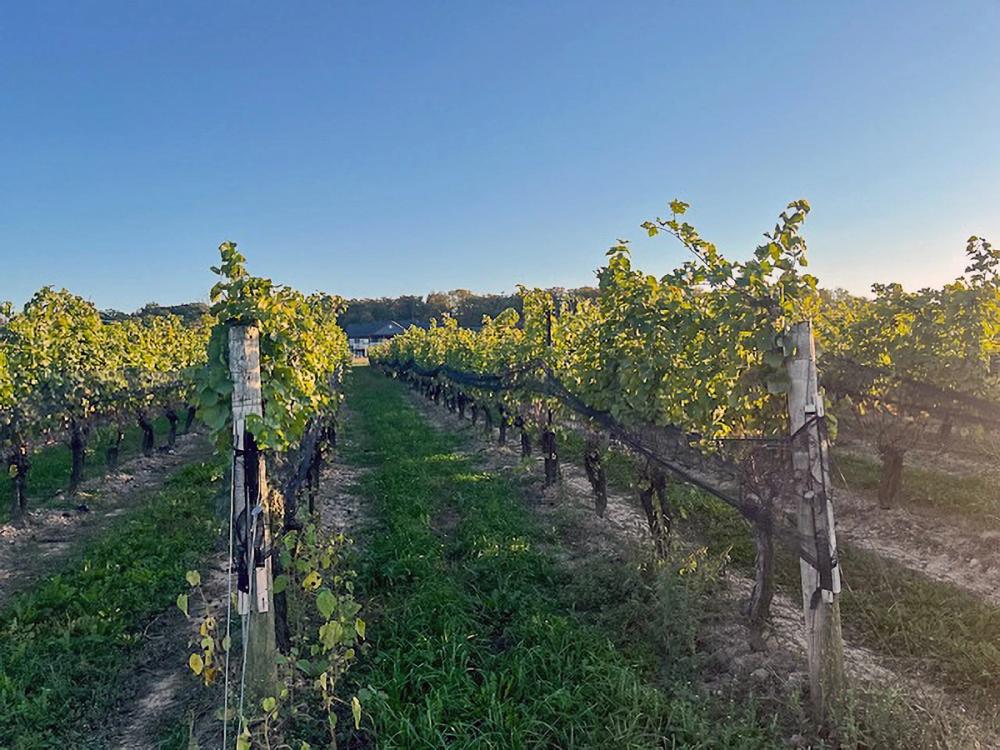
Bachelder's Twenty Mile Bench vineyard
Bachelder and I then went on a grand tour of the region, highlighting the plots where the Beurot, the Grand Clos and many of the Bachelder fruit is grown, including Twenty Mile Bench.
Upon return to the winery, the ‘driving force’ of the tasting room, Mary Delaney (Thomas’ wife), had left a wonderful selection of cheeses and charcuterie, to accompany the many Pinot Noirs, Chardonnays and Gamay Noirs.
Bachelder is passionate, devoted to terroir and bringing a Burgundian quality to Ontario and its environs. Among a host of terrific wines, the Old Eastern Block, Lowery Pinot Noir, 2022 and the Wismer Wingfield Single Vineyard Chardonnay, 2022 are two to note.
Premium boutique Niagara
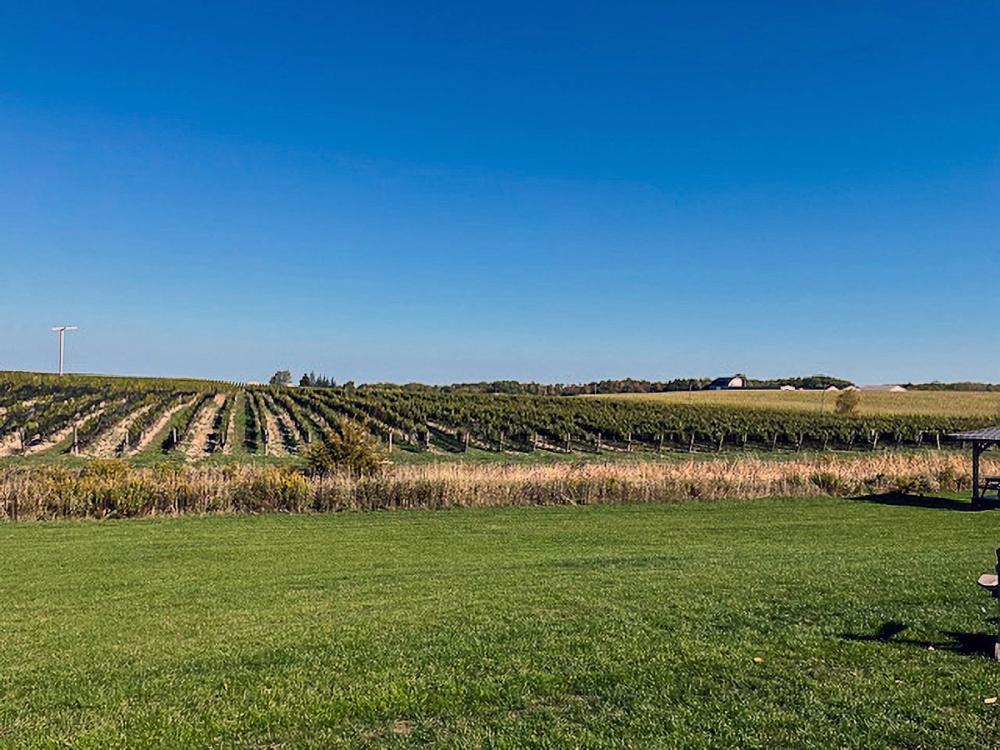
View of the vineyards from the terrace at Wescott
Westcott Vineyards was next on the agenda, kindly recommended by Andrea Peters. It is a boutique winery, situated in Jordan, Ontario. The main winery was constructed as recently as 2012 by the husband-and-wife team of Carolyn Hurst and Grant Westcott. It has a beautifully appointed tasting room, alongside an inviting dining area.
A comprehensive tasting began in style with the Brilliant Sparkling Rose (100% Pinot Noir), with redcurrant, raspberry, salinity and toasty notes.
The Reserve Chardonnay 2023 was another highlight with atypical tropical fruits and a creamy, textural complexity, a fine accompaniment to East Coast oysters, with a seasonal mignonette. Also worthy of note is the Block ‘76 Chardonnay, 2023, which, similar to many Semillons, has great complexity and exceptional age-ability.
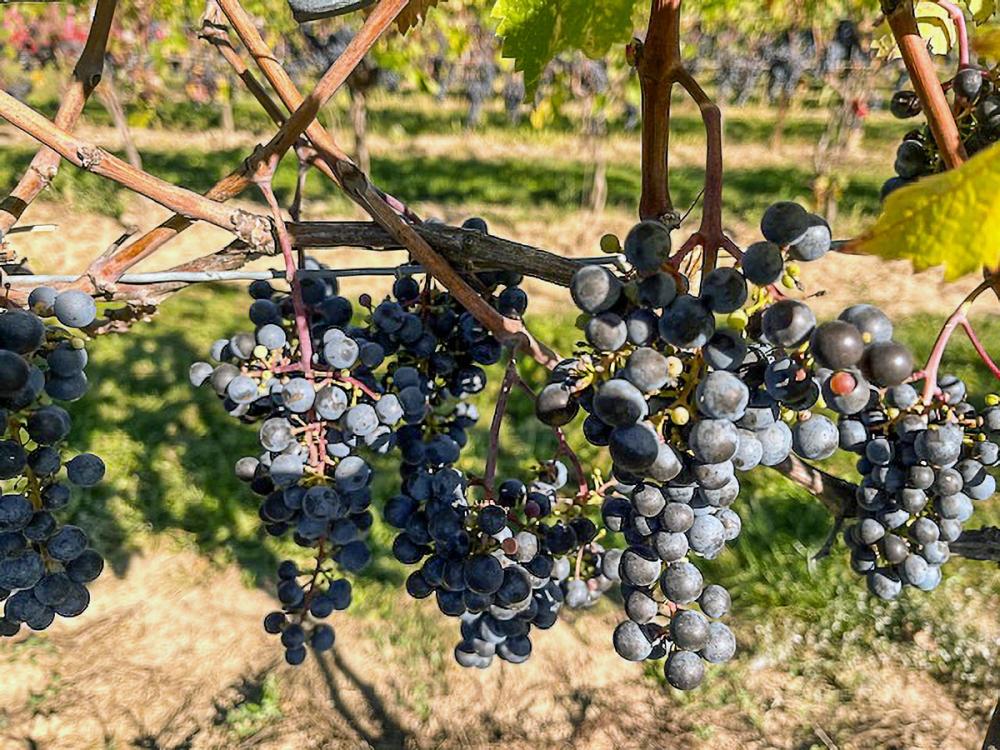
Ready for harvest at Bella Terra Wines
Long-established Niagara
Bella Terra Vineyards was the next stop, situated in Four Mile Creek, Niagara-on-the-Lake. It was established over 50 years ago by the Puglisi family and I was greeted by the current retail manager, David Puglisi.
The estate has a vast array of wines, including Riesling, Fume Blanc, Ice Wine (Cabernet Franc) and Cabernet Sauvignon. The standout, however, was the 2020 Meritage, which is a typical Bordeaux blend, with Cabernet Franc to the fore. It is full of frontal red and black fruits, with spicy, savoury and eucalyptus notes. Although approaching 15% ABV, it remains well balanced and would be an ideal match to pan fried venison in a red wine jus.
Aiming for super-premium
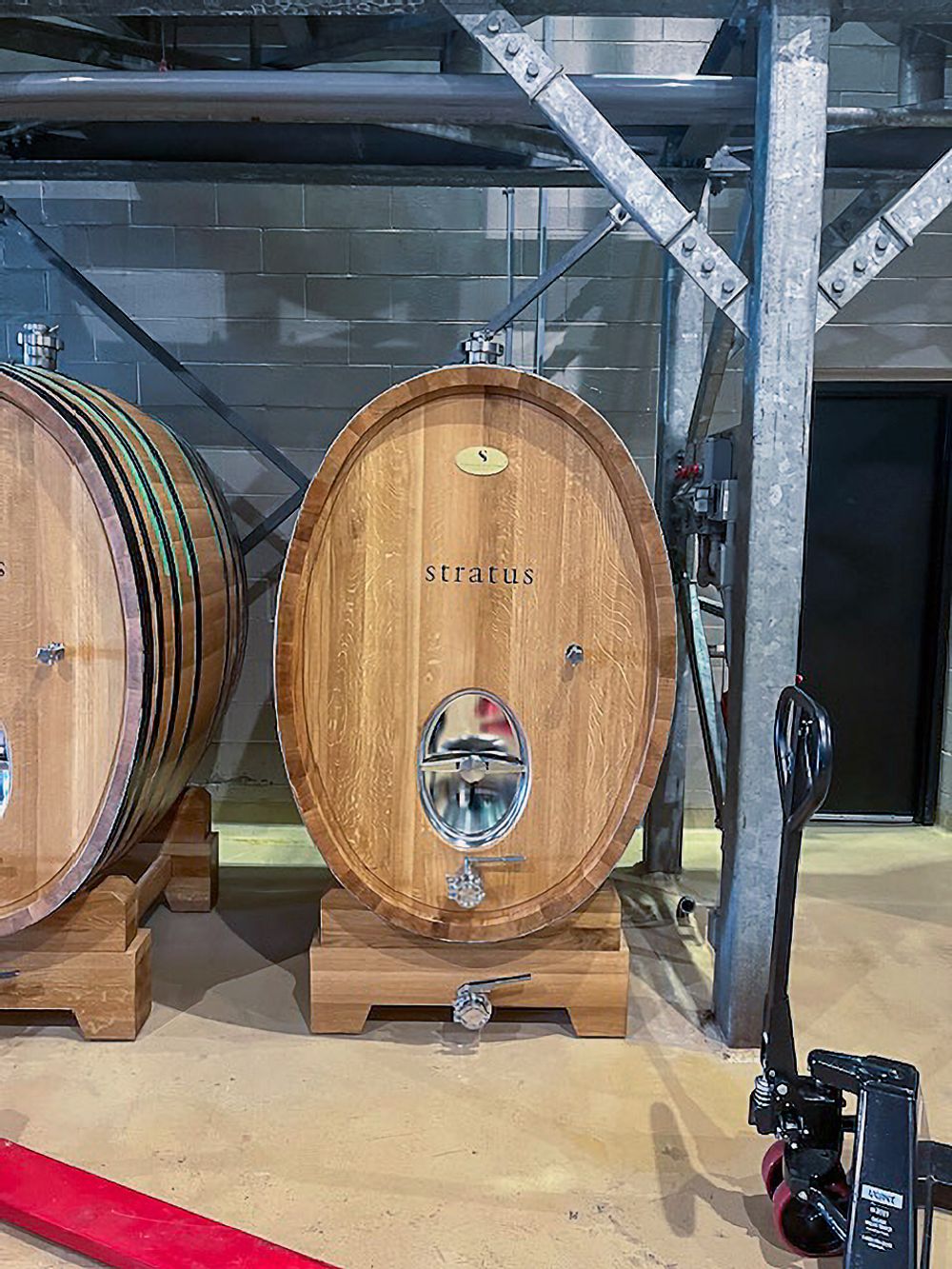
Niagara-on-the-Lake was the location for the next visit - Stratus is a state-of-the-art establishment, with great efforts being made to balance innovation and sustainability.
The unique location has the advantage of being close enough to Lake Ontario, to have protection from early autumn frost, yet far enough away (from the lake) to be able to make a diverse range of wines (not conducive to other parts ofthe region), including ten red and six white varietals.
I was hosted by the charming general manager, Suzanne Janke, who had been at Stratus for some 20 years. The place has left an indelible mark on her, exemplified by the comparative tasting of the flagship Stratus white (a blend of Chardonnay, Sauvignon Blanc, Viognier, Semillon, Gewürztraminer and Riesling) from 2007 and 2023 respectively.
Janke commented about the older vintage: “I remember this wine in my early years at Stratus and have grown up with it by my side. 2007 was such a ripe vintage at the time. The then winemaker thought the wine would age for seven years, but I am delighted it continues to improve.”
I also tried a rather excellent Semillon 2021, which had good complexity and a honeyed vibrancy with well-integrated oak. Other highlights were a 100% Petit Verdot 2020, a white label Cabernet Franc, 2022, made in amphora and finally, the flagship Stratus Red 2021, an assemblage of predominantly Bordeaux blend grapes, which Janke correctly described as “captivating the Stratus philosophy of diversity for complexity.”
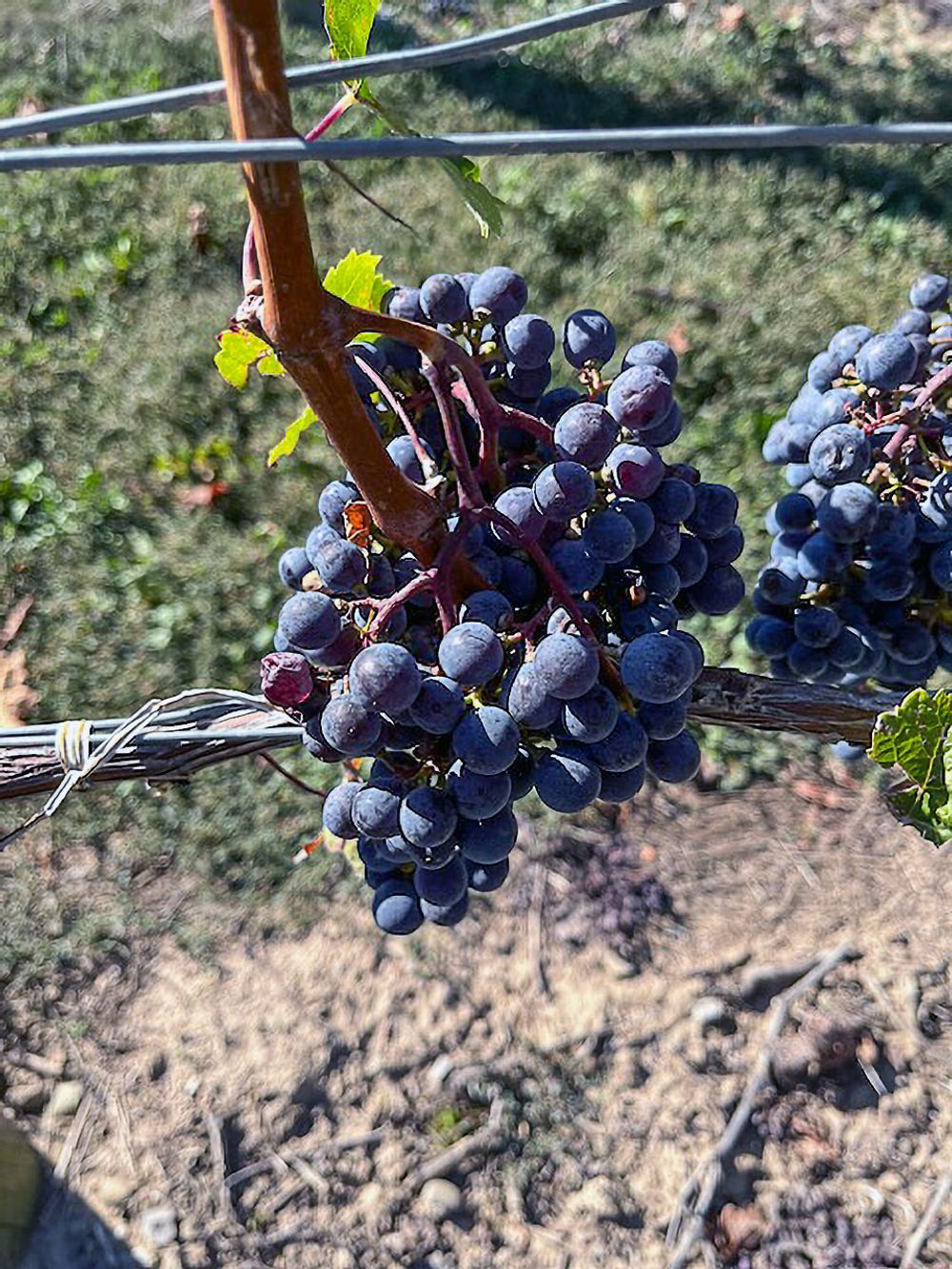
Cabernet Franc at Cave Spring
Riesling pioneers
The final stop in Ontario was Cave Spring Vineyard, situated on the Beamsville Bench. Tom Pennachetti and his brother, Len, have retained their father, John’s, dedication to this terroir, making sustainable wines with the protection of the site's singular environment a high priority. The winery is widely regarded in the Niagara Peninsula for the excellence of its Rieslings, and this was confirmed at the tasting, with the 2020 CSV Riesling particularly crisp, showing a great balance of well-integrated acidity and textural richness from maturation in neutral oak. The Gewürztraminer 2023 was great value with typical floral, rose petal and lychee notes. Of the reds, the Cabernet Franc 2023, on the vines and in the glass, was showing very well indeed.
Pennachetti was a very personable host, and it is clear he, the family and winemaker Gabriel Demarco retain an indefatigable commitment to producing only wines that are authentically representative of the quality of their terroir, one of the finest extant in the Niagara Escarpment.
Okanagan British Columbia
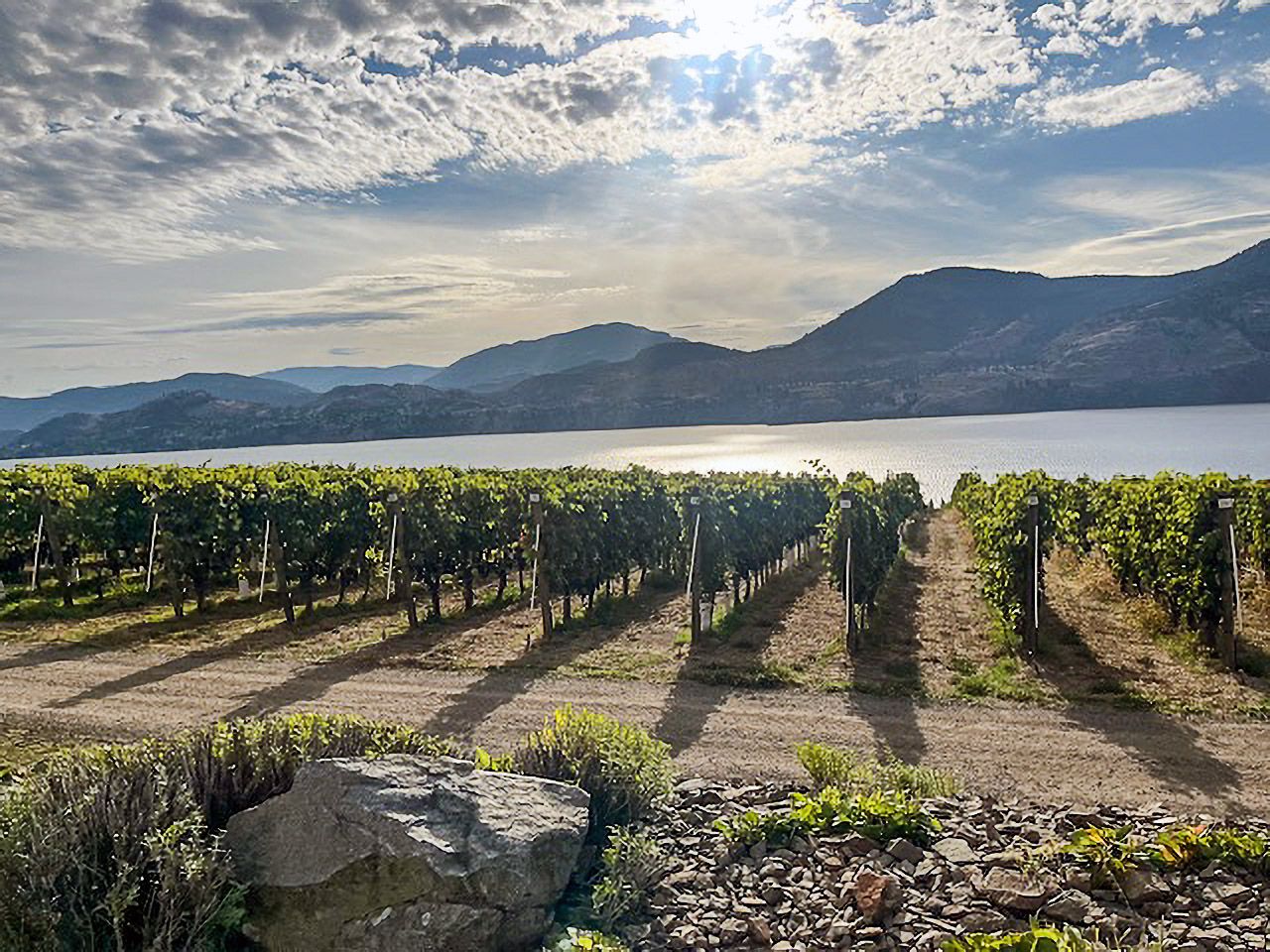
After a five-hour flight from Toronto to Vancouver and a day exploring the city, it was time for an early morning flight to Kelowna, in the Okanagan BC. A one-hour flight (or 12 hours by road) followed by a trip of another hour, or so, to the picturesque Poplar Grove Winery, situated on the outskirts of Penticton.
Dr Tony Holler was the genial host and we were joined for lunch and tasting, by John Skinner, proprietor of the neighbouring, Painted Rock.
A lunch with accompanying wines was a great introduction to the region. The Chardonnay 2023, blended from four different estate blocks, went particularly well with Hokkaido Scallops and a bacon Vinaigrette. Another winning pairing was the Beef Carpaccio, in Black Truffle and Crostini, with the Cabernet Franc 2020 (actually has a little Merlot, Cabernet Sauvignon and Malbec in it too), which tastes well now, but will surely age like a fine Bordeaux.
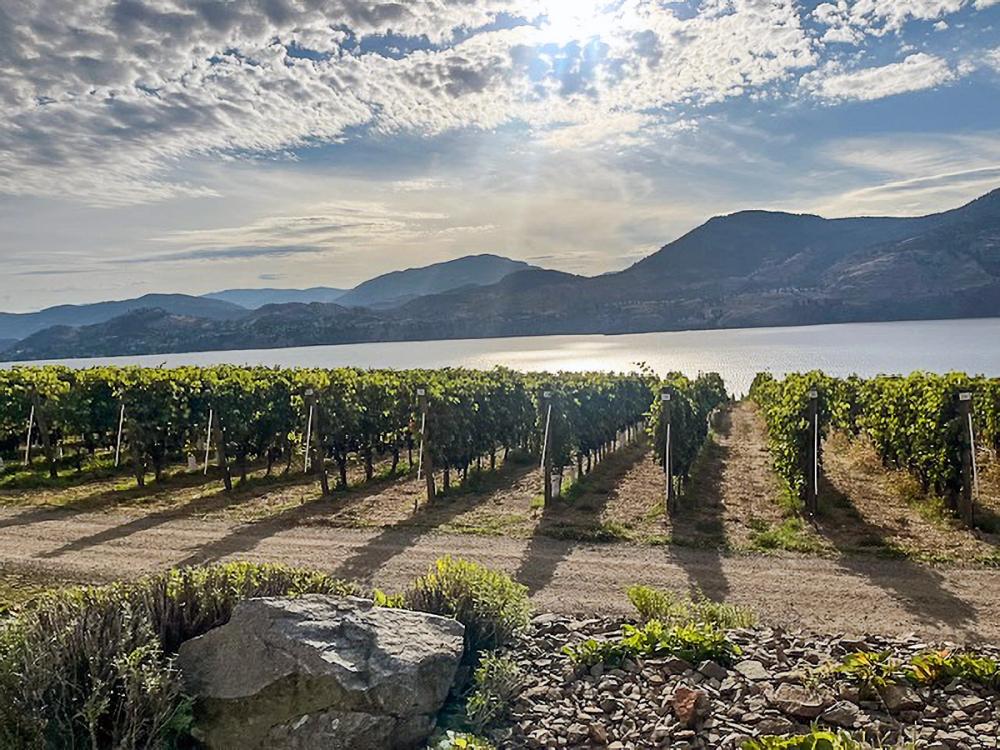
Stunning scenery at Painted Rock
Painted Rock Estate Winery
A short drive from Poplar Grove was the rather spectacular, Painted Rock Estate Winery. The state-of-the-art tasting rooms and beautiful terrace made for an enjoyable tasting, with the owner, John Skinner. He retired from his job as an investment banker, at the age of only 39 and over a quarter of a century later, he can be immensely proud of the stunning vineyards and the premium wines being produced here.
Skinner had the wit and wherewithal to hire consultants to establish the winery, including the renowned Bordeaux expert, Alain Sutre and, more recently, the recruitment of the increasingly reputable winemaker, Gabriel (Gabe) Reis. Skinner’s daughter, Lauren has assumed the role of marketing manager, ensuring that the family nature of the business endures.
Although Painted Rock makes an excellent Chardonnay 2023, the tasting was limited to reds only. One of the best was a rather stylish Syrah 2022, which was concentrated, with black fruits, green pepper, spice and eucalyptus. The real standout, however, was the flagship Red Icon 2021 (41% Merlot 23% Cabernet Franc,16% Cab. Sauvignon, 12% Malbec and 8% Petit Verdot). Aged in new French oak barrels for 18 months, it has all the characteristic complexity of any fine Bordeaux, allied to the finesse and structural elegance, reflecting the unique locality and terroir, not to mention excellent winemaking.
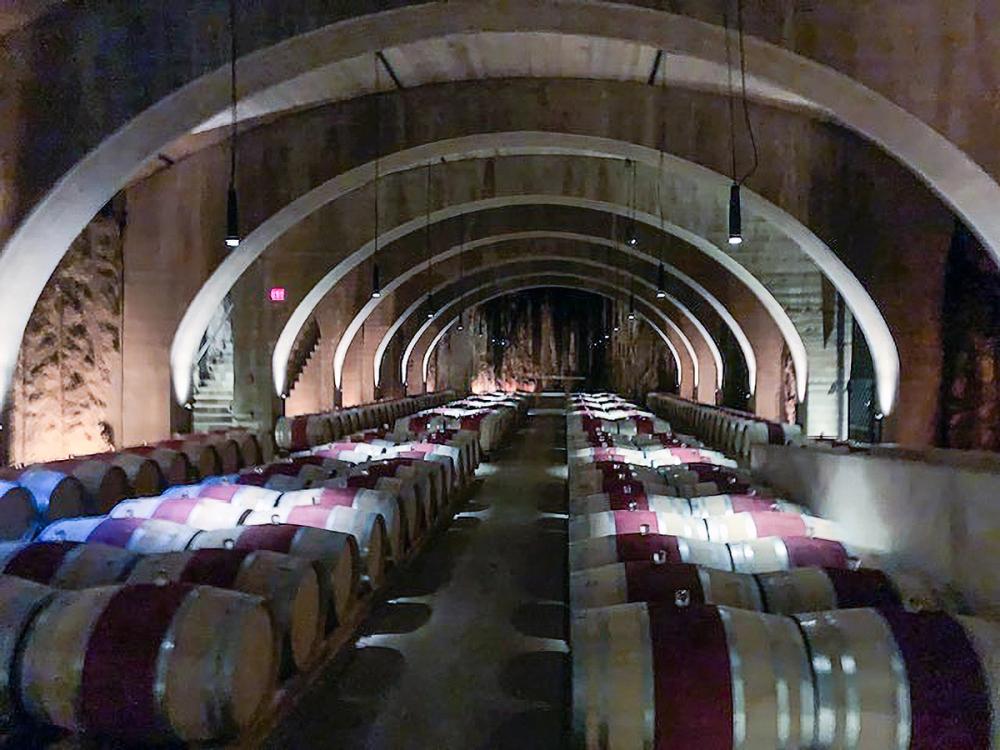
Barrel room at Mission Hills
Six times winner of winery of the year
Travelling back to Kelowna, the final stop of the tour was Mission Hill Family Estate. Founded in 1981 by Anthony von Mandl, it has developed into a multi award-winning winery, with modern architecture, characterful tasting rooms and, of course, high quality wines.
I was joined for the tasting by one of Mission Hill’s ambassadors, Magnus Lam. We tasted the full range of wines from the very basic, but commercial, Sauvignon Blanc (grapes imported from Marlborough) to the 100-point Oculus, 2020, described by Canadian wine specialist, John Schreiner as a ‘tour de force’. The wine is aged for 19 months in French oak, grapes taken predominantly from Osoyoos Vineyard. It is a classic Bordeaux Blend (49% Merlot, 24% Cab. Sauvignon, 22% Cab Franc and 5% Petit Verdot) and, as well as drying red and black fruits, cassis and spice on the nose, it delivers a textural elegance with soft, silky tannins and a rounded finish.
Mission Hill wines are divided into three categories, namely Reserve, Terroir and the super-premium Legacy Collection. The Perpetua Chardonnay 2022, and the Compendium 2020 (Bordeaux blend), are both fine examples of stylish, expressive, texturally elegant wines, for which Mission Hill has become renowned. As Anthony von Mandl intended, the wines ’show a sense of place…. stepping into a sanctuary that’s all about the kindness of wine.’
Mission Hill also has a fine dining restaurant with an interesting five-course tasting menu with matching wines from whatever level the customer desires.
Overall, Canada has plenty to be proud of, in respect of its rapidly developing and vibrant wine industry. I suspect the relative affordability of (particularly) their fine wines, will mean the UK and beyond will be seeing and sampling more Canadian wines in the foreseeable future.
Finbar Cahill is an experienced wine consultant who holds an Honours diploma in Wine, Gastronomy and Management and is a qualified Advanced Sake Sommelier.