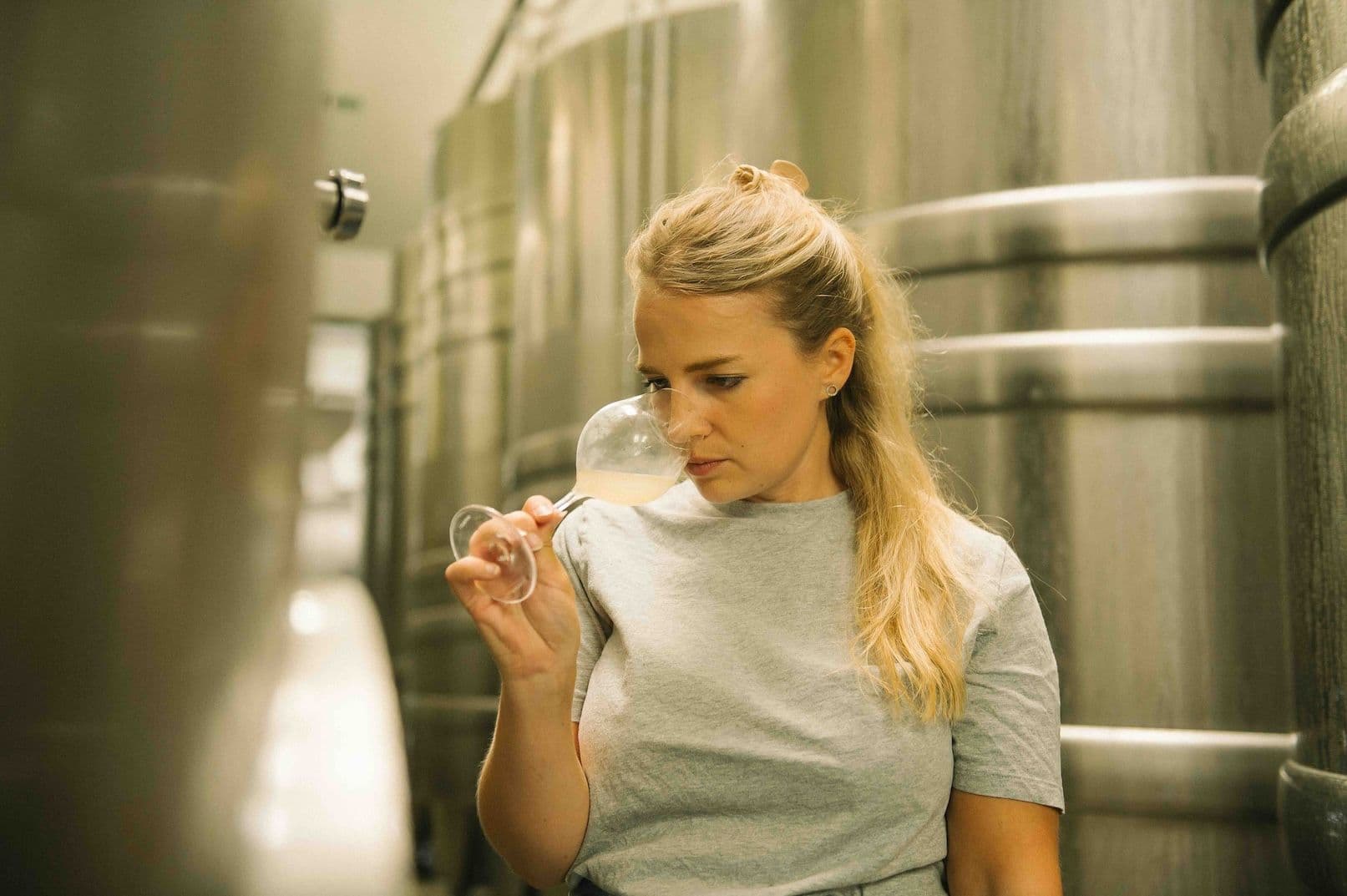

The oak-panelled Marlborough Room at 67 Pall Mall formed a suitably august backdrop for a tasting of Gusbourne’s portfolio of sparkling wines last month. In keeping with the upscale vibe, the wines were detailed in a slick, thick, monochrome-with-gold-trim booklet, typical of Gusbourne’s polished aesthetic. The surprising element was how many wines were listed inside it.
The event was to focus on the English producer’s fizz only, including the much-heralded Blanc de Blancs and the headline-grabbing prestige cuvée, 51 Degrees North. (Gusbourne also makes eight still wines, also from the three Champagne varieties and equally well-reputed, though not to be tasted today.) What is less well-known is the array of other curiosities that were lined up before us. As well as the flagship pair, we were to taste the Blanc de Noirs, several single-vineyard wines and two newish cuvées, across various vintages and formats.
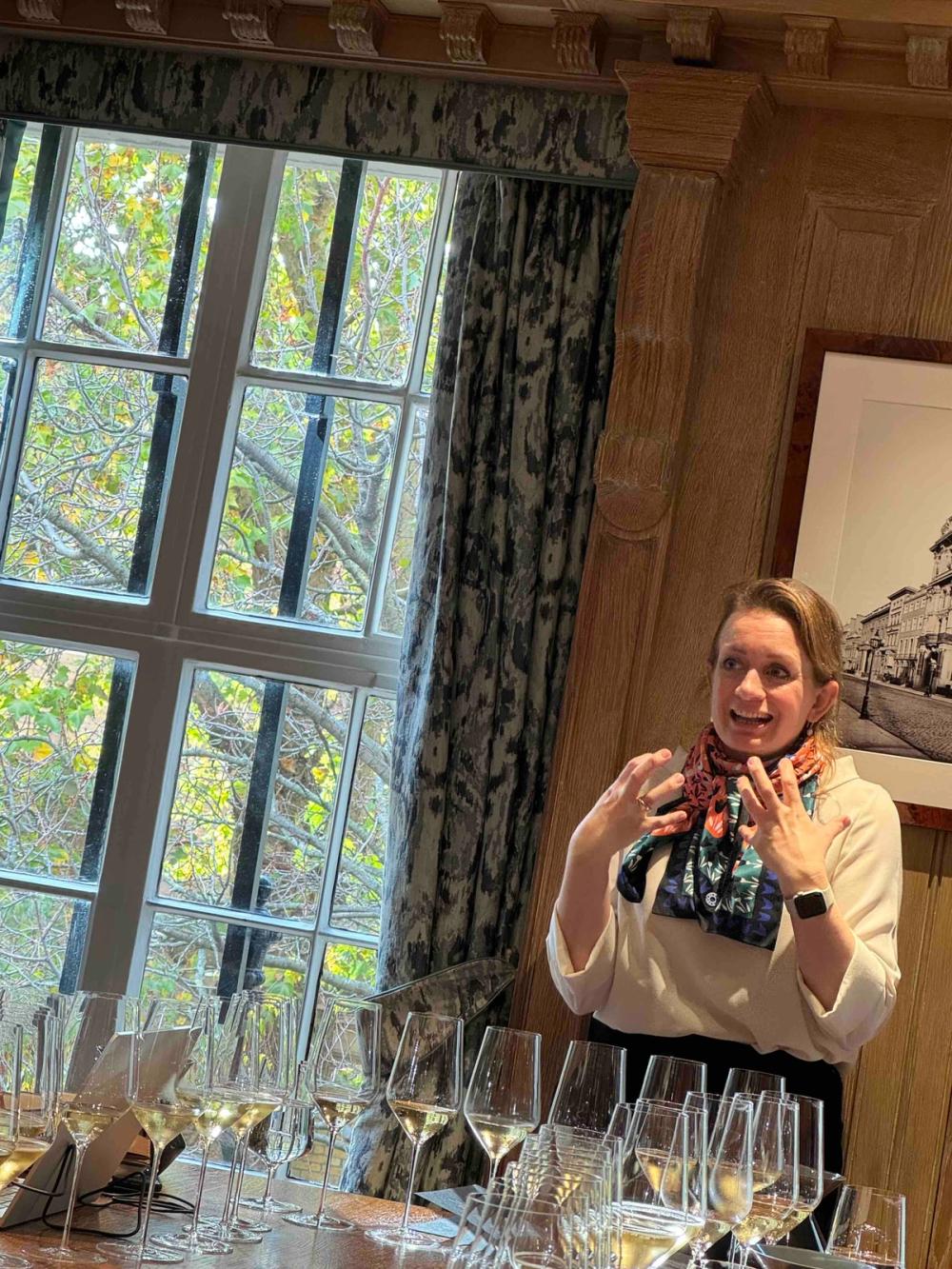
"I honestly don't think we need to [make a NV] because we're so fortunate in terms of the blocks and clones that we have." Laura Rhys MS.
Gusbourne’s USP is that, almost uniquely, it doesn’t produce a NV, dealing in vintage wines only (with the year annotated on its labels in words rather than numbers). Our host, the self-effacing Laura Rhys MS, Gusbourne’s ‘head of wine – communication, education and style’, is the face of the brand having joined the producer a decade ago, having been “blown away” by the quality and potential of its output at a time when she was struggling to persuade clients at La Trompette restaurant to even try English wines.
“The mere suggestion would elicit a sharp intake of breath,” she recalls.
Astonishing, then, to think that a decade later we would be sitting in the heart of St James’s tasting a range of single-vineyard English fizz and a £195 cuvée. Such bottlings don’t appear overnight, of course. Gusbourne first bottled a single-vineyard wine in 2017, keen to explore the diversity of its various vineyard sites. Founded in 2004, the producer uses only its own fruit, spread across 90 hectares. Its sites are split into various individual plots, comprising 40-odd different clones of Chardonnay, Pinot Noir and Pinot Meunier, all of which are picked and vinified separately.
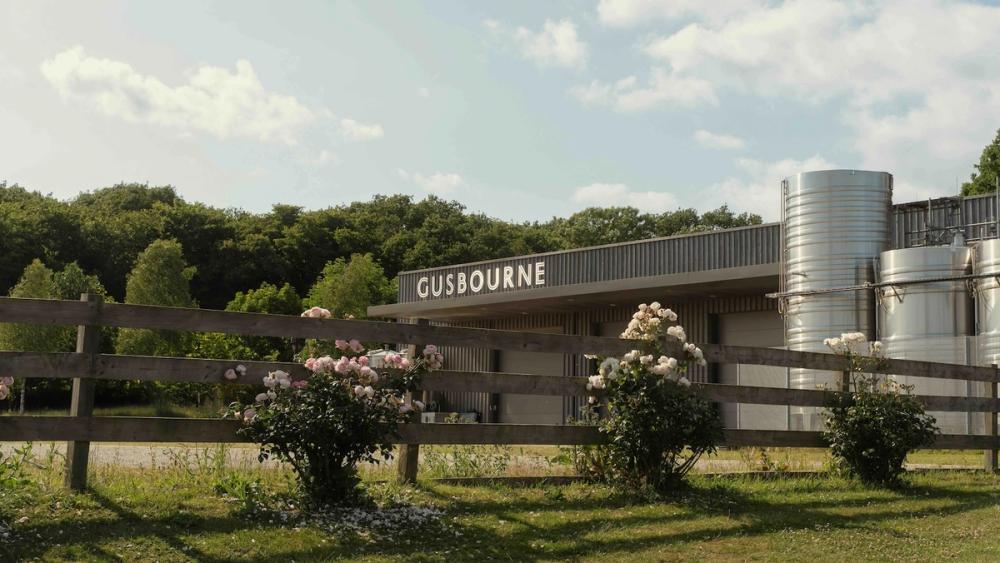
Gusbourne first bottled a single vineyard cuvée in 2017
Making the wines
Rhys explains the process by which each year’s releases are arrived at: “We have around 200 different base wines that we use to blend, and which we sit down and taste them in the new year after harvest. As well as the different plots and clones, these include different barrel ferments too. We'll look at them all separately and grade them, and sometimes we come across a particular base wine that has something about it that makes sense on its own. So we were like, ‘Wow, maybe we should start thinking about bottling some of these’.”
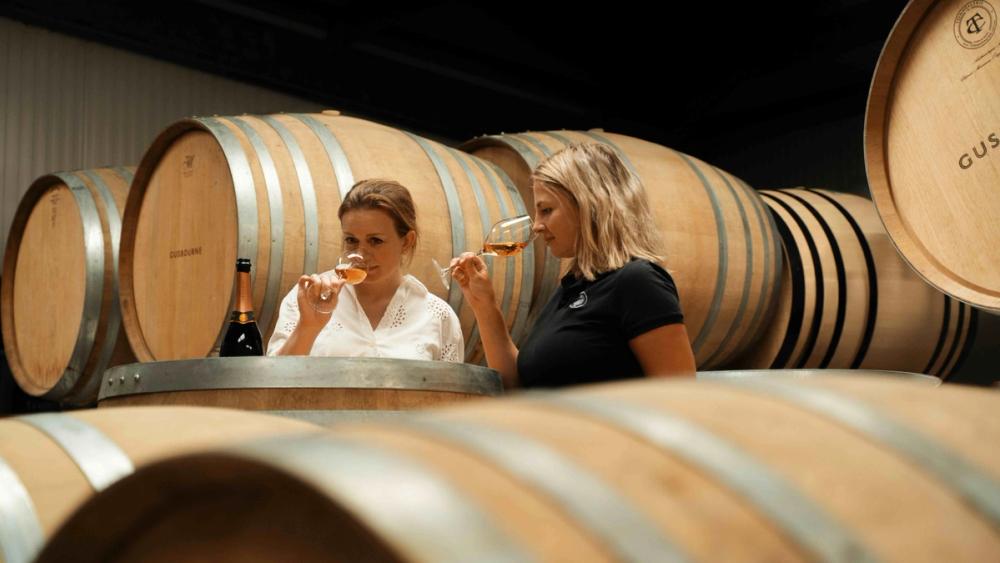
“The winemaking team – myself, our assistant winemaker, lab manager, head of operations, and Laura – taste everything, and we’re joined by some key people from marketing and sales." Mary Bridges (r)
Winemaker Mary Bridges – indisposed suffering from a horrendous cold on the day – told me a few days later: “The winemaking team – myself, our assistant winemaker, lab manager, head of operations, and Laura – taste everything, and we’re joined by some key people from marketing and sales. It's incredibly useful to gauge their feedback, since they’re so much closer to the market.”
There is then a second, more technically focused session, tasting the prospective new vintage wines alongside the most recently bottled vintage. “Having everything together with the previous release and current release makes for a great comparison.”
The single-vineyard wines change every year according to what shines. “So we've had vintages where we've only chosen two, while in 2019 we chose five,” says Bridges. Today we are tasting four – three from 2018 and one from 2019 – so as to show two from Kent and two from Sussex; a pair made from Pinot Noir and a pair from Chardonnay.
Among them is the Boot Hill Blanc de Blancs, from one of the warmest sites in Kent – the dense, rich clay lending a little more weight and texture. Then there’s the Heartbreak Blanc de Noirs, so named by founder Andrew Weeber not after the site’s Pinot Noir, but the fact that a crest halfway along gives vineyard workers the impression that they’ve reached the end of the row before it stretches out again, breaking the heart of the pruner.
Unveiling two new wines
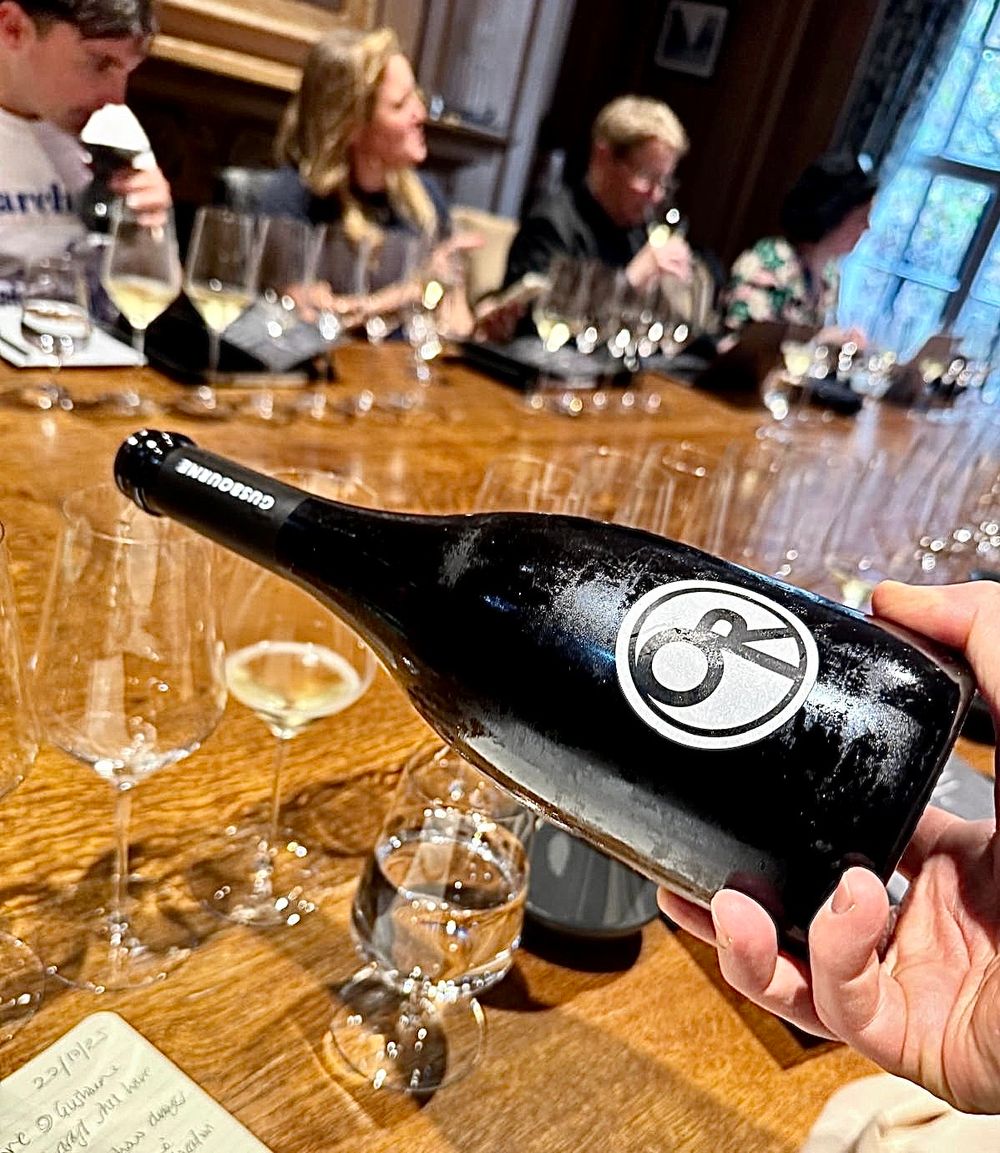
Beyond the single-vineyard sparkling wines, Gusbourne is taking the wraps off two new wines.
The Oak Reserve is fermented in a mixture of barrel types and sizes, from new 228l barrels to an old 4,000 litre foudre, for about 32 months, then blended and held in stainless steel for a while before ageing on the lees in bottle for a similar time. A first release all went to Norway (Gusbourne’s top export market), but the popcorn-tinged, toasty, nutty second release, from the ‘fresh’ 2019 vintage, will be more widely available.
The 2020 Agrafe, meanwhile – the brainchild of head of operations AJ Benham – is aged on lees under cork (rather than crown cap) throughout maturation, closed with a metal ‘agrafe’ or staple. Again, a small amount was made in 2019, but the citrus-, yuzu- and almond-infused 2020 is its main commercial release.
It all makes for a veritable smorgasbord of options, as the Norwegians might say. But amid an apparent glut of English wine on the market, is it too much, too soon?
Vintage versus non-vintage
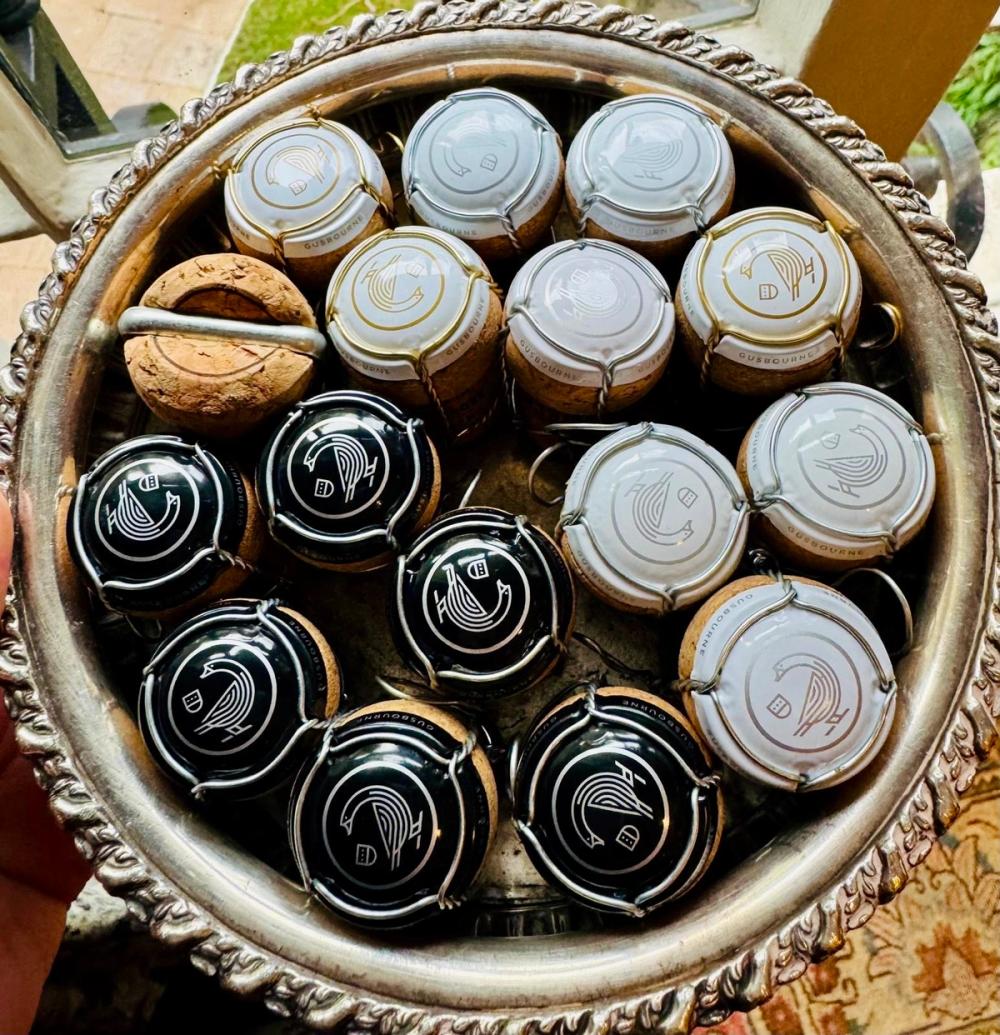
"You’re right, we do have a lot of wines at the moment.” Mary Bridges.
The single-vineyard wines are all made in fairly small quantities (some of only 500 bottles, with few running to over 1,000, amid a total brand production of just below 500,000) and mainly sold direct to consumers online or at The Nest, Gusbourne’s cellar door facility.
“A tiny allocation” goes to select on-trade accounts, says Rhys. “But you’re right, we do have a lot of wines at the moment,” adds Bridges. “They’re all good fun and a little bit different, but we never want to lose sight of the core range. I'm very aware that I’m the custodian of Gusbourne, and that’s what our future is based on – not the whims of a winemaker.”
That core range revolves around the adherence to vintage wines only. In an unpredictable climate, is that also something of a risk? Or, as the ever-probing writer Anthony Rose challenged Rhys at the event, somewhat ‘crazy’?
“Being vintage-only is not always easy,” admits Bridges. Rhys took the question head on. “Yes, we are crazy, but in a good way. We're very happy with our vineyard sites – we're normally one of the first to pick, so we don't often have that kind of late-October nervousness.”
She points out that Gusbourne not only made a wine in the miserable 2012 vintage, when others didn’t, but even won critical acclaim for it. And while 2024 was a struggle, “If you have vintages like that once every 12 years, it just becomes part of the story.”
Rhys says that, for the first five years she was at Gusbourne, the team, then under Charlie Holland, “spent a lot of time going back and forth between the merits of vintage and non-vintage”. Now they are firmly wedded to the strategy.
“Never, say never, but at the moment, I honestly don't think we need to [make a NV] because we're so fortunate in terms of the blocks and clones that we have, that allow us to blend vintage wines that are representative both of the year and the Gusbourne style.”
A wine that can stand on the world stage
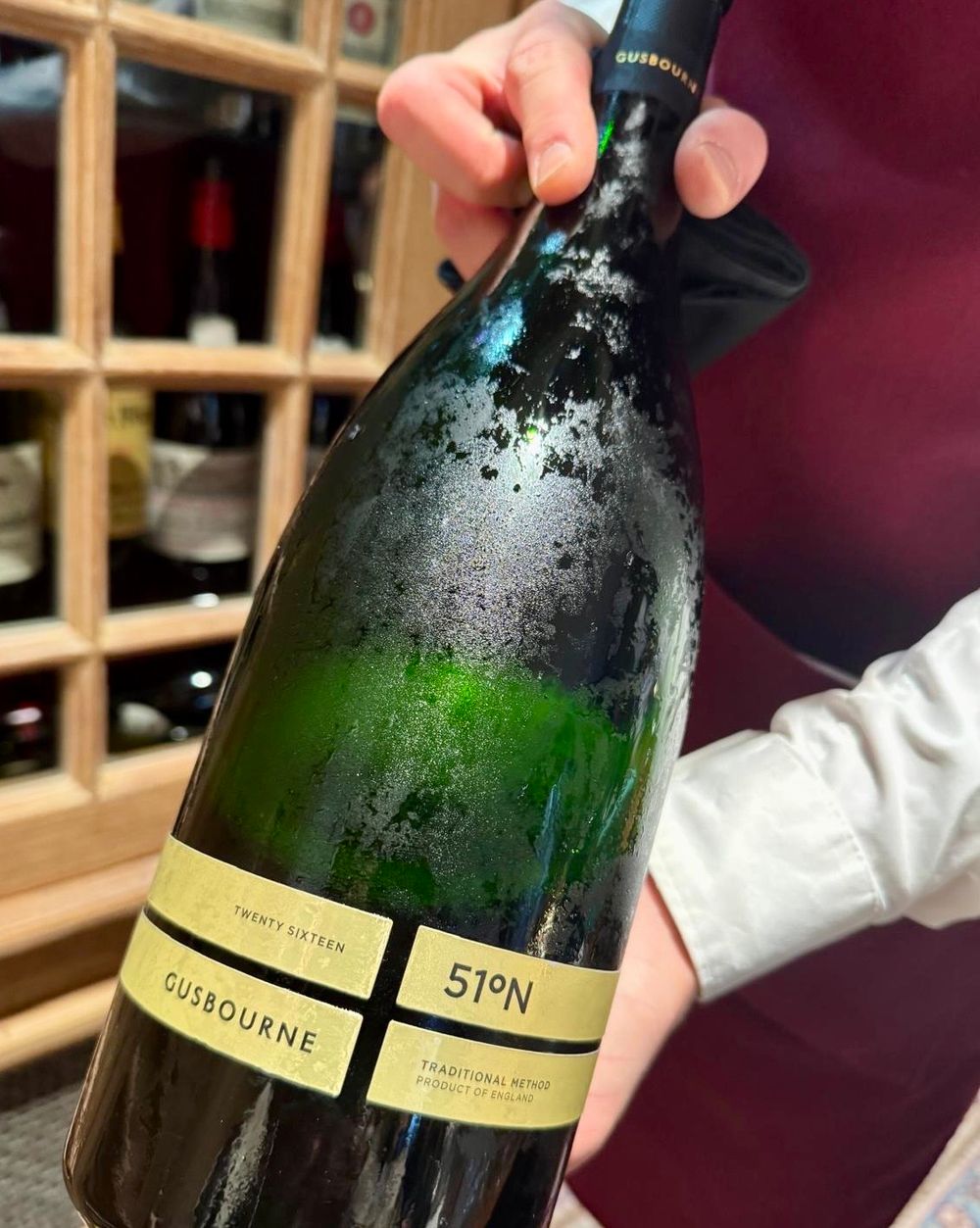
Right from the start, Rhys says, Weeber’s vision was to make wines that could stand up on a world stage. That ambition is realised in 51 Degrees North – “the best plots from the best vineyards in the best vintages”.
The vision took a while to come to fruition, however, with the hot 2014 being “the first year when we had the fruit that made sense stylistically for what we wanted”. Even then, it wasn’t plain sailing.
“There'd be so much more of the 2014 available if we hadn’t tasted it so much before we released it,” says Rhys. “But we needed to get it right. When we launched, it was the most expensive wine in the UK and, and that was a big thing.”
The 2014 vintage yielded 4,000 bottles, while in 2016 – a slightly bigger vintage across the board – the figure is more like 5,000. “It will never be something that's created in vast volumes,” says Rhys. There are also, for the first time, “a few hundred” magnums of the 2016, a format for which Gusbourne is seeing increased interest.
“Sommeliers love working with them, and collectors love ageing and drinking them,” says Rhys, who describes 2016 as one of the standout vintages in her time at Gusbourne. “It had really lovely ripeness but really lovely acid as well, and I think it will just go on and on.” It is taut and structured, while the 2014 offers more weight and generosity.
Weeber’s original ambition was realised when the 2016 vintage of 51 Degrees North, along with its counterpart at Nyetimber, 1086, shared the top two places at ‘The Battle of Bubbles’ blind tasting at this year’s London Wine Fair, beating the likes of Dom Pérignon, Dom Ruinart and Taittinger Comtes de Champagne.
It's easy to get carried away by such triumphs, of course. The current state of the market suggests, further down the chain, there is a lot of English wine to sell. But as Rhys says, “If we think about where the industry has come in 20 years, it really is exciting, and I’m so proud to be part of it.”
A more dispassionate view came from master of wine Anne Krebiehl. “I'm not even English,” said the German-born critic, “and I find this exciting beyond measure. I can only imagine how all this must make you feel if you're English…”