
What was the inspiration behind Master Classes and why did you want to do it now?
We have both taught for the Institute of Masters of Wine’s official study programme for many years, and saw that candidates were making the same mistakes over and over again.
The problem isn’t a lack of effort or knowledge, and it’s certainly not a lack of intellectual capacity.
Candidates on the IMW’s Study Programme are typically high achievers. Yet year after year, the IMW examiners’ reports highlight the same issues - a lack of critical thinking and analysis, a failure to address the questions as set, poor essay structure in theory papers and problems marrying theoretical knowledge with evidence from the glass in the tasting papers.
We felt that there was a clear gap between what students thought they were being asked to do in the exams and the skills needed to achieve a pass, and yet this gap is not necessarily being addressed by the official study programme (which is largely based on self-study rather than teaching) or by other courses being offered by the market.
Why now? Well, the pass rate for the IMW exams remains stubbornly low. We felt that the sooner we started with the courses, the more students we would be able to help.
How have you put the series together in terms of balancing the content needed, the value it provides and ultimately how it helps people prepare for MW exams?
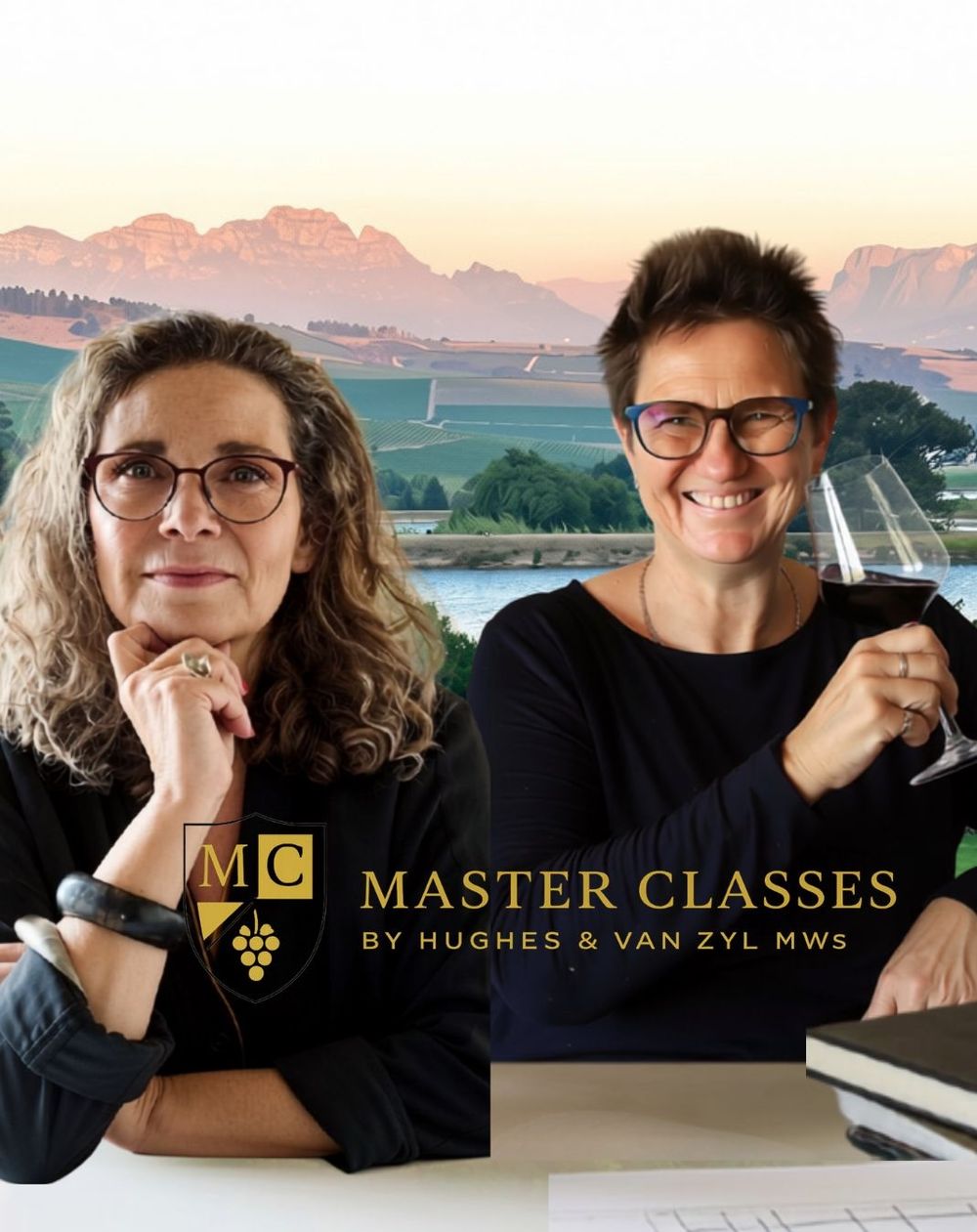
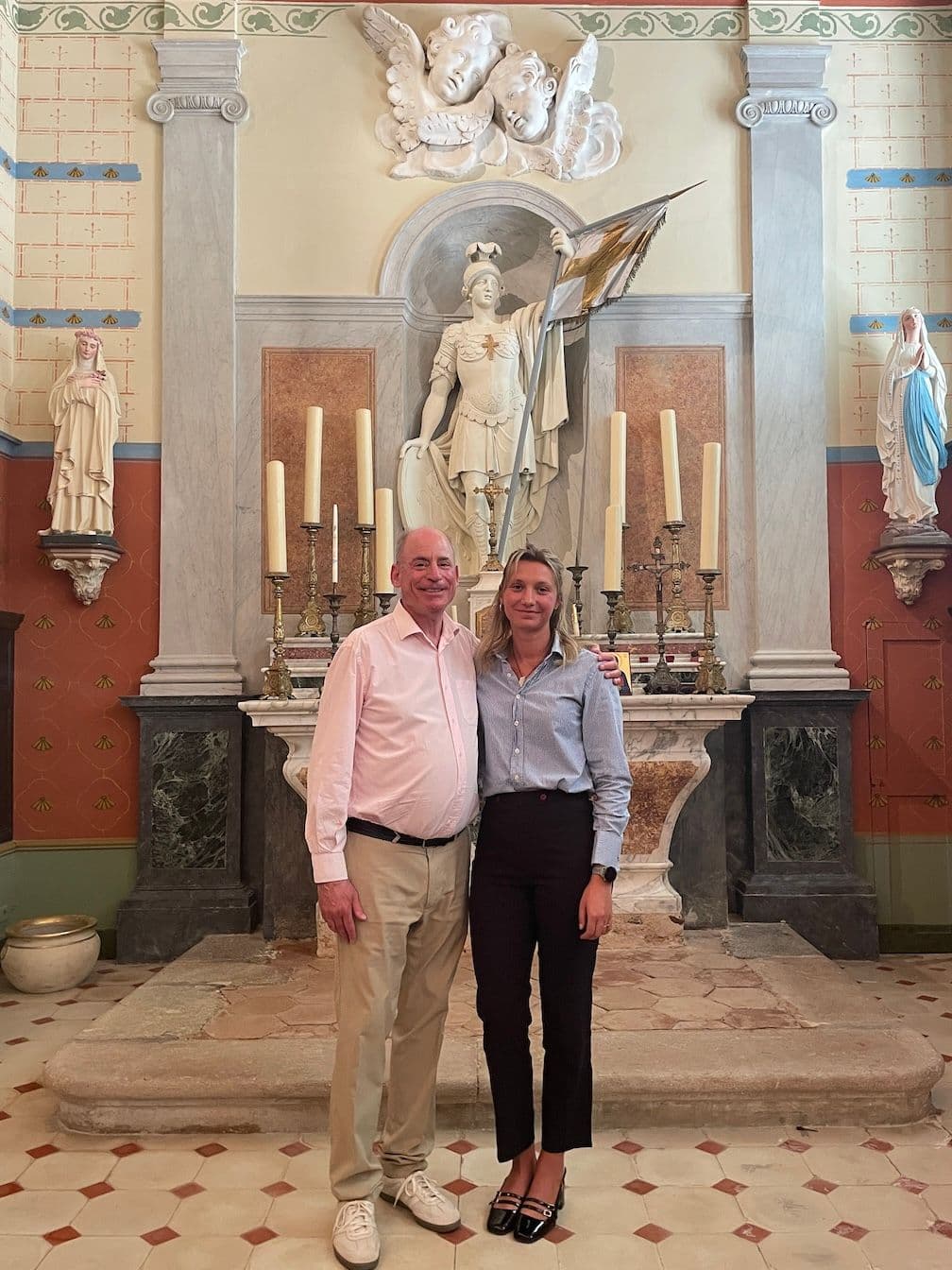
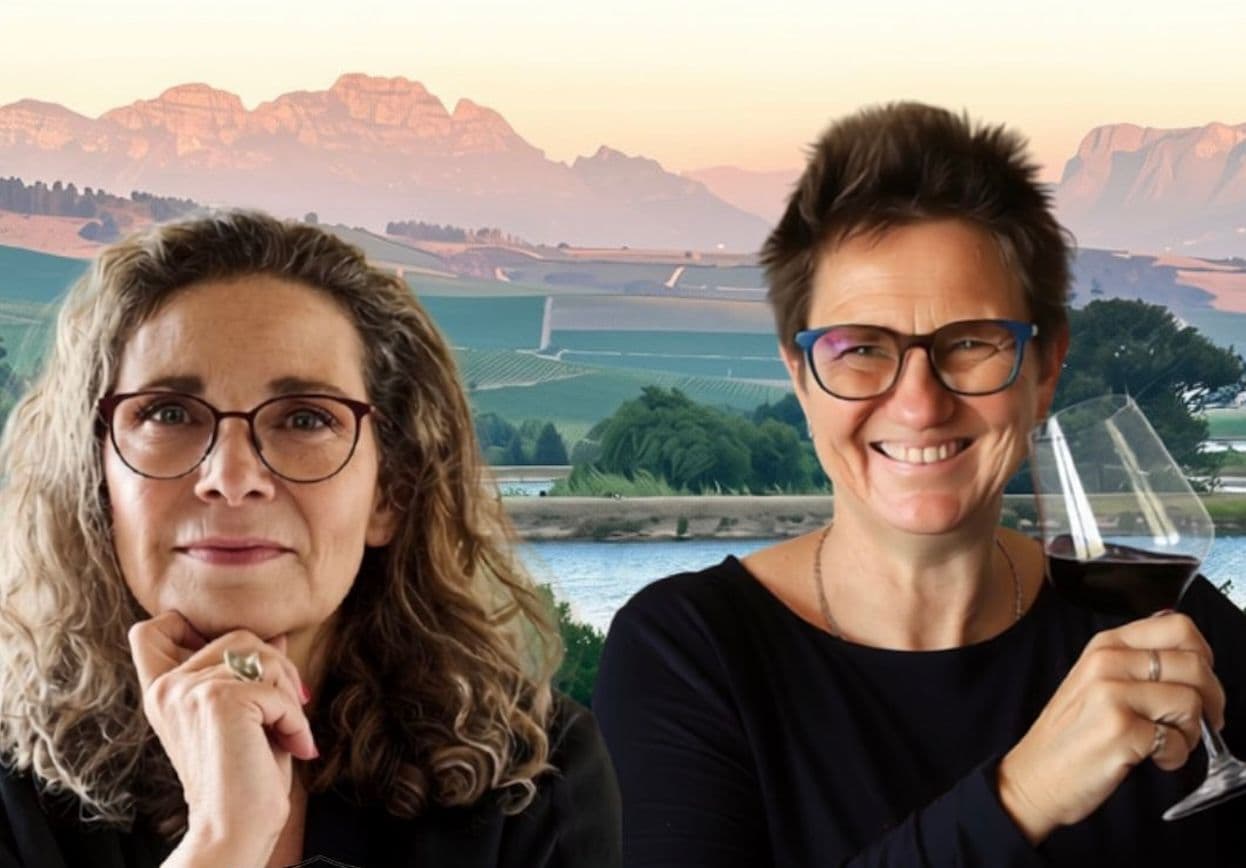
Natasha Hughes MW and Cathy van Zyl MW hope they can share their experiences of becoming a Master of Wine with those looking to sit the various papers now as MW students
Much of our teaching strategy is derived from the online courses Natasha taught between 2020 and 2026 (informed, as well, by both of our experiences of teaching at IMW residential seminars and courses).
Initially implemented as a response to the need for ongoing education during Covid lockdown, Natasha’s small-group sessions saw her teaching around 40-50 students from around the world each year.
It soon became clear that different educational backgrounds created a wide variety of challenges specific to individual students.
She ended up questioning even the most basic of assumptions, for instance, that students would know how to structure an essay, or that they would feel comfortable with the notion that in the real world there is rarely a single ‘answer’ or ‘truth’ in response to a question.
Many students also struggled to move beyond the descriptive approach to tasting that they had learned during the course of their WSET studies in order to adopt a more analytical approach to tasting that helped them to marry their theoretical knowledge to the evidence they were finding in the glass.
The aim of our courses is not to teach students ‘facts’. It’s to help them develop the analytical and communication skills they need to demonstrate their understanding and knowledge.
If the proof of the pudding is in the eating, the higher-than-average pass rate in both the theory and practical exams achieved by Natasha’s students suggests that this approach is an effective one.
You do different Master Classes for people at different levels of their study - can you explain a bit more about how this works?
Our MW Master Class is designed for students who are currently enrolled on the IMW’s Study Programme. Two days of the four-day course are devoted to practical and the other two days are devoted to theory.
Instead of running the usual 12-wine blind tastings and feedback sessions offered by the IMW’s Study Programme and the vast majority of private ‘bootcamps’ run by other MWs, we guide students through a series of short flights designed to help them explore specific aspects of the wines – quality assessment or winemaking, for instance.
We discuss key clues in the wines as a group, then we look at how to articulate that evidence in order to create compelling written arguments in an exam context.
We run through all the major questions typically set by the examiners over the course of the two days, offering up tasting tips and techniques as we go.
The theory sessions are largely based on questions set in past exams, and we show students how to deconstruct these questions and work out what the examiners are actually asking and the best way to deliver an effective response.
We also enlist the help of outside experts to deliver seminars that are aimed at exposing students to a diversity of viewpoints, and to help them to understand how to gather and use the kinds of examples in their essays that the examiners require.
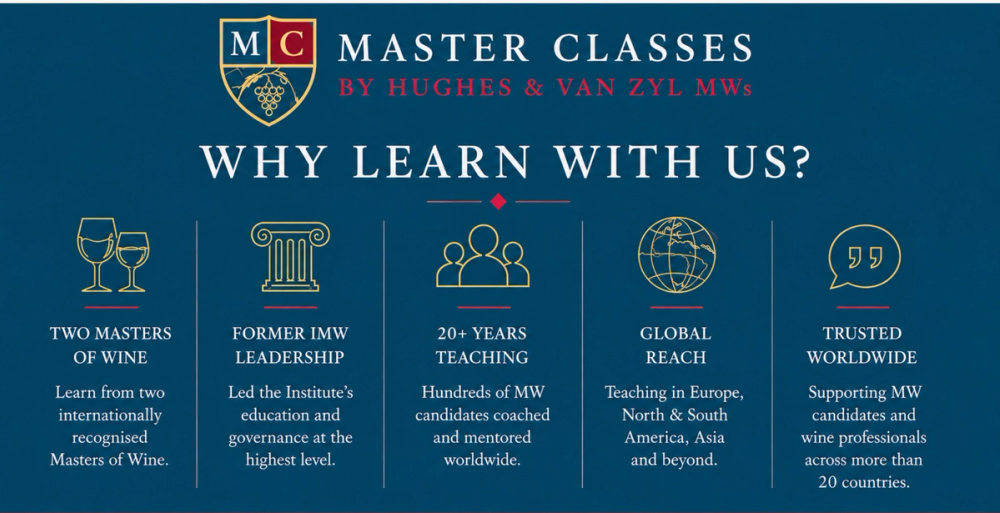
Our Bridging Courses cover similar material, but are aimed at students who already have (or are well on their way to gaining) the WSET Diploma.
This course is designed to help students answer three questions. Am I ready for the IMW’s Study Programme? Do I really want to commit to it? And if I do, how can I best prepare myself for it?
Over the four days of the Bridging Course, students explore their strengths and weaknesses in terms of their preparedness for the study programme. By the end of that time, they will have a much better understanding of whether they’re ready to take on an undertaking that will cost them several thousand pounds and several years of their lives. They should also be better prepared for the IMW’s entrance exam and, crucially, for the Stage One residential seminar.
Most MWs and MW students will admit to having very little idea of what they were trying to achieve during the course of that critical first week of study. We want our students to arrive for the seminar able to construct arguments about origin or maturity, or to unpick the information provided in a theory seminar, so that they can make the most of every session rather than always being on the back foot.
What sort of topics are you covering in the series so far?
We don’t teach topics, we teach techniques and strategy. For instance, the idea of ‘just answering the question’ in the context of the theory exam sounds simple, but when each question could form the basis of a 10,000-word research paper, one key challenge for students is working out the difference between ‘need to know’ and ‘nice to know’.
They have also got to learn how to write a compelling introduction and conclusion to each essay, and how to introduce examples in such a way that these allow them to dig deeper into the ‘why’ of a topic, rather than just a shallow ‘who, what, where’.
Essay-writing skills are (generally) not taught in formal education around the world, so this all comes as news to the vast majority of students.
And when it comes to helping students with tasting, we don’t teach them how to assess levels of acidity or describe aromas, or about the terroir variations in Burgundy or Barolo.
We expect them to have learned these skills and that kind of background knowledge during the course of their WSET studies.
What we teach them is how to place the evidence in the glass into the context of an analysis of the wine that responds directly to the questions asked by the examiners.
You are also offering an international programme with Master Classes available in different countries?
Our first MW Master Class was held in London in April 2025, then in Napa that autumn. This year we ran both a Bridging Course and an MW Master Class in London, and we’ll be taking both to Napa this autumn (see below for details).
Next year we plan to run events in London, Napa and Asia, although our venue for the latter is still to be confirmed. Eventually we hope to retain a core calendar of courses on three continents, but we’re open to running on-demand courses for students wherever there is sufficient demand to make this feasible.
What have you found most rewarding and enjoyable about putting these Master Classes together?

Natasha Hughes MW: "I feel that teaching keeps me honest"
Natasha Hughes: It’s such a pleasure to teach students, and to see that teaching have a positive impact on both the way students learn and think, as well as to watch their growing confidence when they realise they have got a handle on what they are being asked to do.
I also feel that teaching keeps me honest. The fact that I need to help people argue about a wine they’re tasting in the context of the entire world of wine means that I need to keep tasting and thinking about where wines fit in myself.
The same goes for theory – if I’m going to teach students how to respond to a question, I need to have thought about the underlying facts and the diversity of opinions about those facts myself, and that means I need to keep learning myself.
Cathy van Zyl: I totally agree with Natasha’s take-outs. It is extremely rewarding, validating perhaps, to know that what we do with our Master Classes positively impacts our students’ MW journey.
For me, too, the CPD aspect is vital, probably more so than it is for Natasha. I live and work on the southernmost tip of Africa, far from the major metropolitan centres with their wine culture and access to the world’s wines, and far from other significant wine regions.
So, I welcome every opportunity to further explore classic wines styles and market, and learn more about emerging markets and regions, and their wines.
I truly value meeting our students, interacting with them and learning from them, as fellow wine professionals.
Truthfully, sometimes I think I should be the one paying them, not the other way around, if you know what I mean.
What challenges have you had since starting the business?
One of the biggest challenges has simply been getting the word out. MW students – and WSET Diploma graduates thinking of becoming MW students – are a relatively small and geographically dispersed group, and neither of us comes from a marketing background.
With the help of Lilla O’Connor, we’ve recently started putting more resources into communicating what we do, with a particular focus on explaining how our approach differs from most of the traditional MW preparation courses out there on the market.
How do you know each other and why did you want to work on this initiative together?
Hughes: Cathy and I first met when I was a Stage 2 student and Cathy was in charge of organising the MW Stage 2 residential seminar in Bordeaux. This was in 2011. By the time I graduated in 2014 and joined the Study Programme Committee in 2015 as understudy to the guy who was then the wine coordinator (the person charged with setting all eight of the education tasting papers and sourcing the wines for these), Cathy was chair of that committee, so we worked closely together for a number of years to improve the way education was delivered to students.
We then worked together on the IMW’s Council (I was a Council member 2019-2025, Cathy was on Council for six years until 2024, culminating in a two-year period as the IMW’s Chair).
How would you describe your respective teaching and coaching styles?
Hughes: I’m joking, of course, but there may well be an element of ‘good cop, bad cop’ to our teaching partnership. I’m precise and rigorous and detail focused.
I used to be a copy editor, initially for a book publisher but eventually for magazines, so my professional experience has taught me how to help shape and present ideas in such a way as to communicate effectively.
Cathy is very kind and encouraging and the warmth and support she provides really brings out the best in the students.
The underlying motivation for both of us, though, is to see students learn how to learn more effectively and how to communicate that learning precisely. We both take huge pleasure when we can see students develop those skills.
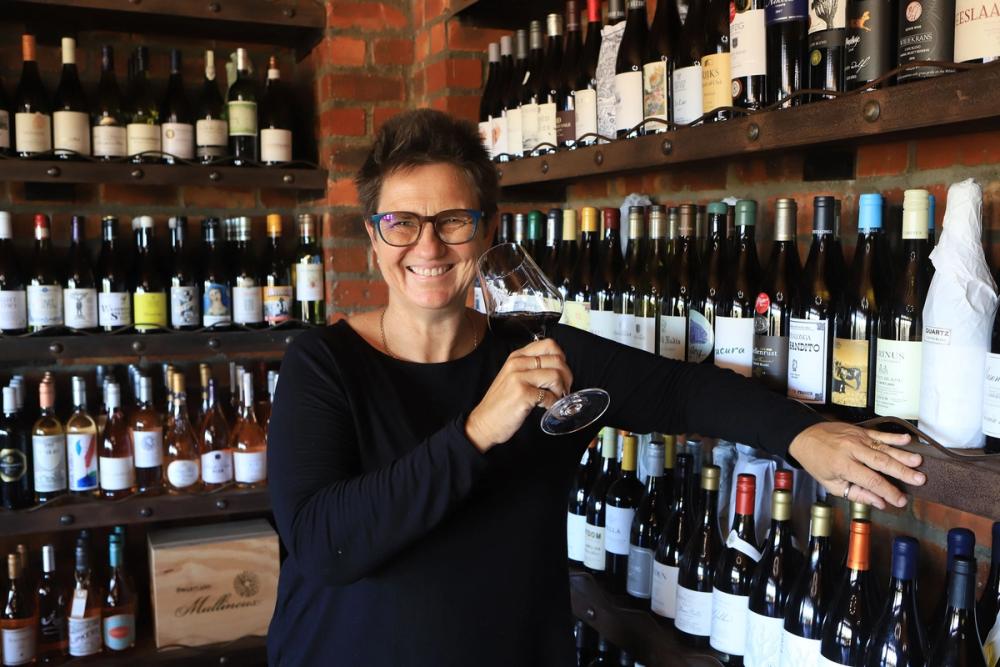
Cathy van Zyl MW: To give [MW students] better odds at achieving that, they need to know where they are going wrong and how they can improve"
Van Zyl: Tash may think she’s hit the nail on the head with the ‘cop’ analogy but I think she does herself a disservice. The substance of her feedback might be harsh, but its delivery is always respectful. Honesty is at the heart of everything we do, it has to be.
The MW journey can be long and pricey, and while most of the human race dislike being corrected or critiqued, we hope our students join us because they want that journey to culminate in admission to the Institute.
To give them better odds at achieving that, they need to know where they are going wrong and how they can improve. If we’re not telling them that, we may as well all go outside and suntan.
How are you funding the Master Classes series?
Master Classes is independently run and is primarily funded through course fees, although we’ve been really fortunate in finding partners who have supported us by providing venues, helping us source wines and other forms of educational support. This really helps us to deliver our programmes effectively and to extend our reach.
Are you looking for partners to support and help you offer more services?
We’ve been lucky enough that we’ve already attracted support from some significant players in the wine trade. We work with the Gérard Basset Foundation to provide educational support and mentoring for recipients of their grants and bursaries, and we also offer these students a discount on our fees if they want to join any of the courses we run.
We’ve partnered with the Napa Valley Wine Academy, who provide us with a home base for our California course and communicate our offering to their Diploma graduates.
Here in London, our home base for MW Master Classes and Bridging Courses is at Liberty Wines and we source many of the wines for the UK courses from them.
* You can find out more about the courses that Master Classes runs at its website here.
* It is running two MW Master Class programmes in the coming months. First from November 2-5 at the Napa Valley Wine Academy, Napa, California. Click here for more details.
* The London MW Master Class is to be held April 26-29 at Liberty Wines, 6 Timbermill Way, London SW4 6LY. Click here for more details.