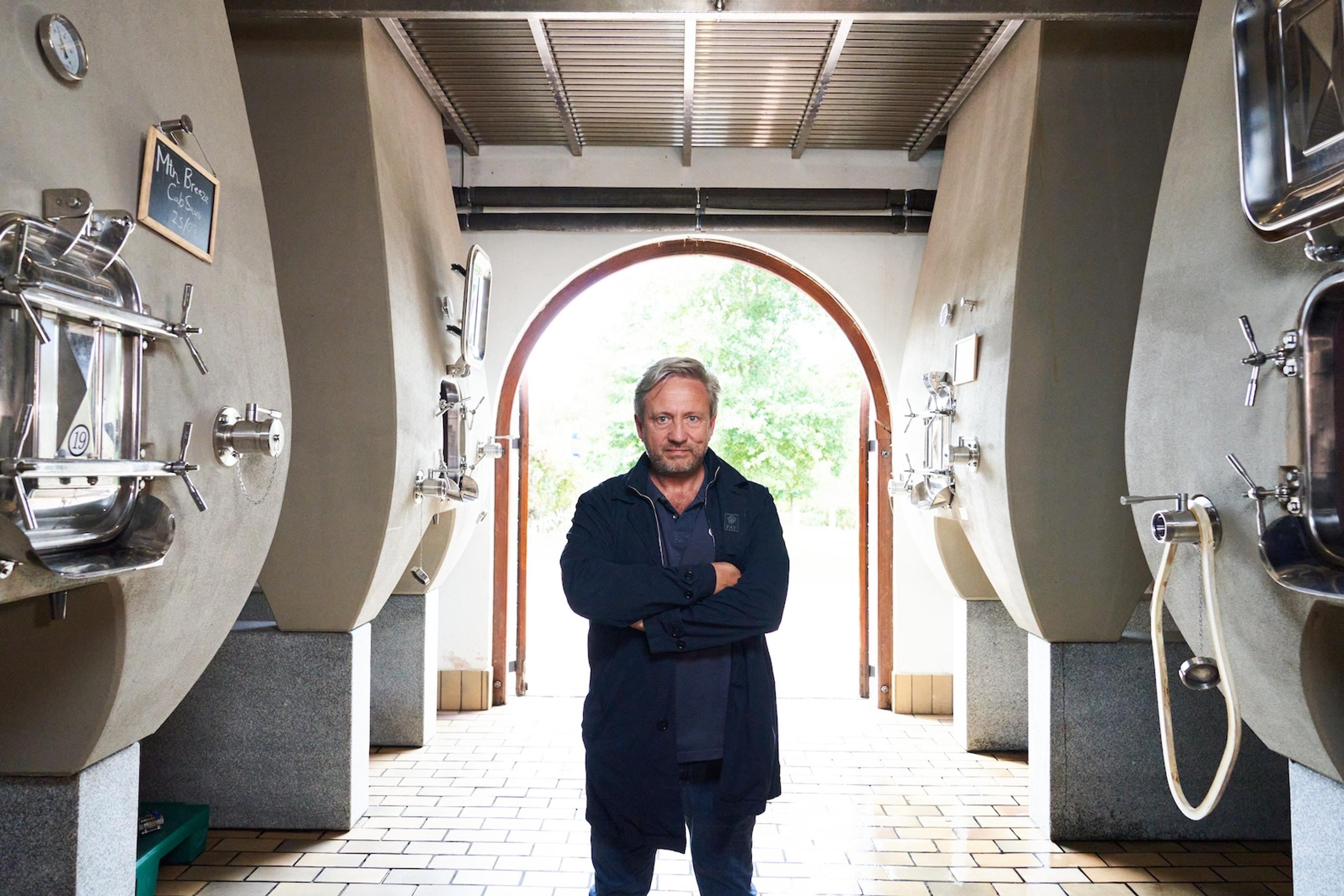
While Central Otago continues to be the source of many of New Zealand’s finest wines as well as the country’s premier destination for wine tourism, a huge shadow hangs over it. As much as 30% of its vineyards are either certified organic or in conversion, but this laudable exercise in sustainable viticulture is being threatened by the real possibility that an enormous new goldmine near Cromwell will be given the go-ahead towards the end of this year. “Vineyards will all be affected if not displaced,” says Gibbston Valley winemaker, Christopher Keys.
Proposed by the Australian mining company, Santana Minerals, who estimate that £2 billion worth of gold deposits lie untapped, the so-called Bendigo-Ophir mine in the Dunstan Range would comprise an open pit of 1000m by 850m, with three smaller satellite pits and a tailings dam. Santana will hear if it can proceed in late October, following the appointment of a specialist panel in late February to assess the merits of the project.
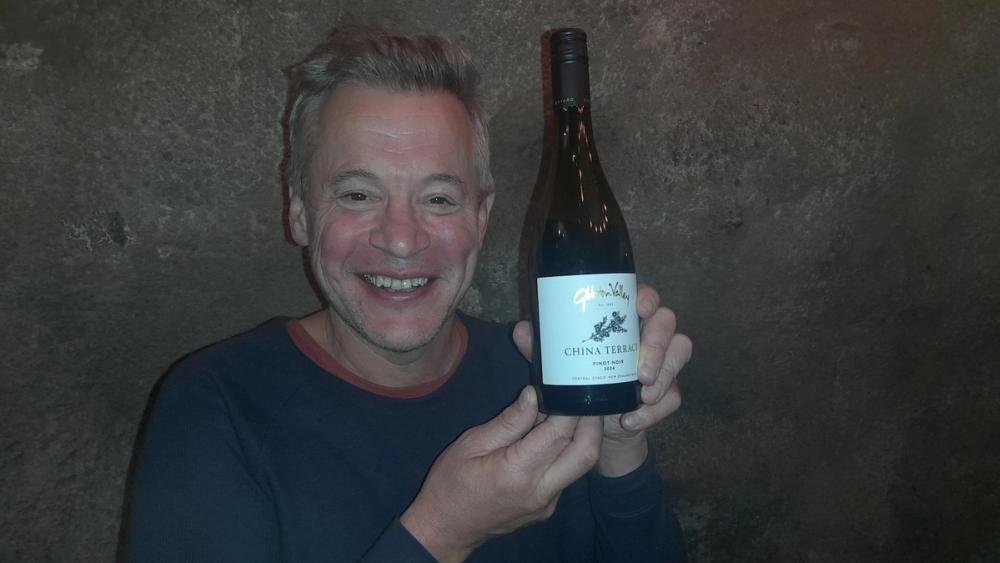
Proposed gold mine will be disastrous for Otago winemakers – Christopher Keys from Gibbston Valley
“The mine would be massive as they are talking of moving an entire mountain to excavate the top of a hill,” Christopher Keys said. “There would be explosions into the earth with extraction of gold through huge cyanide tanks. With that blast comes dust, and with that comes arsenic. It’s quite alarming when you look at the potential disasters against the gain, which is minuscule for the government in terms of royalties, which will only happen once they start making money - in a long time."
"The worry is that Santana creates a catastrophic environment where there’s seepage through the water system, and that will bleed into groundwater, and into one of New Zealand’s major rivers with disastrous results.”
Such is the concern of Central Otago wineries that a dozen of them, including Two Paddocks, owned by the actor Sam Neill, staged a ‘Wine not Mine’ event in February to raise funds to cover expert consultancy fees and legal costs in the campaign against Santana’s application.
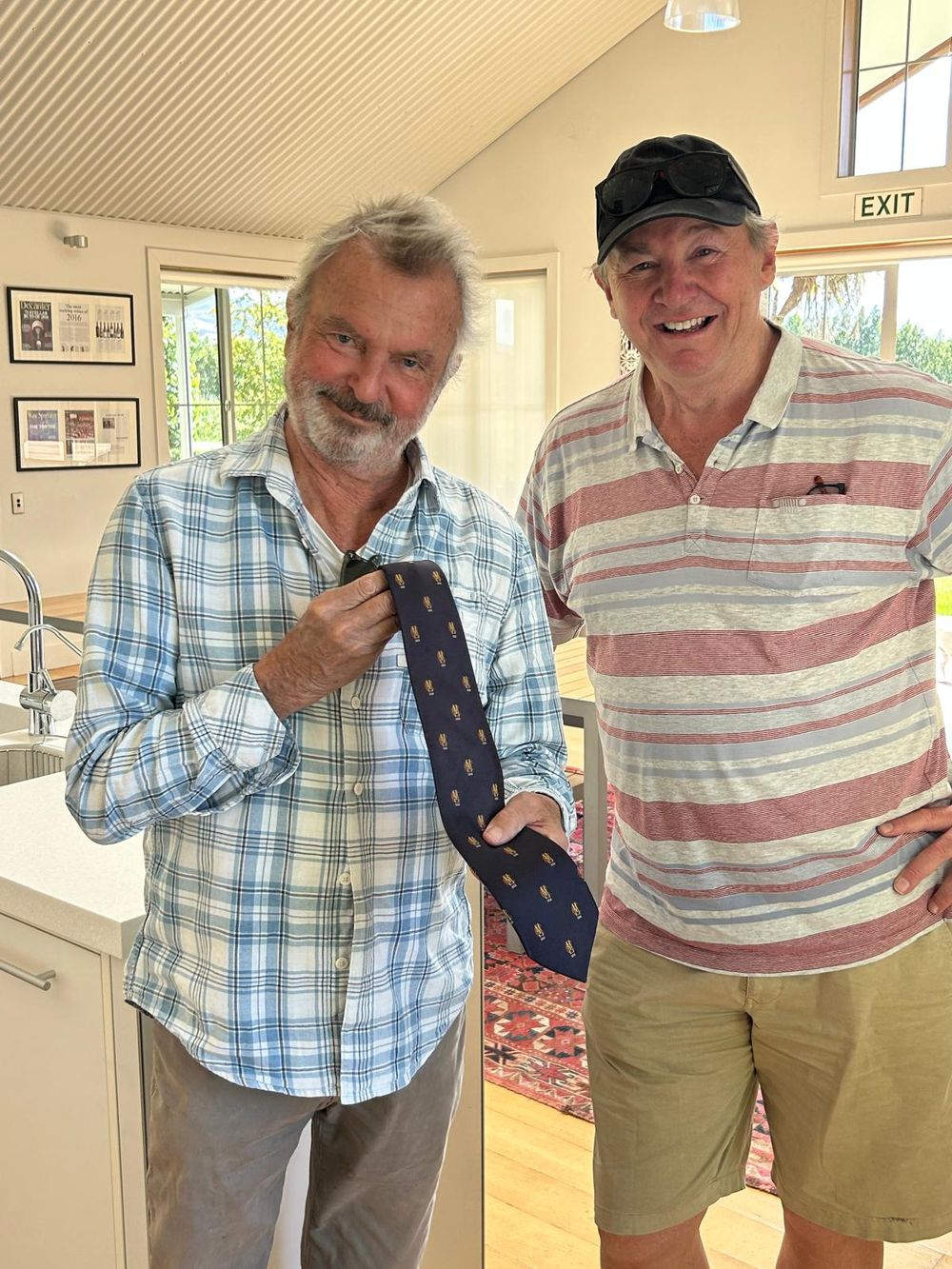
“I beat Jancis in a blind tasting of several wines.” Sam Neill and Geoffrey Dean
“The mining plans are ruinous for the region,” Neill said. “A growing community of ordinary, hard-working people are joining together to fight a very large, very powerful, very well-funded Australian mining company.”
Renowned artist Grahame Sydney spoke of how the ‘madness’ of an open-cast gold mine would cause ‘irreparable harm to the breathtaking, mystical, pristine and ever-changing landscapes of Central Otago.’ Tribal Maori councils are pointing to potential treaty settlement breaches by the mine.
A committed disciple of organic farming, Neill, whose labels are imported into the UK by Fells, and also distributed by Haynes, Hanson & Clark, once had the most southerly vineyard in the world (his ‘Last Chance’ Pinot Noir site) at 45 degrees 15’. There are now plantings south of that in both Argentina and Chile.
As charming as he is famous, New Zealand’s best-known actor is also an accomplished taster, as Jancis Robinson MW discovered when seated next to him at a dinner hosted by Stephen Fry. “I beat her in a blind tasting of several wines,” he chuckled. “She must have had an off day.”
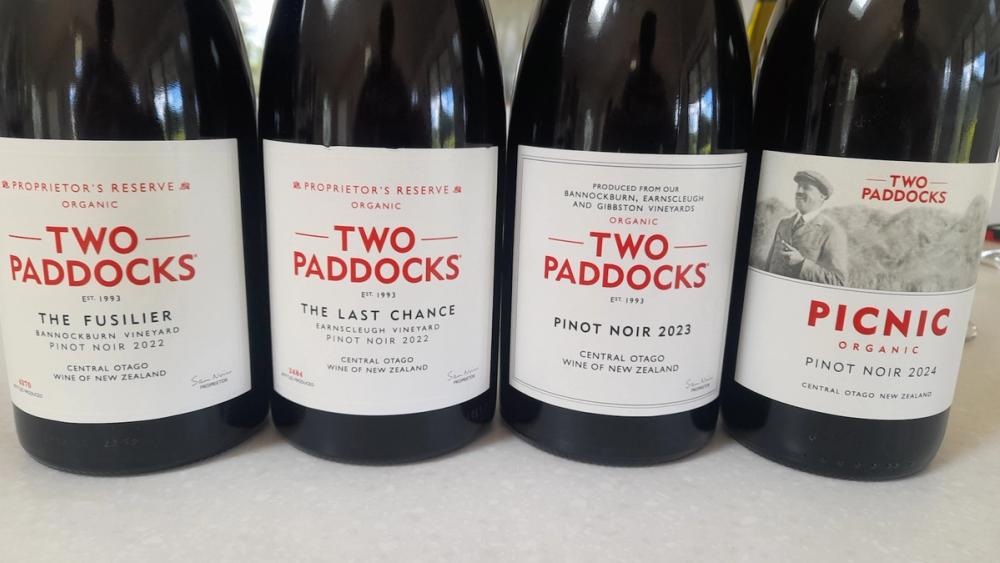
Two of Jancis’ fellow MWs, the married podcasters Peter Richards and Susie Barrie, were so taken, during a January visit to New Zealand, by the Two Paddocks Pinot Noir 2023 (a blend of four single vineyard sites) that they adjudged it the best red in their NZ Wines of the Year 2026, awarding it 98 points. It was made up of 45% The Fusilier (Bannockburn), 30% First Paddock (Gibbston), 23% Last Chance (Alexandra) and 2% Redbank (Clyde).
“That was immensely gratifying as that’s never happened before,” Neill sighed, referencing how his single vineyard labels normally attract the higher marks. “I’m humble about it and couldn’t be more delighted.”
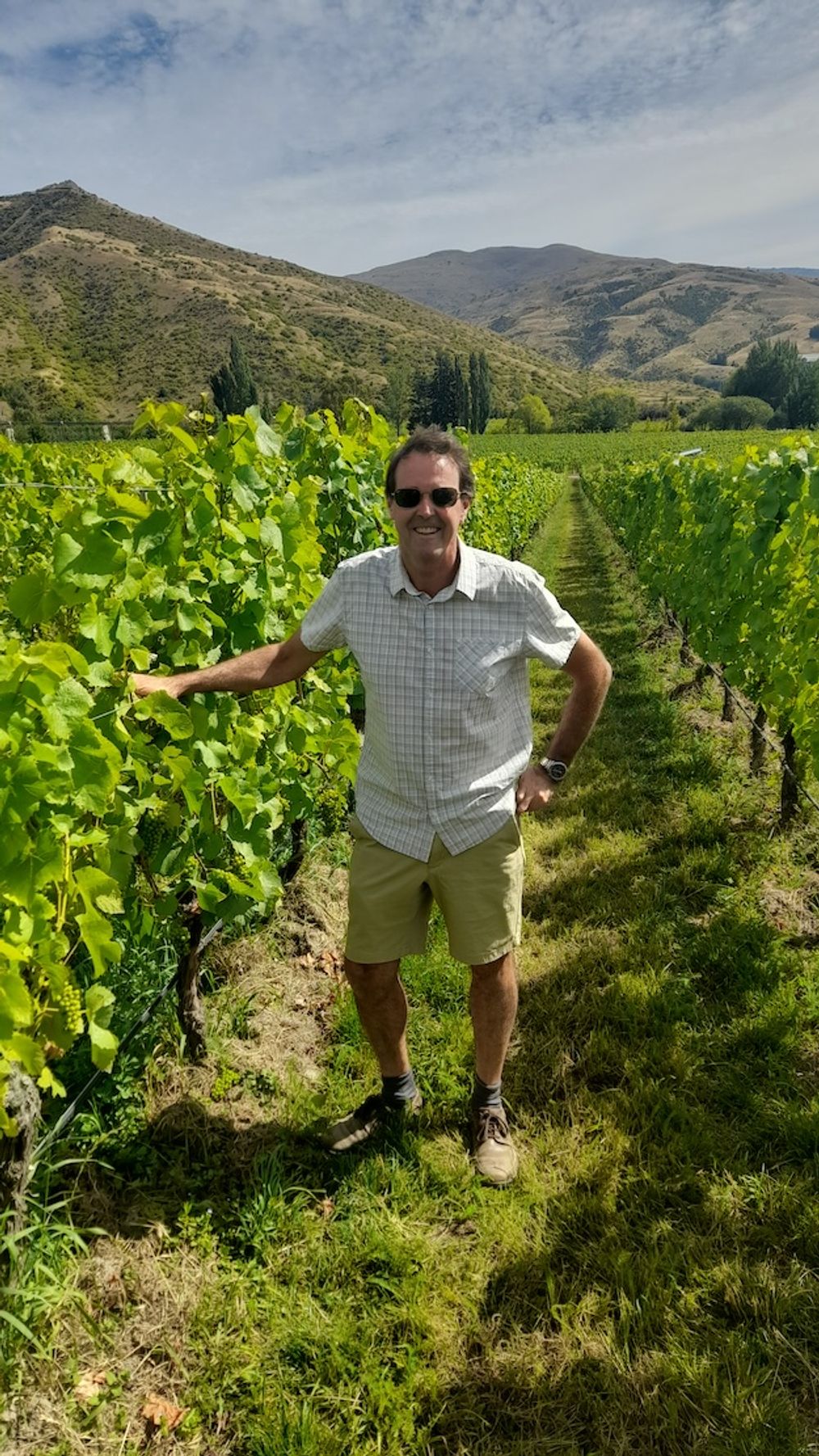
“Our viticulture continues to get better every year." Felton Road's winemaker Blair Walter.
Neill’s Fusilier site lies right next door to Felton Road, which is one of four producers in Central Otago to be certified biodynamic, along with Rippon, Quartz Reef and Burn Cottage. Blair Walter, who has been making the wine at Felton Road since its first vintage in 1997, pointed to stylistic changes in his winery’s iconic labels.
“Something that we’re pleased to see now is that the tannin is a much greater feature of the wines,” he mused. “In the early days, they were much more fruit-forward, rounder, and very pleasant, likeable wines but perhaps lacking the definition and seriousness of great Pinot Noir. I believe now that with ageing vines, we’re seeing greater depth and complexity.”
“Our viticulture continues to get better every year but winemaking-wise there’s been no significant changes apart from not punching down as much as we used to. We discovered, surprisingly, that the less we punch down the more evident and apparent the tannin would become. All we were extracting was fruit matter and sweetness that was masking tannin. So I believe there’s a very fine line how to get the perfect extraction.”
Walter led the campaign to get Bannockburn officially recognised as the first GI (geographical indication) of Central Otago. Gibbston, to the west, is currently applying to become the second at the behest of the Gibbston Valley and Kinross wineries. Apart from having New Zealand’s largest wine ‘cave’ and Central Otago’s oldest vineyards, the former is also home to the Gibbston Valley Lodge, whose 24 luxury villas overlook the estate’s vineyards. For luxury accommodation in the vines, they are hard to beat.
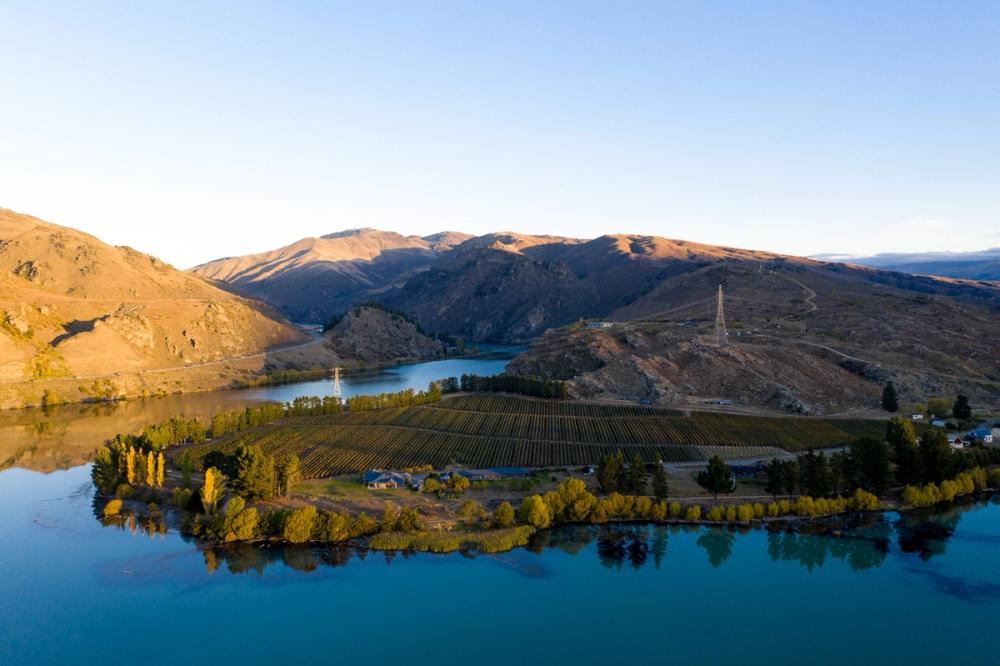
Felton Road's Cornish Point
More in Central Orago
Offering rustic cottage stays, meanwhile, is Kinross, a few kilometres east of Gibbston Valley. The estate has 14 nicely-furnished cottages, all within easy walk of the cellar door and excellent restaurant, where British chef Pete Franklin prepares tasty lunches. Apart from their own impressive range, Kinross acts as a cellar door for four other leading Central producers who are not open to the public: Valli, Hawkshead, High Garden Vineyard and Wild Irishman.
Given the big distances between producers in Central Otago, other welcoming wineries to stay at are two very good options in Alexandra (56km south-east of Kinross). The first is Grey Ridge, a delightful boutique estate, where Paul and Sue Keast have a B&B studio cottage with panoramic views over their four hectares of Pinot Noir and the Dunstan Range. The pair makes a popular white Pinot Noir as well as a distinguished reserve red.
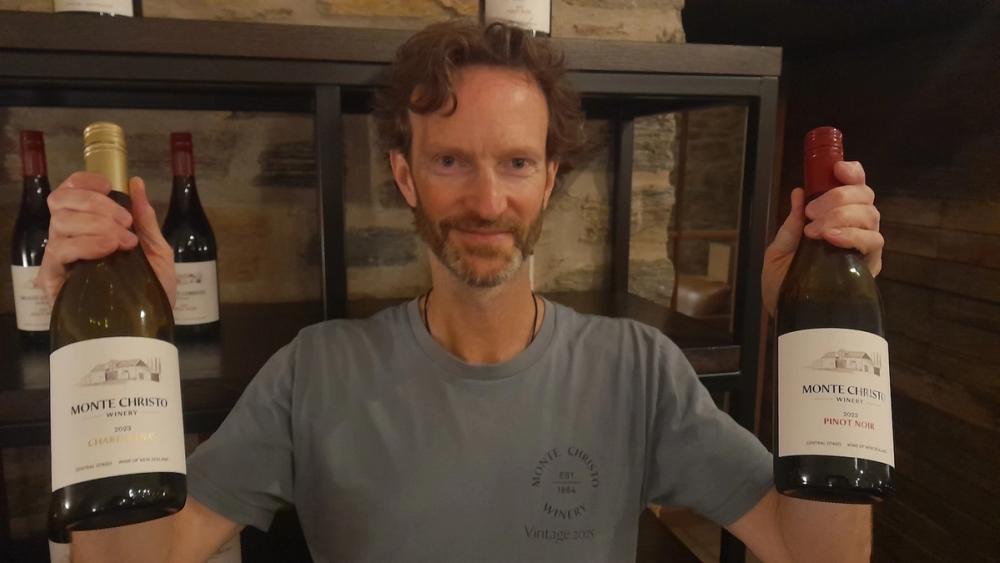
Karl Coombes from Monte Christo
Just down the road from Grey Ridge in Clyde can be found the Monte Christo winery, which has top-end accommodation in the form of three luxury cottages. It is also the birthplace of Central Otago wine, having been established in 1864 by a Frenchman named Jean Désirée Féraud, who was enticed to New Zealand by the gold rush.
Most of the stone in the cellar door building is original, while the new state-of-the-art winery buildings were only completed in March 2025. Nicholas Paris MW is managing director and co-owner of an organically-certified estate that is producing outstanding wines and looking for a UK distributor.
North Canterbury and Marlborough
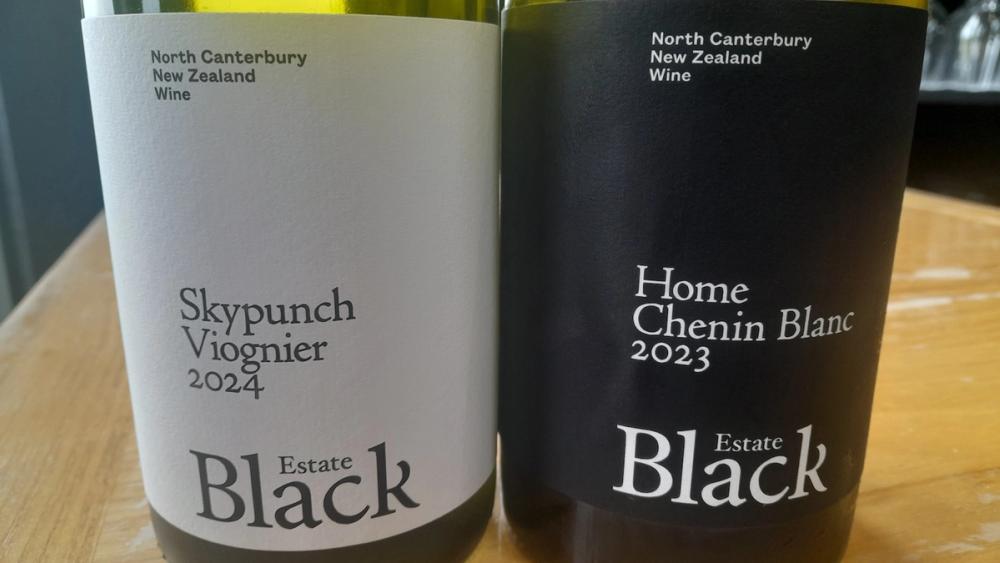
At the other end of South Island in North Canterbury, Black Estate not only makes an excellent range of Riesling, Pinot Gris, Viognier, Chenin Blanc, Chardonnay and Pinot Noir but also offers first-rate accommodation. The attractive ground floor studio apartment by the winery opens out onto the biodynamically-farmed vineyards. Lea & Sandeman imports the compelling Black Estate Omihi Pinot Noir and Chardonnay labels that highly regarded winemaker, Nicholas Brown, crafts from single vineyard sites.
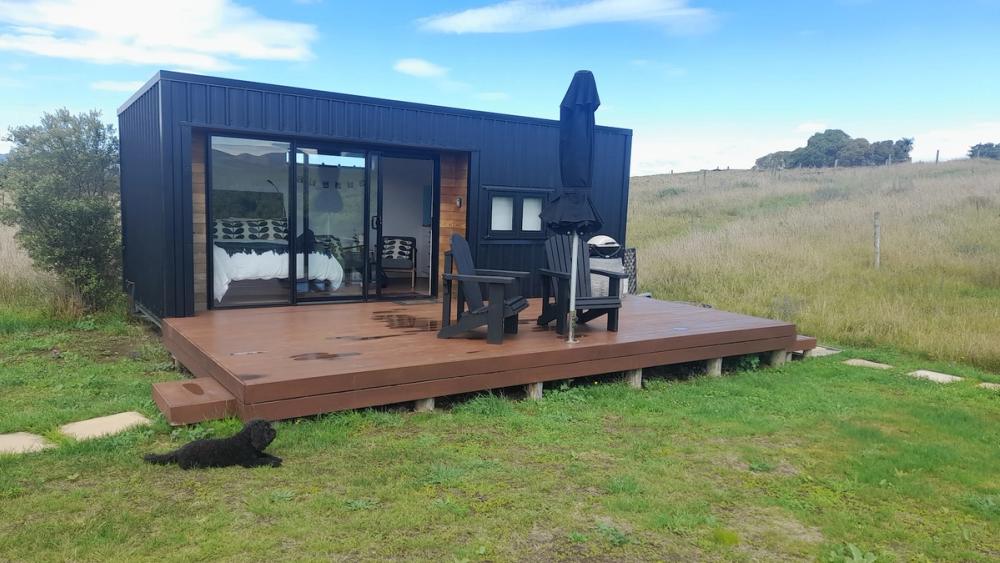
Pod accommodation at Georges Road Wines
Another Waipara Valley outfit, Georges Road Wines, is a boutique producer with a difference. Established in 2015, it has its own wine pod by the vines where you can stay the night. Expect to be escorted to it by owner-winemaker Kirk Bray’s friendly winery dog, Pepper. Luxury bedding and breakfast are provided along with barbecue facilities, and the pièce de résistance – a hot tub under the stars. With minimal light pollution locally, the Southern Cross and other constellations glimmer above you if it is a clear night.
Within striking distance of Georges Road, whose Syrah is a speciality, are a posse of other premium producers including Pegasus Bay, Pyramid Valley, Bell Hill and Greystones.
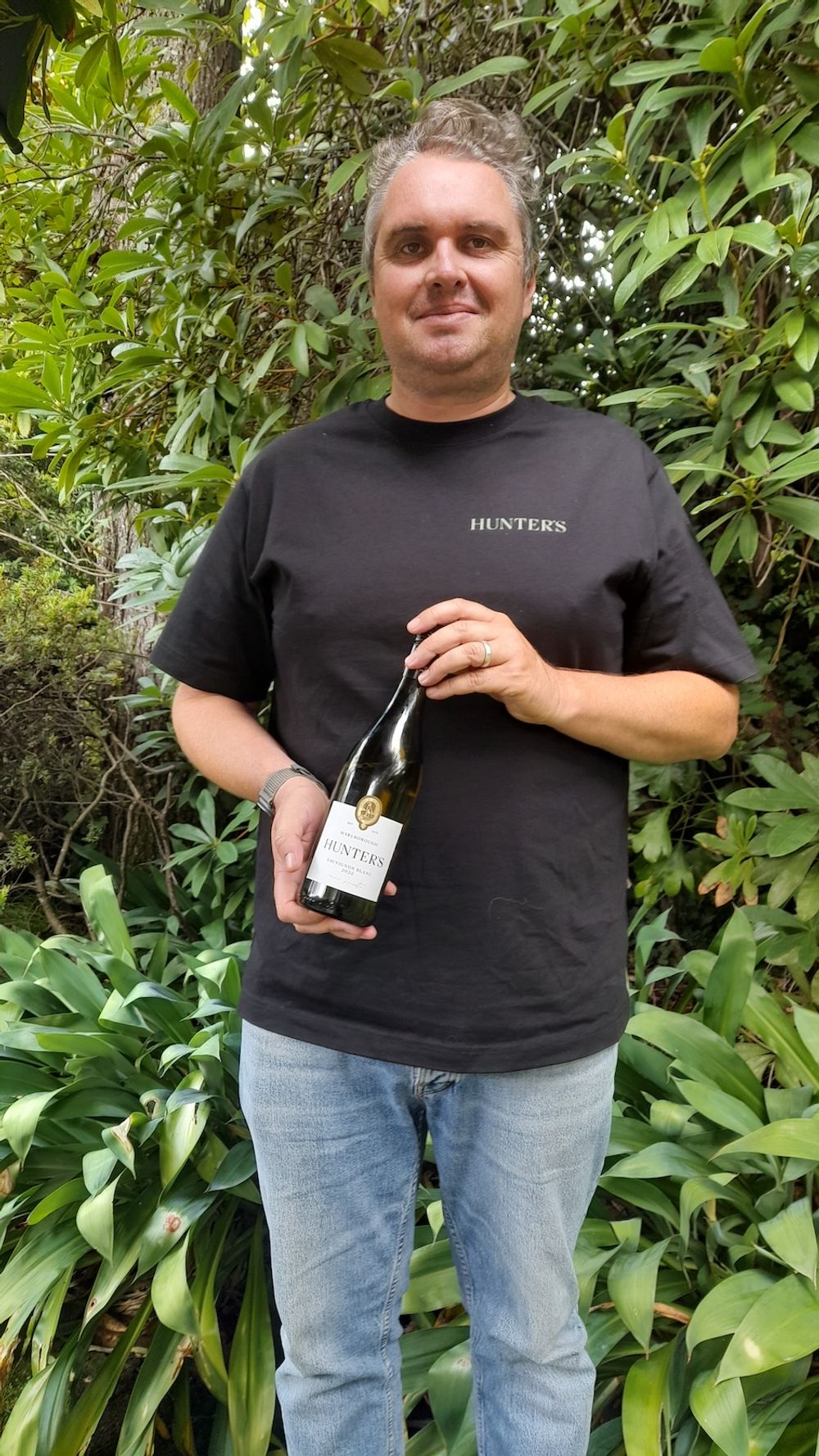
ames MacDonald, head winemaker at Hunter’s Wines
From Waipara it is a three-hour drive to Blenheim and the many Marlborough wineries and growers around it. Some of the latter are facing worrying times with oversupply of Sauvignon Blanc a major issue in the face of falling demand. According to James MacDonald, the head winemaker at Hunter’s Wines, as much as 25% of the fruit grown in Marlborough for this current vintage will not even be vinified.
Hunter’s, the only Marlborough vineyard established in the 1970s to be owned by its original family, remains a major success story. “Demand has been good for us - we’ve managed to sell all our stock,” MacDonald said. “The 12-hectare Waihopai Vineyard we bought recently to give us more Pinot Noir fruit for our sparkling wines has made us the largest producer of that grape in New Zealand with 100 tons per annum approximately. Pinot took a lot longer to understand how to grow in Marlborough. All our Pinot is on clay now as opposed to alluvial gravels. We have ten clones, a very good spread.”
Waiheke Island
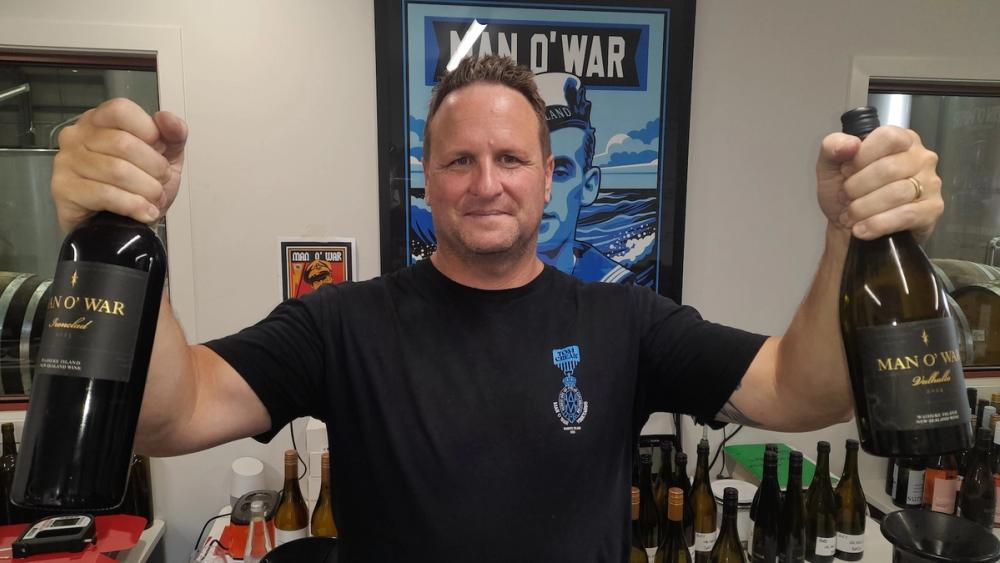
Duncan McTavish, Man O’War’s winemaker
Like Hunter’s, whose vineyards are all accredited by Sustainable Winegrowing New Zealand (SWNZ), the Man O’War winery on Waiheke Island, in Auckland’s Hauraki Gulf, employs sustainable, minimal-intervention practices. The proprietors, the Spencer family, owns the eastern third of the island – some 4,500 acres, of which 150 are under vine, with 5,000 sheep and 1,000 head of cattle grazing the remainder.
Man O’War also has 12 acres of vines on the neighbouring islet of Ponui, which is especially good for red varietals. The wide geographical spread of the 76 vineyard blocks, many planted on steep slopes, means specific grape varieties can be matched to unique soil compositions, which include clay, loam and volcanic ash.
Duncan McTavish, Man O’War’s winemaker since 2008, allows what is a distinct, natural terroir to express itself in the wines. “Nearly all our wines enjoy salt and oceanic influences,” he said. “Our Valhalla Chardonnay, for example, gets mineral salty notes on Pacific-facing vineyards. The soil type is unique to Man O’War - you can taste the Pacific Ocean, which makes up 90% of our boundary. We are in a warm area but have cool climate vineyards with low PHs, so we’re very lucky with the acid profile.”
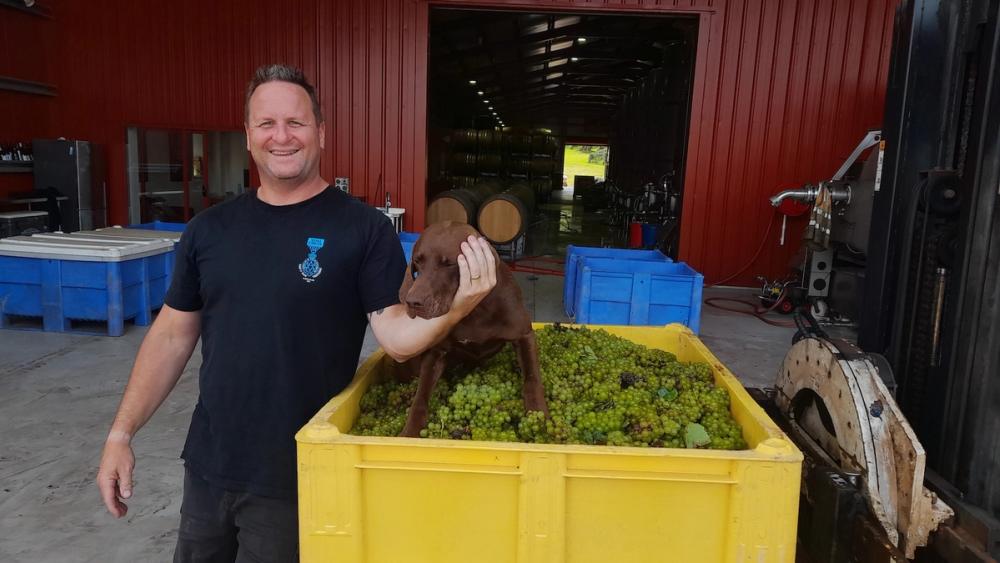
Gratifyingly, global warming has had no impact on Waiheke, with McTavish hailing the last two vintages as the best seen on the island. “2024 was amazing but 2025 was the all-time greatest vintage,” he purred. The outstanding Man O’War range, which includes the northern Rhone-style Dreadnought Syrah and the Bordeaux blend Ironclad labels, are imported into the UK by The Drinks Club, the London-based on-trade specialist.
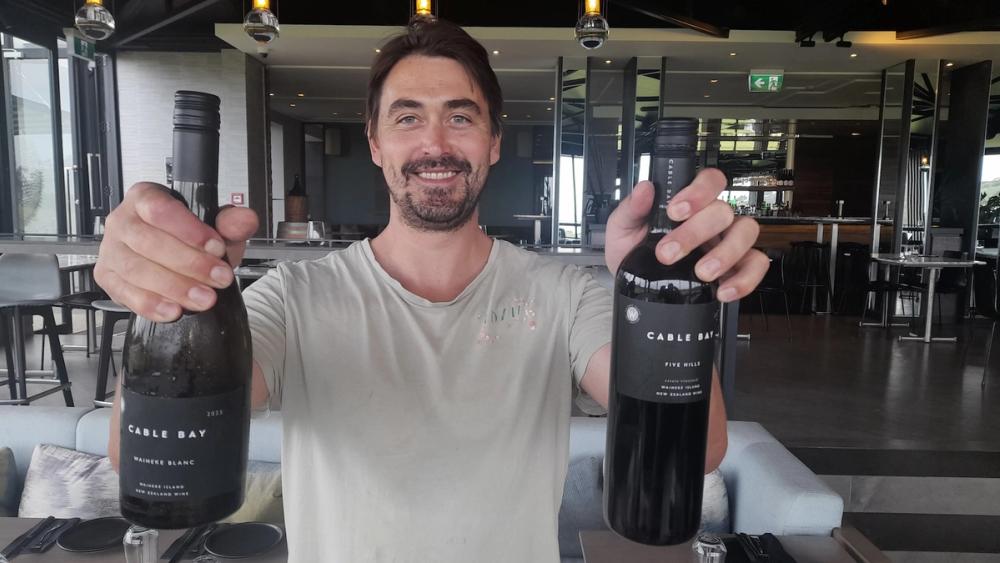
Ashton Hendriks from Cable Bay
At the western end of Waiheke Island, meanwhile, can be found the Cable Bay winery, whose five hectares are accredited by SWNZ. Its Five Hills 2020, a 70/30 Merlot/Malbec blend, showed particularly well, as did its Waiheke Blanc 2025 (70% Viognier, 30% Marsanne). “This white blend is our destination wine,” winemaker Ashton Hendriks said. “We want people to say this is a taste of Waiheke.”
Cable Bay labels are imported into the UK by Decorum Vintners. The beautiful estate, which has scenic views towards Auckland from its cellar door, offers very comfortable accommodation in a cottage close to the vines. If flying internationally into or out of Auckland, this is a great place to spend your first or last nights in New Zealand.
A snapshot of a few of the south island wines tasted
Central Otago
Burn Cottage, ‘Burn Cottage Vineyard’ Pinot Noir 2022 (UK importers: VINVM Ltd)
The Cromwell producer has established quite a reputation, farming biodynamically across its three vineyards with ten Pinot clones. Bright florals and dark cherry fruit complements earthy, flinty mineral tones and darker savoury characters.
Felton Road, Cornish Point 2024 Pinot Noir (Liberty Wines)
Certified organic since 2007, Felton Road has 34 hectares under vine (75% Pinot Noir, 20% Chardonnay and 5% Riesling) with their Cornish Point site the warmest and first to be harvested. Firmer tannins than other parcels with lots of intensity in what winemaker Blair Walter describes as a ‘very, very high quality vintage’ (the best along with 2023, 2019, 2015, 2014 & 2012).
Gibbston Valley, China Terrace Pinot Noir 2024 (Hard to Find Wines, Bridgnorth)
From their Bendigo site at 320m, this 25-year old low density block (clones 777 and 667) on loess, clay and schist produces a supremely elegant wine with fine-grained tannins. The oak (20%) is beautifully integrated, while gun smoke and clove-like complexity assail the palate.
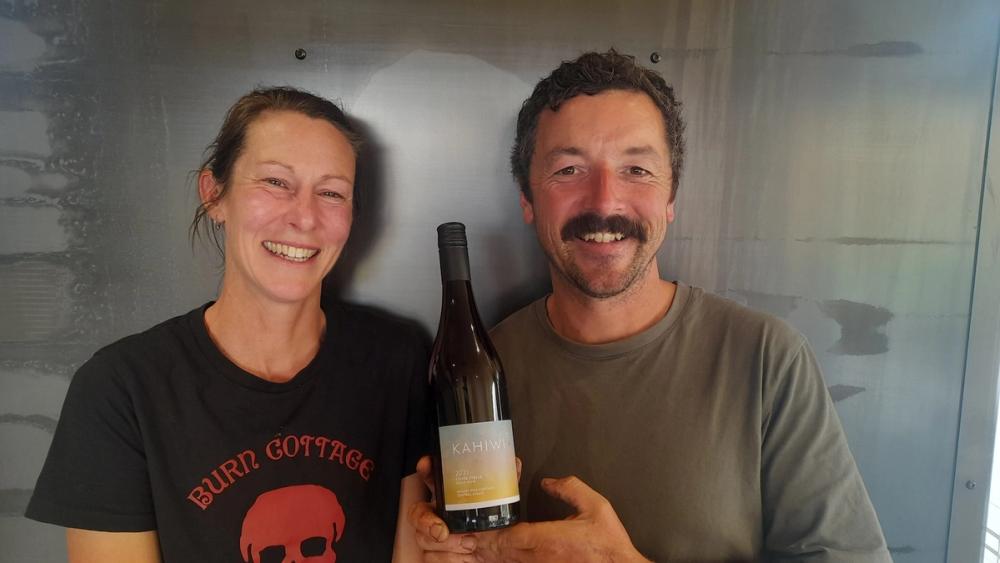
Mike Wolfenden and Olivia Ross from Kahiwi
Kahiwi, Cuvee Stella, Mount Pisa Vineyard 2021 (Raeburn Fine Wines & Farr Vintners)
A relatively new winery that was set up by Scotsman Mike Wolfenden (ex-Felton Road) and Kiwi wife Olivia Ross (ex-Burn Cottage). This was their first vintage and a highly promising one. They only grow Pinot Noir on their five hectares under vine on a windy hillside estate at 270-320m (Kahiwi translates from Maori as ‘ridge of a hill’). This label was produced from clay and loam soils, with five clones used (with Abel the majority).
Kinross, Waitaki Valley Pinot Gris 2025 (no UK representation but wines available online)
The majority of Kinross’ vines are in Gibbston, but the fruit for this barrel-fermented Pinot Gris comes from North Otago near Oamaru on the coast. Baked pear notes with a hint of ginger and spice while 5g/l residual sugar gives some texture.
Monte Christo, Chardonnay 2023 (no UK representation but wines available online)
Winemaker Karl Coombes, formerly of Valli, has crafted a glorious Chardonnay from five clones (548, 15, 6, Mendoza and a ‘mystery’ one). He put it through 85% malolactic fermentation, giving it some richness to offset its zippy acidity (pH3.3). Lovely citrus and ripe white peach fruit notes. No new oak used.
Peregrine, Pinot Noir 2022 (Enotria)
Nadine Cross, winemaker at Peregrine since 2010, gets around 500 tons of fruit from 40 organically-farmed hectares under vine to vinify, and does a great job. Six clones go into this seductive, silky Pinot with fruit blended from Gibbston, Bannockburn and Pisa.
Quartz Reef, Anna Von Tirol Pinot Noir 2022 (seeking UK distribution)
Few would dispute Rudi Bauer’s status as the doyen of Central Otago winemakers. The Austrian came to New Zealand in his twenties and has never left, setting up Quartz Reef in 1996 as a founding partner. Biodynamically-farmed fruit from the most eastern ‘royal’ block 12 in the Bendigo vineyards. Close planting of 8,000 vines per hectare on glacial-derived soils. Flinty minerality with alluring red and blue fruit as well as creamy texture. A standout with capacity to age.
Rippon, ‘Rippon’ Pinot Noir 2016 (Lea & Sandeman)
Perfumed and seductive, this leaps out of the glass with an array of heady aromas including red cherries, herbs and warm spices. Concentrated yet fine-boned with talc-like tannins, it has the structure and freshness to age even further, irresistible though it is now. Nick Mills is a fourth-generation winemaker of this iconic Lake Wanaka winery.
North Canterbury
Black Estate, Home Chenin Blanc 2023 (Lea & Sandeman)
Named after Russell Black, who planted the original vines in 1999, the estate is now owned by the Naish family, whose son-in-law Nicholas Brown makes the wines. From a half-hectare block planted in 2011 from clones 220 and 880, this underlines the potential of Chenin Blanc in New Zealand. Rich with lots of concentration.
Pegasus Bay, Estate Riesling 2025 (New Generation Wines)
A benchmark off-dry Kiwi Riesling with 24g/l of residual sugar that counter-balances the rasping acidity. A touch of botrytis (8%) adds extra complexity and phenolic structure to a well-balanced wine with hints of honey and ginger spice. “We could sell a lot more than we produce,” sales manager Ed Donaldson said, adding Tesco take this.
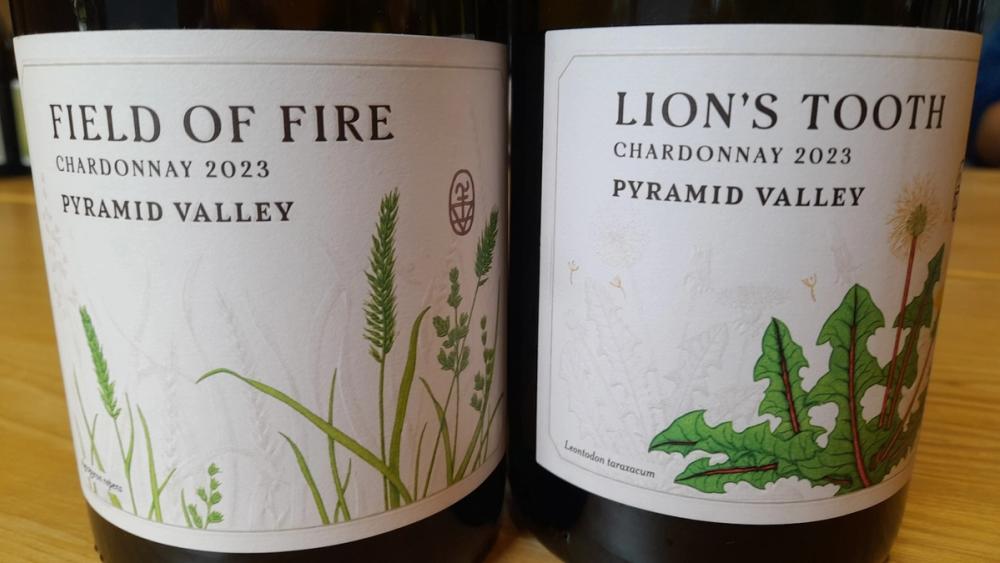
Pyramid Valley, 'Field of Fire' Chardonnay, 2023 (Hallgarten)
Perfect terroir for Chardonnay with limestone and clay soils and a permanent cooling effect from the neighbouring mountains or nearby ocean. Huw Kinch, a highly capable winemaker, employs 100% malolactic fermentation as well as 28% new oak and some concrete for elevage. Fabulous concentration and intensity.
Marlborough
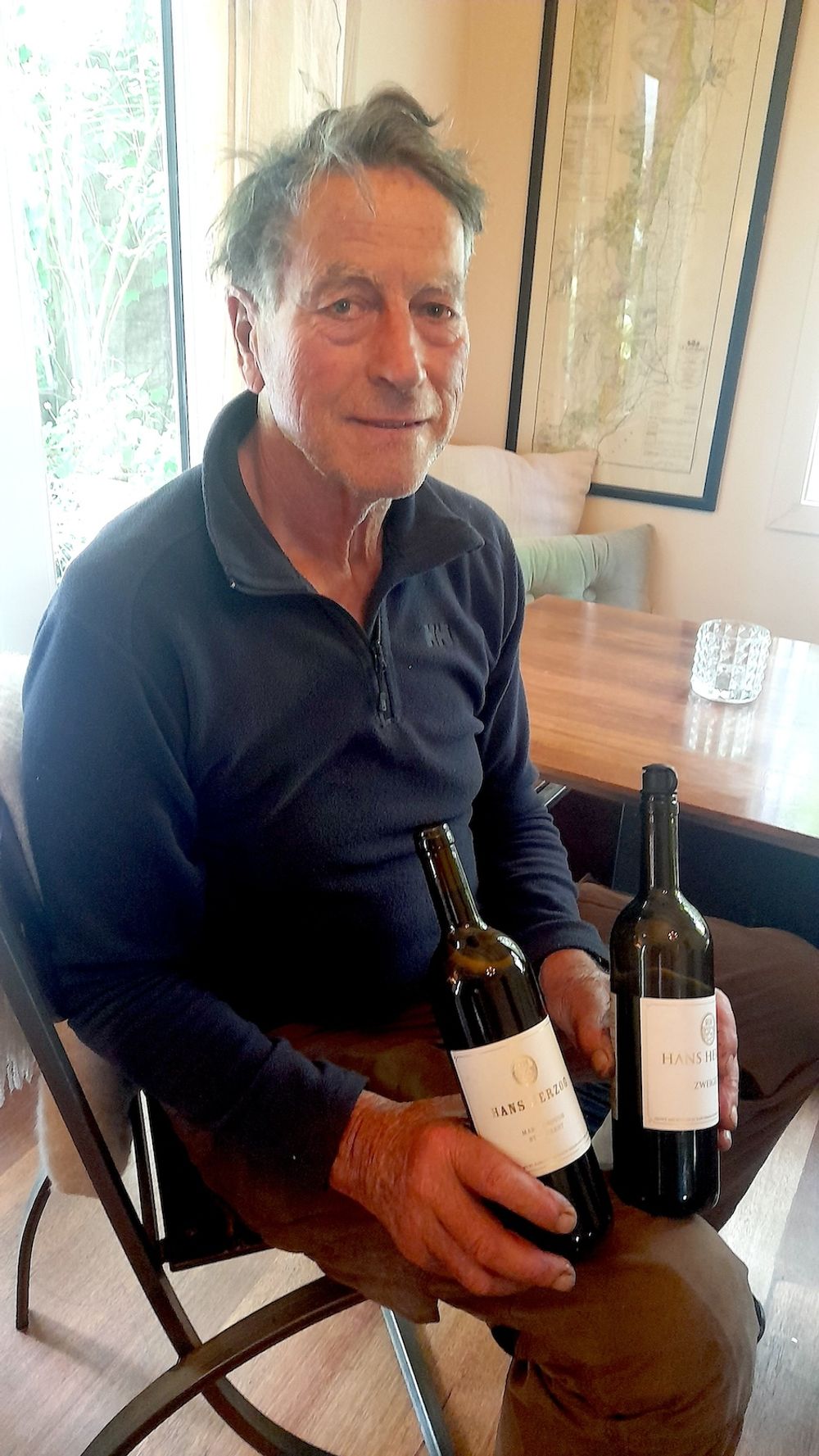
Hans Herzog, Blaufrankisch 2021(Caviste)
On his organically-farmed 11.5 hectares in one of the hotter sites in Marlborough, Austrian-born Hans Herzog grows as many as 28 different varietals. His refined Blaufrankisch thrives on sandy, gravelly soils, showing notes of blueberries, black cherries and a hint of dark chocolate with silky tannins. The UK is his no 1 export market.
Hunter’s, MiruMiru Marlborough Brut NV (Jeroboams)
Named after the Maori word for ‘bubbles’, this highly drinkable sparkling wine (50% Chardonnay, 40 Pinot Noir, 10 Pinot Meunier) spent 18 months on the lees and has a dosage of 8g/l. Hunter’s make around 8,000 cases per year of it, with Laithwaites, a long-term partner, stocking it.
Isabel Estate, Single Vineyard Sauvignon Blanc 2025, Wairau 2024 (Bancroft Wines)
Some of Marlborough’s oldest vines on original rootstocks, dating back to the 1980s, can be found at Isabel. A touch of old oak (15%) is employed for fermentation by winemaker Jeremy McKenzie to give some texture. Passionfruit notes are apparent in this refined Sauvignon, which has hints of minerality and salinity.