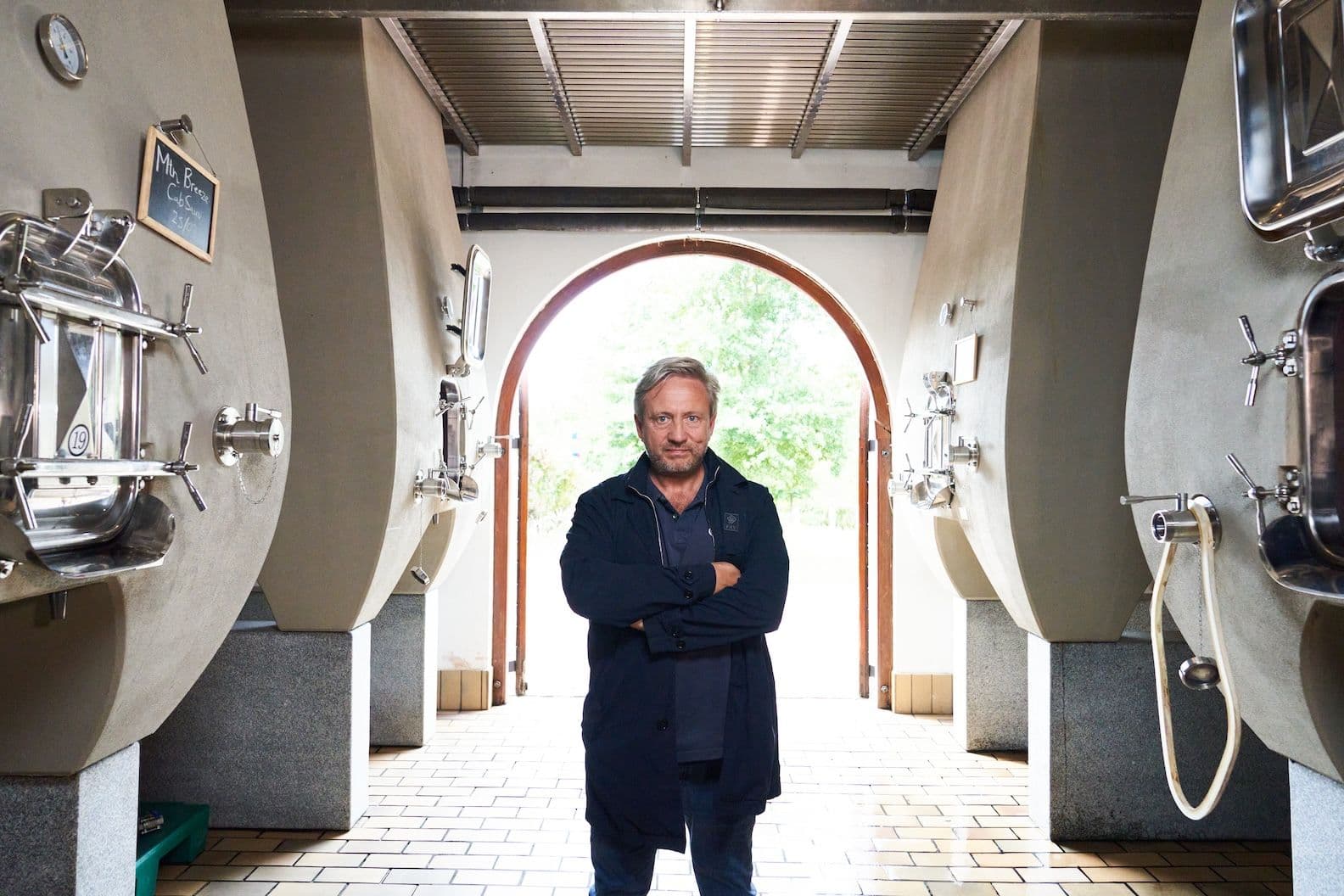
“Forget what you think you might know about Californian wines,” says winemaker Guillaume Boudet, as we launch into a landmark tasting of Hyde de Villaine. It’s been 25 years since Aubert de Villaine – the famous co-director/winemaker at Domaine de la Romanée-Conti (DRC) – set his sights on California, joining forces with the Hyde family and its eponymous vineyard to create the Carneros project, Hyde de Villaine.
“I have a long relationship with California,” says Aubert de Villaine, referring to when he first came to the Golden State in 1964, then an aspiring journalist. He met Robert Mondavi (“He told me he was going to make better wine than we [the French] did”), and later married a Californian woman, Pamela Fairbanks.
As it happened, her cousin was Larry Hyde, who planted what is undoubtedly one of California’s most sought-after vineyards. After tasting a bottle of Chardonnay made with Hyde fruit at Pamela’s grandparents’ house, De Villaine was clear that the vineyard had potential. Even though the Hydes weren’t interested in making wine, he suggested using the best blocks for a joint project – wines from California, but made with a French philosophy. “Even, I dare to say, a Burgundian philosophy,” De Villaine adds, with a decided twinkle in his eye. Hyde de Villaine (HdV) was born – with the first vintage 2000.
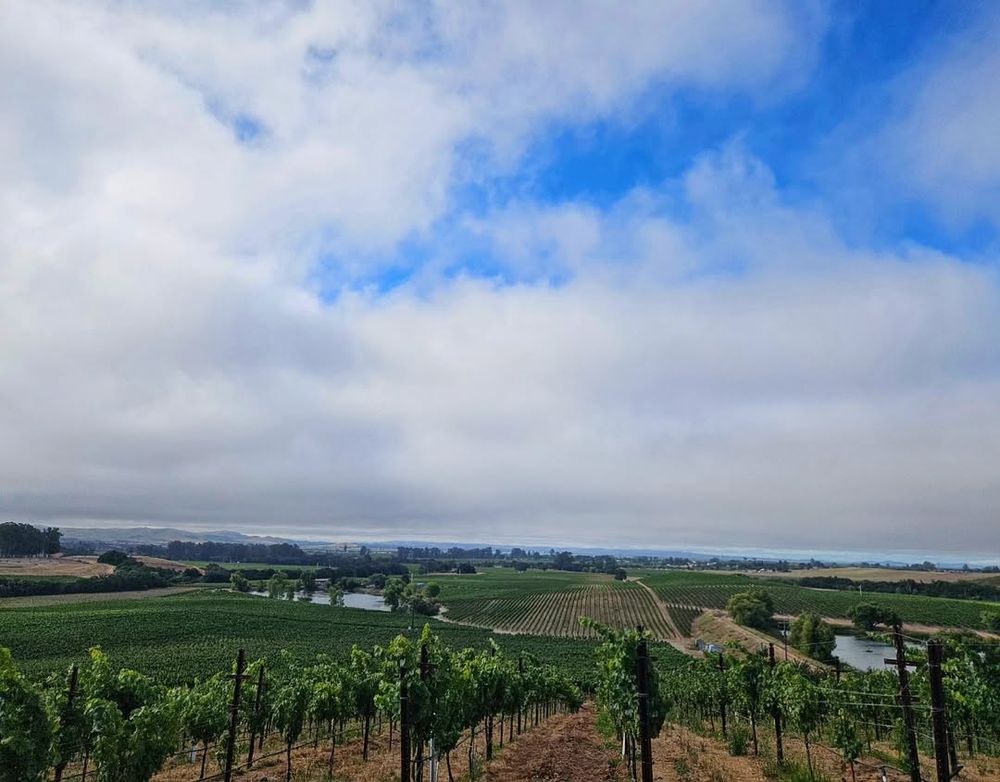
Because of the vineyards' proximity to the ocean, cool breezy mornings are common, even in the peak of the growing season
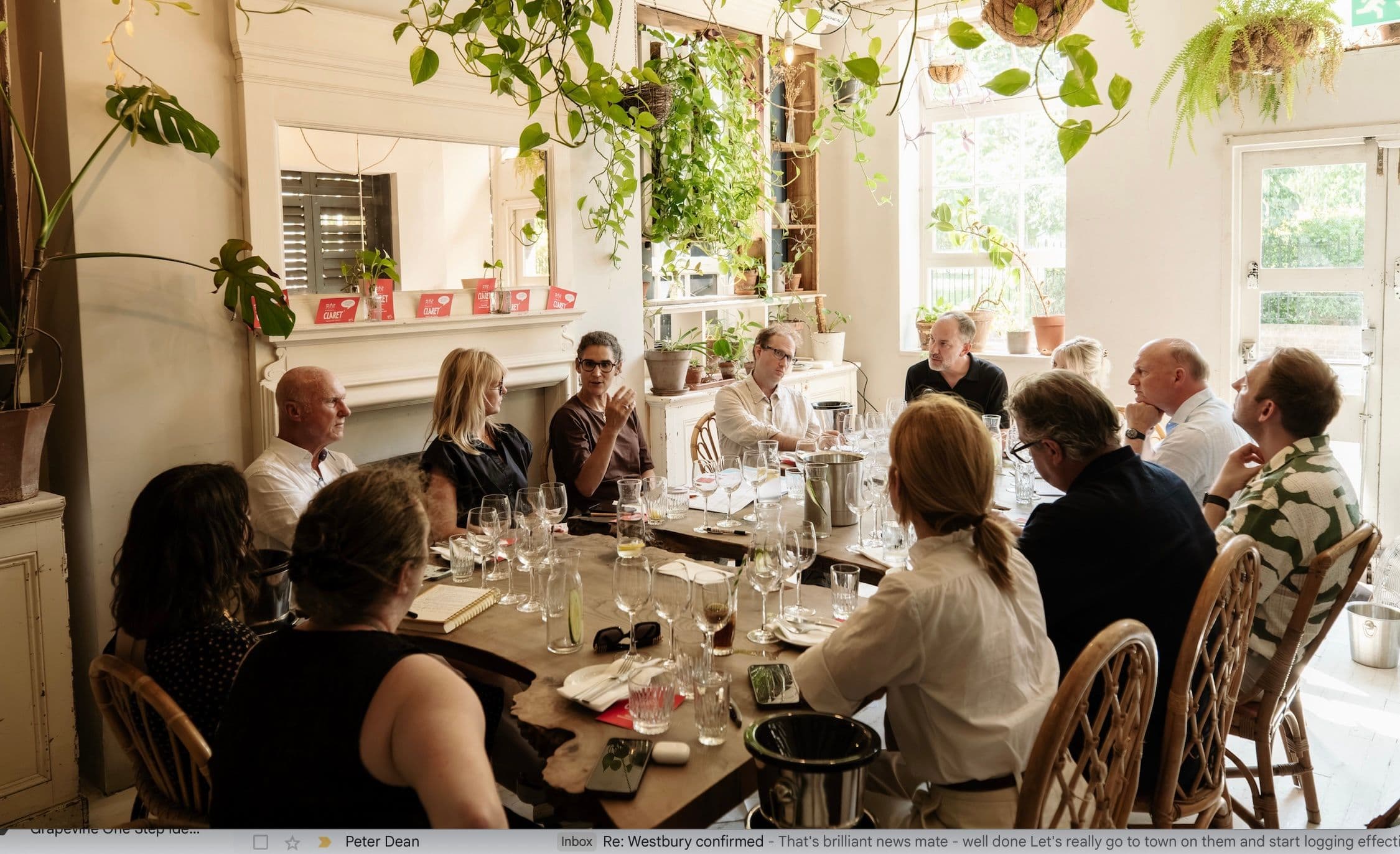
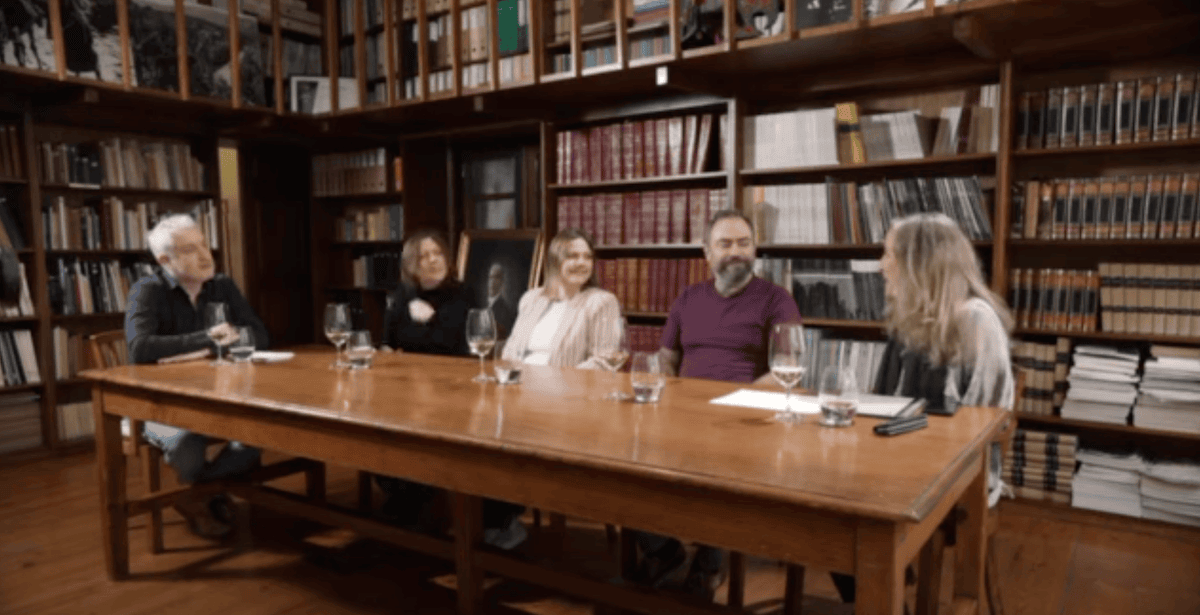
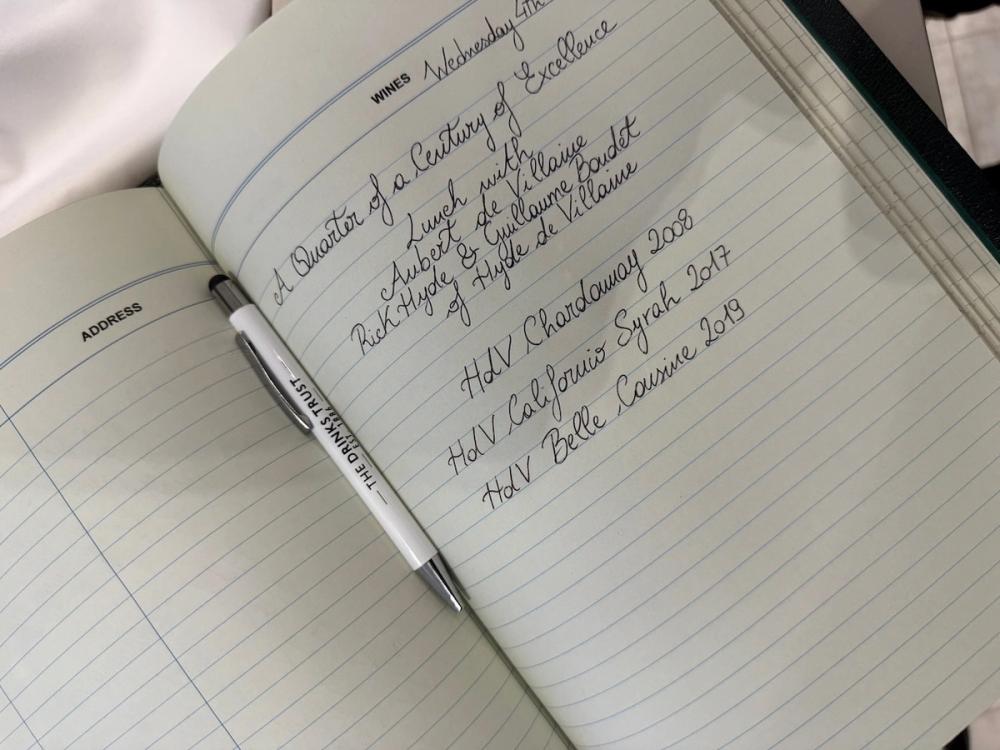
Longstanding exclusive UK agent of both DRC and HdV, Corney & Barrow organised this special vertical to mark the 25th anniversary of the project, offering a look back over more than a decade’s worth of the producer’s flagship Chardonnay (back to 2012), presided over by Aubert de Villaine, Rick Hyde and Guillaume Boudet.
The project has only had three winemakers since inception, Jean-Laurent Vacheron (of the Sancerre family), Stéphane Vivier (a Burgundian who now has his own project, Vivier) and the current Guillaume Boudet, who happens to be from Bordeaux, “But we forgive him for that,” says De Villaine. The consistent mission, however, has been, in De Villaine’s words, to make “wines that try to express place.”
For Boudet, HdV makes Napa wines, but they are also “all about finesse and elegance,” something for which their cooler Carneros location is key. The approach is for 99% of the work to take place in the vineyard, and Boudet describes the winemaking as little more than “babysitting” – with native ferments, full malolactic, minimal new oak, combining standard barrels with larger foudres and concrete eggs, and no bâtonnage.
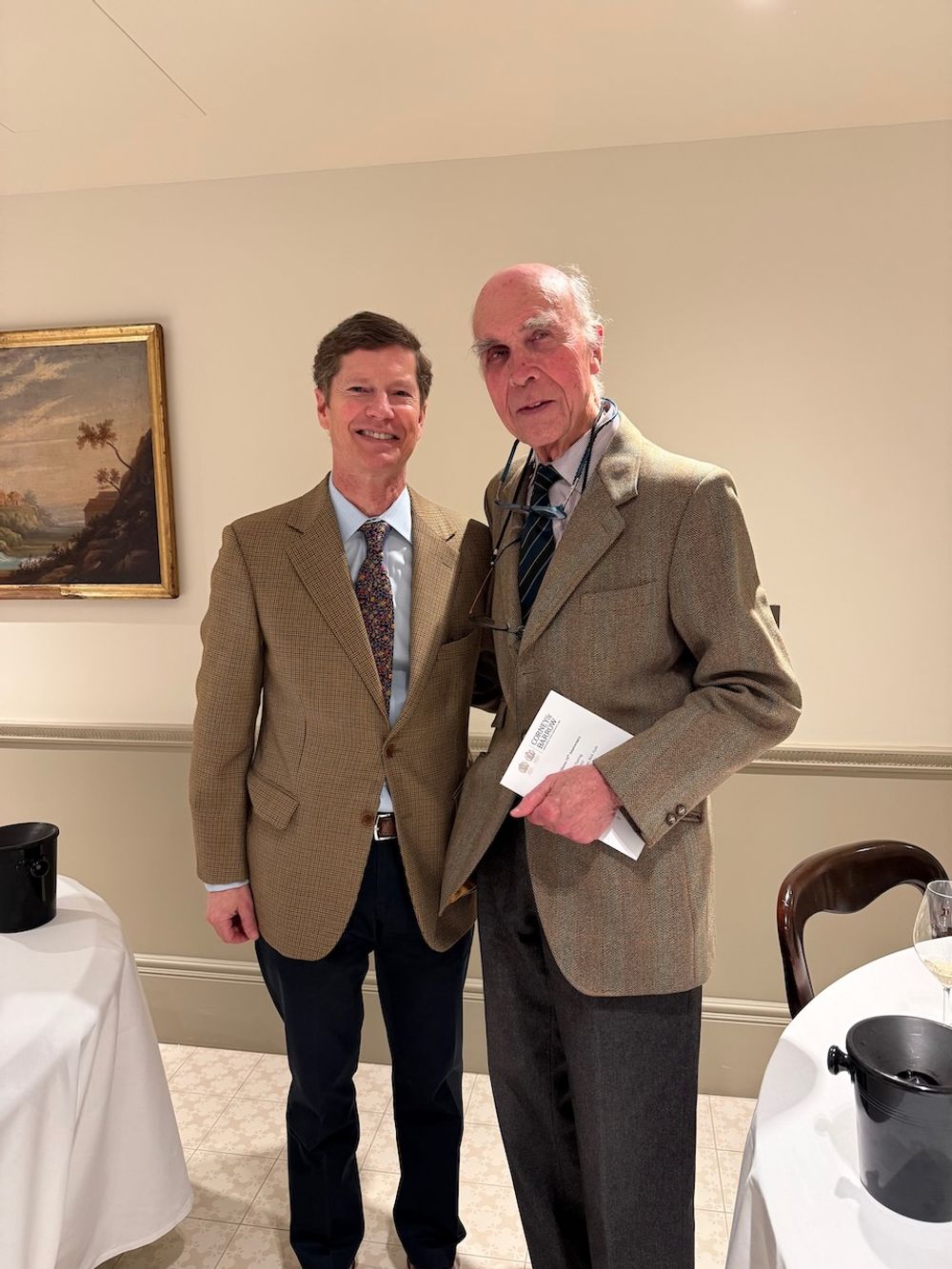
HdV winemaker Rick Hyde and Aubert de Villaine (l-r), London, March 4, 2026
HdV uses 15 acres of the Hyde vineyard, the same, select blocks every vintage, split between around 70% Wente and 30% Calera clone. For Boudet, the Wente, with its hen-and-chick/ millerandage, brings minerality, a citrus character and flint/gunpowder to the wine, while the bigger-berried Calera brings white fruit and a juiciness.
Although they don’t work the vineyard themselves, HdV has a separate crew overseen by Boudet to ensure the site is worked to its standards. Organic practices are used where possible, and the team tries to avoid irrigation, thereby encouraging the roots to drive deeper into the soils.
There haven’t been massive changes in the winemaking since 2000, although the portion of new oak has been reduced – down from around 40% in 2011-2012 and now sitting around 20-25%, depending on the vintage, with a lighter toast favoured too. Boudet has also introduced concrete eggs (from 2014/2015) and a higher portion of foudre for the wines’ élevage – keen for the oak to be a backdrop for the site, vintage and variety.
Understanding the HdV Chardonnay style
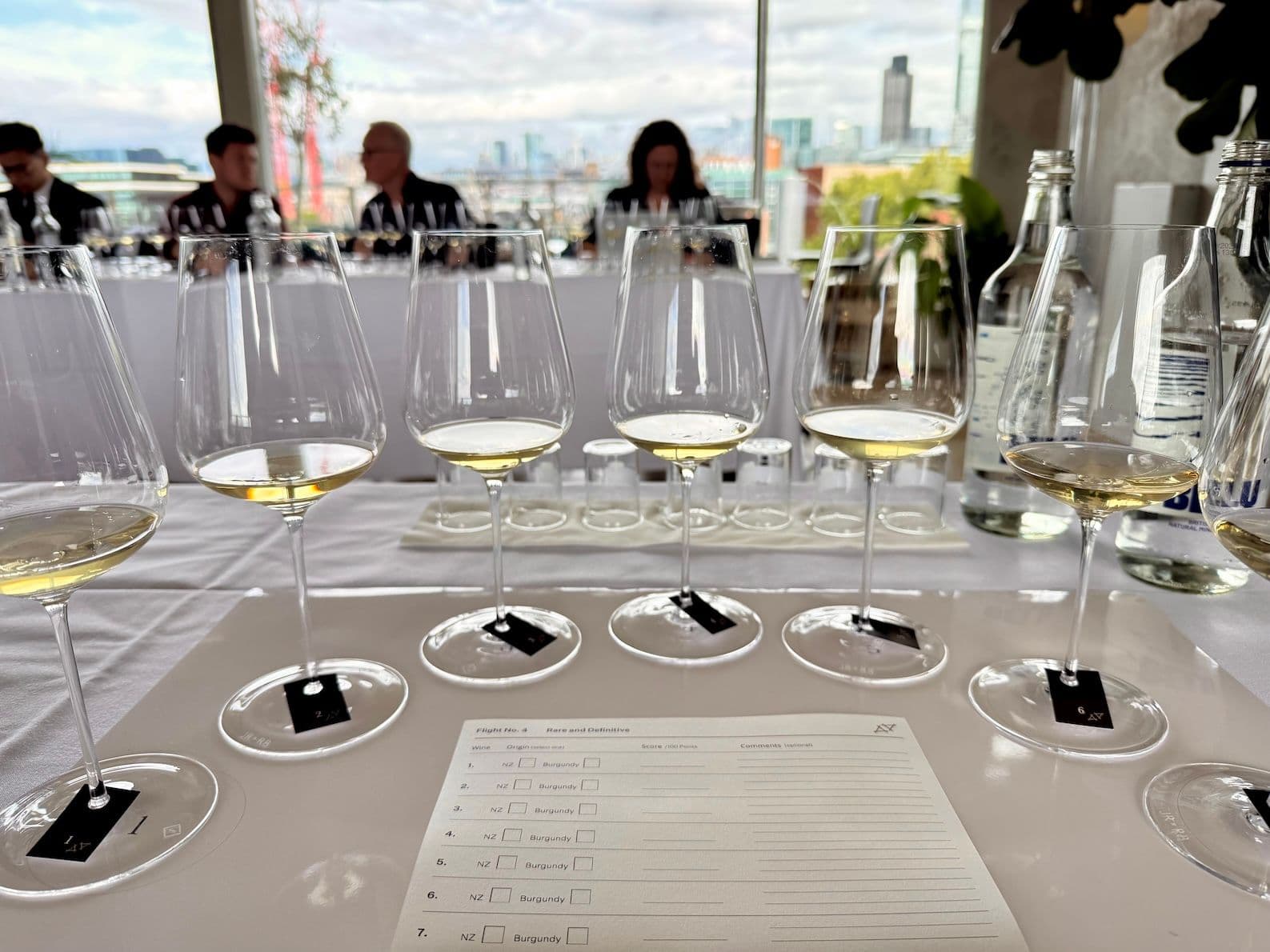
There’s a very clear thread through the wines, as we nose our way through 12 vintages of the flagship HdV Chardonnay, and few would put them in Napa if tasted blind. Indeed, De Villaine notes that he sometimes fools guests with HdV, serving it blind in Burgundy.
The oak is beautifully integrated and, while there is a richness that feels firmly New World, there is also a pristine quality and textural richness that is reminiscent of the best Margaret River Chardonnay, not surprising given the GinGin clone is also prone to millerandage. There is, however, a minerality, salinity and reductive style that is reassuringly Burgundian. Indeed, as we saw tasting a 2008 HdV Chardonnay over lunch, the wines really benefit from air with De Villaine preferring to open HdV Chardonnay three hours before serving.
Boudet attributes the reductive style to a combination of factors – the larger foudre, with a higher volume of fine lees, as well as the long, gentle press cycle, using a pneumatic press over five hours, going up to around 1.3 bar. Boudet also feels the Chardonnay leans further towards the minerality and tension with age, shedding the baby fat of its Californian climate. That might be the case, although there was little fat showing on the gorgeous 2023, which was a real highlight despite its youth.
De Villaine noted how working in California has informed some of his practices in Burgundy, his experience helping him manage the impact of climate change. While there had been a tendency to de-leaf in the Côte d’Or, De Villaine knows how easy it is for the grapes to burn if they don’t have sufficient shade. While once there was some forgiveness when it came to harvest date in Burgundy, a window of several days, global warming has ensured that picking has to be done at exactly the right moment to produce wines that retain their freshness – as has always been the case in Carneros. “We have to be very conscious in Burgundy now,” he says.
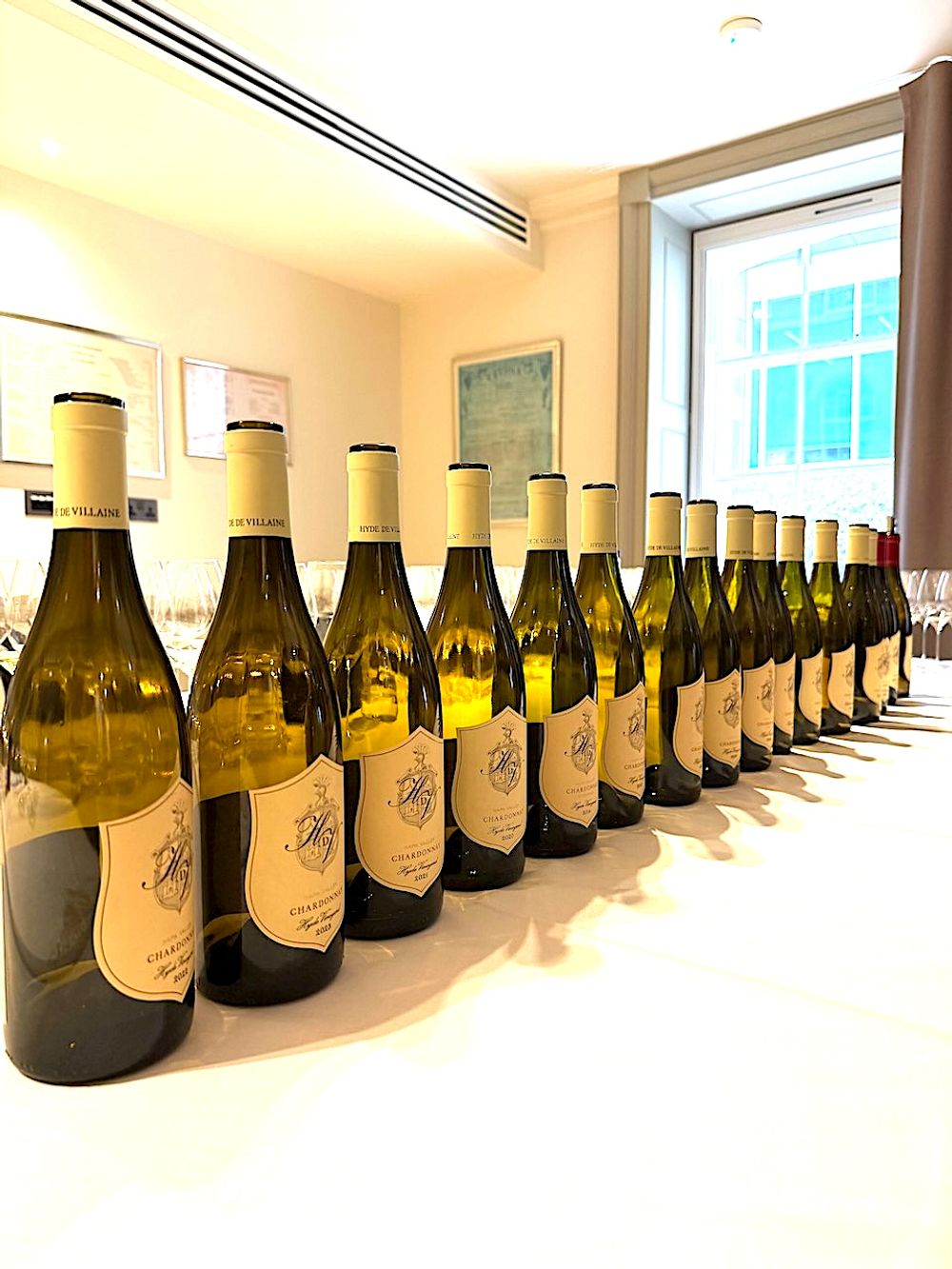
It was a fascinating tasting, with the quality of the HdV Chardonnay shining through. Even the 2008 tasted over lunch was still incredibly youthful. Only the 2013 seemed not to be shining on the day, something De Villaine suggested was bottle variation. The 2012 showed an almost Sauternes-like richness on the nose, yet with a beautifully long, salty finish that complemented the wine’s plump profile, while the 2019 was a real star for me – a particularly mineral expression with pear blossom and gorgeous purity to it.
Looking ahead, the team has started to work with a handful of new Chardonnay vineyards, including Hudson and Firetree, with these new wines set to come on stream from the 2025 vintage, joining the line-up alongside the property’s Californio Syrah, the Cabernet/Merlot blend, Belle Cousine, and the Ygnacio Pinot Noir. While the Napa landscape seems to be shifting, with many wineries up for sale, De Villaine seems unconcerned, confident in HdV’s style and future, safe in Boudet’s hands.
Tasting the 2023 Hyde de Villaine releases
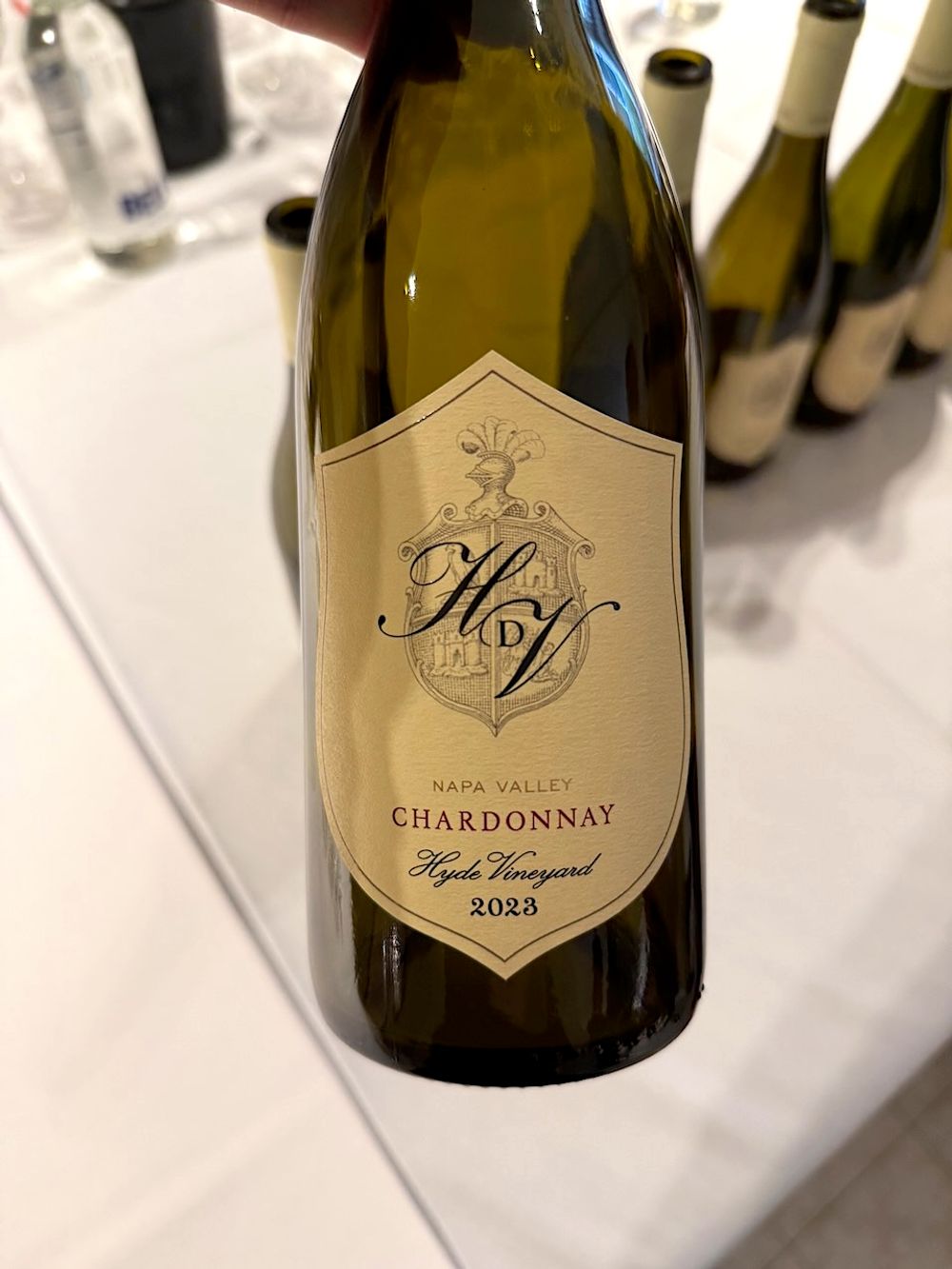
2023 Hyde de Villaine Hyde Vineyard Chardonnay
The 2023 was a star of the tasting – and a vintage that Boudet clearly believes was remarkable. The season was notably long and cool, a waiting game, and they only harvested in mid-October (rather than the normal August). The resulting wine, however, is tight – bristling with flinty energy. Smoky intensity mingles with lime and white peach, leading to a palate of remarkable energy and vibrancy. The wine is pure and driven with a line of taut acidity, yet with a textural richness too, leading to a long, mouth-watering and saline finish.
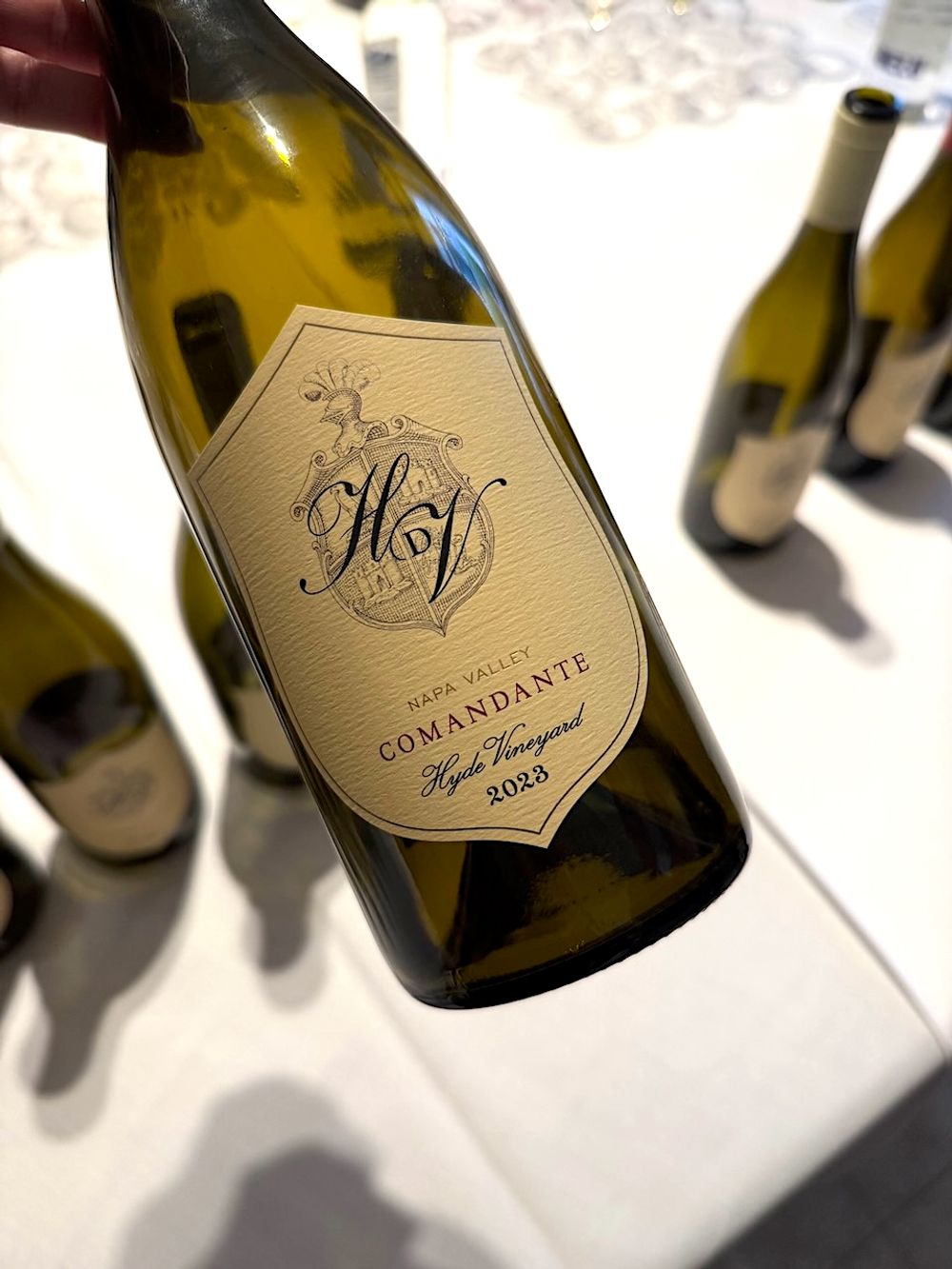
2023 Hyde de Villaine Comandante Chardonnay
The Comandante is a barrel selection of the Hyde Chardonnay. Gunflint and smoke sit alongside ripe Meyer lemon peel, leading to a palate of particular intensity. It’s gorgeous and bright, with sweet peach at its core, but cooler, spicy savoury tones reining in any potential opulence. The framework is textural and earth, with a chalky feel and fresh acidity that balances the wine beautifully.
2023 Hyde de Villaine Ygnacio Pinot Noir
Rose florals and sweet redcurrant entice, but there’s a darker side here too – with black cherry and cherry stones, a spicy perfume of white pepper that adds complexity. The palate offers a chalky frame of fine tannins, lightly framing waves of juicy fruit.
Corney & Barrow is a commercial partner of The Buyer. To discover more about them click here.