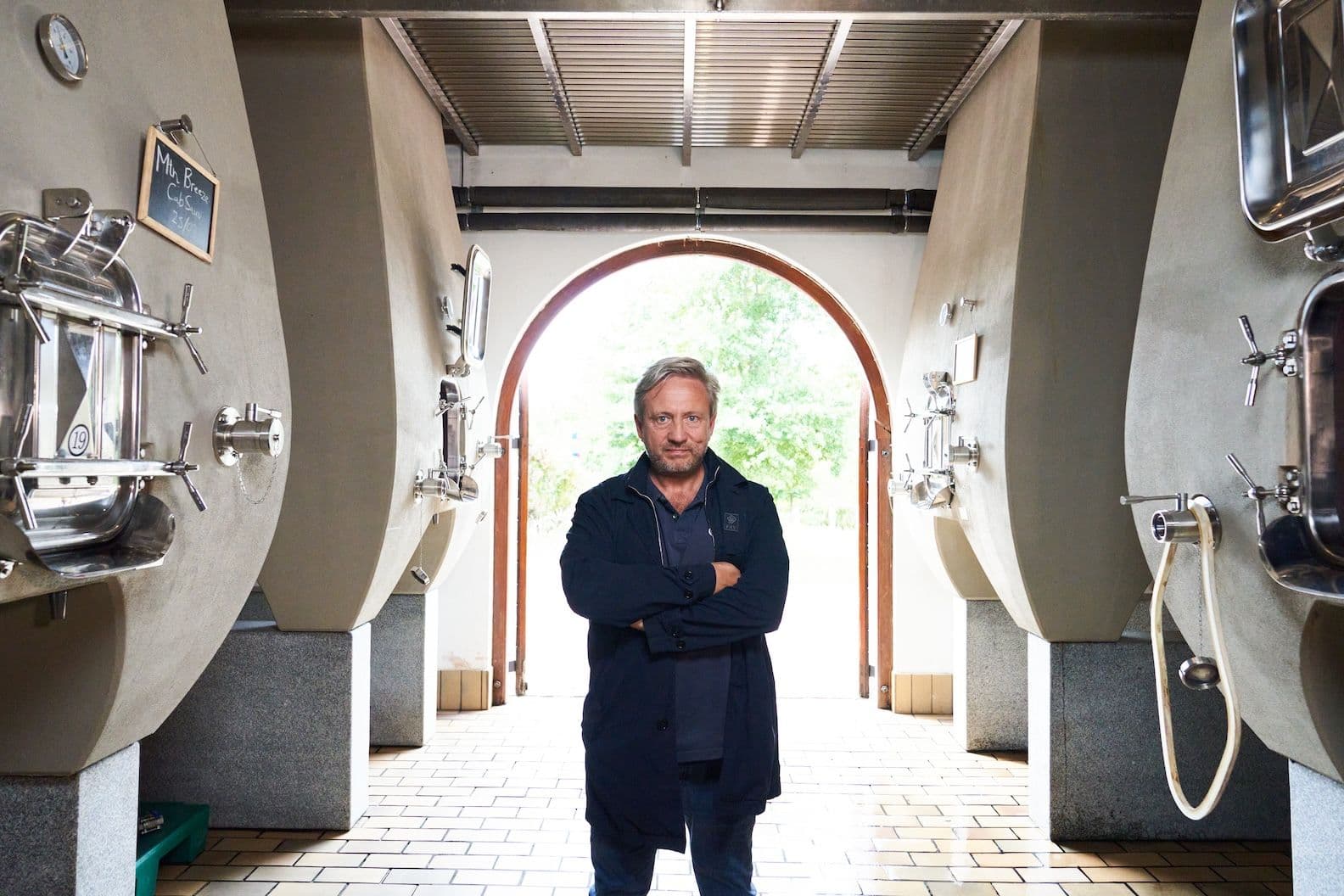
Jean-Rémy Rapeneau has a simple, yet ambitious, goal for Champagne GH Martel, a House originally founded in 1869: to be in the top ten champagnes by volume in every country in the world. According to the UN, there are 195 sovereign states globally; currently GH Martel is present in 82 of them, and in the top ten by volume in 40. So, while there is still a way to go to meet Rapeneau’s target, the tentacles of this family-owned and-run House stretch impressively far.
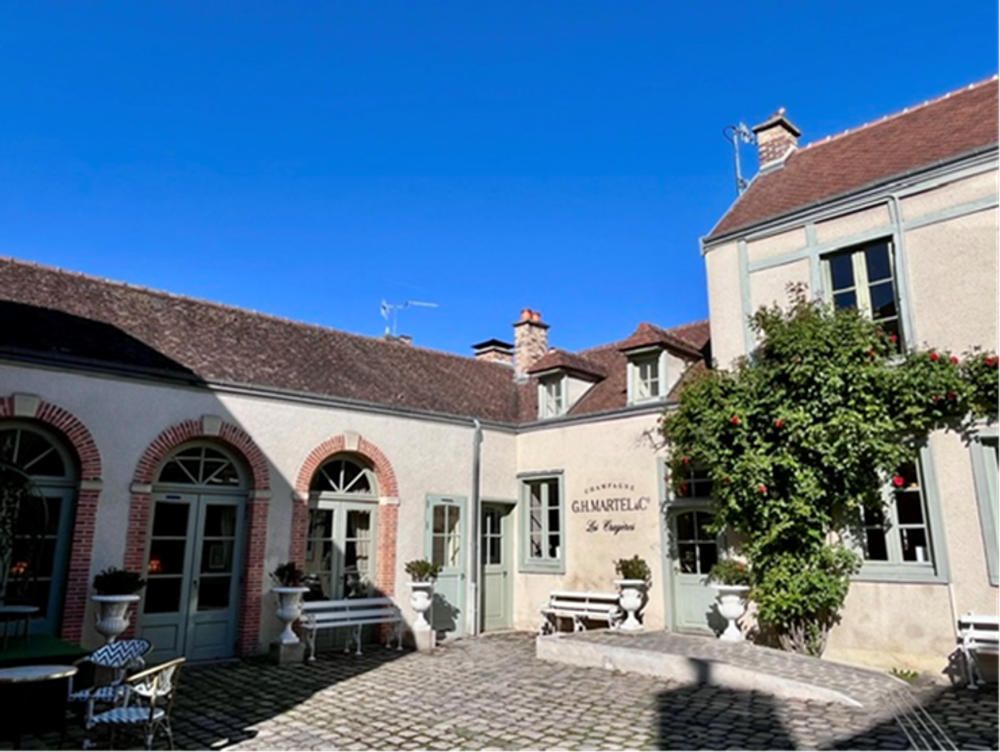
GH Martel owns a total of 206 hectares across 64 villages with an annual output of six million bottles.
GH Martel is a name that is probably familiar to many UK Champagne drinkers, but which had started to fade in the memory, following the end of their distribution agreement with Matthew Clark five years ago. But now it has a fresh partnership with González Byass UK, itself looking for a replacement for Champagne Deutz, which has recently shuffled over to MMD, to join its stablemate, Champagne Louis Roederer.
Rapeneau grew up in Champagne, surrounded by members of a family who continue to manage the Martel collection (more on that later), spending his summer holidays from the age of 12 rotating through entry-level jobs in the vineyard and winery. He may have been destined for a senior role at the house from an early age but, as his father Christophe put it, “If you want to be at the top, you have to know every job below.” His father has now been joined by Rapeneau’s brother on the winemaking side, while a cousin is responsible for the French market.
This tight-knit family control gives GH Martel some key advantages, thinks Rapeneau. They are able to be nimble in their decision-making: “A phone call, a conversation and it’s done,” rather than the drawn-out management meetings of a corporate entity.
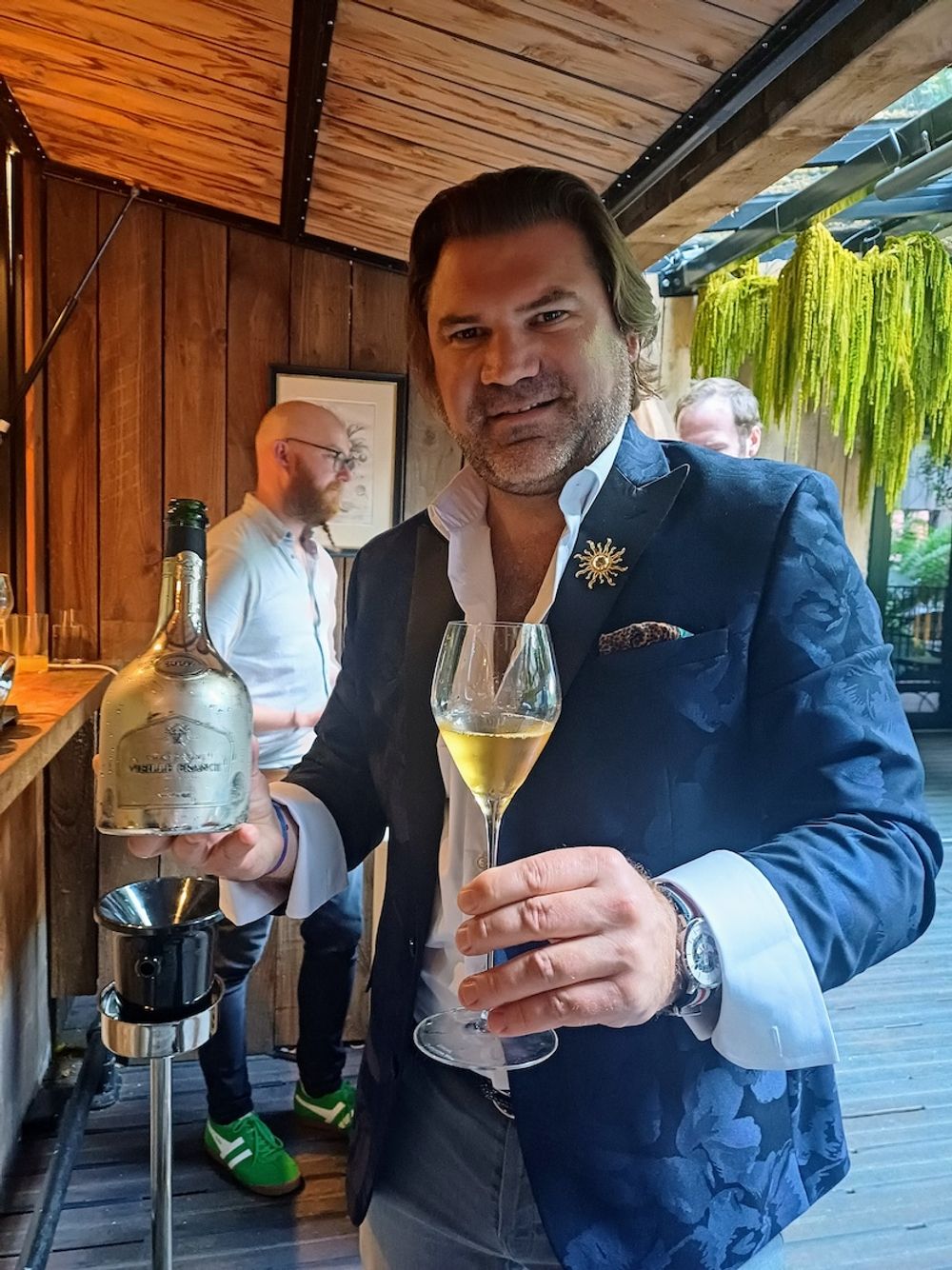
Jean-Rémy Rapeneau - fourth generation of the family that owns it, heads up global export and marketing for the Martel group
The Rapeneau family took over the house of GH Martel in 1979, but the family history in Champagne is much longer, starting as negociants in 1901. In the 1970s they started to buy vineyards at a time when this was a much easier (and cheaper) enterprise than it is today.
Now they own a total of 206 hectares across 64 villages. To supply the grapes they need for their 6 million bottle production across the Martel collection, they also buy from 500 growers who supply from a further 500 hectares. Rapeneau stresses that they buy from growers close to where they already own vines, so that they can use the same press houses and the grapes don’t, therefore, have far to travel.
Being both growers and negociants is important for the Rapeneau family, as it gives them insight and control over quality. Also, as Jean-Rémy puts it, “We went to school with many of these growers,” so their connections are deeper than merely buyer and seller.
The GH Martel cuvées
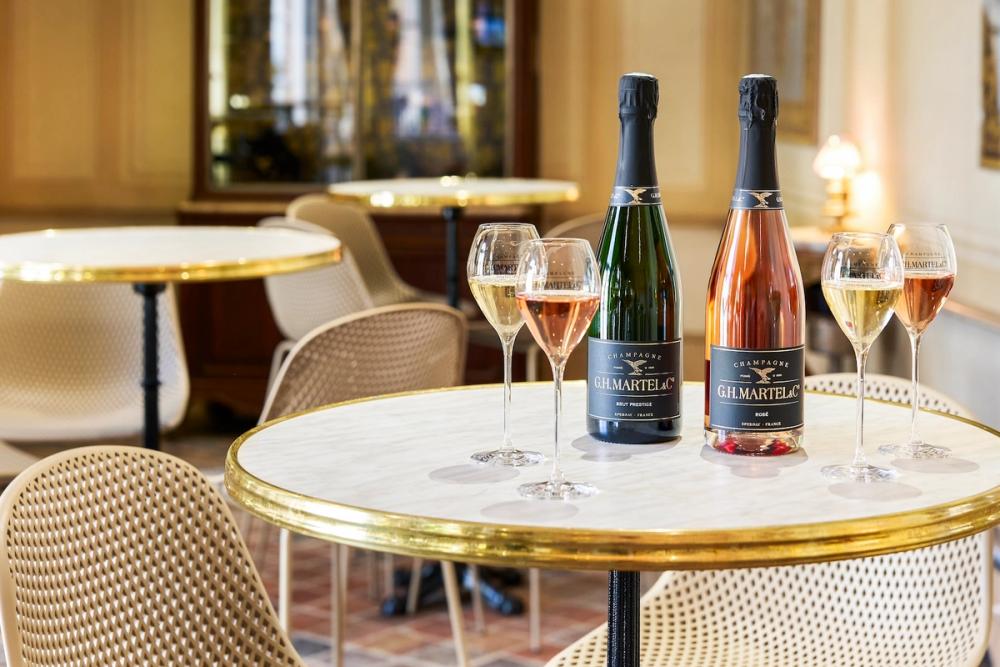
The GH Martel cuvées coming to the UK include Brut Prestige and Rosé, familiar to UK drinkers from their long presence in the off trade in previous years. Brut Prestige is a Pinot Noir dominant blend which has broad appeal and great drinkability. The Brut Rosé, with 15% of still Pinot Noir as part of the blend brings a food-friendly, richly fruited vinosity.
Alongside these comes Cuvée Victoire, a range created in 1989 from the family’s own vineyards, comprising Premier Cru, Rosé and Blanc de Blancs iterations, all aged for 42 months before release. The name evokes celebration and success and the champagnes themselves offer a step up in terms of quality, succulent richness and expressiveness.
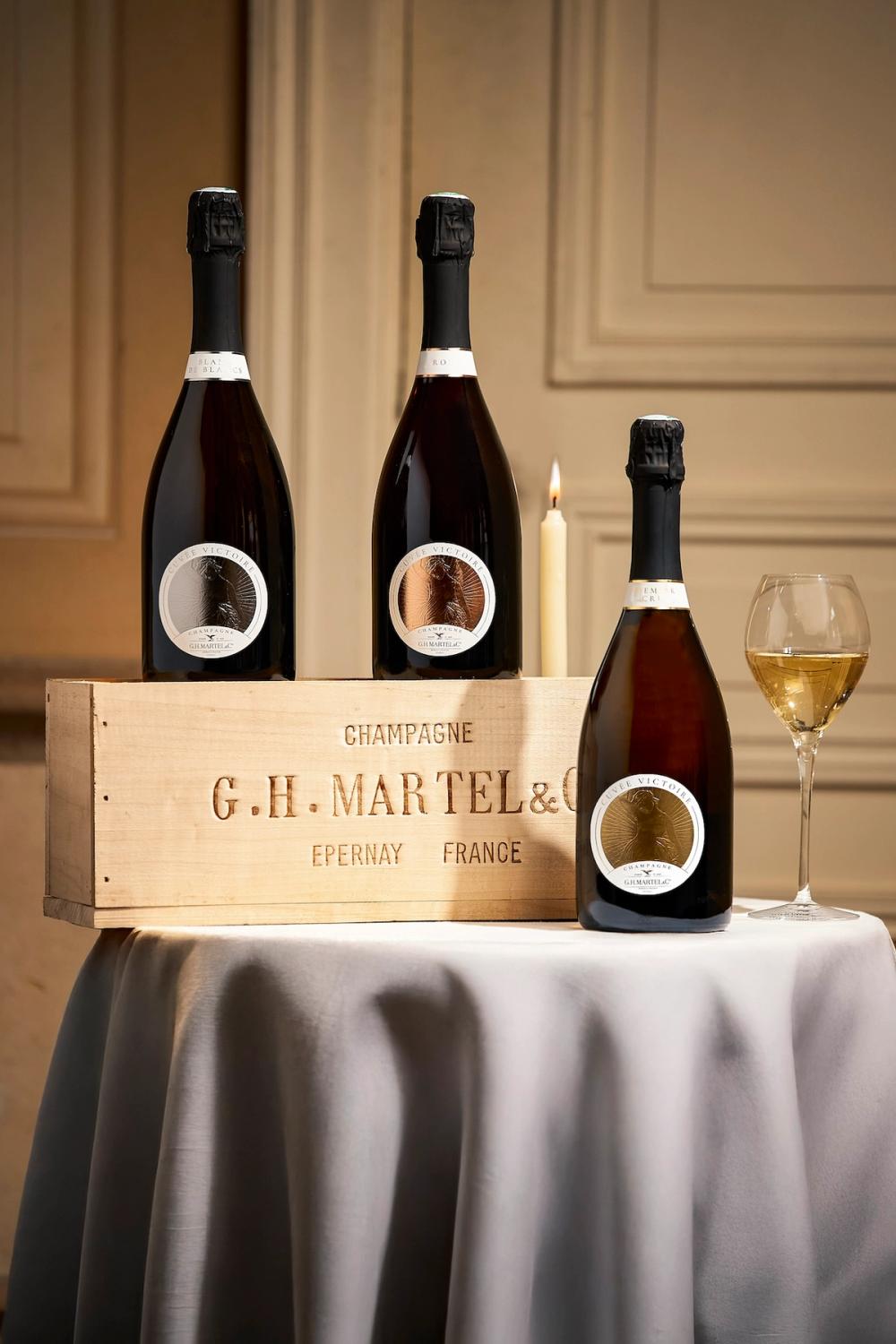
The Premier Cru is a 50/50 Chardonnay/Pinot Noir blend, mostly from the Côte des Blancs, while the Rosé again contains 15% still Pinot Noir, but this time it is Chardonnay which leads the blend, making for greater elegance and finesse. The Blanc de Blancs is all from the Côte des Blancs and has a chalky-tinged minerality.
Finally, there is Vieille France, in a distinctively-shaped bottle; acquired in 2003, this is the only champagne which contains the word France – something which has not escaped the commercially-minded Rapeneau. From grand and premier cru vineyards and with a minimum of ten years on the lees, these are seriously gastronomic champagnes, offering mature complexity with natural somm-appeal.
The Brut Réserve has freshening salinity to counteract the mature richness. The Vieille France 2007, which stands out in its blingy livery, is a 60/40 Pinot Noir/Chardonnay blend, from a year with good natural acidity, making for a layered and satisfying champagne.
The GH Martel Collection also includes two further Houses, Charles de Cazenove and Ernest Rapeneau, as well as a number of growers, including Albert Lebrun and Château de Bligny. But these other elements of the family business don’t form part of the distribution deal with Gonzalez Byass UK. Overall, the group’s production stands at 6 million bottles annually, making them the largest family-owned champagne producer. Half that volume stays in France, with the rest exported, facilitated by their offices in the US, Korea and Singapore.
Trying to combat climate change
Other than developing export markets, top of the list of challenges that lie ahead for GH Martel is the same one that faces all producers in Champagne: climate change. The harvest has begun in August for the past three years, and this year could be one of the earliest ever. Yet, despite the heat in summer, spring frosts are becoming even more of a threat here, as earlier spring warmth tempts the vines into growth, which is then at risk from the frosts which have continued to occur in April.
As growers, they have introduced the somewhat controversial “vignes semi-large” planting of vines, which was approved by the grower body Syndicat Général des Vignerons in 2022. Instead of the usual 1-1.5 metre gap between vines and rows, this system has just 90cm between vines, but 2 metres between rows, and the vines are trained higher. The higher vine growth reduces the risk of most frost, which is worst at ground level.
Aside from such concerns, Rapeneau retains his laser focus on international sales growth, and like all really successful sales people understands that, at its most basic, his job is simple. “The more it’s available on the market, the more people can buy it.”