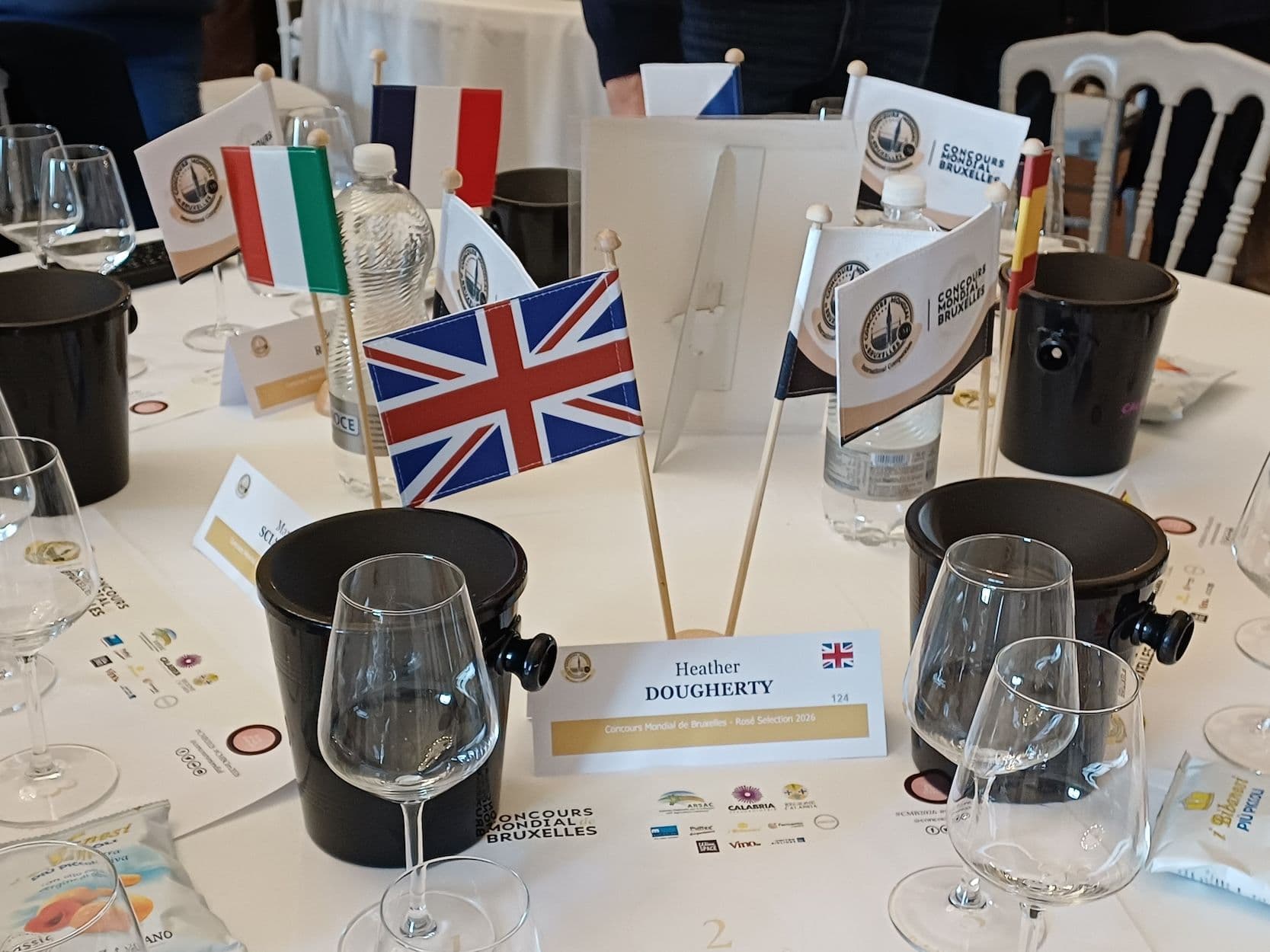

The Concours Mondial de Bruxelles (CMB), a wine competition and family business founded in 1984 by the grandfather of the current CEO, Quentin Havaux, arrived in Cirò, Calabria in late March, for the session of the competition dedicated to rosé wines. Other judging sessions in other locations, including Armenia, follow in the coming months.
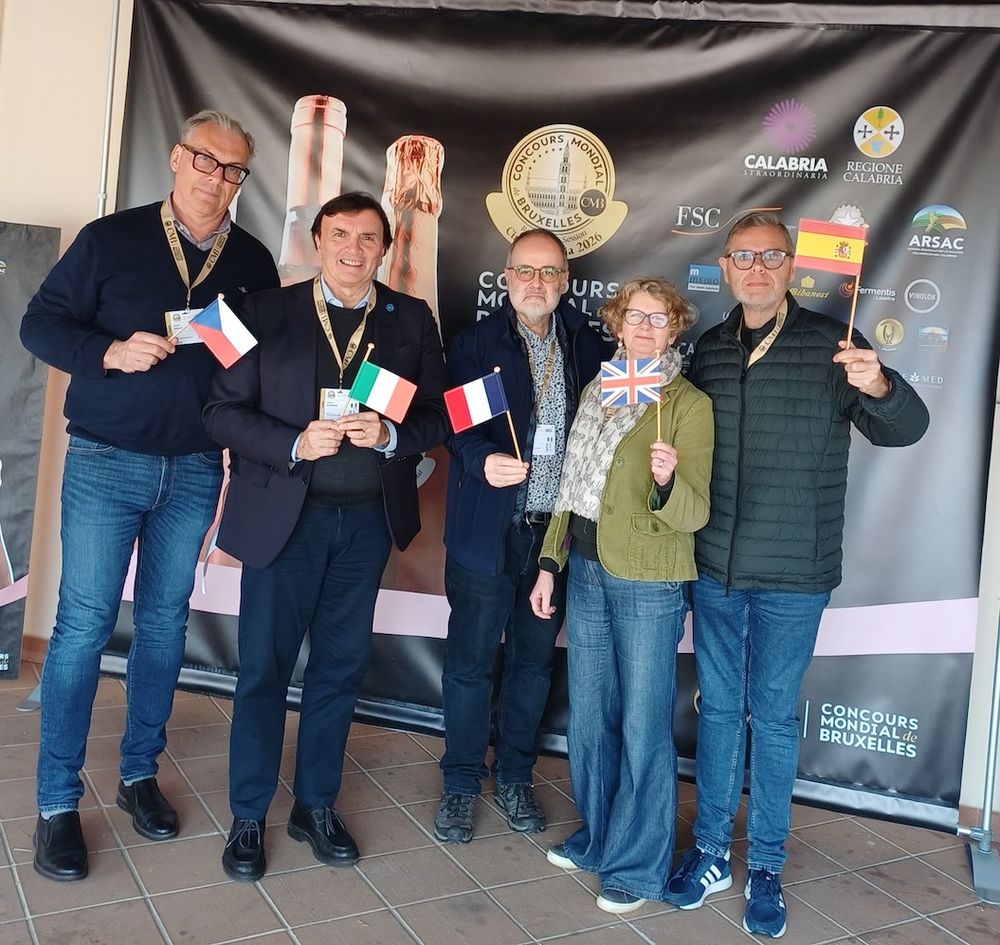
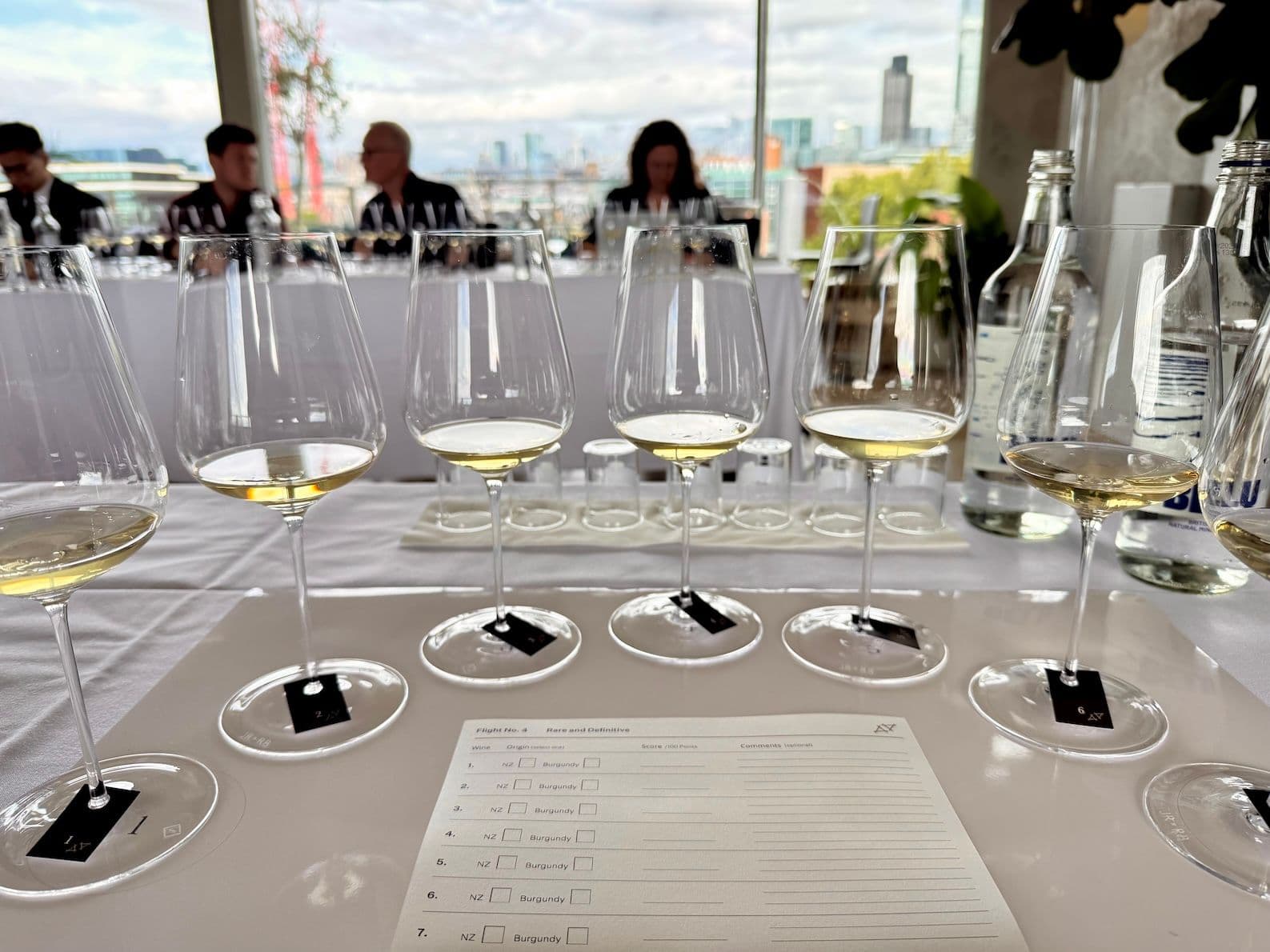
As well as its peripatetic nature, the CMB stands out for its format: multi-national tasting panels judge wines in the morning, then afternoons and evenings are dedicated to exploring the wines, landscapes, culture and food of the host region. This is the second time that Cirò has hosted the competition, underlining Havaux’s feeling that welcoming a group of international journalists and buyers can be an effective way to raise a region’s profile.
So, we 55 judges, having finished our morning of wine blind tasting, set off each afternoon to meet wine producers and explore the vineyards of the area. If the region of Calabria is the toe of Italy, then Cirò DOC, in Crotone province, sits at the ball of the country’s foot, facing towards Puglia, the heel, across the Gulf of Taranto. It is by far the largest DOC in Calabria by volume of wine produced and is home to its own array of local varieties.
Leaving behind the unappealing sprawl of the narrow coastal strip of Crotone province, with its petrol stations and unfeasibly large number of car body shops (carrozzerie), we quickly ascend into the bumpy hills. Here olives, citrus and vines replace buildings, and the landscape transforms into an intensely rural one.

The white wines of Cirò are predominantly made from Greco Bianco – which is not related to the Greco of Campania, and is also not the same as Greco di Bianco, also found here in Calabria. There are also bottlings from neighbouring Terre di Cosenza, still in Calabria, made from the variety Pecorello – though Wine Grapes (the reference work by Jancis Robinson, Julia Harding and Jose Vouillamoz) informs me that Pecorello is in fact genetically identical to Greco Bianco. What would Italian wines be, without a few confusing wrinkles such as this?
Putting aside the technicalities, the white wines here are in general fresh, generously textured, with citrus and herb flavours, finishing with a saline freshness. They are typical Italian white wines in that they refresh and cleanse the palate, without imposing on your next mouthful of food.
The salinity I found in the white wines is something that marks all of the wines of Cirò, in all three colours. And over half of the area’s wines are either white or rosé, with around 40% red.
Gaglioppo – vinous treasure

Gaglioppo tasting – Starting with rosé and moving to red, it was almost impossible to tell where one style ended and the other began
Cirò’s real vinous treasure, however, is the red Gaglioppo grape, which has drawn comparisons with Piedmont’s Nebbiolo, due to its rapid colour evolution towards brick red, and its ethereal, perfumed nature combined with savoury flavours and sometimes robust tannins. Comparisons like this can be useful, but they can also rob a grape variety of its own unique identity. Gaglioppo is an ancient grape, which may be the offspring of a natural crossing of Sangiovese and Mantonico (another local white grape).
Gaglioppo’s qualities were laid out in memorable fashion at a tasting held by a collective known as Cirò Revolution. This is a group of small producers, all organic and committed to artisanal wines, low yields and no use of chemicals. They are determined to champion pure, unadorned Gaglioppo, and a tasting of five wines from different members of the collective underlined their challenge to the way we normally view rosé and red wines.
Starting with rosé and moving to red, it was almost impossible to tell where one style ended and the other began. The rosés, all from 2023, were shades of brick red, fragrant and full-flavoured, with varying amounts of tannic structure – the antithesis of DYA (drink youngest available) pink wine.
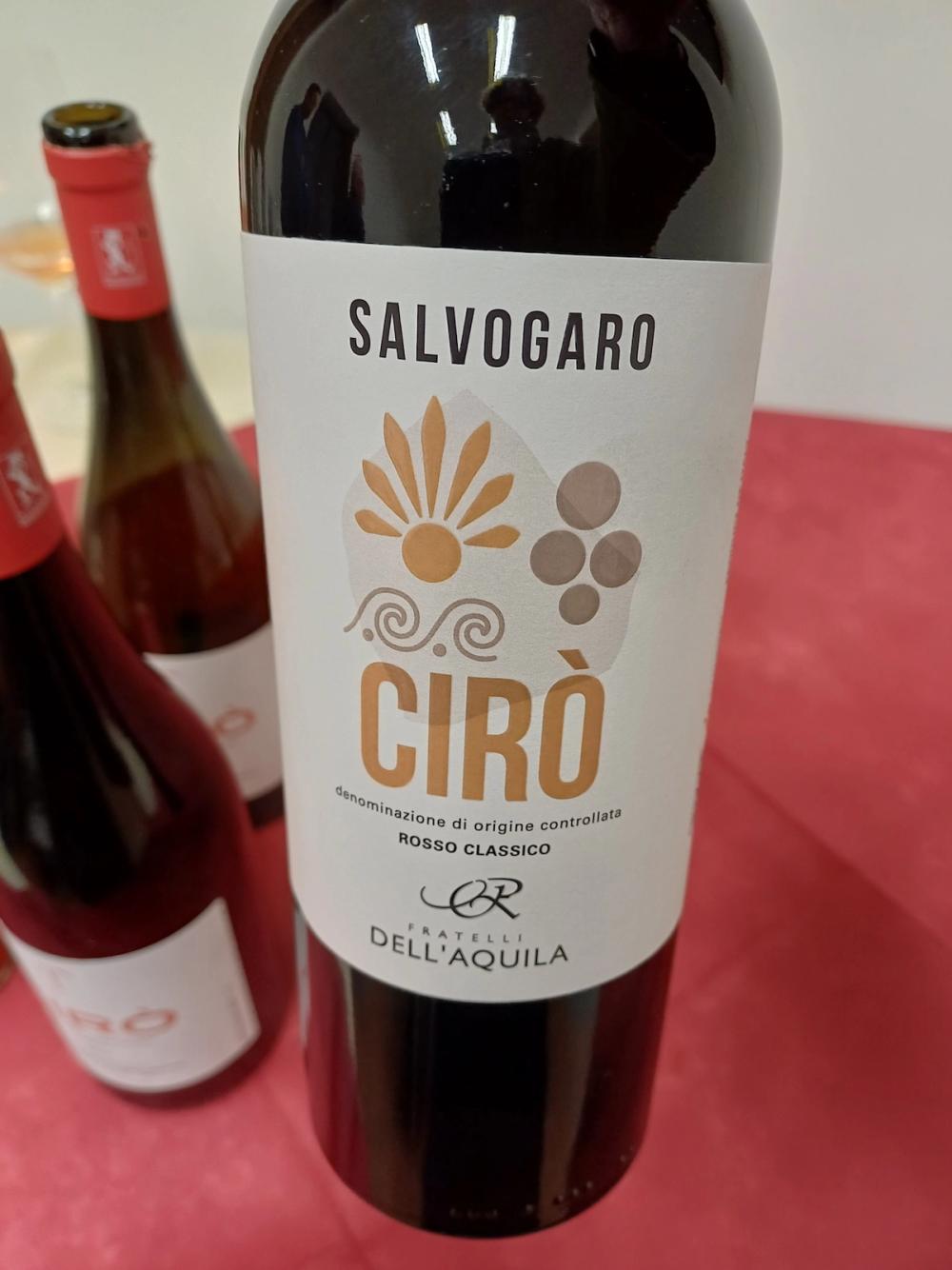
The two reds showed different sides of the variety. Fratelli del Aquila’s Salvogaro 2021 looked like the kind of rich consommé that I would like to think The Ritz still makes, and was satisfyingly savoury, with grippy tannins. Sergio Arcuri’s 2020 looked and smelled of autumnal chestnuts, with unfolding flavours of old rose and ripe spiced fruit, closely followed by cotton wool tannins. All these wines could be described as medium bodied.
Librandi and its discovery of other varieties
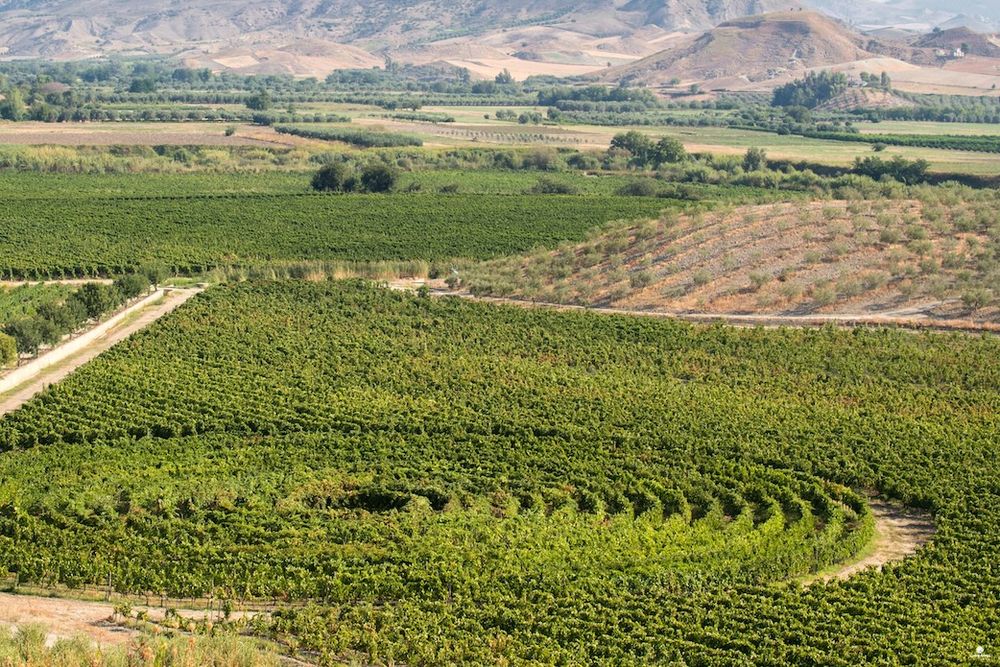
Librandi has assembled a vineyard with some of Calabria's 200 varieties
Beyond Gaglioppo, we visited Cirò’s largest producer, Librandi, and specifically its “Giardino varietale”. Here the Librandi family has assembled a vineyard with some of the 200 Calabrian varieties they collected with the help of local vineyard owners in just a three-year period.
Some, including white Mantonico and black Magliocco, were known varieties which had become almost extinct, but which can now be found in commercial bottlings. Others are so forgotten that new names have had to be coined for them. The vineyard is notable for being a single row, planted in a spiral, emblematic of the continuous – and continuing - research work that has gone into creating it.
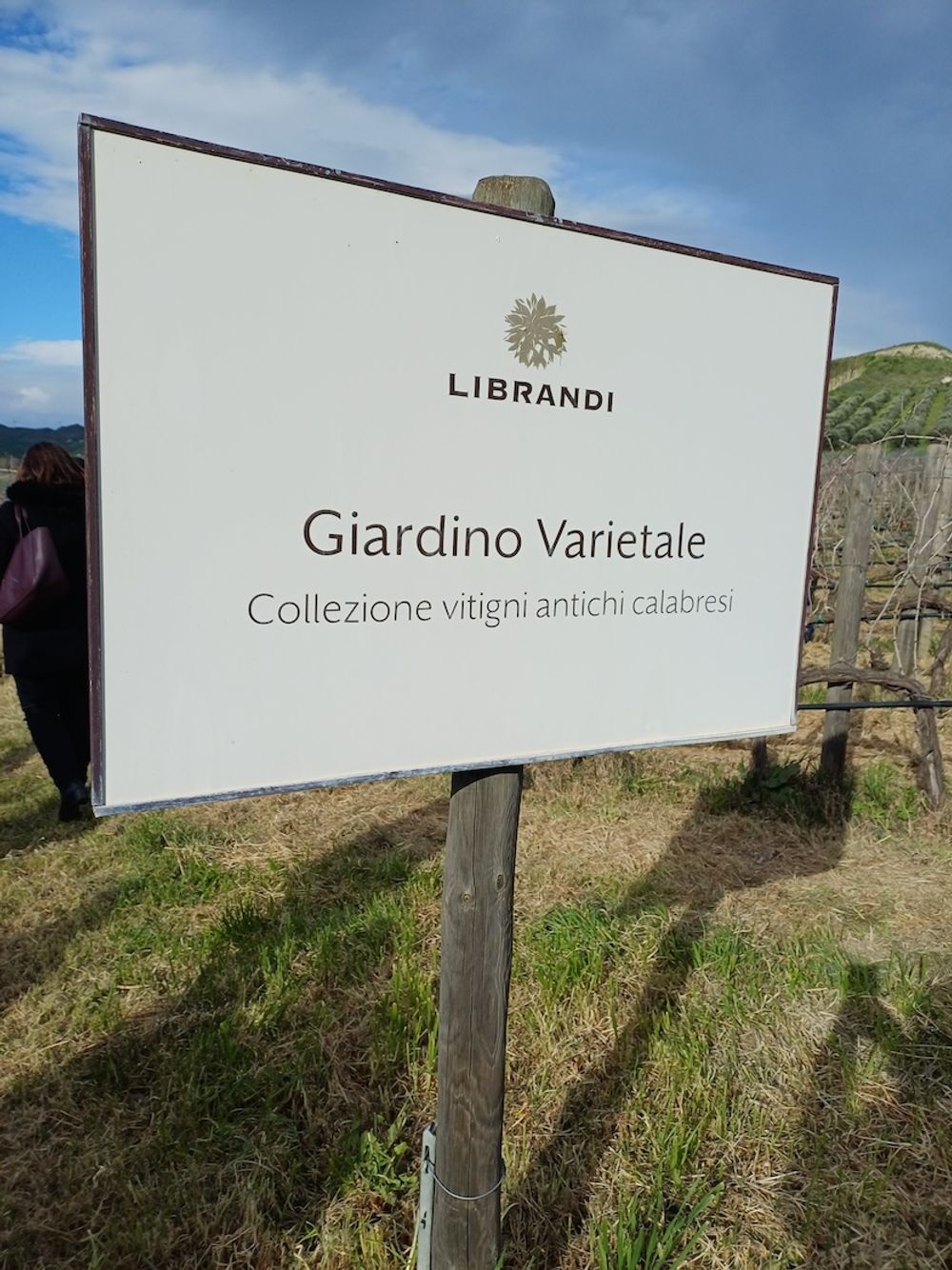
The results of the family’s efforts have been shared with all the other local growers, so that the (re)discovered varieties can be propagated across the region.
The roots of the project date back to the trend in the 1990s to plant international varieties in Calabria. “We had a card to play,” says Paolo Librandi, as their research has unearthed varieties that only exist in Calabria, which can serve as an unique calling card. Even those recently discovered varieties which don’t seem to offer much interest in terms of profile or flavour now, might serve as an insurance policy against the future effects of climate change, so are still worth preserving.
After a tour of the research vineyard, we were treated to a taste of the very first traditional method sparkling wine made from a native Calabrian grape variety – yet another incarnation of Gaglioppo. We also learned that the Italian for a toast is “un brindisi” – apparently a mangling of a German phrase which bore some resemblance to the Italian city of that name. Cheers to Cirò, its growers and its burgeoning range of unique varieties.