G.D. Vajra is a family-run winery in Barolo, founded in the 1970s by Aldo Vaira. It is regarded as one of the most elegant and terroir-focused producers in the region. Although the estate is called G.D. Vajra, the family uses the more modern Vaira spelling for their surname. The G.D. at the front of the estate’s name relates to Giuseppe Domenico, Aldo Vaira’s father.
Aldo Vaira’s life in wine began when he was only 15, in 1968. At the time, he was living in Turin and became involved in the student protest movement. After he joined a march that passed his father’s office, his parents were so shocked that they sent him to the family farm in Vergne, above Barolo, for the summer to stay with his grandfather.
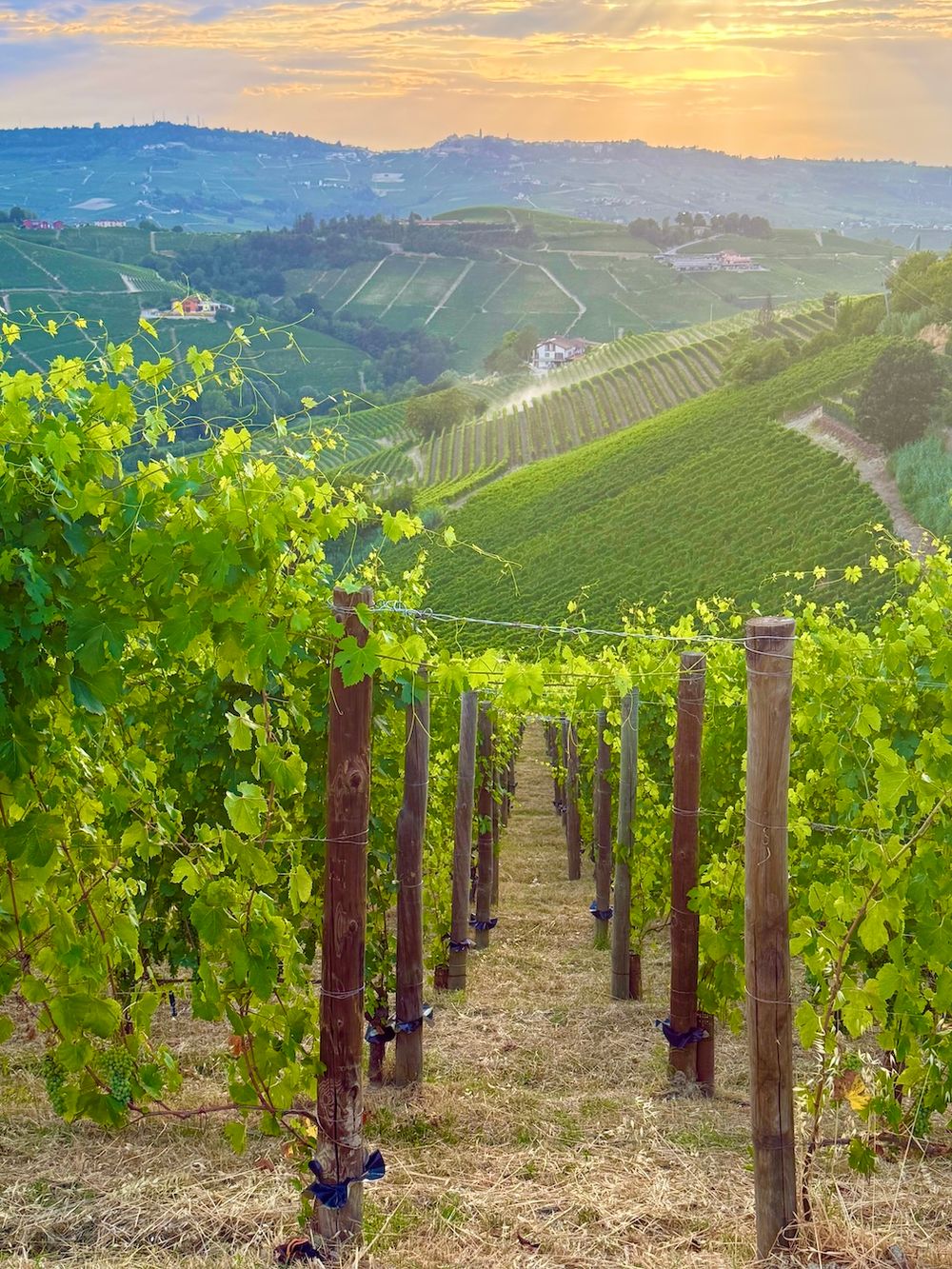
Aldo Vaira was so struck by the magnificence of his grandfather's farm that he vowed to become a winemaker rather than lawyer
What was intended as a punishment became the start of his vocation. During that summer among the vines, Aldo fell in love with the land and decided he wanted to become a farmer rather than follow his father into law. When he returned to Turin, he told his parents he wanted to revive the family farm.
He went on to study agriculture, travelling regularly back to Barolo to plant and manage vineyards at his grandfather’s farm, while still a student. Incredibly early on, he embraced organic viticulture, at a time when this was highly unusual. By 1972, he produced his first vintage, though it was one of the most difficult vintages of the century and no Barolo was made. Still, Aldo remained committed, teaching viticulture to support himself while slowly building the estate that became G.D. Vajra.
Thus, what began as a teenage rebellion, turned into a lifelong devotion to farming Barolo and the family land. Aldo and his wife Milena are still very much at the helm of the estate, and on my visit there I was warmly welcomed by them and their three siblings Giuseppe, Francesca and Isidoro who are all part of the family story.
Giuseppe Vaira runs the cellar and ensures that the family continues with not only building the business but keeping and evolving old traditions. Francesca works both on the hospitality and administration side and Isidoro, the youngest, works in the vineyards, ensuring that Aldo’s legacy continues.
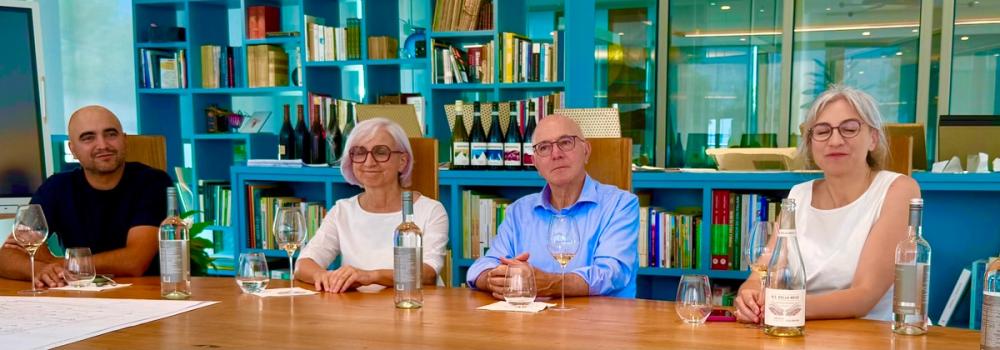
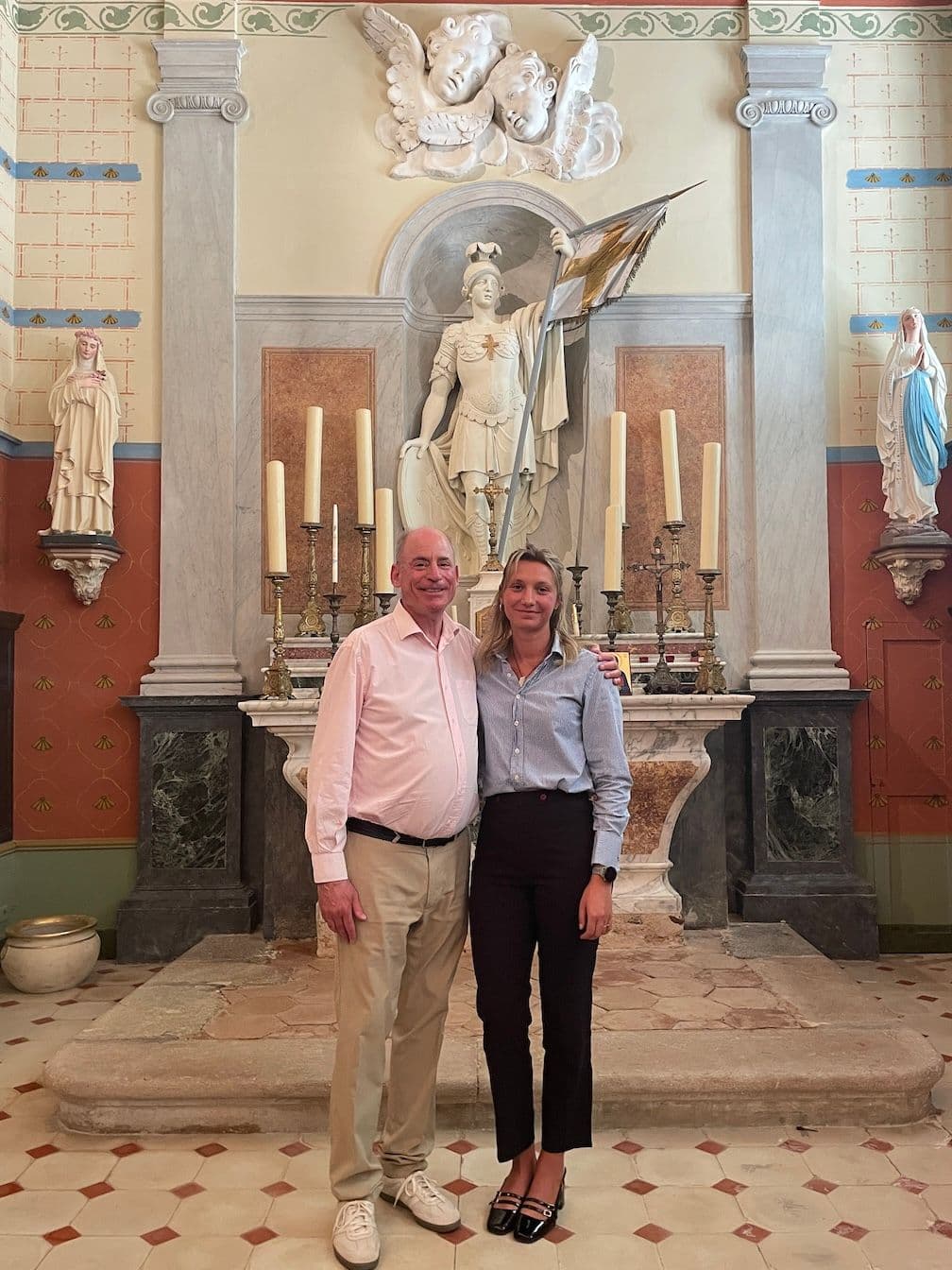
Close-knit family - Aldo and Milena (r) with Giuseppe and Francesca
I have visited many family vineyards, but this really did give a special ‘family’ feel, not only was the whole family warm, graceful, and kind but their passion for the estate was glowing; this continued over the two days I spent with them. It was fascinating to hear the stories, the struggles, and the devotion they have put into this glorious estate, with every piece of glass or building having a story to tell.
The estate has a range of key vineyard sites across Barolo, with particular emphasis on higher-altitude holdings. Each vineyard has its own story, and it was incredible to see the passion and love for each one as we jumped in and out of each site, luckily there was a slight breeze due to the Alps in the background to keep us refreshed.
Winemaking follows a traditional philosophy, with long macerations, gentle extraction and ageing in large oak botti. The aim is to express site and vintage clearly, without heavy oak influence. However, with the new generation on board, there is new energy, with the rediscovery of Chiaretto di Nebbiolo and the taste of the 17th century is championed with N.S. Della Neve, a Metodo Classico Rose and Clare JC, a partial whole-cluster fermentation of Nebbiolo.
There are also expansions, as with the purchase of Luigi Baudana a tiny, highly respected Barolo estate in Serralunga d’Alba. The estate was for years owned by Luigi and Fiorina Baudana who, on retirement in 2008, entrusted the Viara family to take it over. They run it as a separate estate, preserving its identity rather than absorbing it into the main G.D. Vajra label.
Another more recent rediscovery is the Nascetta grape, a rare white grape variety associated with the Langhe and the village of Novello near Barolo. This appears in Dragon Langhe Bianco, where it adds aromatic lift, freshness and local identity to the blend of Chardonnay, Sauvignon and Riesling along with the Nascetta; it was especially good with a cuttlefish dish that we tasted.
It is common language now to talk about cover crops, but Francesca stated that as a child riding on the school bus back in the early 1990s they were intrigued why only their parents had grass and flowers growing freely between their vines, whilst their neighbours' vines were kept as “clean as a kitchen floor”.
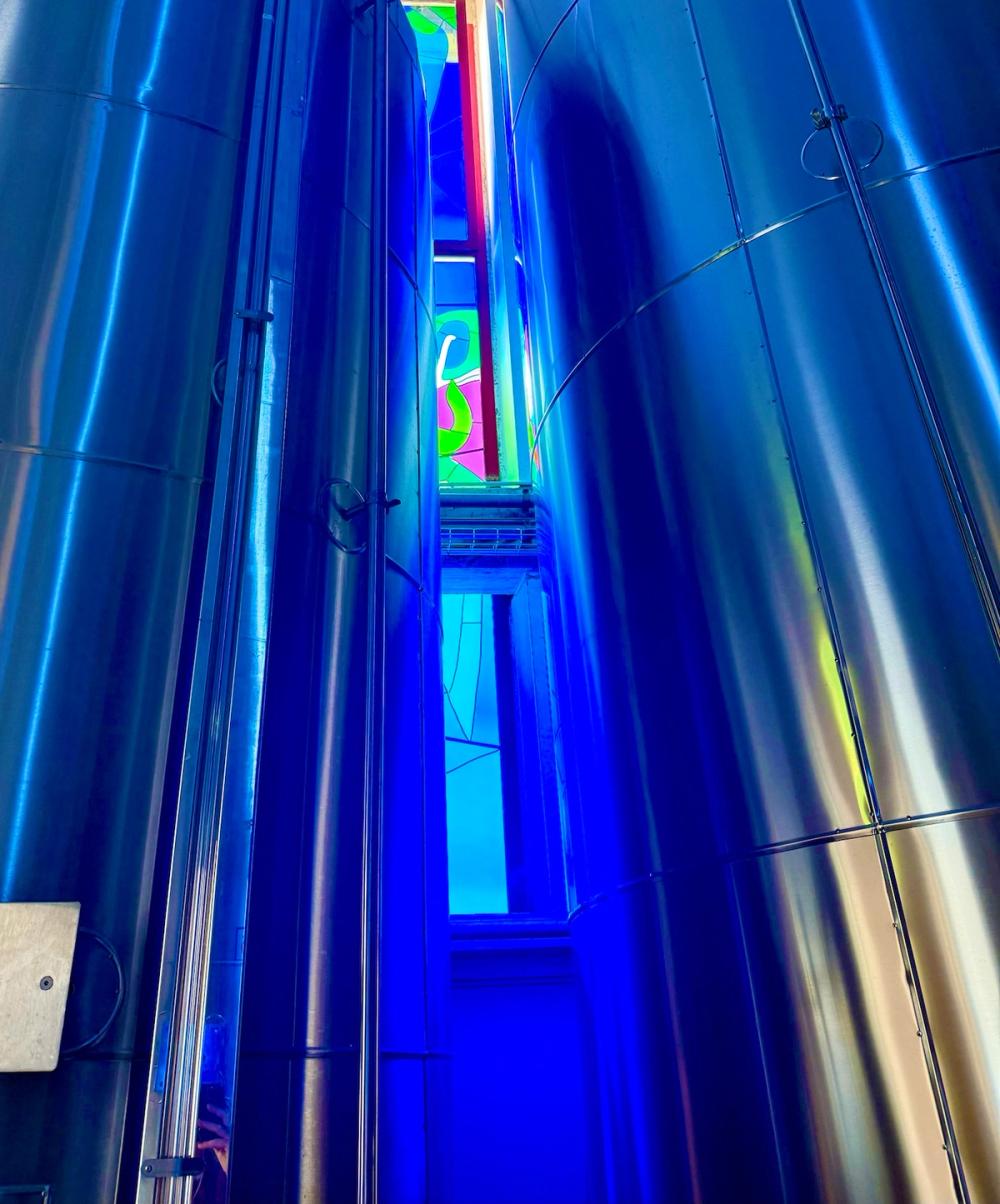
It’s hard to explain fully the incredible jigsaw of this estate, from the coloured stained-glass facades, designed by a monk artist; Costantino Ruggeri. This artwork provides a stunning light show every day, sadly the ‘monk’ status did not reflect in his accountancy with the cost, which had not been discussed in advance, meaning the family had to live quite frugally for many years!
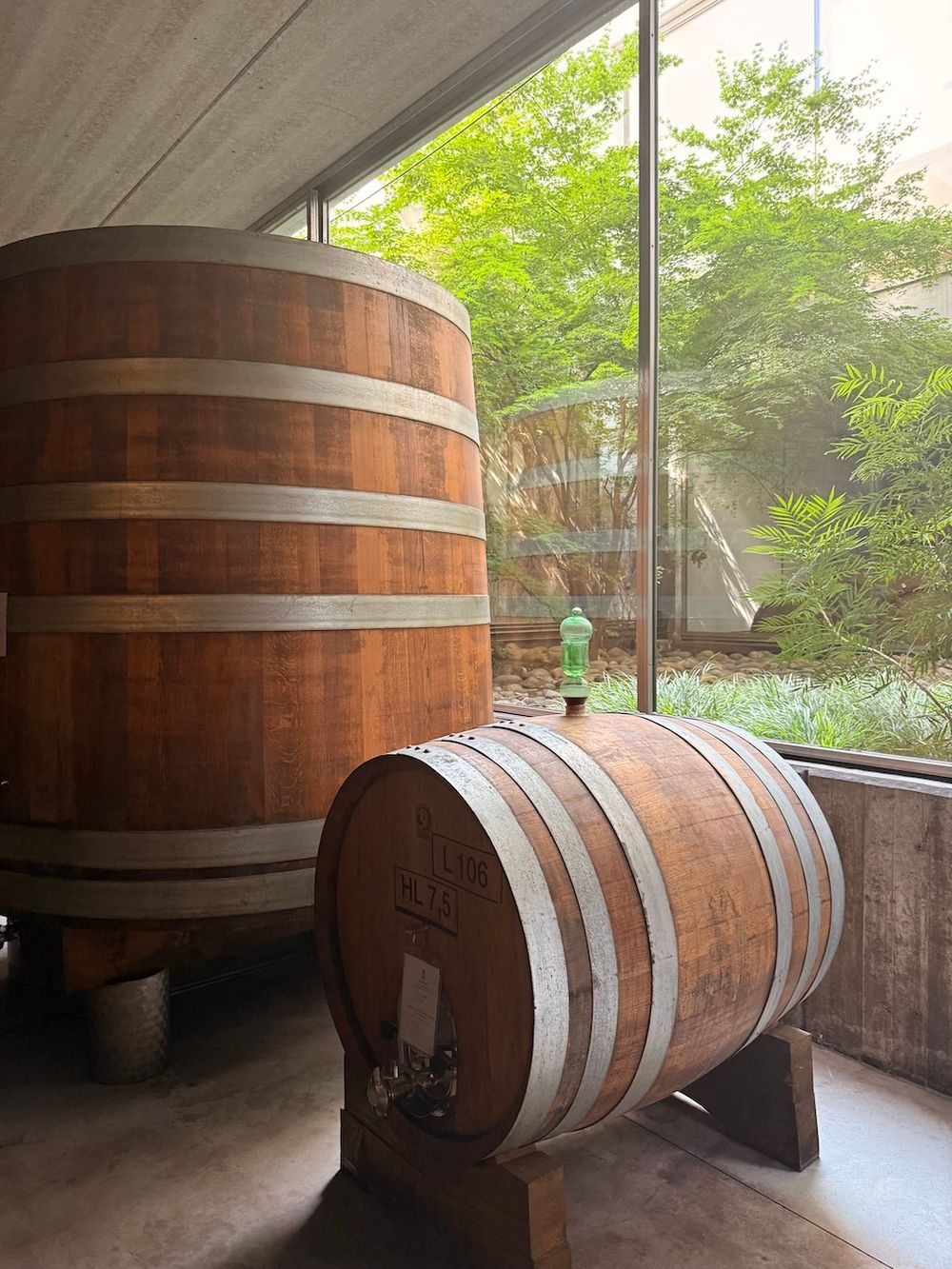
Cellarhands can work in natural light
Then there is the cellar which has an underground garden, allowing light to be reflected into it, allowing the team to work in natural light, as well as the whole complex covered with grass and cover crops, blending the whole enterprise seamlessly into the Barolo countryside.
And the wines ... (and there were many, as I said it was a two-day gig) of which here are some of my highlights
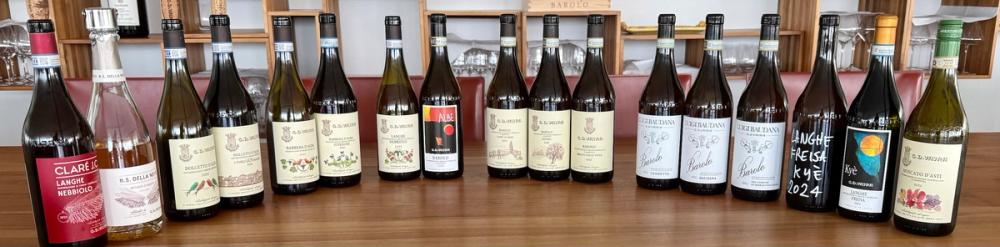
Dolcetta D’Alba Classic 2025 G.D Vajra
Bitter chocolate, perfumed, refined, clean cut, plenty of texture, youthful elegance, rose petals and raspberry with sweet spices. Very approachable.
Dolcetta D’Alba Classic Costa Fossati 2025 G.D Vajra
More savoury, spiced with lovely tannins, delicate ceps and truffles, forest floor with blackberries and bilberries. Lovely purity, refreshing, textured and pristine. No oak, all stainless steel, class.
Barbera D’Alba 2025 G.D Vajra
Beautifully perfumed, bright clean-cut then a luscious tingle of dark and red berries dance on the palate, focused, linear with a great precision. Fabulous.
Barbara D’Alba Superior 2024 G.D. Vajra
Vines back to 1949 go into this dark, rich, aromatic glorious wine, a baby Barolo, touch of spice, liquorice, rhubarb, pomegranate, teak (although there is minimum oak used). Lovely fresh clean focus with ripe acidity, then the depth with a granite/graphite edge.
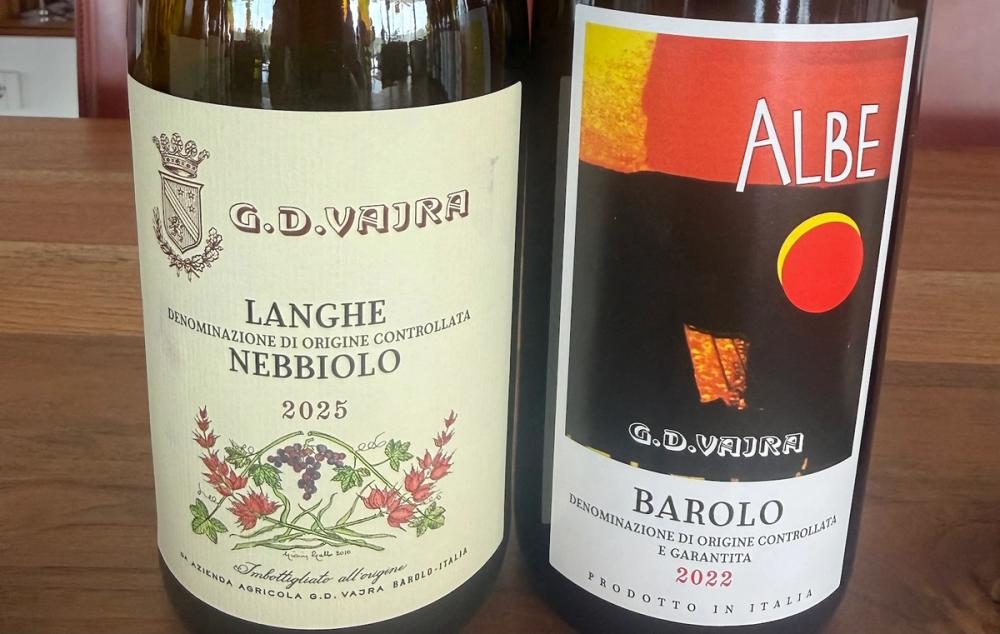
Langhe Nebbiolo 2025 G.D. Vajra
Vajra’s Langhe Nebbiolo is a younger, fresher expression of Nebbiolo. It gives a preview of the house style – aromatic, pure, bright and finely structured – without the intensity, price or ageing requirement of Barolo. It gives a great introduction to the style of the estate.
Plenty of aromatics, some say these are the purest expressions of Barolo, the innocence of Nebbiolo, a 'ballet' or a delicate 'first dance into wine'. Spiced but a clean-cut freshness, hint of perfume, blackcurrants, thyme, delicate tannin, expressive and easy to drink.
Barolo Albe 2022 G.D. Vajra
This is their ‘village’ style, or multi–vineyard, offering exceptional value for money. Sourced from three specific single vineyards that give “3 sunrises” every day, this is an outstanding wine, beautifully balanced. Luscious bright precise berries, silky creamy notes, drinking so well but this will develop perfectly with time. Wild strawberries, red cherries, sage, lemon thyme, mint, with a hint of aged, refined balsamic.
Barolo 2022 Coste de Rose 2022 G.D. Vajra
Located on a steep slope in the comune di Barolo. One of the first vineyards to be picked, there is a ripe, focused, spiced nose, perfumed, red floral and cherry, then tiny clusters of berries tingle and dance on the palate, bright clean notes, textured with an enticing scent. This is one of more delicate and seductive of the Vajra Barolos.
Barolo Ravera 2022 G.D.Vajra
Ravera is one of Vajra’s most serious and structured Barolo labels. Compared with Bricco delle Viole, Ravera is usually darker, more focused with stronger tannic drive and a more mineral, savoury profile.
This vineyard is tucked away in Novello on the south-west edge of the Barolo region, a site recognised for depth, minerality and longevity. Clean cut, crisp with a beautiful backbone, refined and focused – I love the purity of this wine. Essence of red berries, framboise, bilberries, frais de bois, and a juicy roast lamb note, very impressive, a wine that will age beautifully.
Barolo Bricco delle Viole 2022 G.D Vajra
Bricco delle Viole is Vajra’s flagship Barolo and its most famous wine. It comes from one of the highest-elevation vineyards in Barolo, above the village itself, and is known for perfume, lift and finesse rather than brute force. With vines planted in 1931, 1949, and 1968.
The cool chilled nights give it a chiselled appeal, granite and subtle minerality. Real class, with a beautiful, delicate, refined appeal, great balance of savoury notes and pristine bight berries. Rose, violet, red cherry, wild strawberry, spice, mint, liquorice and fine-grained tannins. It is elegant and stunning now but it is made for long ageing.
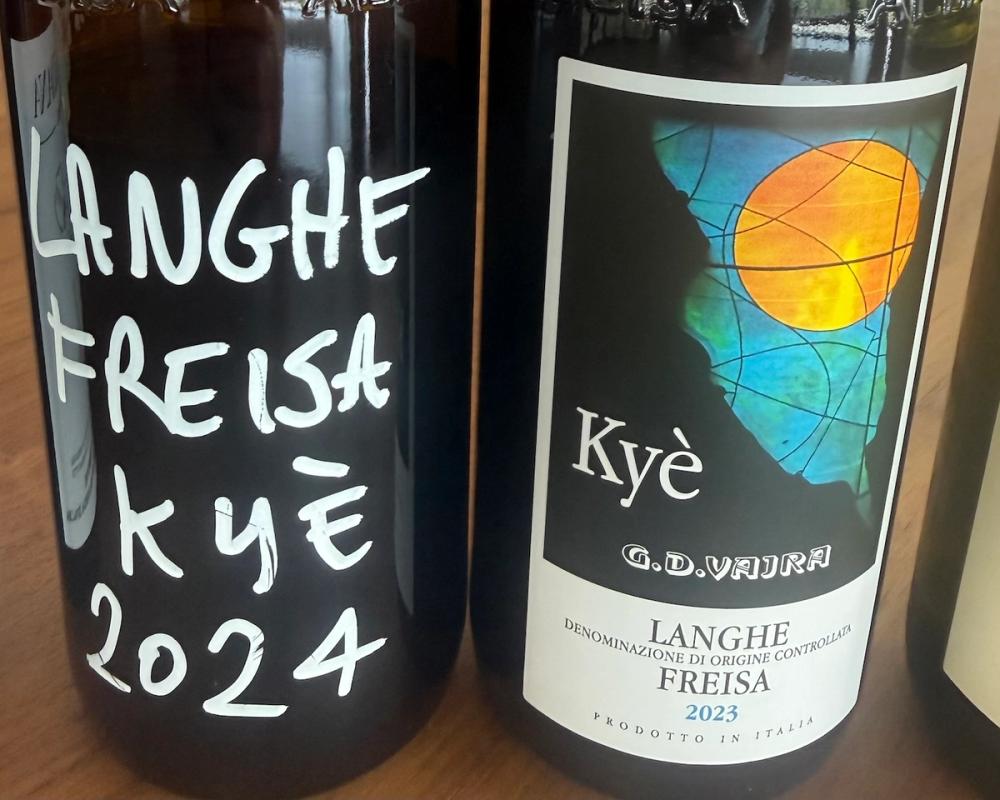
Langhe Freisa Doc Kyè Langhe 2024
Kyè is Vajra’s serious expression of Freisa, a traditional Piedmontese red grape related to Nebbiolo. It is one of the estate’s cult wines: spicy, floral, beautiful clean and focused, ripe dark wild strawberries, perfumed, sheer class.
Langhe Nebbiolo DOC "Claré J.C." 2024
Bright red ruby colour, raspberries and wild strawberries, rosehip, sweet spices and white pepper, savoury but fresh and focused. The wine was evolved from the family reading Thomas Jefferson’s quote of 1787 "There is a red wine of Nebiule (Nebbiolo) made in this neighbourhood which is very singular. It is about as sweet as the silky Madeira, as astringent on the palate as Bordeaux, and as brisk as Champagne. It is a pleasing wine." Claré is the closest word to Claret they can use without any legal issues!
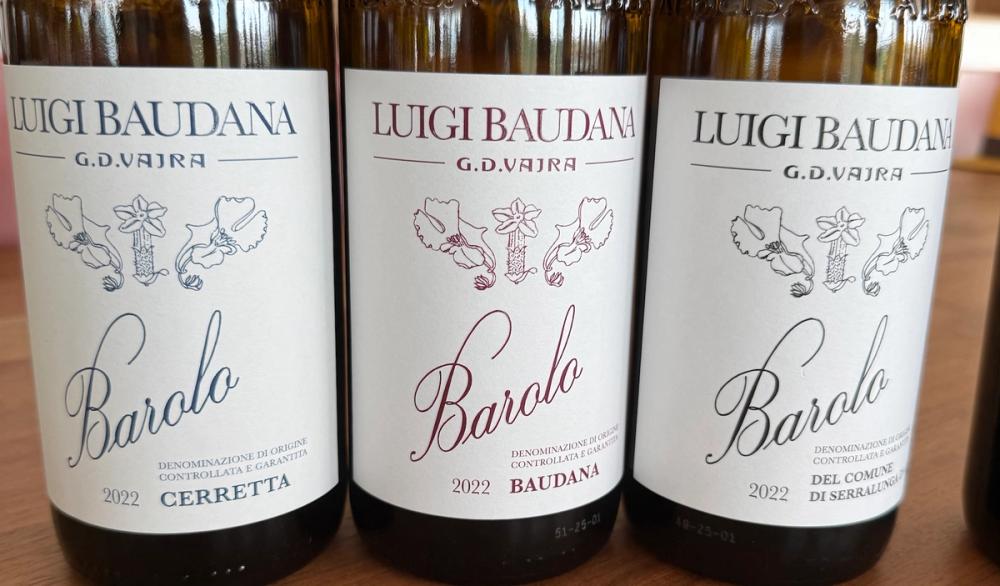
Luigi Baudana DOCG Baudana 2022
Complex and layered, textured, dark red fruit, violets, herbs, granite, slate, perfect purity and a linear focus, poised, beautiful wine. Outstanding, sourced from a special vineyard that the Vaira family took over in 2008, when Luigi and Fiorina Baudana retired. Tiny at just 2.6 hectares it is located in the village of Serralunga.
Luigi Baudana DOCG Cerretta 2022
Savoury-led, hint of offal, with dark fruit, evolves with a silky purity, good structure and minerality. Needs time but a classy wine.
Luigi Baudana ‘Dragon” Langhe Bianco 2024
The four grape varieties, Chardonnay, Sauvignon Blanc, Riesling and Nascetta are grown as a white field blend and vinified together in stainless steel tanks. Pale yellow, bright and aromatic, with acacia, hawthorn, fresh bread, tropical fruit, mint, citrus, apricot, green apple and flinty minerality. The palate is vibrant, savoury and fresh, finishing long with a subtle saline edge.