“Crisp rosés for sunnier days, sparkling stars for celebratory moments, trendsetting pours that make your list stand out; not forgetting those sustainable sips and premium picks for when only the best will do.” So read the jaunty trailer from Matthew Clark’s marketing team ahead of their Spring Portfolio Tasting for the on-trade at Boxhall City in Liverpool Street on what was the first weekday of March.
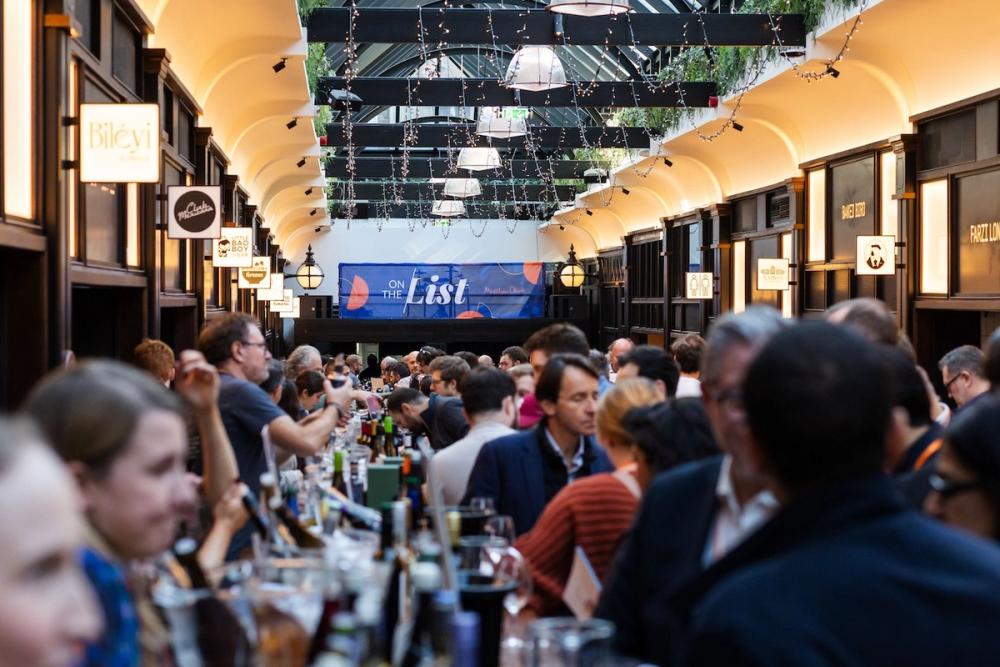
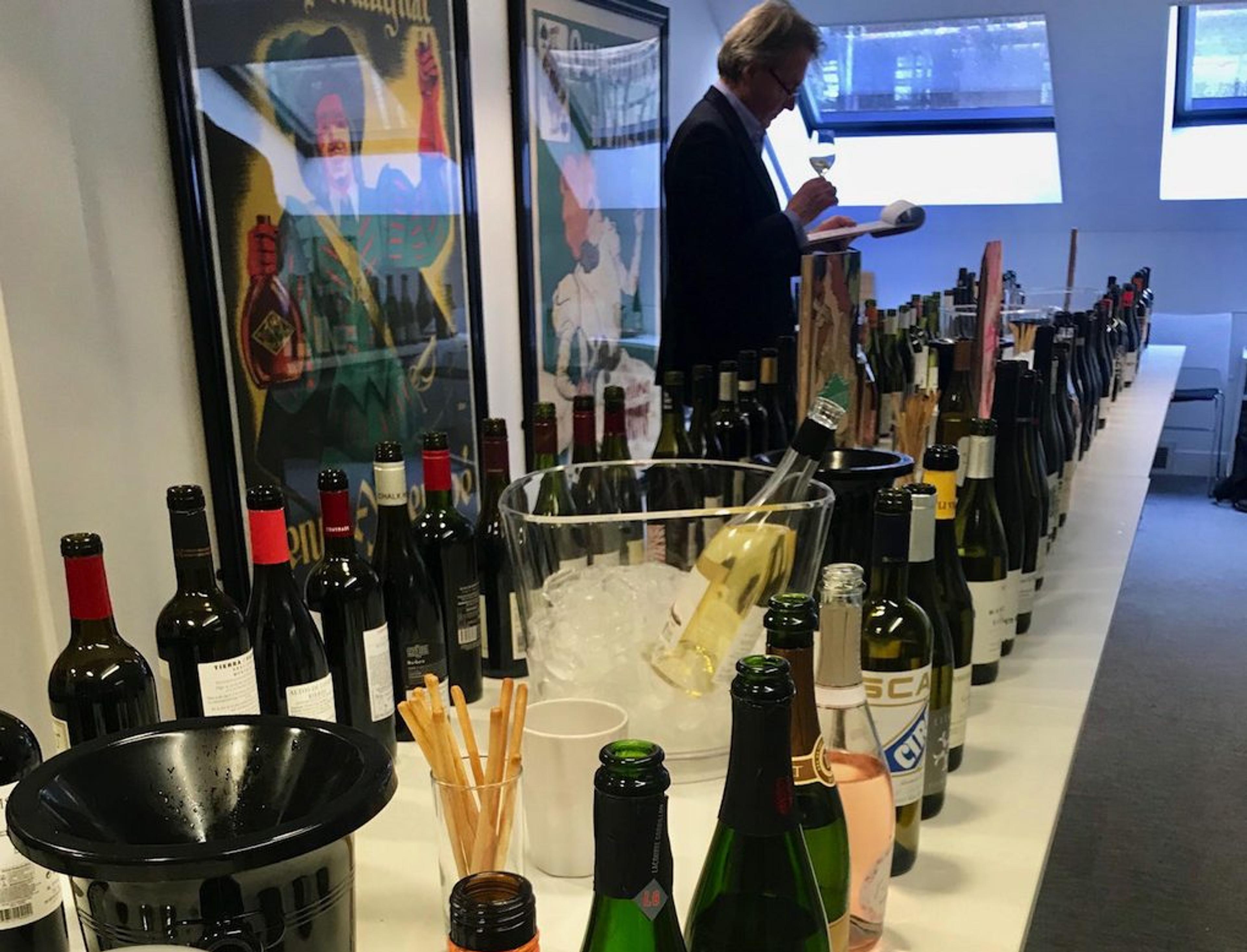
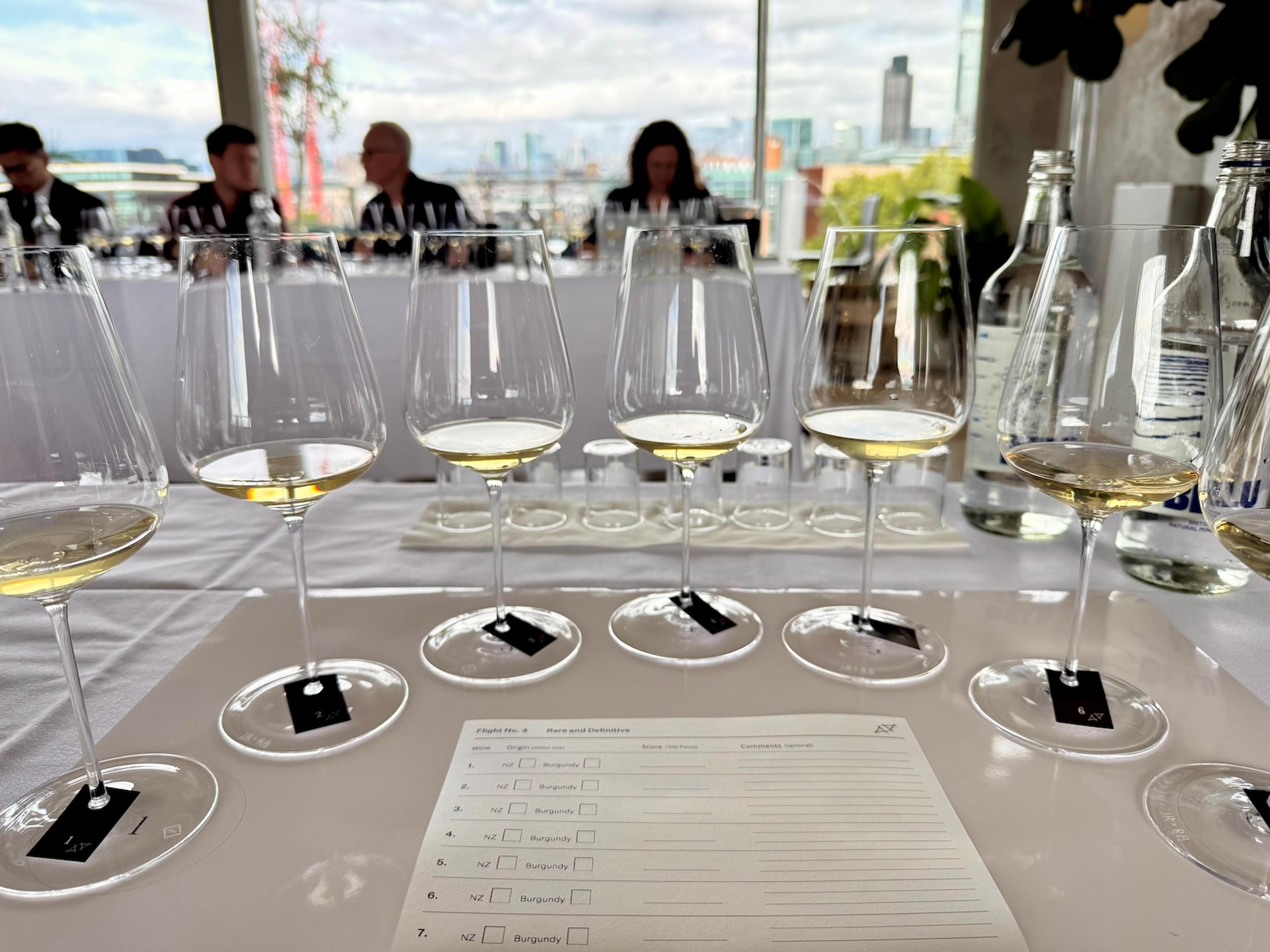
Matthew Clark spring portfolio tasting, Liverpool Street, London. © Alex Merz
With over 300 Old and New World wines, from what the drinks distributor describes as ‘our globetrotting range’, there was certainly plenty to satisfy the varied requirements of the two hundred or so on-trade representatives that descended on Liverpool Street.
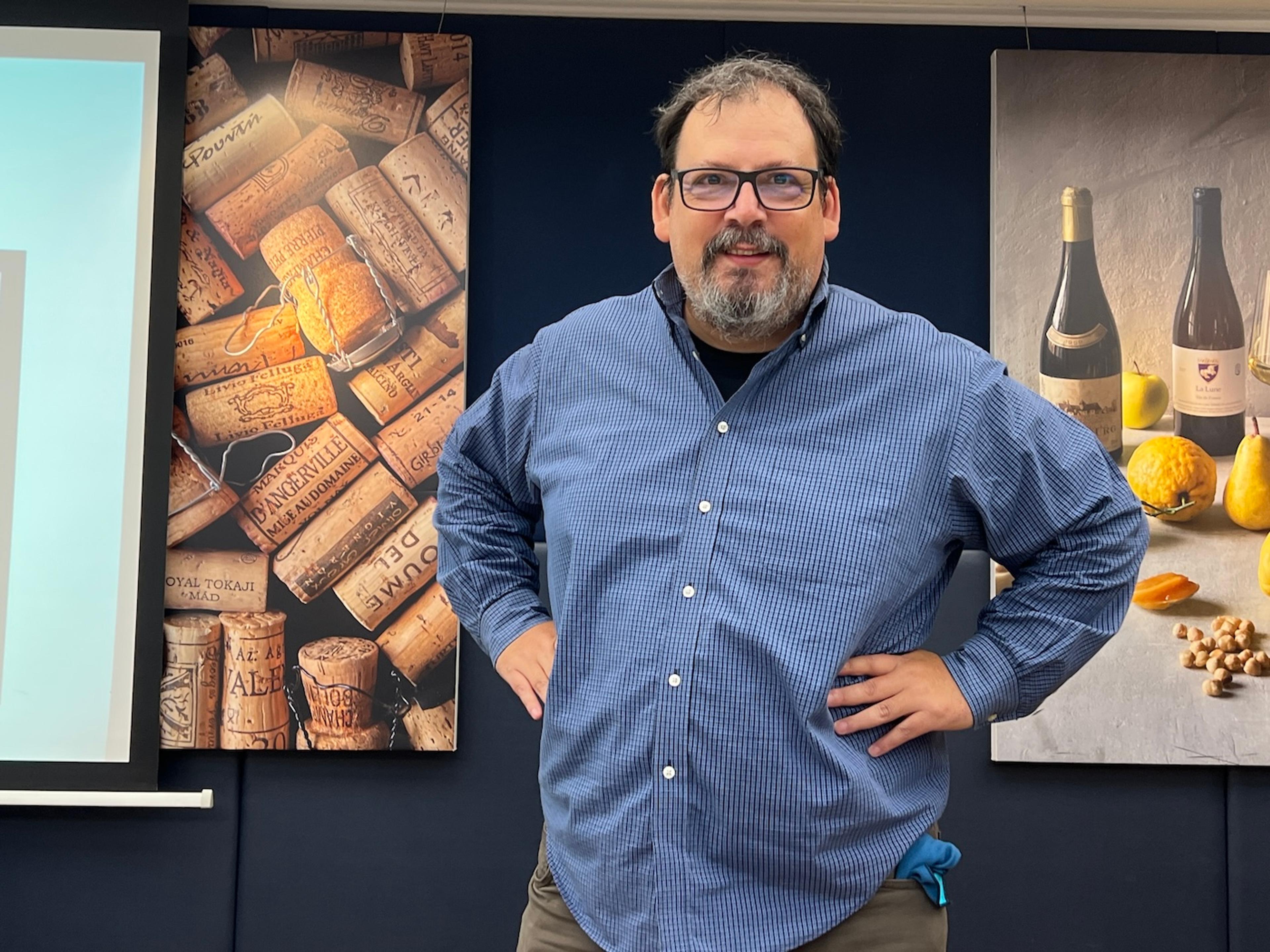
Nick Zalinski, Matthew Clark’s head of wine development and on-trade ambassador who has worked in two spells for the company for a total of 28 years, was present throughout to offer his enthusiastic input.
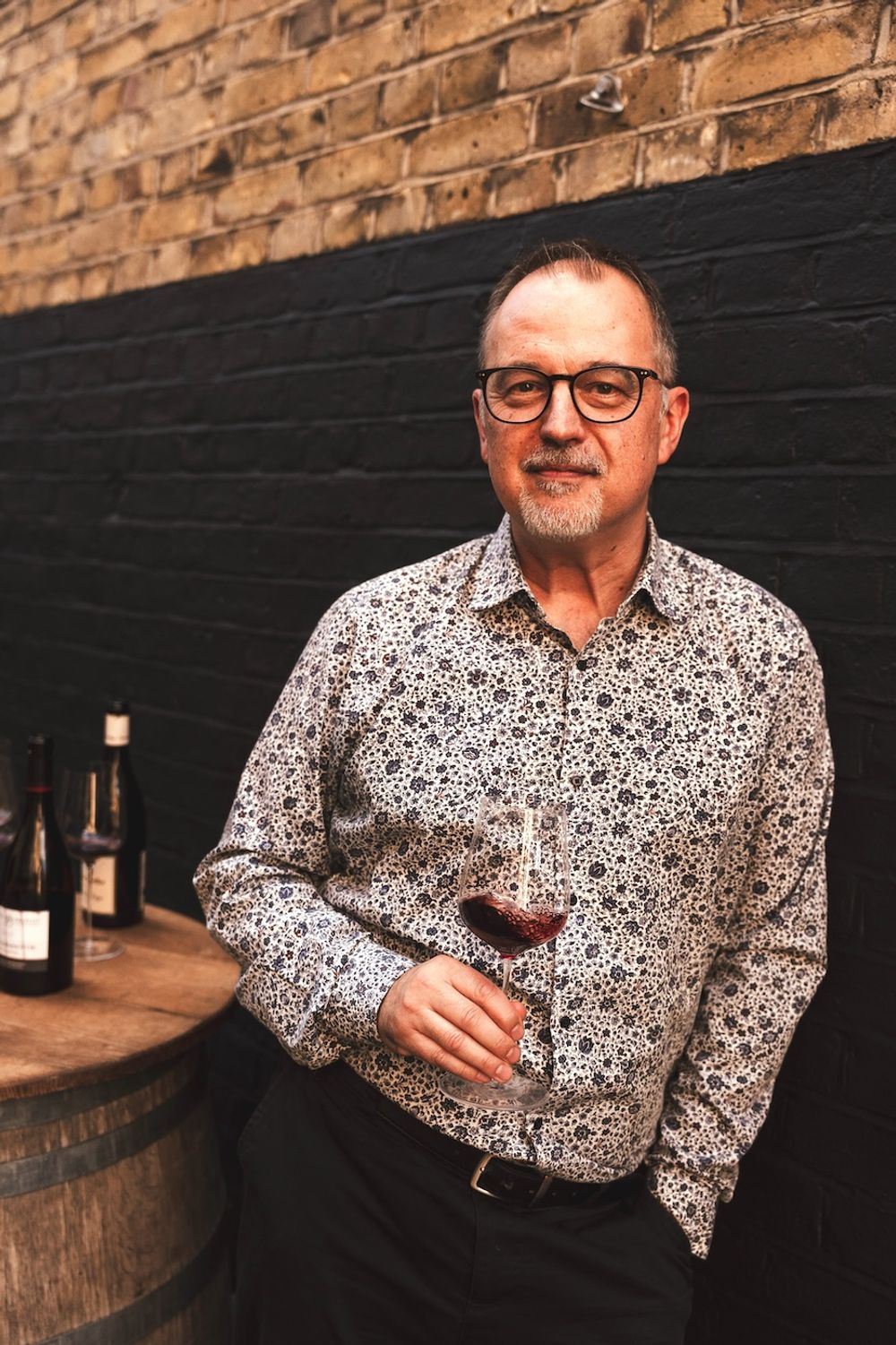
Nick Zalinski, Matthew Clark’s head of wine development and on-trade ambassador
“We’ve been in business for over 200 years, and are here to support the on-trade,” he declared. “My role is to help customers sell better wine and more wine in what is a challenging market but where there are still lots of opportunities.”
“It’s our first wine-only tasting for some time. We’ve tended to combine wine and the rest of the beverage categories because our customers can kill two birds with one stone. But I think the wine category still has such great potential. We’ve had some years of on-trade wine decline but it’s still a really important category and we wanted to give our customers the chance to come in and find the right ranges and right tweaks.”
“This is the normal time of year when our customers will review their lists, so we’ve listened to them and said, ‘Right we’re gonna do a really wine-focussed tasting at the best time for them.’ So as they see new products coming through and the 2026 prices, they can make informed choices, and amend their list as they see fit."
Talking to customers, it was clear they had come from all over the country.
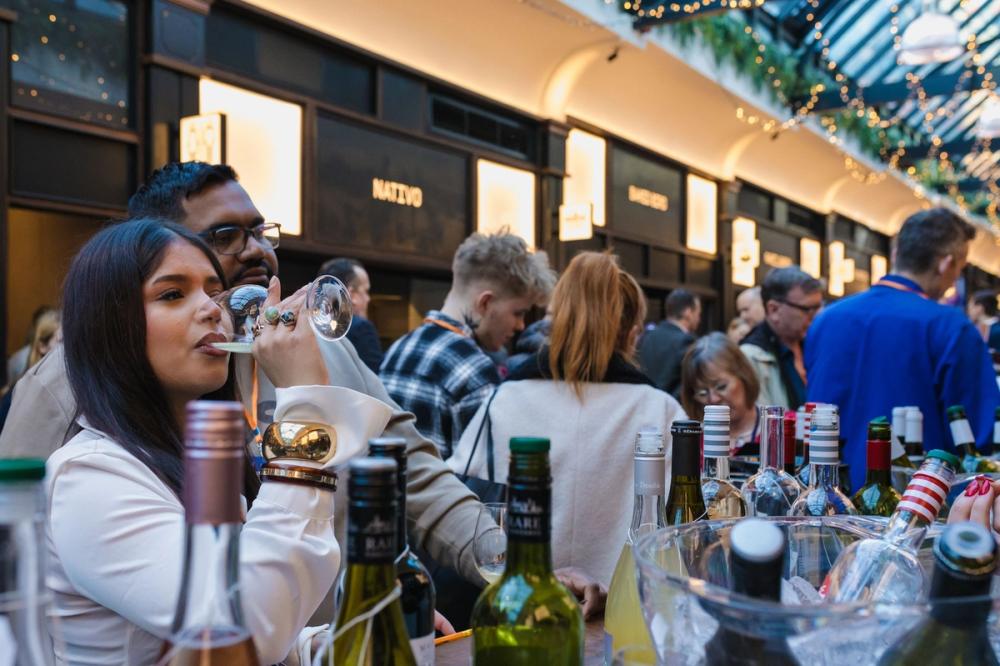
An impressive guest list was found at the Matthew Clark tasting. © Alex Merz
“The guest list is pretty impressive,” Zalinski continued. “The interesting thing about the Matthew Clark customer base is that it’s very broad, and we’re very proud to say we supply wines to the likes of Wetherspoons and Mitchells & Butlers. They have all sorts of brands from accessible ones to quite premium ones. We can supply those commercial branded wines that appeal to a less wine-engaged consumer as well as that middle ground and the fine dining markets. Here today, we’ve got Marriott Hotels, the Hilton group, five-star properties like the Ritz as well as some regional brewers and pub operators that have a really decent wine and food offer.”
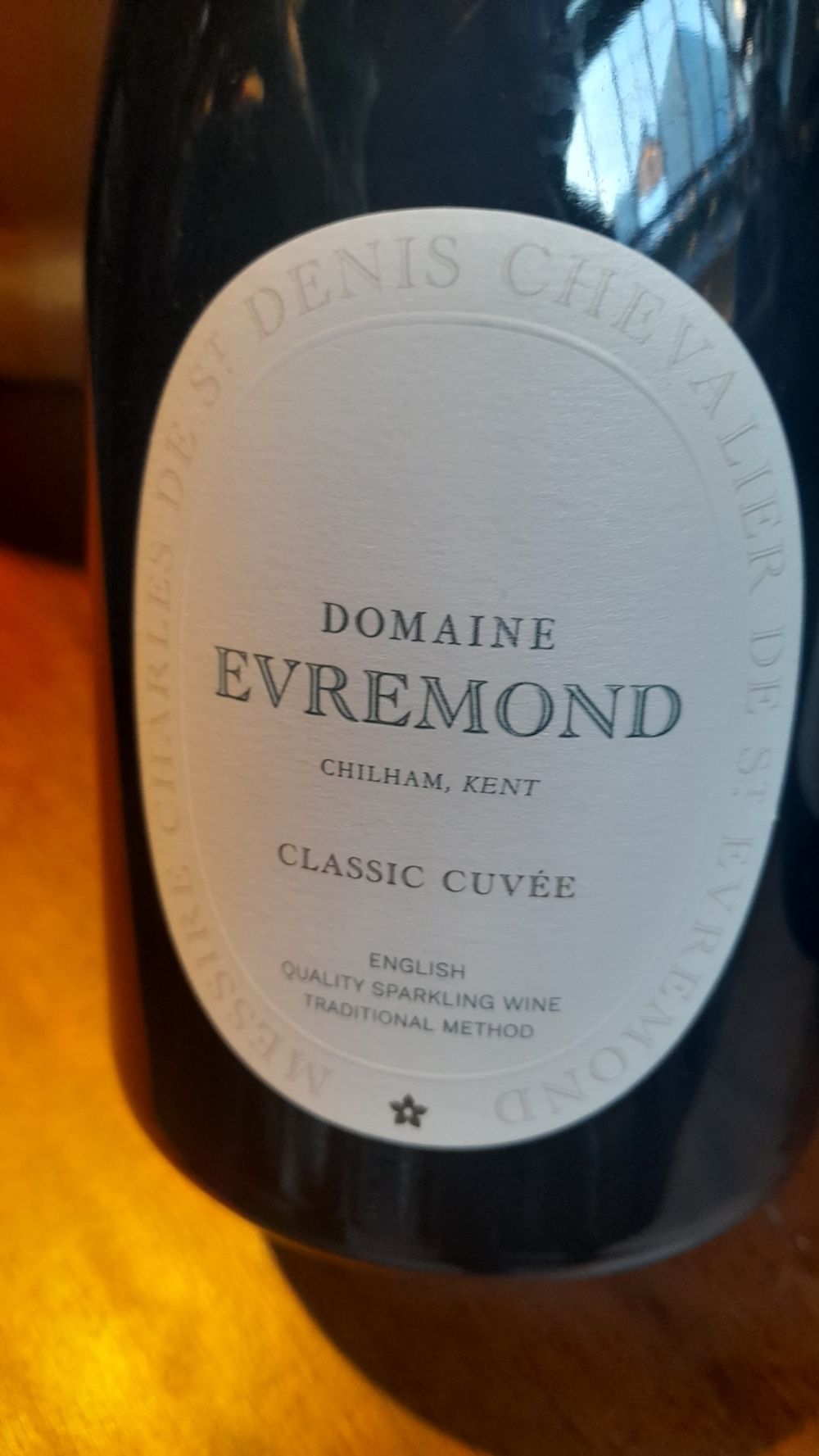
With demand riding high for English sparkling wines, it was no surprise to hear from the Hatch Mansfield stand that all their samples of Domaine Evremond had run out well before the end of the tasting. Matthew Clark is the route to market for the on-trade for Hatch, allowing the Berkshire-based agency to focus on the off-trade. Having attended the ceremonial inaugural planting of the Kent estate’s vines in May 2017, I was especially interested to taste the first release of Domaine Evremond, named the Classic Cuvée, Edition 1. It lived up to expectations, with its persistent mousse, vivacious acidity, generous but elegant fruit, autolytic notes and mineral intensity. Comprised of 45% Pinot Noir, 35% Chardonnay and 20% Pinot Meunier, it spent three years on the lees before being bottled in 2021 and disgorged in August 2024. The Classic Cuvée, Edition 2 is due for release later this spring.
“We manage the distribution of Domaine Evremond carefully with Hatch Mansfield as it’s proving really popular in the premium market,” Zalinski revealed. “We see real growth in English sparkling wines, particularly in the hotel channel. Overall, sparkling wine is growing its share of total wine consumption, with Prosecco still a go-to, Champagne strong and other sub-regional sparklings doing well.” Graham Beck, for example, the South African Robertson-based MCC producer, offers very good quality at a competitive price point.
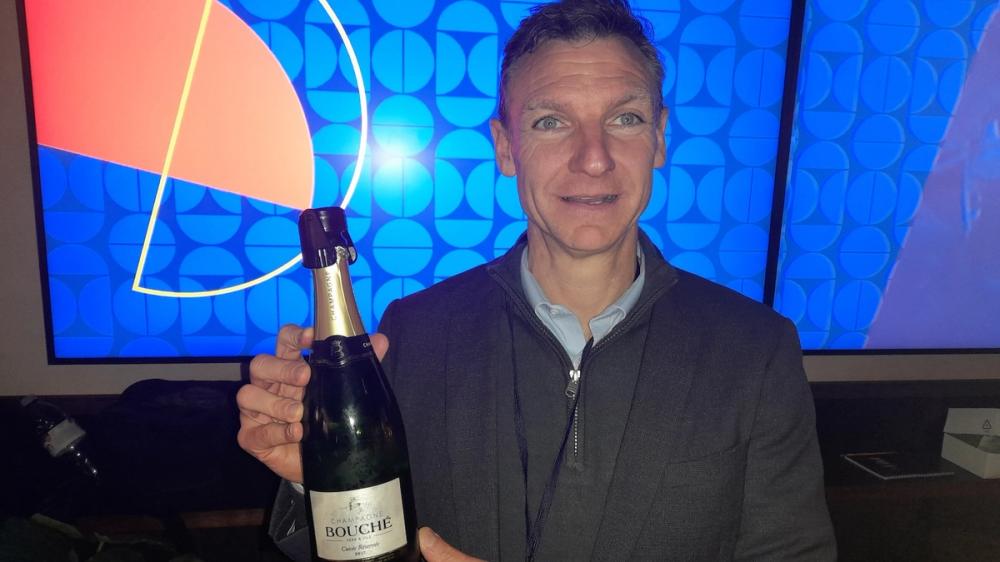
Nicolas Bouché
The Hatch stand’s impressive French stable also included Taittinger, the co-owners of Domaine Evremond, and Louis Jadot, which had five labels for tasting. Matthew Clark’s relationship with the Beaune negociant stretches back 75 years, while they have been working with Champagne Bouché Père & Fils for over 35 years. Fourth generation owner Nicolas Bouché, who has made the wines since 2010, was present with a pair of NVs that showed very well - his Cuvée Réserve and Rosé. Each spent four years on the lees, with dosage of 8g/l and 10g/l respectively. With 30 hectares under vine over 11 villages and 74 parcels, production is limited to 180,000 bottles per annum, half of which are exported. The UK is Bouché's number one overseas market.
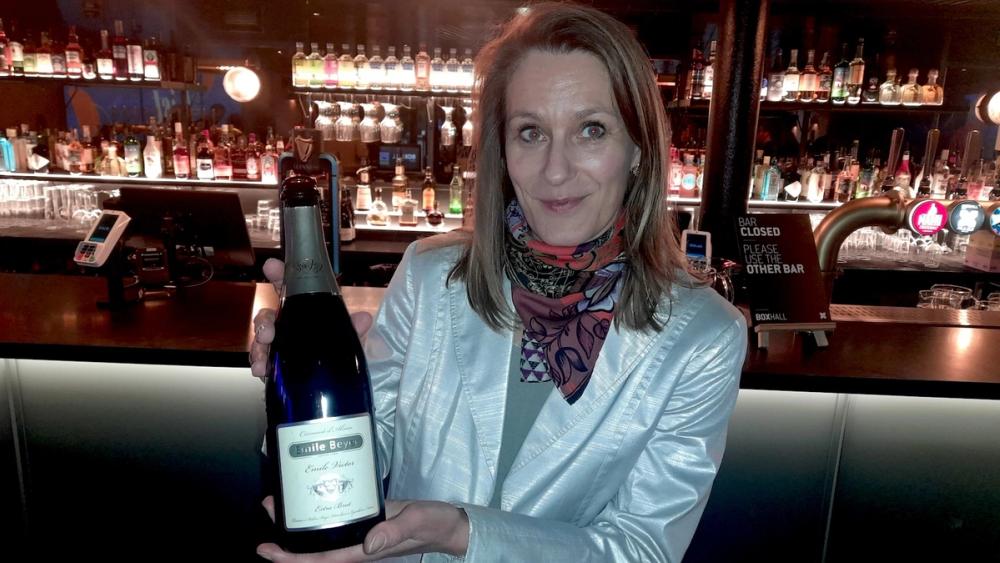
Valerie Beyer
For customers wanting a Crémant, there was an excellent one from the highly regarded Alsace biodynamic producer Emile Beyer, whose wife Valérie was on hand to show it. Named Cuvée Emile-Victor, it spent two years on the lees, had 2g/l dosage and was 50% Pinot Blanc, 45% Chardonnay and 5% Pinot Noir. Emile Beyer’s Les Prémices Riesling 2023 and Eguisheim Pinot Noir 2020 also impressed, with the latter grape faring well in Alsace under global warming.
“Consumers are finally starting to understand what Alsace is,” Zalinski mused. “Particularly in fine-dining, and even in that middle market, we are starting to see more Alsace wines being listed. They’re always great value for money. That’s something we’re proud of – we aim to deliver amazing value for money or price points.”
Zalinski picked out a couple of entry-level Languedoc wines that did just that – a Marsanne-Viognier blend and a Malbec from a concern called Rare Vineyards, which is part of LGI Wines, the Carcassonne-based exporter. Both labels are made under the Pays d’Oc designation.
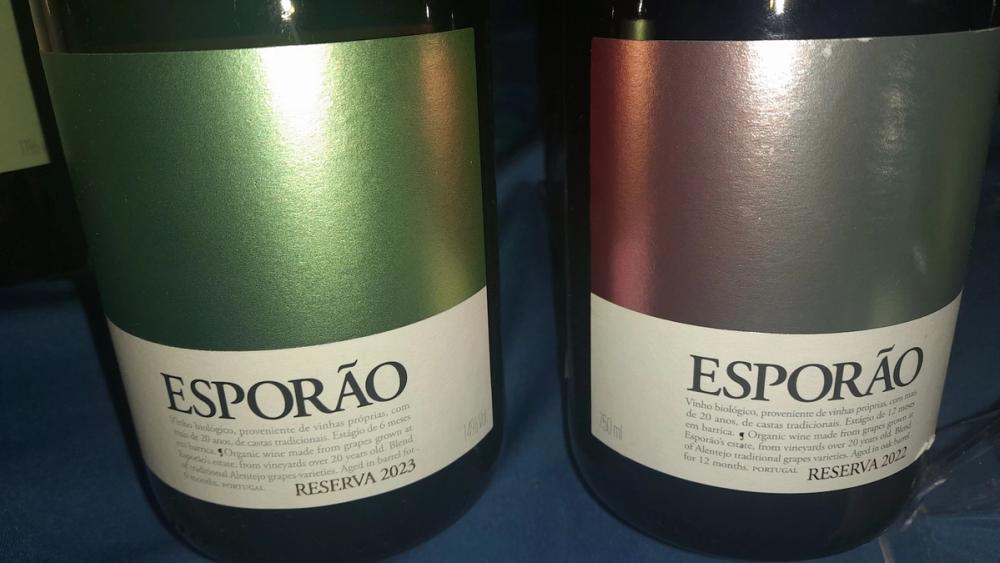
Equally good value (at £9.68 trade list price) was the Quinta do Ameal Bico Amarelo Vinho Verde 2024, which won best Portuguese white wine at the International Wine Challenge last year. This was a blend of 40% Loureiro, 35% Alvarinho and 25% Avesso. Meanwhile, certified-organic Alentejo producer, Herdade do Esporão, unfurled its appealing Reserva Tinto 2023, a field blend of Alicante Bouschet, Cabernet Sauvignon, Touriga Nacional and Trincadeira.
“These types of approachable, affordable and delicious wines we like to bring to our customers,” Zalinski said. “We like to tell them about any accolades as these can help them to sell on to their guests.”
What was palpably apparent from the tasting was the impressively wide portfolio of wines for Matthew Clark’s clientele to select from. From mainstay, workhorse, competitively-priced wines that consumers understand without any guidance to mid-market labels and super-premium offerings, there was something for everyone.
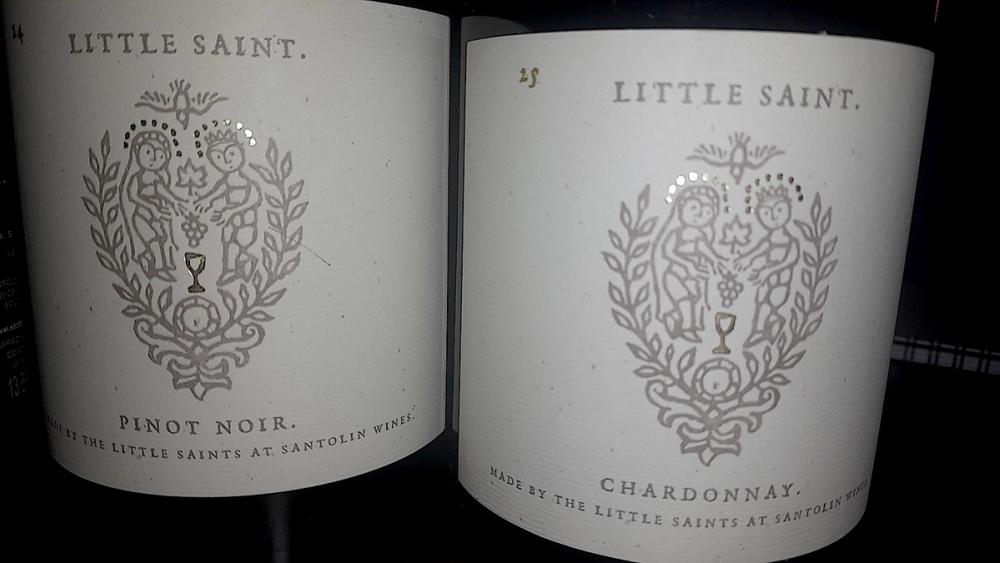
“Bodegas Corral is a quite traditional style Rioja with a lot of American oak and extended ageing, but we have others that are more modern,” Zalinski continued. “It’s about giving customers a choice. For example a new winery from Victoria we’ve taken on called Santolin, whose wines are all about precision and freshness.”
With the popularity of New Zealand Sauvignon Blanc still holding up, according to Zalinski, he revealed he is encouraging some customers with a more extensive list to offer something ‘more specialist’ in the form of Yealand's L5 Sauvignon. With availability of Sancerre Sauvignon certain to be tight after two successively low yields there in both 2024 and 2025, Yealand could fill the void. “The L5 is so subtle and elegant it’s almost Loire in style,” Zalinski opined.
For those wanting wacky offerings, there was an Osado White Malbec from leading Mendoza winery Salentein, and an unfiltered Grenache Blanc from Languedoc producer Gérard Bertrand aptly named ‘Trouble’ (the French word for ‘turbid’ which this was). “The white Malbec our customers are excited about,” Zalinski purred. “It’s a talking point to bring them something new but not too unusual. And Bertrand is probably the most exciting biodynamic producer in Europe. Both wines are ideal for a wine bar wanting something edgy but not too funky.”
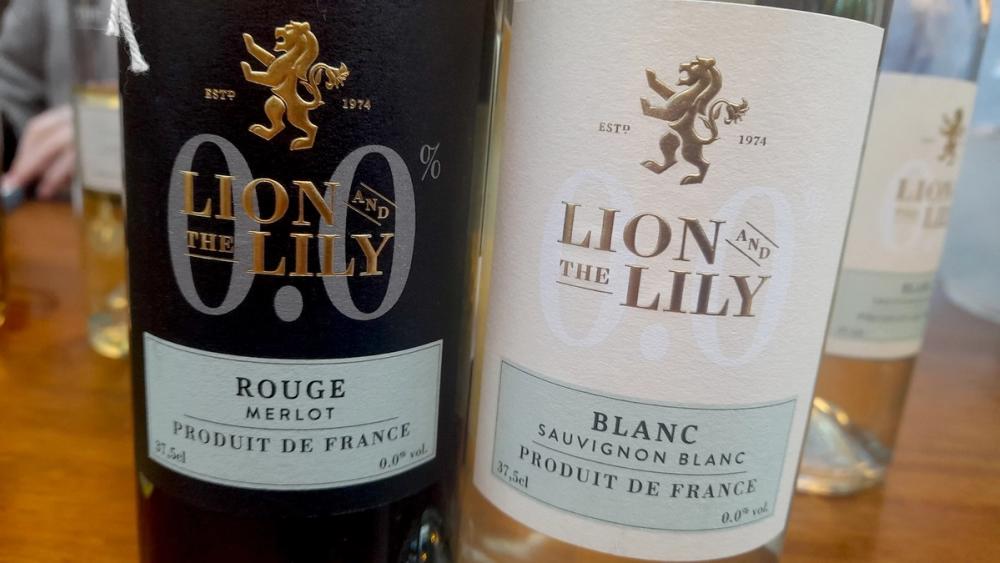
Last and least – if only in abv terms – were a couple of wines from France with zero alcohol, branded Lion & The Lily. The white was a Sauvignon Blanc and the red a merlot, with each coming in 37cl half-bottles. When he attended the annual AA Restaurant awards, with whom Matthew Clark works closely, Zalinski said he got useful feedback about zero per cent trends.
“With 39% of Gen Z not drinking alcohol, it’s important for our customers to have products they can offer to those guests,” he professed. “We’ve just introduced a pair of zero per cent wines made by one of our Bordeaux producers, in half-bottles as customers were requesting them. Often I’ve found it difficult to get a good red without alcohol but this is the first I’ve actually enjoyed drinking.”
Matthew Clark is part of C&C which is a commercial partner of The Buyer. To discover more about them click here.