Released at 10 years old, Mes Grands Lieux is a blend of the domaine’s best plots, selected and blended after a year of ageing in the cellar. Choosing to release a wine at ten years of age is a sign of confidence in the quality of both terroir and winemaking and Ogier clearly excels in both.
Mes Grands Lieux is, to quote Stéphane Ogier, “a new wine that is not really new”, because the wine being launched in the UK is from the 2016 vintage.
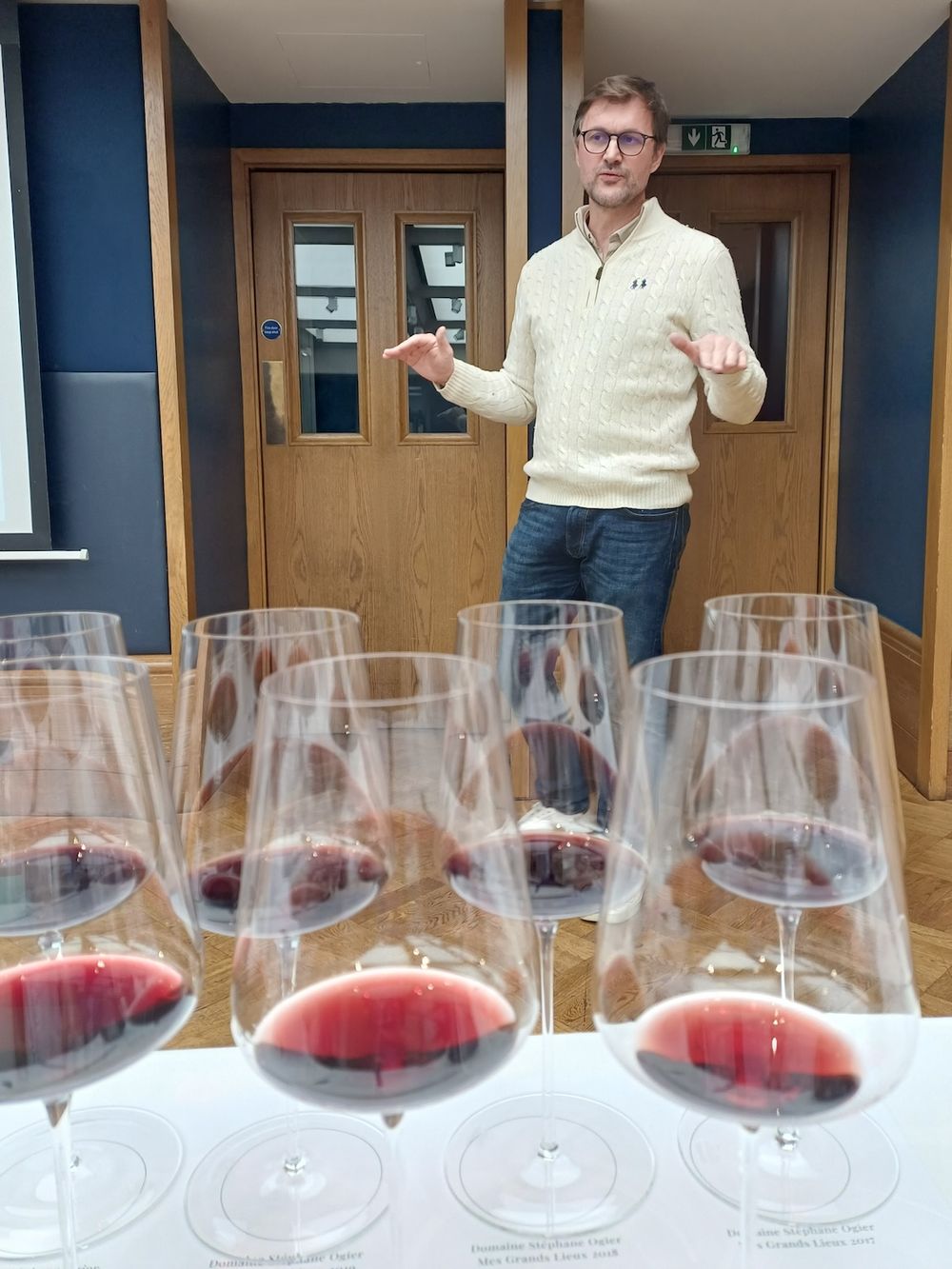
2016 is one of Côte Rôtie’s “most seductive vintages” – Stéphane Ogier, Mes Grands Lieux global launch, London
Stéphane Ogier is a second-generation winemaker, whose father Michel began making wine, in a family that had spent multiple generations growing fruit – and not just grapes. Apricots were “much more famous in Ampuis in the 1960s” according to Stéphane. Côte Rôtie’s rise to fame has been almost as steep as its famously vertiginous slopes: from just 72 hectares (ha) in 1973, by 2024 the vineyard area had increased nearly fivefold, to 343 ha – though this is still only just over 10% the size of Châteauneuf-du-Pape, so the amount of Côte Rôtie wines available is pretty tiny.
Before joining his father at the domaine, Stéphane worked in Burgundy, and aspects of that Burgundian philosophy have become evident in his winemaking, including embracing the notion of single “lieu-dit” (specific site) bottlings. Côte Rôtie is rich in these lieux-dits, with 75 of them in the course of its few kilometers of steep, terraced, mainly southeast-facing slopes. Ogier has vines in 25 of these sites, across 35 different plots, making him one of the major landowners in the appellation.
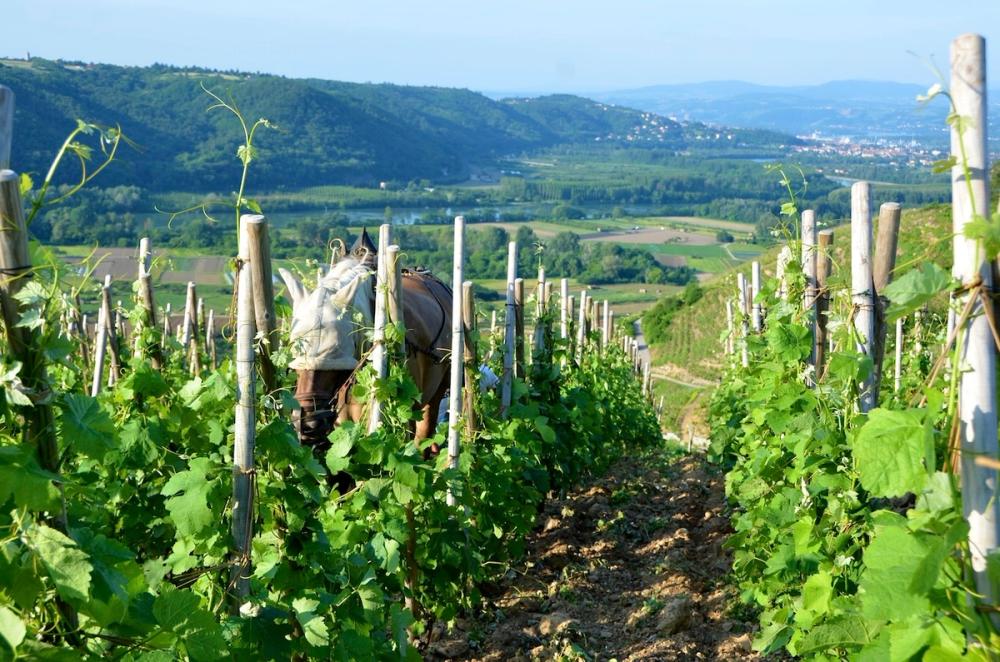
Mes Grands Lieux captures a vintage's character across numerous plots
But with Mes Grands Lieux, Ogier has returned to a Côte Rôtie tradition, where wines were traditionally made from blends across different vineyard holdings – until Marcel Guigal started shaking things up in the 1980s with his single vineyard “La-Las” (La Landonne, La Mouline and La Turque). Ogier still makes single vineyard/lieu-dit wines, but he also wanted to bring together wines from his best plots from across the appellation, to show the strength of a blend, and its ability to capture the character of the vintage across multiple plots.
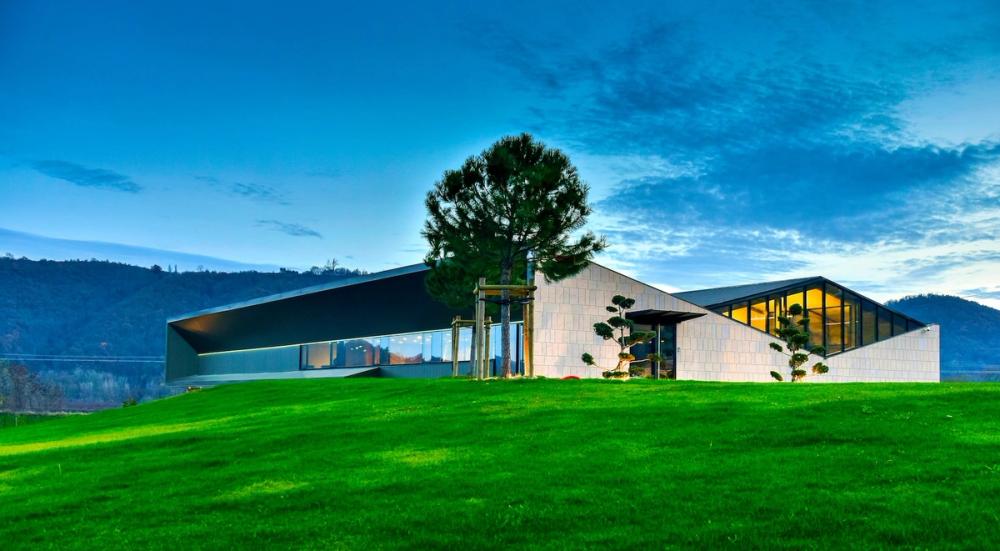
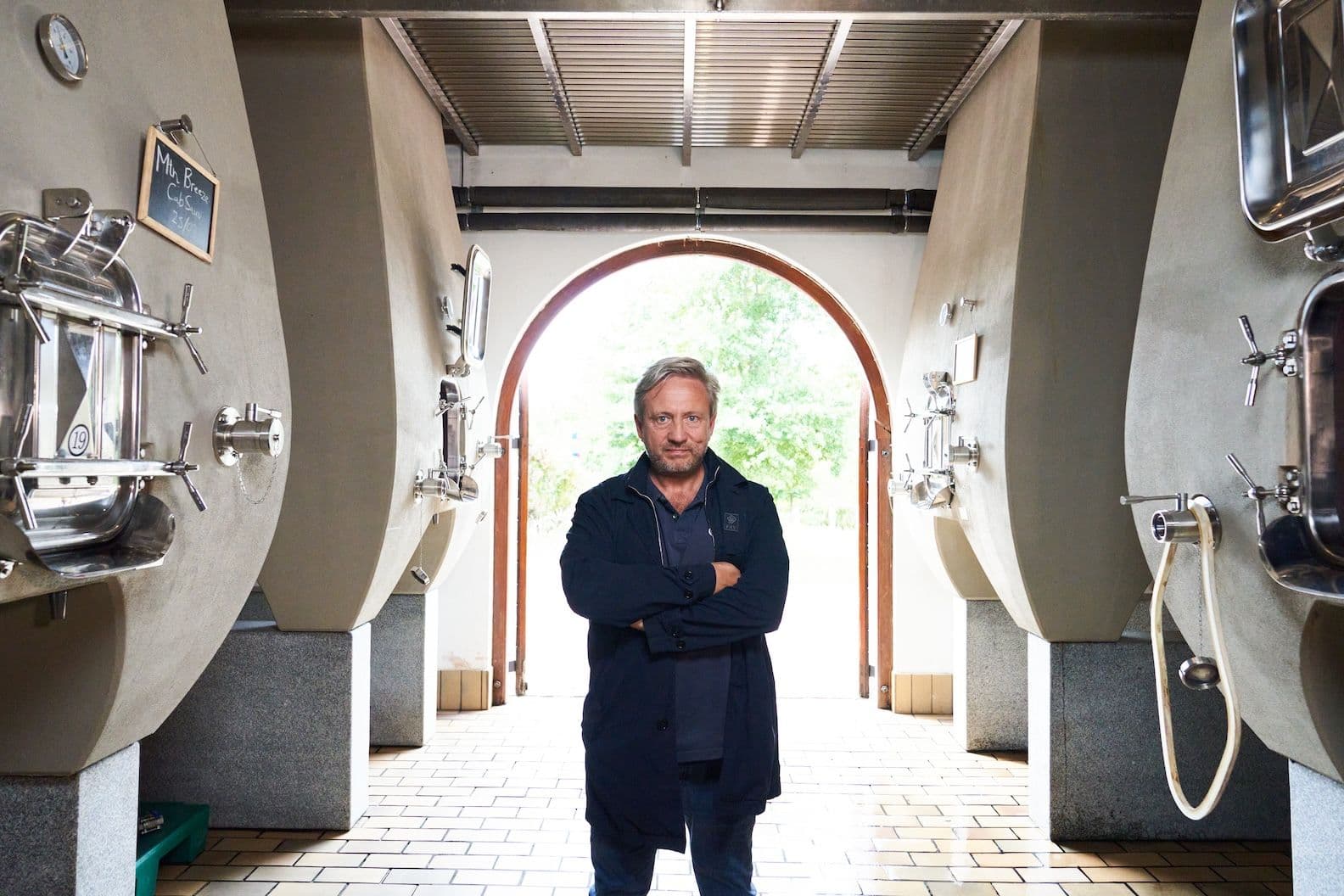
Facilitating micro-vinification: Stéphane Ogier's new winery was completed in 2014
A key factor that has allowed Ogier to deliver this wine is his new winery, completed in 2014. Its size permits him to keep wines from each plot separate, not just for vinification, but until after the first year of ageing in barrel. It is only then that the decision whether to make a Mes Grands Lieux, and its make-up, is decided upon.
To the wines: as well as tasting the newly-released 2016, we had the opportunity to look both backwards in time to previous vintages and, tantalisingly, forwards to future releases which are still biding their time in the Ogier cellar.
Mes Grands Lieux 2016
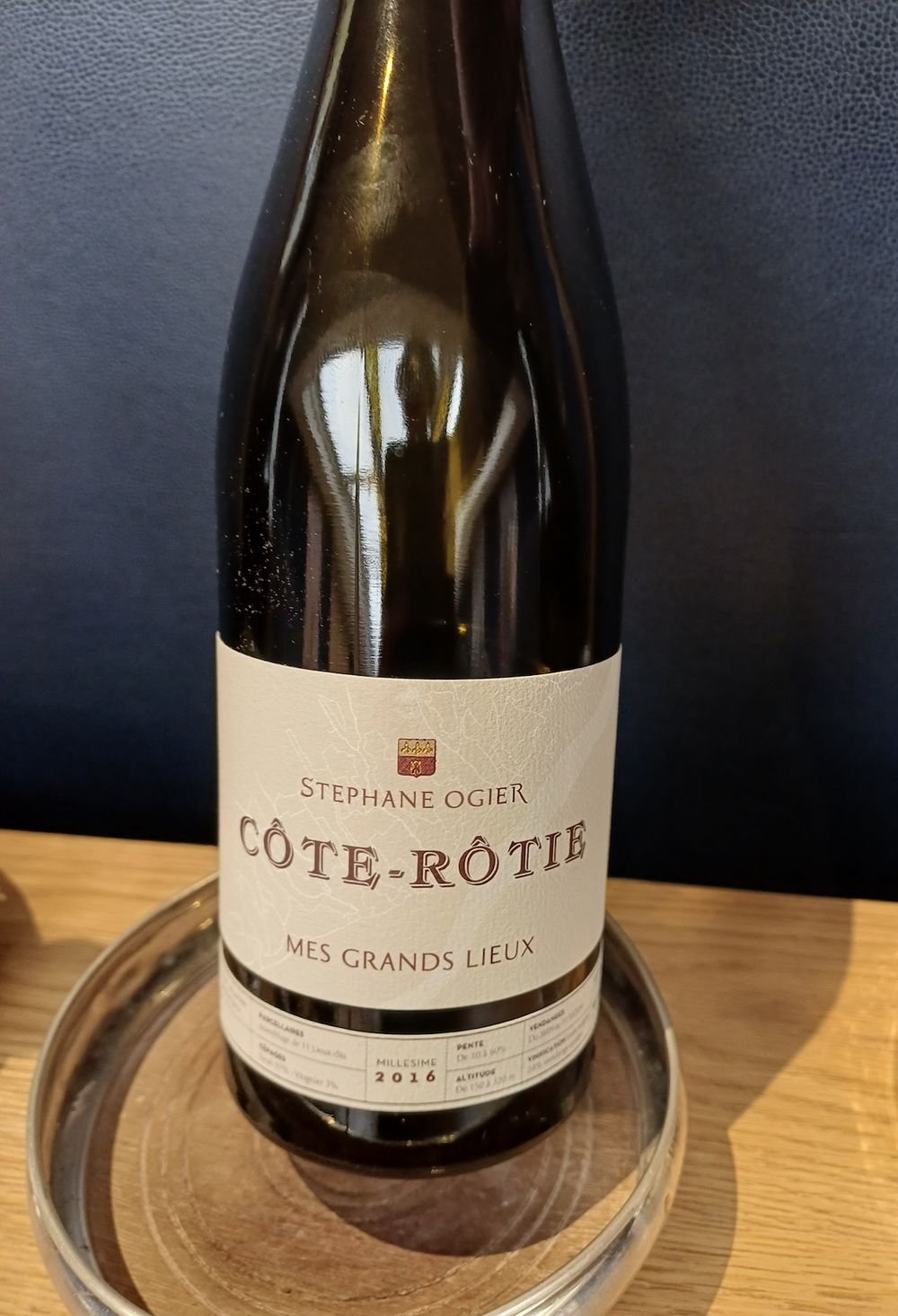
Ogier described 2016 as one of Côte Rôtie’s “most seductive vintages”, which produced balanced and elegant wines in this most northerly Syrah appellation in the Rhône. The blend of 97% Syrah and 3% Viognier (up to 20% is permitted in the appellation rules, but Ogier feels that a maximum of 5% is right for his wines) is a blend of wines from 11 different lieux-dits, nearly three quarters of them in the northern part of the Côte, known as Côte Brune, where dark micaschist predominates. These darker soils tend to produce firmer, more ageworthy wines than the more southerly, lighter-coloured granite and gneiss soils of the Côte Blonde.
Ogier brings a Burgundian elegance and finesse to his Côte Rôties, which combine a sense of ripeness and overt fruit with precision and fine definition. This 2016 both looks and feels youthful but is relaxed enough to be approachable now (Ogier thinks it will keep improving for another 10 years). It is full of flavour, without heaviness, combining a rich, velvety texture with perfumed, juicy black cherry fruit, black olive, bay leaf and a saline tang. It is satisfying to drink now but will only gain in complexity.
The grapes were mostly de-stemmed (28% whole bunch) and then aged in 228-litre barrels (20-30% new) for 20 months.
Since he made this wine, Ogier has been on something of a journey with his use of oak. From 2018 onwards he is no longer using new oak and he has been steadily reducing his use of 228-litre barrels in favour of (used) neutral 600-litre demi-muids.
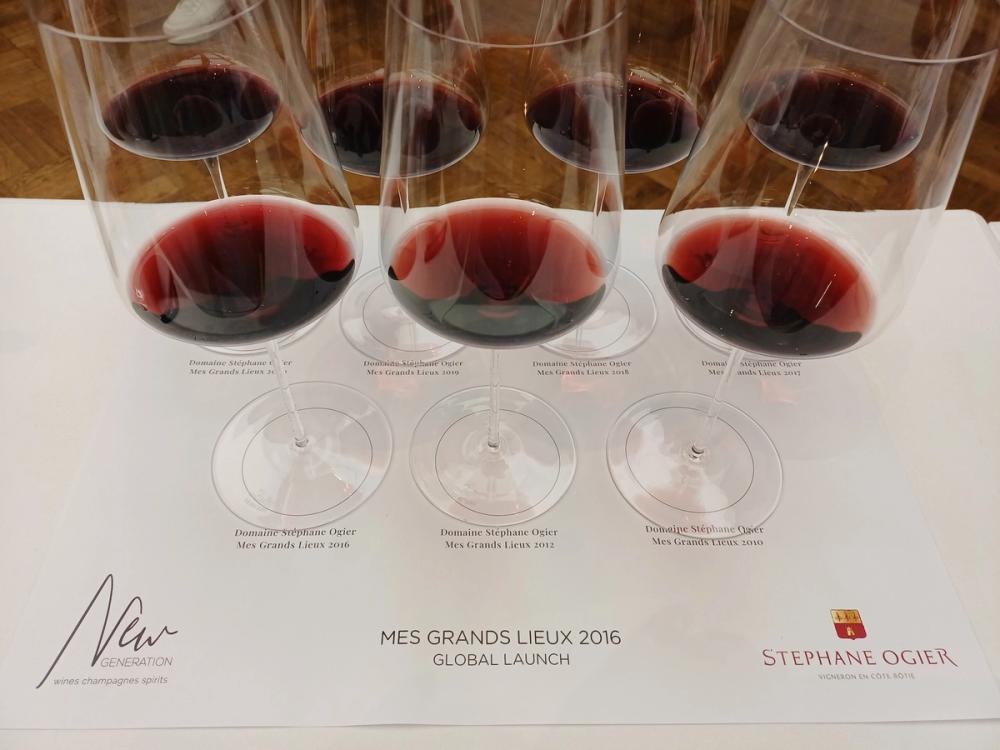
Looking into the future for Mes Grands Lieux to come:
Mes Grands Lieux 2017
This offers a richer, riper style, reflecting the vintage, with plush, velvety tannins. Aromas of black olive lead onto a palate of black fruit and a touch of fruit cake.
Mes Grands Lieux 2018
Another early and warm vintage, which needs (and luckily will get) more time to evolve before its release. The nose is decidedly savoury and reminiscent of beef stock, but the palate brings an initial wave of ripe blueberry, before the more structured elements feed in and a smoky note extends the finish.
Mes Grands Lieux 2019
A hot vintage, resulting in alcohol of 15% here, though it is dangerously well-integrated, making it hard to spot. Alcohol levels have crept up steadily this century, but older vines and making use of the vines’ protective canopy have helped to mitigate this.
The almost opaque colour signals the intensity here. The wine is opulent and ripe (but not overripe), with crushed dried flowers and fine, textured tannins and a certain prettiness.
Mes Grands Lieux 2020
Although it will be four years until this wine is released, it promises to be worth the wait. Already delicious, it shows terrific balance with masses of freshly crushed raspberries and relatively soft tannins which only add to the sense of freshness. It has class in its bones and will doubtless be a delight when it is released in 2030.
Looking further ahead, Ogier is not sure that 2024 will produce good enough wines to make a Mes Grands Lieux. But, like just about every Rhône winemaker, he is cock-a-hoop about the potential of 2025, which he describes as “just wow!” Roll on 2035!
Stéphane Ogier’s wines are imported and sold in the UK through New Generation Wines which is a commercial partner of The Buyer.